


Knockers : The Mine Spirits of Cornish Folklore
At a glance
| Description | |
|---|---|
| Origin | Cornish Mythology |
| Classification | Hybrids |
| Family Members | N/A |
| Region | England |
| Associated With | Miners |
Knockers
Introduction
Knockers are supernatural beings from Cornish folklore, traditionally associated with the tin mines that shaped Cornwall’s history, economy, and cultural identity. Believed to inhabit underground tunnels and mineral-rich rock formations, these mysterious creatures became an important part of the stories miners shared about their dangerous working environments. Their name comes from the knocking sounds they were believed to produce within the mines, sometimes interpreted as signs of valuable ore or warnings of approaching danger.
For generations, Cornish miners worked in dark, unstable underground passages where falling rocks, flooding, and other hazards threatened their lives. Unexplained noises within the rock could inspire both hope and fear, particularly when workers were searching for profitable mineral deposits. Knockers offered a supernatural explanation for these experiences, transforming the hidden world beneath Cornwall into a place inhabited by unseen beings.
Unlike creatures portrayed as straightforward enemies of humanity, Knockers occupied an uncertain position in mining folklore. They could be helpful, mischievous, or potentially dangerous, depending on the tradition. Their stories reflected the precarious relationship between miners and the underground environment on which their livelihoods depended.
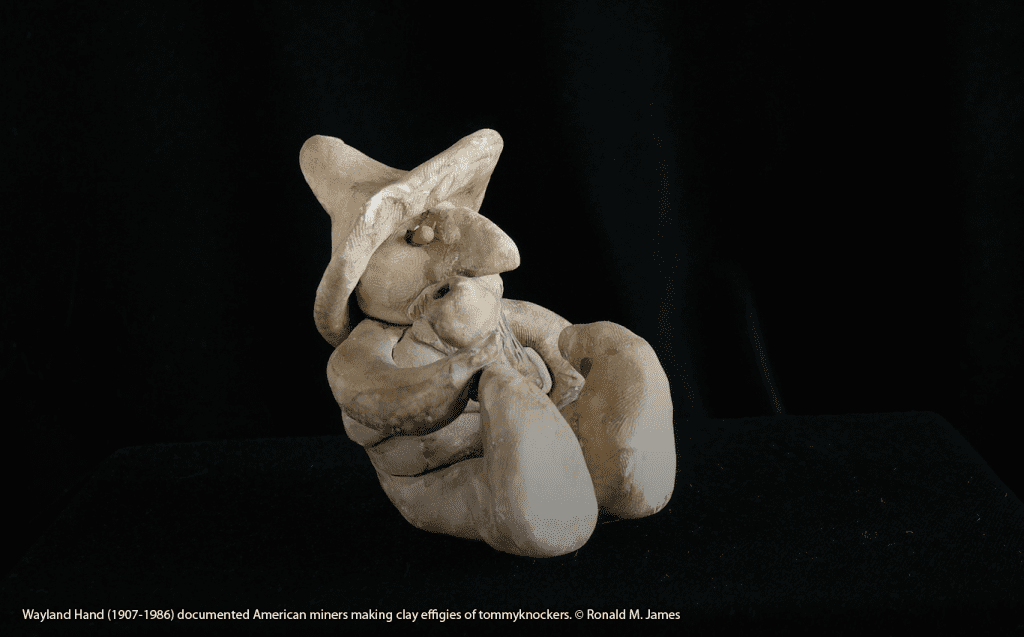
The folklore surrounding Knockers also travelled beyond Cornwall. When Cornish miners emigrated to mining communities in the United States during the nineteenth century, their traditions helped shape the American stories of Tommyknockers. These related figures demonstrate how folklore can move between cultures while retaining its connection to the experiences of the people who tell it.
Physical Description
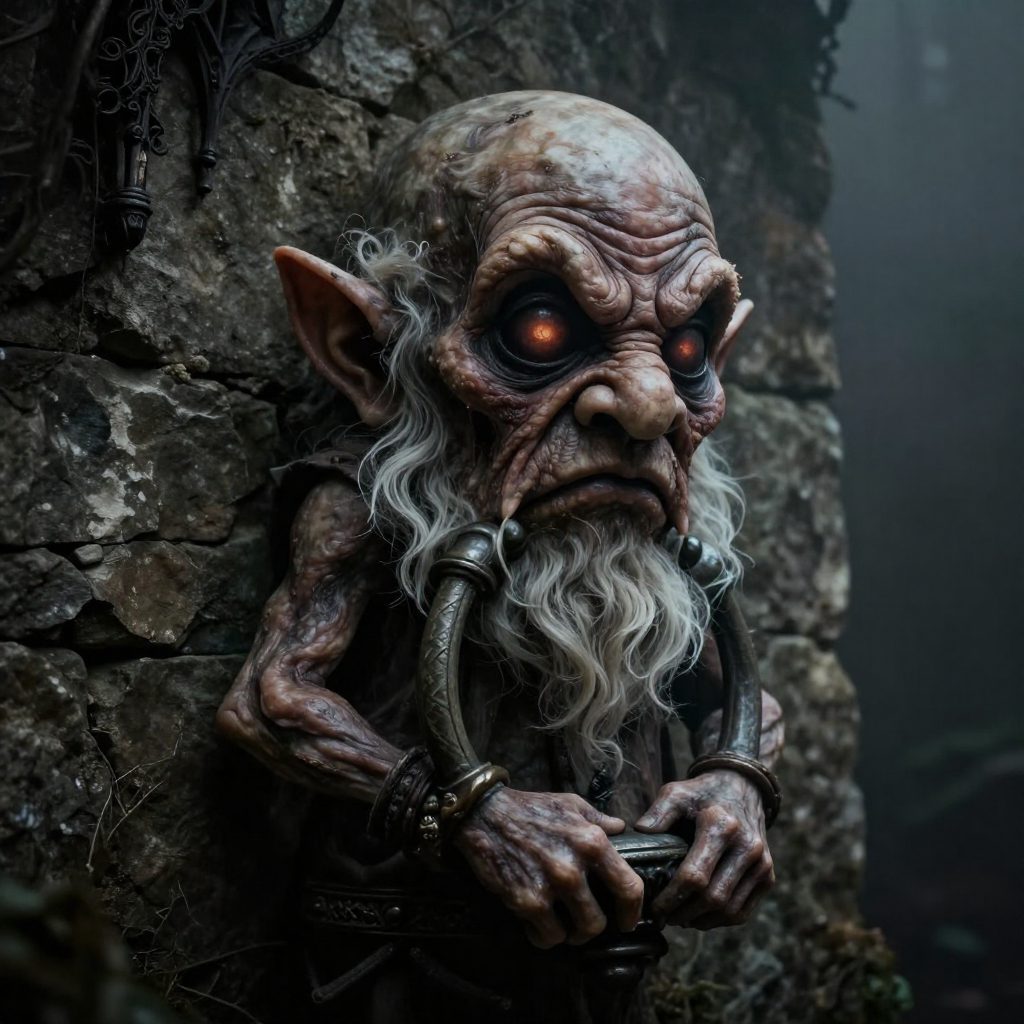
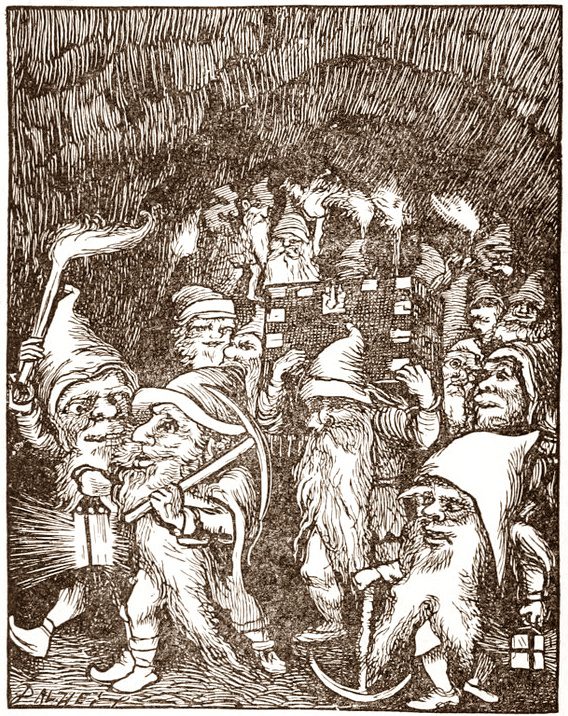
Traditional descriptions portray Knockers as small, human-like creatures resembling dwarfs or gnomes. They are sometimes described as approximately two feet tall, with disproportionately large heads, long arms, wrinkled faces, and white whiskers. Their appearance varies between accounts, reflecting the changing ways in which different storytellers imagined these elusive underground beings.
Some descriptions give Knockers miniature versions of miners’ clothing, including boots and other garments associated with underground labour. These details establish a visual connection between the supernatural creatures and the human workers whose activities they supposedly observed. Rather than appearing as entirely unfamiliar monsters, Knockers were often imagined as strange counterparts to the miners themselves.
Despite these descriptions, direct sightings were not the defining feature of Knocker folklore. Their presence was more commonly associated with unexplained knocking, unusual noises, and other experiences within the mines. Their physical appearance therefore belongs to the imaginative tradition surrounding them rather than to a consistent, universally accepted description. The contrast between their small stature and their mysterious influence gives Knockers much of their distinctive character. They were imagined as creatures capable of occupying the narrow passages and hidden spaces of the underground world, remaining beyond the reach of ordinary human understanding.
Mythological Context
Knockers belong to the broader tradition of supernatural beings associated with mines, mountains, caves, and other underground environments. In Cornish folklore, they are particularly connected with tin mining, an industry that played a significant role in the region’s historical development. Mining required workers to enter environments where the consequences of uncertainty could be severe. Rock movements, changes in underground conditions, and the difficulty of locating productive mineral deposits created circumstances in which unexplained sounds could acquire considerable significance. Stories about Knockers helped give these experiences a familiar cultural meaning.
Their most distinctive characteristic was the knocking associated with their presence. Some traditions interpreted these sounds as indications that valuable mineral deposits lay nearby. Other accounts associated the noises with danger, particularly the possibility of rockfalls or other underground hazards. These interpretations were not necessarily uniform, and the meaning assigned to knocking could vary across different accounts and periods.
Knockers also occupied the uncertain moral territory commonly found in British and Celtic fairy traditions. They were not consistently portrayed as benevolent guardians or malicious spirits. Instead, their behaviour could range from helpful to mischievous, creating a relationship in which miners sought their goodwill without entirely trusting them. This combination of practical anxiety and supernatural belief distinguishes Knockers from mythological beings whose primary roles involve creation, warfare, or cosmic order. Their stories developed around the immediate concerns of working people and the unpredictable environment in which they earned their living.
Origins
The precise origins of Knockers remain uncertain. Their traditions emerged within Cornwall’s mining culture, but there is no single authoritative account explaining when the belief first developed or how the supernatural beings were originally conceived. One explanation connects Knockers with the spirits of miners who died underground. Given the dangers associated with historic mining, it is understandable that stories developed around the idea of workers who continued to inhabit the places where they had lived and died. In these interpretations, Knockers could represent the lingering presence of earlier generations of miners.
Other traditions portray them as an independent race of supernatural beings associated with the earth. Rather than originating from human deaths, these creatures were understood as inhabitants of the underground world itself. Such interpretations place Knockers within the wider British folklore tradition of mysterious beings connected with particular landscapes and natural environments.
Historical accounts also preserve an association between Knockers and stories about Jewish miners supposedly forced to work underground. This material belongs to the history of the legend rather than to verifiable evidence about the creatures’ origins. It should be understood as a historical folklore tradition, not as an established account of the development of Cornish mining.
The evolution of Knocker folklore also reflects changes in the industry. Accounts of the creatures were recorded by nineteenth-century folklorists, including Robert Hunt, who collected traditions from Cornwall and the West of England. Later research has explored how the meaning of Knockers changed as mining practices developed and Cornish workers carried their beliefs abroad. The most responsible conclusion is that Knockers emerged from a combination of mining experiences, local storytelling, and wider supernatural traditions. Their origins cannot be reduced to one universally accepted explanation.
Notable Members
Knockers do not have a well-established mythology of individual characters, named rulers, or elaborate family genealogies. Unlike Greek, Norse, or Egyptian mythological traditions, Cornish mining folklore does not generally organise these beings around a clearly defined pantheon. Instead, Knockers are usually portrayed collectively. Their identity comes from their shared association with underground spaces, mysterious knocking, and the fortunes of miners rather than from the deeds of particular individuals.
Some accounts imagine them as groups of small supernatural workers inhabiting the mines. Others suggest connections with the spirits of deceased miners or with ancient beings that existed before human mining began. These descriptions represent different strands of folklore rather than a single consistent account of Knocker society. Consequently, there are no widely established individual Knockers whose biographies can be compared with those of prominent gods or legendary heroes. Their importance lies in the collective role they played in Cornwall’s mining traditions.
This absence of named individuals is significant because it makes Knockers a distinctive subject within folklore. They represent a community of imagined presences rather than a collection of personalities with separate adventures. Their stories focus on the relationship between miners and the underground world, allowing the creatures to remain mysterious even when their supposed behaviour is described in detail.
Relationship with Other Beings
Knockers belong to a wider cultural landscape populated by fairies, spirits, and supernatural inhabitants of the natural world. Their similarities to other small supernatural beings have encouraged comparisons with brownies, dwarfs, and related figures in British folklore.
However, these comparisons should not obscure the distinctive character of Cornish mining traditions. Knockers are specifically associated with mines and the experiences of miners, whereas brownies are more commonly connected with households, farms, and domestic work. Their occasional similarities in size, behaviour, or helpfulness do not make them identical beings.
Their relationship with human miners is central to their folklore. Knockers could be interpreted as unseen companions who helped workers locate valuable ore or warned them about dangerous conditions. They could also behave mischievously, with stories describing them as interfering with tools, food, or the activities of people underground. Some traditions held that miners should leave small food offerings, particularly pieces of pasty, to maintain the goodwill of the Knockers. Such customs reflect the belief that respectful treatment could encourage cooperation from supernatural inhabitants of the mines.
The relationship was therefore based on uncertainty rather than complete trust. Miners could hope for assistance while remaining cautious about provoking the beings they believed shared their underground environment. Knockers also developed a relationship with American mining folklore through the migration of Cornish workers. The Tommyknocker tradition retained many of the same basic themes, demonstrating how stories about supernatural mine dwellers could adapt to new communities and working conditions.
Similar Beings
Knockers share characteristics with several supernatural beings found in British and European folklore. These comparisons reveal a recurring tradition of imagining small, elusive creatures that inhabit particular environments and interact with human communities.
The closest parallel is the Welsh Coblynau, supernatural beings associated with mines and mineral deposits. Like Knockers, Coblynau were connected with underground knocking and were sometimes believed to indicate the presence of valuable ore. Both traditions emerged from mining environments in which unexplained sounds could be interpreted as meaningful signs. Despite these similarities, Coblynau belong to Welsh folklore and should not be treated simply as another name for Cornish Knockers.
Tommyknockers are another closely related tradition. The name became particularly associated with American mining communities after Cornish miners brought their stories overseas. Tommyknocker folklore developed within different regional settings, including the mining districts of the western United States. Although the terminology and individual stories varied, the association with underground sounds and the uncertain intentions of mine spirits remained important.
Brownies provide a more general comparison. These small supernatural beings appear in Scottish and northern English folklore, where they are traditionally associated with domestic work and the maintenance of households or farms. Their occasional helpfulness and potential for mischief resemble aspects of Knocker folklore, but their customary setting and responsibilities are different.
Dwarfs and other underground beings from European storytelling also offer useful points of comparison. Such creatures are frequently associated with mountains, hidden treasures, craftsmanship, or subterranean spaces. However, similarities in appearance or habitat do not establish that they share a common origin with the Knockers. These parallels suggest that the idea of supernatural beings inhabiting mines belongs to a wider pattern of folklore. Each tradition nevertheless retains its own regional history and cultural significance.
Symbolism and Interpretations
Knockers symbolise the uncertain relationship between human ambition and the natural world. Cornwall’s mining industry depended on extracting valuable resources from underground environments that workers could never completely control. Stories about unseen mine spirits gave this uncertainty a recognisable form.
Their knocking carried particular significance because it could represent either opportunity or danger. A sound associated with a promising mineral deposit offered hope of financial reward, while the same mysterious environment could inspire fears about unstable rock or other hazards. This dual meaning reflects the competing possibilities that shaped the lives of miners.
Knockers also represent the cultural importance of cooperation in dangerous workplaces. Beliefs about respecting supernatural inhabitants, avoiding offence, or leaving food offerings expressed the desire to maintain a favourable relationship with forces that workers believed could influence their fortunes. These practices belonged to the world of traditional belief, not to a system of supernatural protection that can be historically verified.
Another important interpretation concerns memory and community. The idea that Knockers might be connected with deceased miners allowed stories about the underground world to preserve a symbolic connection with earlier generations of workers. Even when the creatures were not explicitly described as human spirits, their association with mining gave them a place within the shared cultural imagination of Cornwall.
The tradition also demonstrates how folklore changes through migration. When Cornish miners carried their stories to the United States, Knockers became associated with the Tommyknocker legends of American mining communities. Their continuing presence in books and popular culture shows how a regional belief can acquire new meanings beyond its original setting.
Modern representations have sometimes transformed Tommyknockers into entirely different kinds of beings. Stephen King’s 1987 novel The Tommyknockers, for example, reimagines the name within a science-fiction horror narrative involving an extraterrestrial presence. This creative reinterpretation should be distinguished from traditional Cornish folklore.
Ultimately, Knockers remain an important expression of Cornwall’s mining heritage. Their stories preserve the fears, hopes, and imaginative responses of people whose working lives depended on the uncertain riches beneath the earth. Through their association with mysterious sounds, hidden minerals, and underground dangers, these supernatural beings continue to represent the enduring relationship between folklore, labour, and the landscapes that shape human experience.
Related Images


Source
Deacon, B. (2018). Knockers, knackers, and ghosts: Immigrant folklore in the western mines. Academia.edu. https://www.academia.edu/31849151/Knockers_Knackers_and_Ghosts_Immigrant_Folklore_in_the_Western_Mines
James, R. M. (2019). The folklore of Cornwall: The oral tradition of a Celtic nation. University of Exeter Press.
King, S. (1987). The Tommyknockers. G. P. Putnam’s Sons.
MacKillop, J. (1998). Dictionary of Celtic mythology. Oxford University Press. [ from refs]
Monaghan, P. (2004). Dictionary of Celtic mythology. Infobase Publishing. [ from refs]
Penwith Eye. (2017). Creatures of Cornish folklore: Piskies, spriggans and knockers. https://penwitheye.co.uk/2017/10/creatures-cornish-folklore-piskies-spriggans-and-k…
Tregarthen, E. (1906). The old man of Cury and other stories of Cornish folklore. T. C. & E. C. Jack.
Briggs, K. M. (1976). A dictionary of fairies: Hobgoblins, brownies, bogies, and other supernatural creatures. London: Penguin Books.
Bord, J., & Bord, C. (1986). The secret country: An interpretation of the folklore of fairyland. London: Granada.
Simpson, J., & Roud, S. (2000). A dictionary of English folklore. Oxford: Oxford University Press.
Westwood, J. (1985). Folklore of Cornwall. London: Batsford.
Deane, T. (2010). Cornish folklore and legends. Truro: Cornwall Heritage Press.
Frequently Asked Questions
What are Knockers in Cornish mythology?
Knockers are small, supernatural spirits believed to live in Cornish tin mines, known for their knocking sounds that warned miners of danger or indicated hidden ore.
Why are they called Knockers or Tommyknockers?
The name comes from the tapping sounds miners heard underground. When Cornish miners emigrated to America, the beings became known as Tommyknockers in U.S. mining communities.
Are Knockers considered good or bad?
They are viewed as dual-natured—helpful when respected but mischievous when ignored or offended. Their knocks could signal either fortune or danger.
What did miners do to appease Knockers?
Miners often left food offerings, such as pasty crusts, to earn their protection and avoid their tricks.
Do Knockers still appear in modern culture?
Yes. They appear in literature, folklore studies, heritage sites, fantasy media, and notably in Stephen King’s novel The Tommyknockers.


