Cupu Manik Astagina : The Sacred Javanese Relic of Vision and Transformation
| Description | |
|---|---|
| Origin | Indonesian Mythology |
| Classification | Magical vessel revealing all events |
| Owners/Users | Dewi Indradi, Dewi Anjani, Guwarsa, Guwarsi |
| Symbolism | Divine knowledge, Temptation, Karmic consequence |
| Source Texts | Serat Ramayana, Wayang Purwa, Kakawin Ramayana |
Mythlok Perspective
In Mythlok’s Perspective, Cupu Manik Astagina is not simply a magical relic but a symbol of forbidden awareness. The object reflects a recurring mythological theme found across cultures: humanity’s desire to see beyond natural limits. Unlike many Western myths where forbidden objects unleash destruction directly, the Javanese tradition focuses on the inner collapse caused by jealousy and ego. The relic is closer in spirit to sacred mirrors and prophetic artifacts from East Asian traditions than to simple cursed treasures. Its lasting power comes from how it transforms knowledge into a moral test, showing that wisdom without discipline can become more dangerous than ignorance itself.
Cupu Manik Astagina
Introduction
Cupu Manik Astagina is one of the most important sacred objects in Javanese mythology and wayang tradition. More than a magical relic, it represents the dangerous balance between wisdom, temptation, and spiritual responsibility. The story surrounding the object is deeply connected to Indonesian versions of the Ramayana and explains the origins of famous figures such as Subali, Sugriwa, and Dewi Anjani.
In Javanese storytelling, sacred objects are rarely simple treasures. They often test the morality of those who possess them, and Cupu Manik Astagina is one of the clearest examples of this idea. The relic becomes the center of jealousy, secrecy, and punishment within the household of Resi Gotama and Dewi Indradi. Its presence transforms an ordinary family conflict into a mythic tragedy with lasting spiritual consequences.
The tale continues to survive through wayang kulit performances, dance dramas, literature, and modern cultural discussions in Indonesia. Even today, Cupu Manik Astagina is remembered not only for its supernatural abilities but also for the lessons it teaches about discipline, humility, and the burden of divine knowledge.
Description
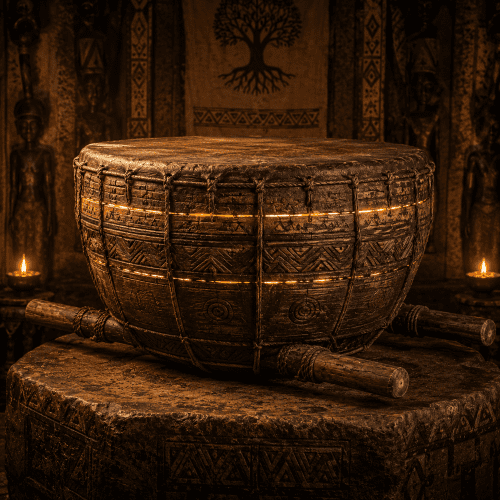
Cupu Manik Astagina is usually described as a small sacred container, jewel box, or mystical casket with extraordinary powers. In many traditional interpretations, the object possesses a mirror-like quality that allows the holder to see distant places, heavenly realms, and events occurring across the universe. Some versions also describe it as revealing truths beyond ordinary human understanding.
The name itself carries symbolic meaning. “Cupu” refers to a small container or vessel, while “manik” means jewel or something radiant and precious. The term “astagina” is commonly associated with completeness or multiple sacred qualities, often interpreted through Javanese spiritual philosophy. Together, the name suggests an object that stores divine wisdom rather than mere physical wealth.
Visually, the relic is imagined as elegant and luminous, reflecting its heavenly origin. In wayang art and Indonesian illustrations, it is often portrayed as golden or crystal-like, emphasizing its connection to celestial power. Although physically small, its influence within the myth is enormous, shaping the destiny of entire kingdoms and bloodlines.
Mythological Context
The myth of Cupu Manik Astagina is primarily associated with the family of Resi Gotama, a respected ascetic sage, and his wife Dewi Indradi, who is sometimes called Dewi Windradi in Javanese retellings. According to many versions of the story, the sacred relic was originally connected to Batara Surya, the Sun God, and was entrusted to Dewi Indradi under strict conditions.
The object was never meant to become a source of vanity or conflict. However, secrecy surrounding the relic eventually attracted curiosity and suspicion within the family. When the children Dewi Anjani, Guwarsa, and Guwarsi discovered the object, their fascination quickly turned into rivalry. The dispute escalated until Resi Gotama intervened in anger.
His response changed the course of their lives forever. The children were cursed and transformed, eventually becoming the monkey-like figures associated with the Ramayana tradition. Guwarsa became Subali, while Guwarsi became Sugriwa. Dewi Anjani also underwent spiritual transformation and later became linked to the birth of Hanuman in Indonesian tradition.
This myth serves as an important bridge between Javanese folklore and the wider Ramayana narrative. Unlike the original Indian epic, Javanese adaptations place greater emphasis on family conflict, moral failure, and spiritual discipline as the origins of the monkey heroes.
Owners/Users
Dewi Indradi is most commonly identified as the primary keeper of Cupu Manik Astagina. In several traditions, she receives the object from Batara Surya as a sacred gift. However, her possession of the relic is conditional, reflecting the idea that divine knowledge should only be handled with wisdom and restraint.
Resi Gotama does not actively use the relic in most versions of the story, yet he becomes the moral authority who judges the consequences of its misuse. His actions reveal an important theme in Javanese mythology: sacred power without ethical control inevitably creates disorder.
The children of the household also become deeply connected to the relic. Dewi Anjani, Guwarsa, and Guwarsi are drawn toward its beauty and mystery, but their fascination ultimately leads to tragedy. In this sense, the myth suggests that possession alone does not make someone worthy of divine power. Spiritual maturity matters more than ownership.
Some later traditions also associate the relic indirectly with Hanuman and the monkey kingdoms of the Ramayana, extending its influence beyond the original family narrative.
Instances of Use
The most significant use of Cupu Manik Astagina occurs when it reveals visions of the world and heavens. This ability makes it more than a magical artifact; it functions almost as a cosmic mirror capable of showing truths beyond human perception. Such powers explain why the object inspires both awe and obsession.
Another major moment occurs when the children fight over the relic. Their pursuit of the object becomes symbolic of uncontrolled desire. Resi Gotama, furious at the conflict and secrecy surrounding the relic, throws it away in an attempt to end the chaos.
In several Javanese versions, the relic lands near sacred waters such as Telaga Sumala. The children chase after it and encounter supernatural transformation connected to the lake. These events explain their transition into monkey-like beings and establish the spiritual origins of later Ramayana characters. The object itself eventually disappears from ordinary human possession, reinforcing the idea that divine relics cannot permanently remain in mortal hands without consequences.
Symbolism and Interpretations
Cupu Manik Astagina is often interpreted as a symbol of sacred knowledge. It grants insight into realities hidden from ordinary people, but the story warns that wisdom without discipline becomes destructive. The problem is never the object itself; the danger comes from ego, envy, and emotional weakness.
The myth also reflects Javanese spiritual teachings about self-control. Characters who become consumed by curiosity or desire lose harmony within themselves and within their family. Their transformations into monkeys symbolize the loss of higher spiritual balance and the descent into instinctive behavior.
Some scholars and cultural interpreters connect the relic to the idea of astabrata, the eight principles of ideal leadership in Javanese philosophy. In this reading, Cupu Manik Astagina represents the responsibilities that come with power and insight. Leaders who lack humility may gain knowledge but still fail morally.
The story additionally explores karma and purification. Although the characters suffer punishment, their transformations eventually become part of a larger spiritual journey. Redemption and growth remain possible even after failure.
Comparative Analysis
Cupu Manik Astagina shares similarities with sacred objects found in many world mythologies. One of the closest comparisons is Pandora’s Box from Greek tradition. Both stories involve a powerful object whose misuse leads to suffering and irreversible change. However, the Javanese relic focuses more on spiritual vision and ethical responsibility than the release of evil into the world.
The artifact also resembles mystical mirrors and prophetic tools from other Asian traditions, where seeing hidden truths is considered both a gift and a burden. In Western folklore, crystal balls and enchanted mirrors serve similar symbolic roles, revealing knowledge that humans may not be prepared to handle.
Within Southeast Asian mythology, Cupu Manik Astagina stands out because it combines family drama, cosmic symbolism, and moral philosophy into a single narrative. The relic is simultaneously a treasure, a spiritual test, and an explanation for the origins of legendary heroes.
Modern Influence
Cupu Manik Astagina continues to appear in Indonesian cultural life through wayang kulit performances, educational material, novels, and online discussions about Javanese mythology. The story remains especially important in performances connected to the Ramayana cycle, where the origins of Subali and Sugriwa are explored in greater detail.
Modern interpretations often emphasize the ethical dimensions of the myth. Writers and educators use the story to discuss leadership, self-restraint, and the dangers of unchecked ambition. Because the relic combines supernatural mystery with emotional family conflict, it remains highly relatable to contemporary audiences.
The visual appeal of the object also makes it popular in modern Indonesian art and digital illustration. Artists frequently portray the relic as glowing, celestial, and jewel-like, reinforcing its reputation as one of the most iconic sacred objects in Javanese tradition.
Legacy
The legacy of Cupu Manik Astagina lies in its enduring ability to communicate moral and spiritual lessons through mythology. The relic represents the idea that knowledge is never neutral. Wisdom can elevate individuals toward enlightenment, but it can also destroy relationships when pursued through greed or pride.
Its story continues to influence Indonesian cultural identity by connecting divine mythology with human emotion and ethical reflection. Through wayang performances and literary retellings, the relic remains a reminder that sacred gifts require responsibility and humility.
Cupu Manik Astagina also survives because its themes are universal. Questions about power, temptation, and spiritual readiness appear across cultures, making the story understandable far beyond Indonesia. Even centuries later, the myth continues to resonate as a timeless reflection on how people respond to the burden of knowledge.


Sources
Ardian, K. (n.d.). Cupu manik astagina: Tragedi maha hebat pusaka pemberian dewa. Goodreads.
Baratayuda. (2021, April 3). Cupu manik astagina – senjata ampuh dari dewa Indra. https://www.baratayuda.eu.org/2020/02/cupu-manik-astagina-senjata-ampuh-dari.html
Blog Hadisukirno. (n.d.). Cupu manik astagina. https://blog.hadisukirno.co.id/cupu-manik-astagina/
Espos.id. (2022, January 19). Cupu manik astagina, pusaka pembawa petaka. https://regional.espos.id/cupu-manik-astagina-pusaka-pembawa-petaka-1239832
Hartalangit. (2023, November 16). Legenda pusaka dewa cupu manik astagina. https://www.hartalangit.com/2020/11/legenda-pusaka-dewa-cupu-manik-astagina.html
Kompasiana. (2015, June 25). Cupu manik. https://www.kompasiana.com/gusharpramudito/54fff88aa33311796d50f994/cupu-manik
Zoetmulder, P. J. (1974). Kalangwan: A Survey of Old Javanese Literature. The Hague: Martinus Nijhoff.
Robson, S. (1995). Wayang and Its Significance in Javanese Culture. Leiden: KITLV Press.
Santoso, S. (1980). Ramayana in Javanese Tradition. Jakarta: Balai Pustaka.
Anderson, B. (1990). Language and Power: Exploring Javanese Culture. Ithaca: Cornell University Press.
Frequently Asked Questions
What is Cupu Manik Astagina?
Cupu Manik Astagina is a sacred magical relic in Javanese mythology known for revealing visions of the heavens and the world.
Who owned Cupu Manik Astagina?
The relic was primarily associated with Dewi Indradi, though it later became central to the story of her children and Resi Gotama.
Why is Cupu Manik Astagina important?
It explains the origins of Subali and Sugriwa in Indonesian Ramayana traditions and symbolizes the dangers of greed and uncontrolled desire.
What powers did Cupu Manik Astagina have?
The object could reveal hidden truths, distant places, and cosmic visions beyond ordinary human perception.
Is Cupu Manik Astagina connected to the Ramayana?
Yes. In Javanese adaptations of the Ramayana, the relic plays a major role in the backstory of the monkey heroes.