Figures Associated With Food in Ancient Civilizations and Sacred Traditions
Food is more than sustenance in mythology. Across cultures, it can represent divine generosity, fertility, hospitality, prosperity, sacrifice, transformation, and the relationship between humans and the natural world. Mythological figures associated with food therefore include gods and goddesses of nourishment, sacred plants, harvest deities, supernatural providers, and beings whose stories explain where particular foods came from.
In Hindu traditions, Annapurna is one of the clearest embodiments of food and nourishment. Revered as a form of Parvati, she is associated with the giving of food and the sustaining power of nourishment. Her imagery emphasizes an important principle found throughout mythology: food is not simply something consumed, but a sacred gift that sustains life.
Japanese mythology offers a darker and more unusual food deity in Ukemochi. Associated with food and nourishment, she possesses the extraordinary ability to produce food from her body. Her story, preserved in the Nihon Shoki, connects food with divine abundance while also demonstrating how myths can portray the sacred origins of everyday nourishment through strange and unsettling imagery.
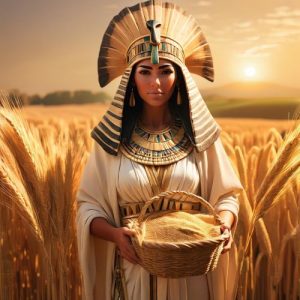
In Greek mythology, Demeter is primarily associated with agriculture, grain, and the fertility of cultivated land, but her mythology places food at the center of divine relationships. Her grief over Persephone’s disappearance causes crops to fail, making the availability of food dependent upon the restoration of the goddess’s relationship with her daughter. Her Roman counterpart, Ceres, similarly became associated with grain and agricultural abundance.
Food mythology also frequently concerns the origin of particular foods. Across cultures, stories explain how humans first received grain, maize, rice, fire, fruits, or other essential foods. These narratives often feature creator beings, culture heroes, tricksters, or benevolent spirits who obtain something previously unavailable to humanity. The food itself can become a sacred inheritance from the supernatural world.
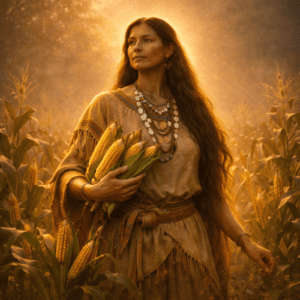
The Maya Popol Vuh, for example, makes maize fundamental to the creation of humanity, describing the successful human beings as formed from yellow and white corn. Food therefore becomes inseparable from identity: people are not merely sustained by maize but are symbolically made from it.
Mythology also treats food as a boundary between worlds. Divine meals can grant immortality, while forbidden foods can bring transformation, exile, or death. Sacred offerings allow humans to communicate with supernatural beings, and sharing food can establish bonds between mortals, gods, ancestors, and spirits.
From Annapurna’s nourishing abundance to Ukemochi’s mysterious production of food and Demeter’s power over grain, food-associated figures reveal how deeply nourishment is embedded in sacred imagination. What humans eat can become a story about creation, generosity, survival, identity, and the fragile relationship between humanity and the forces that sustain life.