


Adze : The Shapeshifting Vampire Spirit of the Ewe People
Listen
At a glance
| Description | |
|---|---|
| Origin | Ewe Mythology |
| Classification | Hybrids |
| Family Members | N/A |
| Region | Ghana, Togo, Benin |
| Associated With | Vampirism, Shapeshifting, Possession, Disease, Jealousy, Misfortune |
The Mythlok Perspective
In Mythlok’s Perspective, the Adze is less a creature and more a mirror. It reflects how cultures interpret invisible threats, whether disease, envy, or social imbalance. Unlike the European vampire, which is often aristocratic and individualistic, the Adze is communal and psychological in nature. It shares parallels with entities like the Slavic upir or the Southeast Asian penanggalan, yet it remains distinct in its connection to social tension. Where others feed on blood, the Adze feeds on imbalance. It represents a worldview where the supernatural is not separate from human behavior but deeply intertwined with it.
Adze
Introduction
The Adze is one of the most fascinating and unsettling supernatural beings in West African tradition, particularly among the Ewe people of Ghana, Togo, and Benin. More than just a monster, the Adze represents a deeper cultural attempt to understand invisible threats, especially disease, jealousy, and social imbalance. In many ways, it acts as both a warning and an explanation for misfortune.
Historically, Ewe communities developed Adze lore as a way to interpret unexplained illnesses and sudden deaths, particularly among children. The creature’s association with insects, especially fireflies, suggests a symbolic link to mosquito-borne diseases such as malaria. This connection reflects an early cultural awareness of how unseen forces could harm entire communities.
At the same time, the Adze embodies human emotions like envy and resentment. It is not just an external threat but something that can emerge from within society itself, often tied to accusations of witchcraft. This dual nature makes the Adze both a supernatural predator and a social metaphor, deeply embedded in the worldview of the Ewe people.
Physical Traits
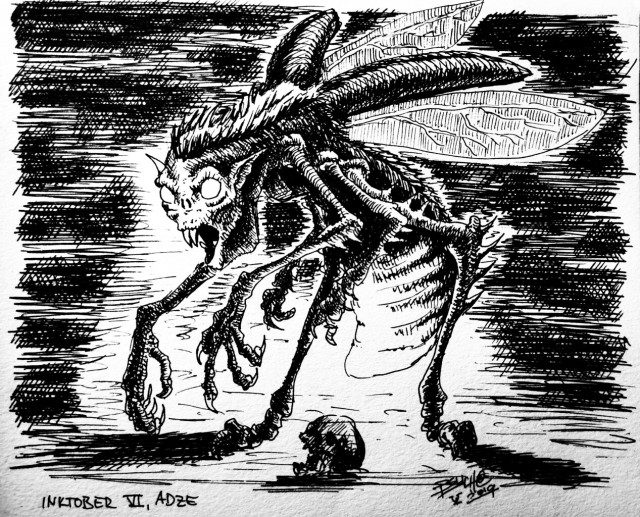
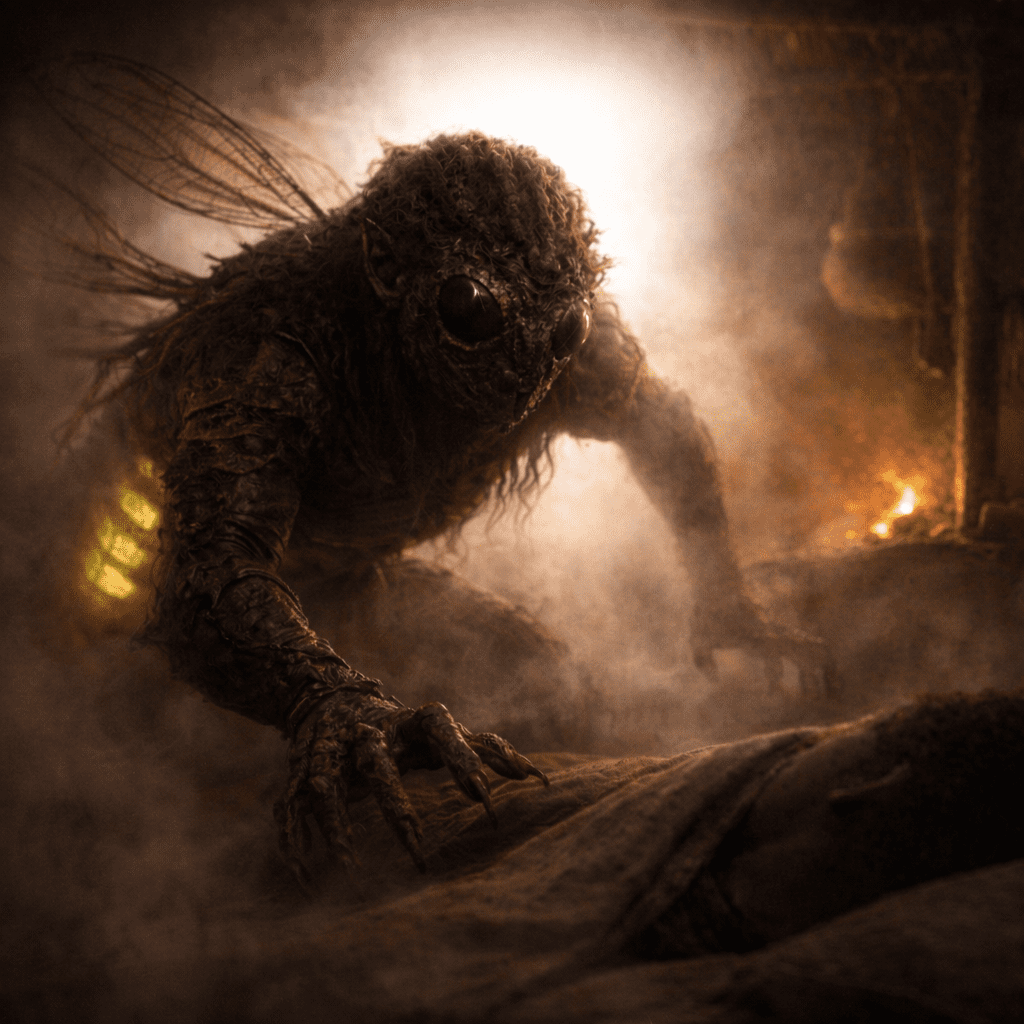
Unlike many mythological beings that have a fixed appearance, the Adze is defined by its ability to shift forms. Its most common and natural state is that of a firefly or glowing insect, often described as emitting an eerie light in the darkness. This small, almost harmless appearance allows it to move unnoticed through the night, slipping into homes through tiny openings such as cracks, windows, or keyholes.
When captured, however, the Adze loses this insect form and transforms into a human. In this state, it becomes far more dangerous in a different way, as it can blend into society and interact with people directly. Individuals possessed by the Adze are sometimes known as adzetos, and their condition may be marked by strange nocturnal behavior, including the emission of light or flame-like energy from the body.
Some variations of the myth describe more grotesque features in its physical manifestation, such as an elongated snout or trunk-like appendage used for feeding. These details reinforce its identity as a parasitic being, one that feeds not only on blood but also on the vitality of its victims.
Family
The Adze does not belong to a traditional mythological family or divine lineage. Instead, its “family” exists in a symbolic sense, rooted in the social fabric of the community. It is closely tied to relationships marked by tension, rivalry, and suspicion.
In many accounts, Adze activity is linked to interpersonal conflict within families or villages. Jealousy between relatives, disputes among co-wives, or resentment over wealth and success are often seen as conditions that allow the Adze to manifest. Rather than being inherited through bloodlines, it spreads through emotional and social fractures.
This lack of a defined genealogy makes the Adze more unsettling. It is not distant or divine but intimately connected to human behavior. It reflects the idea that danger does not always come from outside forces but can arise from within one’s own circle.
Other names
The name “Adze” remains consistent across Ewe traditions, with no widely accepted regional variations. However, the concept surrounding it can shift depending on context.
When associated with possession, individuals affected by the Adze may be labeled as witches or linked to terms such as abasom. In these cases, the Adze is not just a creature but a force of harmful sorcery. The word itself can carry multiple meanings, ranging from creative spiritual power to destructive magic driven by jealousy.
In modern interpretations, especially outside West Africa, the Adze is often described as a “vampire spirit” or “witch-firefly.” While these labels help global audiences understand its nature, they simplify a much more complex cultural concept.
Powers and Abilities
The Adze’s abilities make it one of the most feared entities in African folklore. Its power lies not only in physical harm but also in its ability to remain unseen and misunderstood.
Its most defining trait is shapeshifting. In its firefly form, it can travel silently at night and infiltrate homes with ease. This allows it to feed on the blood of sleeping victims, particularly children. The act of feeding is believed to cause illness, weakness, and sometimes death, reinforcing its association with disease.
If it cannot access blood, the Adze is said to consume substitutes like palm oil or coconut water, suggesting its need for nourishment tied to life force rather than strictly blood.
Possession is another major aspect of its power. When in human form, the Adze can inhabit a person’s body, amplifying negative traits such as jealousy, bitterness, and malice. This transformation often leads to social isolation, as the possessed individual may be accused of witchcraft and blamed for misfortune within the community.
Unlike many mythological creatures, the Adze is notoriously difficult to defeat. Traditional beliefs suggest there are no reliable weapons or spells against it, though spiritual practices like prayer have been considered effective in some later interpretations.
Modern Day Influence
Even today, the Adze continues to shape cultural beliefs and social dynamics in parts of West Africa. It remains a powerful explanation for unexplained events, from illness to personal hardship. In some communities, accusations of Adze possession can still carry serious consequences, reflecting the enduring influence of these beliefs.
The arrival of Christianity in the region during the 19th century reshaped how the Adze was understood. It began to merge with concepts of the Devil, transforming from a cultural metaphor into a more explicitly demonic figure.
Globally, the Adze has gained recognition through folklore studies and modern media. It is often compared to vampires in Western traditions, though this comparison only captures part of its identity. Unlike classic vampires, the Adze is as much about social and psychological realities as it is about supernatural horror. Today, it stands as a powerful example of how myth evolves, bridging ancient belief systems with contemporary interpretations.
Related Images





Source
Bane, T. (2010). Encyclopedia of vampire mythology. McFarland.
Mythical Encyclopedia. (2024). Adze: Mythical creature. https://mythicalencyclopedia.com/adze/
Spieth, J. (1906). Die Ewe-Stämme: Material zur Kunde des Ewe-Volkes in Deutsch-Togo. (English translation, African Books Collective, 2011).
Vampires Fandom. (2025). Adze. https://vampires.fandom.com/wiki/Adze
Adeche Atelier. (2024). The Adze: A deep dive into the vampiric firefly in Ewe folklore. https://adeche.com/en-us/blogs/learn-african-mythology/the-adze-a-deep-dive-into-the-vampiric-firefly-in-ewe-folklore
Consult IFA. (2025). Adze: A shapeshifting vampire creature from African mythology. https://consultifa.com/blog/adze-a-shapeshifting-vampire-creature-from-african-mythology/
Deyerin Storytellers. (2023). Adze. https://deyerinstorytellers.com/adze/
Eerie Worlds. (2023). Adze. https://www.eerieworlds.com/eerie-world-cards/adze
Frequently Asked Questions
What is the Adze in African folklore?
The Adze is a vampiric spirit from Ewe tradition that can transform into a firefly and feed on human blood.
Is the Adze a vampire?
It is often compared to a vampire, but it is more complex, combining traits of a spirit, witch, and disease-bringer.
How does the Adze attack its victims?
In its insect form, it enters homes at night and feeds on the blood of sleeping individuals.
Can the Adze possess humans?
Yes, it can possess people and amplify negative emotions like jealousy, leading to accusations of witchcraft.
What does the Adze symbolize?
It symbolizes disease, envy, and social tension within communities, acting as both a supernatural and cultural explanation.
