


Acan : The Maya God of Alcohol and Intoxication
At a glance
| Description | |
|---|---|
| Origin | Mayan Mythology |
| Classification | Gods |
| Family Members | N/A |
| Region | Mexico, Guatemala, Belize, Honduras, and El Salvador |
| Associated With | Wine, Alcohol, Revelry, Enjoyment |
Mythlok Perspective
In Mythlok’s Perspective, Acan represents a fascinating intersection between intoxication and spirituality in ancient Maya culture. Like Dionysus in Greek mythology, who presides over wine, ecstasy, and religious celebration, Acan is associated with alcohol and its place in communal and ceremonial life. However, while Dionysus occupies a prominent position in Greek mythology, with extensive stories exploring transformation and divine ecstasy, Acan is primarily known through his association with intoxicating beverages and Maya ritual practices.
Acan
Introduction
Acan is a deity associated with alcohol and intoxication in Maya tradition, reflecting the important place fermented beverages occupied in the religious and social life of ancient Maya communities. His name is associated with drinking and its effects, connecting him to a cultural world in which alcoholic beverages served purposes beyond ordinary consumption. Drinks such as balché played significant roles in ceremonies, communal gatherings, and religious observances, bringing together ideas of ritual participation, shared identity, and relationships with the supernatural world.
For the Maya, fermented beverages could carry meanings shaped by the occasions on which they were consumed. Their use in religious ceremonies distinguished them from ordinary refreshments, making drinking an activity that could participate in the wider spiritual life of the community. Acan’s association with intoxication offers a perspective on this relationship between bodily experience and religious practice. Rather than treating alcohol simply as a source of pleasure, his place in Maya tradition invites a closer examination of the cultural meanings attached to drinking, ceremony, and communal participation.
Physical Traits
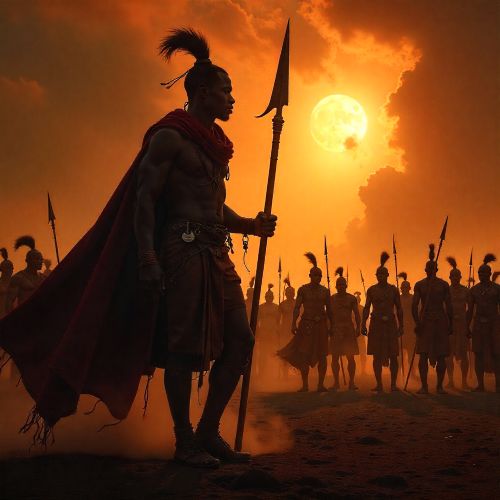
Acan’s identity is defined primarily through his association with alcohol rather than a distinctive physical appearance. His representation in modern illustrations often draws on broader visual traditions associated with Maya deities, incorporating elements of ancient Mesoamerican clothing, jewellery, and ceremonial objects. Such artistic choices can establish a recognisable cultural setting, although they should not automatically be interpreted as historically documented attributes of Acan himself.
The visual world of ancient Maya religion included an extensive range of divine figures, represented through sculpture, painted ceramics, inscriptions, and other artistic forms. These representations frequently combined human characteristics with symbolic elements that communicated a deity’s identity and significance. Acan’s association with drinking provides a natural starting point for artistic interpretation, particularly through the inclusion of a ceremonial vessel or a setting connected with ritual gatherings.
A culturally grounded representation of Acan should place greater emphasis on the historical material culture of the Maya than on generic fantasy imagery. Traditional clothing, appropriate ornaments, and historically inspired ceremonial objects can establish this context without attributing an invented costume or fixed appearance to the deity. The result presents Acan within the cultural world that gives his character meaning.
Family
Acan’s place within the Maya pantheon is best explored through his religious associations rather than an extensive divine genealogy. Maya religious traditions encompassed numerous supernatural beings connected with natural forces, agriculture, political authority, death, and ritual life. Their relationships varied across communities and historical periods, reflecting the diversity of religious practices throughout the Maya world.
Acan’s association with alcoholic beverages situates him within this wider religious landscape, where substances used in ceremonies could acquire spiritual significance. Balché, in particular, connected the natural environment with human ritual activity through the preparation of a fermented drink from plant materials, water, and honey. Its ceremonial use illustrates how relationships between people, the natural world, and supernatural powers could be expressed through communal practices.
The wider Maya pantheon included important agricultural and creation deities, but Acan’s precise genealogical relationships remain unclear. His significance can therefore be understood through his association with ritual drinking and its place in Maya religious life, without assigning him parents, consorts, offspring, or divine relatives whose identities are not securely established.
Other Names
Acan is also written as Akan in references to Maya mythology. The variation reflects differences in the spelling of names transmitted through historical records and subsequent scholarship. The name has been associated with the meaning groan or bellow, an interpretation that evokes the vocal expressions sometimes connected with intoxication.
Names in Mesoamerican religious traditions can preserve information about the characteristics, functions, or cultural associations of the beings they identify. Their interpretation, however, depends on the linguistic and historical context in which they appear. In Acan’s case, the proposed meaning reinforces the connection between his name and the effects of drinking, although it should not be treated as an unquestionable linguistic derivation.
Acan and Akan are the principal spelling variants associated with the deity in secondary references. His identity is most consistently connected with alcohol and intoxication rather than a documented collection of regional titles or alternative divine identities.
Powers and Abilities
Acan’s defining association is with alcohol and intoxication. His place in Maya tradition reflects the cultural importance of fermented beverages and the range of settings in which they were consumed. Drinking could accompany social gatherings, but it also formed part of religious observances in which food, drink, offerings, and communal participation acquired ceremonial meaning.
One of the most important beverages for understanding this cultural setting is balché. Traditionally prepared using the bark of the balché tree, water, and honey, balché underwent fermentation to produce an alcoholic drink used in Maya ceremonial life. Its ingredients linked the finished beverage to the natural environment, while its preparation and consumption placed it within established cultural practices.
Balché was more than an ordinary drink in the contexts where it served a ritual purpose. Its consumption could form part of ceremonies and offerings through which participants engaged with supernatural beings and maintained relationships central to their religious worldview. The beverage therefore illustrates how an everyday material substance could become part of a larger system of spiritual meaning.
Acan’s association with intoxication belongs within this ceremonial context. Alcohol could alter perception and behaviour, making its consumption a distinctive experience within gatherings and religious observances. The deity’s identity consequently provides a way to examine how the Maya understood and incorporated intoxicating beverages into their cultural practices.
This association should not be confused with a general authority over agriculture or fertility. Although balché depended on natural ingredients and could be used in ceremonies connected with the land, these connections do not independently establish Acan as a harvest deity. His documented significance is more closely tied to alcohol and intoxication than to a broad portfolio of supernatural powers.
Modern Day Influence
The cultural significance of Acan can be explored through the continuing study of Maya religious traditions and the ceremonial beverages associated with them. Balché remains an important element of cultural heritage in some Maya communities, where its use in particular ceremonies preserves knowledge of traditional ingredients, preparation methods, and ritual practices.
The continued use of balché demonstrates the resilience of cultural traditions across generations. A beverage prepared from locally available materials can preserve connections between communities and their environment while carrying meanings shaped by inherited religious practices. Its ceremonial role also offers insight into the relationship between food, drink, and spiritual life in Maya culture.
Contemporary interest in Indigenous history has brought renewed attention to the diversity of Maya religious traditions. Historical research, cultural education, and artistic interpretation contribute to a broader understanding of the beliefs and practices that shaped ancient Maya society. Within this context, Acan provides a point of entry into discussions of ritual intoxication and the significance of alcoholic beverages in religious life.
The distinction between preserving a cultural practice and maintaining the worship of a particular deity is important. Balché’s continuing ceremonial use is documented in some Maya communities, while contemporary worship specifically directed toward Acan is less clearly established. His modern relevance is therefore best understood through the historical and cultural questions his identity raises, rather than through assumptions about widespread contemporary devotion.
Acan occupies a distinctive place in discussions of Maya religion because his association with alcohol reveals how substances used in communal life could also participate in sacred traditions. Through balché and the ceremonies surrounding fermented beverages, his character connects the physical experience of intoxication with the social and religious worlds of the Maya. His significance lies in this relationship between drinking, ritual, and cultural identity, offering a focused perspective on the complexity of ancient Maya religious life.
Related Images




Sources
López Oliva, M. (2024). La personificación de ˀAhkan en el Dintel 3 del Templo IV de Tikal [The impersonation of ˀAhkan as depicted on Lintel 3 of Temple IV at Tikal]. Boletín del Museo Chileno de Arte Precolombino. https://boletinmuseoprecolombino.cl/html/03-lopez-29-1/
McGee, R. J. (1991). The balché ritual of the Lacandon Maya. Estudios de Cultura Maya, 18. https://doi.org/10.19130/iifl.ecm.1991.18.184
Chuchiak IV, J. F. (2003). “It is their drinking that hinders them”: Balché and the use of ritual intoxicants among the colonial Yucatec Maya, 1550–1780. Estudios de Cultura Maya, 24. https://doi.org/10.19130/iifl.ecm.2003.24.381
Gabriel, M. (2007). El uso del alcohol, tabaco, cacao e incienso en las ceremonias tradicionales de los mayas yucatecos contemporáneos [The use of alcohol, tobacco, cacao, and incense in contemporary traditional Yucatec Maya ceremonies]. Estudios de Cultura Maya, 29. https://doi.org/10.19130/iifl.ecm.2007.29.115
McGraw, J. J. (2013). Maya religion. In A. L. C. Runehov and L. Oviedo (Eds.), Encyclopedia of sciences and religions (pp. 1238–1242). Springer. https://doi.org/10.1007/978-1-4020-8265-8_1492
Thompson, J. E. S. (1990). Maya history and religion. University of Oklahoma Press. https://www.oupress.com/9780806122472/maya-history-and-religion/
Thompson, J. E. S. (1954). The rise and fall of Maya civilization. University of Oklahoma Press.
Human Relations Area Files. (2019). A divine brew: Alcohol in Haitian Vodou and Yucatec Maya ritual. Yale University. https://hraf.yale.edu/a-divine-brew-alcohol-in-haitian-vodou-and-yucatec-maya-ritual/
Frequently Asked Questions
Who is Acan in Maya mythology?
Acan, also spelled Akan, is a Maya deity associated with alcohol and intoxication. He is linked to the ceremonial use of fermented beverages and the cultural significance of drinking in Maya religious traditions.
What is Acan the god of?
Acan is associated with alcohol and intoxication in Maya tradition. His identity is connected to the role of fermented beverages in ceremonial gatherings and religious practices among the ancient Maya.
What drink is associated with Acan?
Acan is associated with balché, a traditional Maya fermented drink prepared using the bark of the balché tree, water, and honey. The beverage played an important role in religious ceremonies.
What does the name Acan mean?
The name Acan, also spelled Akan, has been associated with the meaning “groan” or “bellow,” reflecting the sounds linked to intoxication. This interpretation appears in references to Maya religious traditions.
Is Acan still worshipped today?
Acan’s contemporary worship is not clearly documented. However, balché continues to hold ceremonial significance in some Maya communities, preserving aspects of traditional religious and cultural practices.


