Mugo wa Kibiru : The Legendary Prophet of the Kikuyu People
At a glance
| Description | |
|---|---|
| Origin | Kikuyu Mythology |
| Classification | Mortals |
| Family Members | Kibiru (Father) |
| Region | Kenya |
| Associated With | Prophecy, Healing, Spiritual wisdom, Foresight |
The Mythlok Perspective
In Mythlok’s Perspective, Mugo wa Kibiru represents the voice of indigenous memory standing against historical upheaval. His prophecies are important not simply because they predicted colonialism, but because they preserved Kikuyu fears, hopes, and spiritual identity during a time of immense change. The connection between his visions and sacred natural spaces also reflects the deep relationship between spirituality and land in African traditions. Much like Nostradamus in European tradition or Tiresias in Greek lore, Mugo wa Kibiru exists in the powerful space between history, folklore, and cultural truth.
Mugo wa Kibiru
Introduction
Mugo wa Kibiru remains one of the most respected prophetic figures in Kenyan oral tradition. Remembered as a seer, healer, and spiritual guide of the Kikuyu people, he is closely connected with predictions that later became associated with major events in Kenya’s colonial history. His story has survived for generations through oral storytelling, cultural memory, and local traditions across central Kenya.
Historical accounts place Mugo wa Kibiru between the late eighteenth and early nineteenth centuries in the region of Kariara in Murang’a County near Thika. While exact dates about his birth and death remain uncertain, his influence on Kikuyu cultural identity has continued long after his lifetime. He is especially remembered for prophecies describing the arrival of Europeans, the construction of the Kenya-Uganda Railway, and the social transformation that colonial rule would bring to East Africa.
Unlike many legendary prophets whose stories became detached from real communities, Mugo wa Kibiru remains deeply rooted within Kikuyu heritage. His name is often invoked in discussions about indigenous knowledge, resistance to colonialism, and the preservation of sacred traditions. For many Kenyans, he represents wisdom that existed long before modern political systems emerged.
Physical Traits
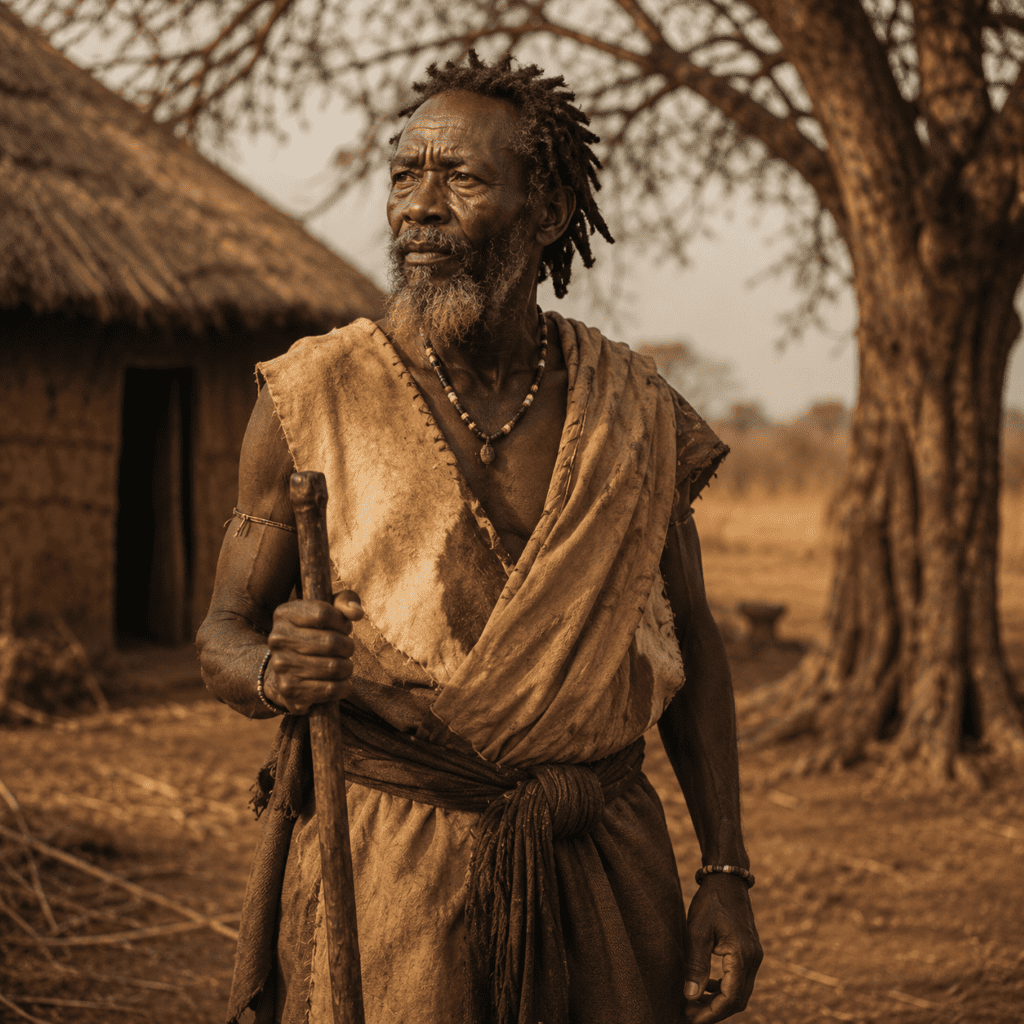
Very few reliable descriptions exist regarding the physical appearance of Mugo wa Kibiru. Kikuyu oral traditions focus far more on his spiritual authority and prophetic abilities than on bodily characteristics. Because of this, modern depictions of him are usually symbolic rather than historically verified.
Stories describe him as a calm and fearless figure who spent significant time in forests and sacred natural spaces. According to tradition, wild animals did not attack him, reinforcing the belief that he possessed spiritual protection from Ngai, the supreme deity in Kikuyu belief systems. These accounts helped shape his image as a man who existed close to the spiritual world.
In artistic representations today, Mugo wa Kibiru is often portrayed as an elderly sage with thoughtful eyes, traditional Kikuyu clothing, and a composed presence. These portrayals are based more on cultural imagination than historical evidence, yet they reflect how communities perceive him as a source of wisdom and spiritual insight.
The mystery surrounding his physical appearance has also contributed to his legendary status. Rather than being remembered for outward features, he is remembered for the visions and teachings that became attached to his name.
Family
The origins of Mugo wa Kibiru are surrounded by mystery. Oral traditions state that he was discovered alone in a forest by a hunter named Kibiru. The child’s biological parents were never identified, and stories rarely attempt to explain how he came to be abandoned in the wilderness.
Kibiru eventually adopted the boy into his household, giving him the name Cege wa Kibiru, meaning “Cege, son of Kibiru.” Through this adoption, the child became associated with the Anjiru clan, a Kikuyu clan traditionally linked with spiritual leadership, prophecy, and medicinal knowledge.
As he grew older, Cege developed a reputation for unusual wisdom and spiritual awareness. His connection to forests and sacred spaces strengthened local beliefs that he had been chosen by supernatural forces. Over time, he earned the title “Mugo,” which refers to a healer or medicine man within Kikuyu society.
Historical traditions do not provide reliable information regarding a wife, children, or descendants. Instead, the focus remains on his symbolic role as a spiritual guide for the wider community rather than as the founder of a family lineage.
Other names
Mugo wa Kibiru is known by several names in Kikuyu tradition, each reflecting a different stage of his life and identity. The name Cege is believed to have been his earliest known name before his spiritual reputation developed. After being adopted by Kibiru, he became known as Cege wa Kibiru, identifying him as the adopted son of the hunter who raised him.
The title Mugo wa Kibiru later became the most widely recognized form of his name. In the Kikuyu language, “Mugo” refers to a healer, diviner, or medicine man. This title acknowledged his role as both a spiritual adviser and a prophetic figure within the community.
Some traditions and written records also use the spelling Chege wa Kibiru. Although the spelling differs slightly, it refers to the same legendary prophet. Variations emerged because Kikuyu oral traditions were recorded differently by colonial writers, historians, and translators over time. Today, Mugo wa Kibiru remains the most common and culturally recognized version of his name across Kenyan historical discussions and folklore studies.
Powers and Abilities
The reputation of Mugo wa Kibiru is built primarily upon prophecy. Oral traditions credit him with foreseeing major political and cultural changes long before they occurred. His most famous prediction described the arrival of Europeans in Kenya. According to Kikuyu stories, he spoke of pale-skinned strangers wearing colorful clothing and carrying powerful weapons.
One of his best-known prophecies involved the construction of the Kenya-Uganda Railway. He reportedly described it as a giant “iron snake” stretching across the land with many legs. Later generations connected this image with the railway line built by the British during colonial expansion into East Africa.
Mugo wa Kibiru also warned about dramatic social transformations that would affect Kikuyu society. Stories attributed to him mention changing traditions, foreign customs, and conflicts over land ownership. These prophecies became especially significant during the colonial period when many Kikuyu communities lost ancestral territories to European settlers.
In addition to prophecy, he was respected as a healer and spiritual practitioner. As a mũndũ mũgo, he was believed to possess knowledge of herbal medicine, rituals, and spiritual healing techniques. Kikuyu traditions portray him as a mediator between humanity and divine wisdom.
Another enduring story concerns a sacred Mugumo fig tree near Thika. Tradition states that Mugo wa Kibiru predicted the tree would fall after colonial rule ended. Following Kenya’s independence in 1963, many people linked the eventual collapse of the tree with the fulfillment of his prophecy.
Modern Day Influence
Mugo wa Kibiru continues to influence Kenyan cultural memory and national identity today. His prophecies are frequently discussed in schools, documentaries, heritage projects, and cultural exhibitions focused on East African history.
Digital platforms such as Google Arts & Culture and Kenyan storytelling initiatives have helped preserve his legacy for younger generations. Through these projects, his life is presented not only as folklore but also as an important part of indigenous historical knowledge.
In modern Kenya, Mugo wa Kibiru is often viewed as a symbol of resistance against colonial domination. His warnings about foreign rule became especially meaningful during the Mau Mau movement, when many Kikuyu people fought against British colonial authorities. For some communities, his prophecies represented spiritual validation for the struggle for independence.
Environmental activists and cultural historians have also connected his legacy with the protection of sacred Mugumo trees and indigenous ecological traditions. Since sacred fig trees hold deep spiritual significance in Kikuyu belief systems, references to Mugo wa Kibiru are sometimes used in campaigns promoting environmental conservation and cultural preservation.
His story has additionally inspired literature, theatre, and online media focused on African spirituality and oral traditions. Even today, many Kenyans regard him as one of the greatest prophetic figures in their cultural history.
Related Images


Source
Google Arts & Culture. (2023). Mugo Wa Kibiru: The Seer (Kikuyu community) – Shujaa Stories. https://artsandculture.google.com/asset/mugo-wa-kibiru-the-seer-kikuyu-community-shujaa-stories/qgEnNW7tf2iuIA?hl=en
Shujaa Stories. (2019). Mugo wa Kibiru. https://shujaastories.org/stories/mugo-wa-kibiru/
Paukwa. (2024). Mugo – The Seer. https://www.paukwa.or.ke/story-series/shujaastories/mugo-the-great-seer/
Kinuthia, M. (1979). Urathi wa Cege wa Kibiru [Prophesy of Cege wa Kibiru]. Kenya Literature Bureau
Mathaga. (n.d.). URATHI WA CEGE WA KIBIRU by D. Kinuthia Mugia. https://www.mathaga.com/products/urathi-wa-cege-wa-kibiru-by-d-kinuthia-mugia
Urumwe. (n.d.). Kikuyu Medicine. https://urumwe.org/kikuyu-medicine/
Google Arts & Culture. (2023). Mugo wa Kibiru: The Story of the Kikuyu Prophet. https://artsandculture.google.com/story/EgWBt9mQGDKqJA
Kiki’s History Blog. (2023). The story of Cege wa Kibiru. https://kikishistory.blogspot.com/2023/02/the-story-of-cege-wa-kibiru.html
Frequently Asked Questions
Who was Mugo wa Kibiru?
Mugo wa Kibiru was a legendary Kikuyu prophet and healer from Kenya known for prophecies about colonialism and the railway.
What did Mugo wa Kibiru predict?
He reportedly predicted European arrival, the Kenya-Uganda Railway, and major social changes in Kikuyu society.
What does “Mugo” mean in Kikuyu?
“Mugo” refers to a healer, diviner, or spiritual medicine man in Kikuyu culture.
Was Mugo wa Kibiru a real person?
Most historians believe he was likely based on a real spiritual figure preserved through Kikuyu oral traditions.
Why is Mugo wa Kibiru important today?
He remains important as a symbol of indigenous wisdom, cultural memory, and resistance to colonial rule in Kenya.