

Tsui-Goab : The Khoikhoi God of Dawn and Storms
At a glance
| Description | |
|---|---|
| Origin | Khoikhoi Mythology |
| Classification | Gods |
| Family Members | N/A |
| Region | Namibia and South Africa |
| Associated With | Creation, Rain, Thunder, Lightning, Dawn, Healing, Fertility, Protection |
The Mythlok Perspective
In Mythlok’s Perspective, Tsui-Goab stands out as a deeply human divine figure because his power is inseparable from struggle and endurance. Unlike distant creator gods who rule from perfection, he carries wounds that symbolize sacrifice and persistence. His mythology reflects how the Khoikhoi understood survival in a difficult environment where rain, health, and balance determined life itself. The battle between Tsui-Goab and Gaunab is not simply about good versus evil, but about maintaining harmony against forces of chaos and death. Similar themes appear in figures like the Egyptian god Ra battling darkness each night or the Norse god Odin sacrificing himself for wisdom. Across cultures, wounded creator figures often become symbols of resilience, and Tsui-Goab embodies this idea through the lens of Khoikhoi spirituality.
Tsui-Goab
Introduction
Tsui-Goab is one of the most important divine figures in Khoikhoi tradition, revered as the supreme creator and protector of the Khoekhoe people of southern Africa. The Khoikhoi, also called Khoekhoe, are indigenous pastoral communities historically associated with present-day Namibia and South Africa. Within their spiritual worldview, Tsui-Goab represents life, renewal, rain, health, and the eternal victory of light over darkness.
The name Tsui-Goab is most commonly translated as “Wounded Knee,” a reference to the injury he received during his legendary conflict with Gaunab, the destructive force associated with darkness, death, and suffering. Some scholars, however, argue that the name may originally have referred to the “Red Dawn,” connecting him more directly with sunrise and the first light of morning. Both interpretations remain important because they reflect different aspects of his identity. He is both a wounded divine warrior and a bringer of light.
In Khoikhoi cosmology, Tsui-Goab is not a distant or passive creator. He is deeply connected to the natural world and to the survival of the people. Rainstorms, thunder, fertile grazing lands, and healing were all believed to emerge through his power. Communities often prayed to him during droughts or hardship, especially in the early morning while facing east toward the rising sun.
Unlike many mythological creator gods who remain detached after shaping the world, Tsui-Goab continues to actively defend humanity against destructive forces. His mythology reflects the realities of life in southern Africa, where survival depended on balance between nature, weather, cattle, and community. Through these stories, Tsui-Goab became more than a deity. He became a symbol of endurance, protection, and hope.
Physical Traits
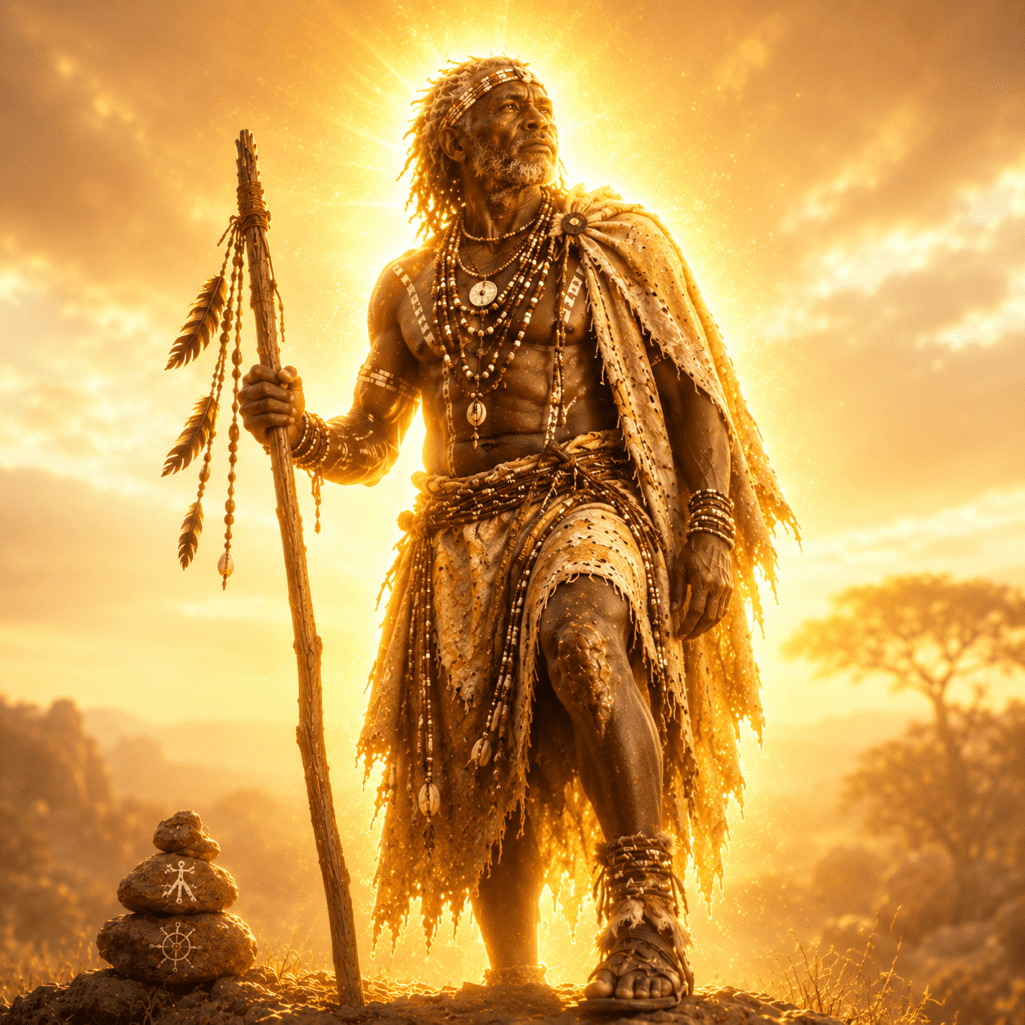
Tsui-Goab is most famously associated with his injured knee, which gives him a permanent limp. According to Khoikhoi oral tradition, this wound was inflicted during his great battle against Gaunab. Even after defeating the spirit of darkness, the injury remained, forever marking him as a god who suffered in order to protect humanity.
This physical imperfection carries symbolic meaning. Rather than portraying divinity as flawless, Khoikhoi mythology presents Tsui-Goab as a powerful being who bears the scars of conflict and sacrifice. His wounded leg represents survival through hardship and resilience against destructive forces.
In some traditions, Tsui-Goab is described as an ancient chief or powerful healer who later became deified. Certain stories identify him with a legendary medicine man named U-tixo, a wise elder with supernatural abilities and a damaged knee. Over time, the figure evolved from a heroic ancestor into a supreme spiritual being.
The moon is also closely connected with Tsui-Goab. Some Khoikhoi traditions describe it as his visible manifestation in the sky, linking him with cycles of renewal, rebirth, and cosmic order. His association with dawn, moonlight, storms, and heavenly light reinforces his role as a celestial guardian who governs both the sky and the rhythms of nature.
Family
Khoikhoi mythology does not describe Tsui-Goab as part of a large divine family in the way seen in Greek or Norse traditions. Instead, his mythology focuses primarily on his cosmic rivalry with Gaunab, the spirit associated with darkness, death, sickness, and misfortune.
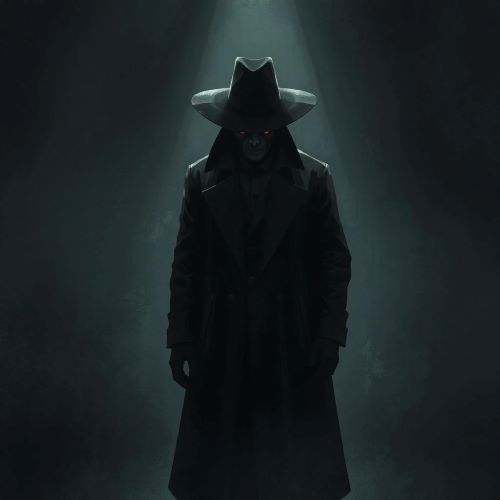
Gaunab serves as Tsui-Goab’s direct opposite. While Tsui-Goab lives in a bright heavenly realm associated with life and abundance, Gaunab dwells in a dark and isolated region often described as the “Black Sky.” Their struggle represents the eternal conflict between life and death, dawn and night, hope and despair.
Another major figure connected to Tsui-Goab is Heitsi-eibib, a heroic being found throughout Khoikhoi folklore. Heitsi-eibib is remembered as a hunter, magician, warrior, and trickster figure capable of resurrection and supernatural feats. In some regional traditions, Tsui-Goab and Heitsi-eibib are treated as separate figures, while in others they appear closely connected or even interchangeable.
This fluid relationship reflects the oral nature of Khoikhoi mythology, where stories changed between regions and generations. Rather than presenting rigid genealogies, these traditions focused more on spiritual roles, symbolic meaning, and lessons about survival and balance.
Other names
Tsui-Goab appears under several different names and spellings across Khoikhoi and broader Khoisan traditions. These variations developed through regional dialects, colonial spellings, and oral transmission over centuries.
The most common forms include Tsũi-||Goab, Tsui-Goab, Tsui-Goub, and Tsuni-Goam. Among the Nama people, he is sometimes referred to as “The Good One” because of his role as a benevolent creator and protector.
The name Utixo also became associated with him in some southern African traditions, especially through early interactions between Khoikhoi spirituality and neighboring cultures. Certain scholars believe this name originally referred to a legendary healer or ancestral chief before becoming connected to the supreme deity.
Some researchers have also linked Tsui-Goab with wider Khoisan spiritual figures such as Kaang or Kaggen, though these identifications remain debated. Because Khoisan belief systems varied widely across regions, similarities between divine figures do not always mean they were originally the same being. Despite the different names, the central image remains consistent. Tsui-Goab is remembered as a celestial force connected to creation, protection, rain, and the triumph of light.
Powers and Abilities
Tsui-Goab possesses many powers that establish him as the supreme spiritual force within Khoikhoi mythology. His abilities are closely tied to nature, survival, healing, and cosmic balance. As the creator deity, he is credited with shaping the world, humanity, and the natural elements. Some oral traditions describe him creating landscapes, animals, rivers, and the forces necessary for life. This role made him the foundation of existence itself within Khoikhoi belief.
Rain and fertility are among his most important domains. In the harsh environments of southern Africa, rainfall determined whether communities and livestock could survive. Because of this, Tsui-Goab became deeply associated with clouds, thunder, and nourishing storms. During approaching thunderstorms, Khoikhoi communities traditionally sang prayers and hymns asking for his blessing.
He is also connected to thunder and lightning, which were viewed as visible signs of divine power in the sky. Storms symbolized both destruction and renewal, reinforcing his role as a god capable of both judgment and protection.
Another significant aspect of Tsui-Goab is healing. He was invoked for protection against illness, suffering, and spiritual harm. Some traditions describe him as capable of resurrection, returning from death multiple times after battles or trials. These stories strengthened his image as a force that could overcome destruction itself.
His battle against Gaunab further highlights his role as a divine warrior. Though repeatedly thrown down and wounded, Tsui-Goab continued to rise and fight with greater strength until darkness was driven away. This myth became a powerful metaphor for endurance and perseverance in Khoikhoi culture.
Modern Day Influence
Tsui-Goab continues to hold cultural and symbolic importance among Khoisan communities today. Although colonialism, migration, and religious conversion transformed many traditional practices, stories about Tsui-Goab remain part of cultural memory in Namibia and South Africa.
Modern Khoisan cultural revival movements often view Tsui-Goab as a symbol of indigenous identity and spiritual resilience. His mythology represents a connection to ancestral traditions and to the relationship between humanity and the natural world.
The themes found in his myths continue to resonate in contemporary discussions about survival, environmental balance, and cultural preservation. His role as a rain-bringer and protector reflects the enduring importance of land, water, and ecological harmony in southern African life.
Scholars and historians also continue to study Tsui-Goab as one of the most significant divine figures in indigenous African cosmology. Early ethnographers recorded many oral traditions connected to him, helping preserve stories that might otherwise have disappeared during colonial disruption. Today, Tsui-Goab stands as more than a mythological figure. He remains a spiritual symbol of resilience, light, healing, and the enduring strength of Khoikhoi cultural heritage.
Related Images

Source
Hahn, T. (1881). Tsuni-//Goam: The supreme being of the Khoi-khoi. Trübner & Co.
Mythopedia. (2023, September 24). Tsũi-||goab. https://mythopedia.com/topics/tsui-or-or-goab
Gateway Africa. (n.d.). Hottentot deities: African superstitions and stories. https://www.gateway-africa.com/stories/Hottentot_Deities.html
Religion Wiki. (2007). Khoikhoi mythology. https://religion.fandom.com/wiki/Khoikhoi_mythology
Wikipedia. (2021, April 6). Heitsi-eibib. https://en.wikipedia.org/wiki/Heitsi-eibib
Wikipedia. (2021, February 13). Gaunab. https://en.wikipedia.org/wiki/Gaunab
GodChecker. (2023, June 15). TSUI-GOAB – the Xhosa and Khoikhoi God of Creation. https://www.godchecker.com/african-mythology/TSUI-GOAB/
Van Reeth, A. (1994). Encyclopedie van de Mythologie. Tirion, Baarn.
Frequently Asked Questions
Who is Tsui-Goab in Khoikhoi mythology?
Tsui-Goab is the supreme creator deity of Khoikhoi tradition, associated with rain, dawn, thunder, healing, and protection.
What does the name Tsui-Goab mean?
The name is usually translated as “Wounded Knee,” though some scholars interpret it as “Red Dawn.”
Who is Gaunab in Khoikhoi mythology?
Gaunab is the spirit of darkness, death, and destruction who serves as the enemy of Tsui-Goab.
What powers does Tsui-Goab have?
Tsui-Goab controls rain, storms, fertility, healing, creation, and the victory of light over darkness.
Is Tsui-Goab still important today?
Yes. Tsui-Goab remains an important cultural and spiritual symbol among Khoisan communities in southern Africa.
