

Tungkung Langit : The Sky Creator of Visayan Tradition
At a glance
| Description | |
|---|---|
| Origin | Philippine Mythology |
| Classification | Gods |
| Family Members | Alunsina (Wife) |
| Region | Philippines |
| Associated With | Creation, Sky, Order, Weather, |
The Mythlok Perspective
In Mythlok’s Perspective, Tungkung Langit is not merely a creator but a symbol of structured existence shaped by emotional loss. His story mirrors a universal theme where order emerges from separation rather than unity. Unlike figures such as Brahma in Indian tradition who creates through intention, or Zeus in Greek belief who rules through authority, Tungkung Langit creates through grief. This places him closer to cosmic archetypes where emotion itself becomes a force of creation, bridging the human and the divine.
Tungkung Langit
Introduction
Tungkung Langit stands as one of the most compelling creator figures in Philippine tradition, particularly among the Suludnon people of Panay in the Visayas. His name, often translated as “Pillar of Heaven,” reflects not just a title, but a cosmic responsibility. He is remembered as the force that transformed a shapeless, chaotic universe into a structured and living world.
This creation story, preserved and popularised through the work of anthropologist F. Landa Jocano, presents Tungkung Langit as a disciplined and purposeful deity. In contrast to the disorder that existed before him, he represents stability, structure, and intention. The myth also introduces Alunsina, his consort, whose presence—and eventual absence—plays a crucial role in shaping the natural world.
More than just a creation narrative, the story of Tungkung Langit reflects deeper cultural themes. It explores balance between order and emotion, the consequences of conflict, and the idea that even divine beings experience loss. Through this, the myth becomes not just an origin story, but a reflection of human experience projected onto the cosmos.
Physical Traits
Unlike many mythological figures across the world, Tungkung Langit is not described in vivid physical detail. Philippine oral traditions often prioritise function and symbolism over appearance, and this is clearly the case here. He is understood less as a figure with defined features and more as a presence that embodies cosmic order.
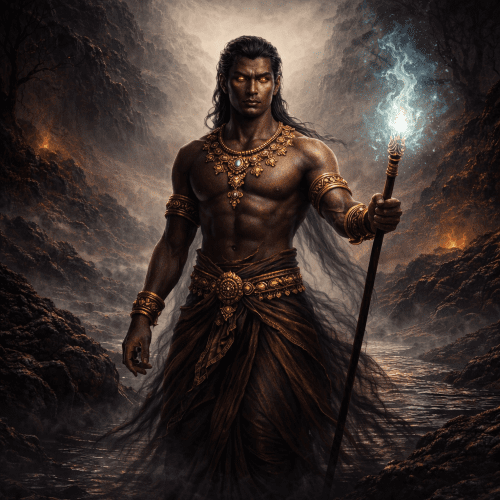
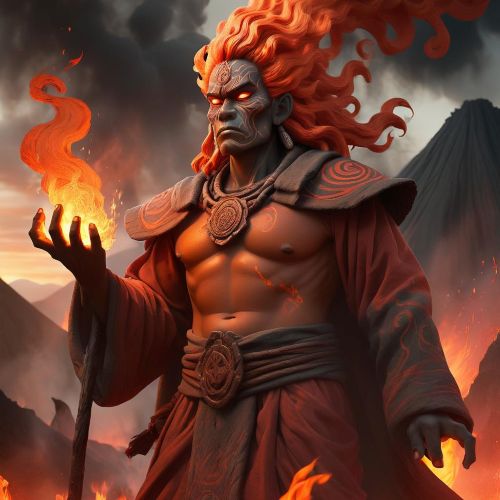
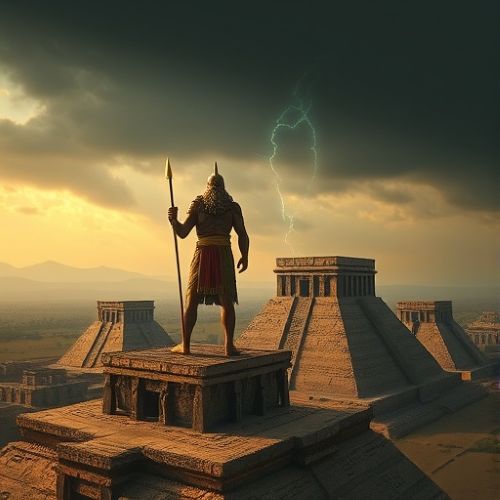
However, in some regional interpretations, a figure bearing the same name is described as immense and towering, tasked with physically supporting the sky. This version portrays Tungkung Langit as a being of extraordinary scale and strength, reinforcing the idea of him as a stabilising force within the universe.
Rather than focusing on facial features or attire, the imagery surrounding Tungkung Langit is conceptual. He is the sky itself, the structure that holds existence together. His “form” is better understood through his actions—organising chaos, separating elements, and maintaining balance in the world.
Family
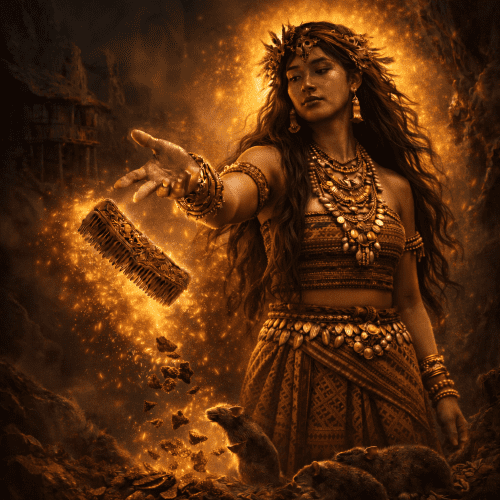
At the centre of Tungkung Langit’s story is his relationship with Alunsina, the goddess of the eastern skies. Their union begins with harmony, representing a balance between discipline and emotion. Tungkung Langit is often portrayed as diligent and focused, while Alunsina embodies beauty, freedom, and unpredictability.
Over time, this contrast leads to conflict. Alunsina’s growing jealousy and dissatisfaction disrupt the balance between them, eventually resulting in her departure. This moment becomes the emotional turning point of the myth. Left alone, Tungkung Langit is consumed by grief and longing.
Unlike many mythologies, there are no children attributed to their union in the core narrative. Instead, creation itself becomes the outcome of their separation. The world, in many ways, is shaped not by harmony, but by loss.
In separate traditions, another figure named Tungkung Langit appears as a lesser deity connected to other gods such as Panlinugon, the deity associated with earthquakes. However, this version is generally considered distinct from the creator deity of the Suludnon narrative.
Other names
Tungkung Langit does not have a wide range of alternative names or titles across traditions. His identity remains strongly tied to his primary name, which itself carries deep meaning.
The phrase “Tungkung Langit” translates directly to “Pillar of Heaven,” a description that encapsulates his role in maintaining cosmic stability. Rather than needing multiple titles, his name alone serves as both identity and function.
This simplicity reflects a broader characteristic of many indigenous Philippine traditions, where names are often descriptive and directly linked to a deity’s role within the universe.
Powers and Abilities
Tungkung Langit’s most defining ability is his power to bring order out of chaos. At the beginning of the myth, the universe exists as a formless mixture of sky, sea, and earth. There is no separation, no rhythm, and no structure. Tungkung Langit changes this.
He separates the elements, giving each its place. He forms the earth and the sea, then fills the land with life by planting trees and vegetation. He also establishes the movement of celestial bodies, creating a sense of time and continuity.
One of the most poetic aspects of his power comes after Alunsina’s departure. In his grief, he scatters her belongings across the sky. Her jewels become stars, her comb transforms into the moon, and her crown becomes the sun. These acts are not just creative—they are deeply emotional, turning loss into permanence.
His connection to natural phenomena extends further. Rain is said to be his tears, while thunder is the sound of his voice calling out for Alunsina. Through this, the environment itself becomes a reflection of divine emotion.
In some interpretations, the “Pillar of Heaven” aspect of Tungkung Langit also suggests immense physical strength, as he is believed to hold the sky in place. Whether symbolic or literal, this reinforces his role as a guardian of cosmic balance.
Modern Day Influence
The story of Tungkung Langit continues to hold relevance in modern Filipino culture. It is widely taught in schools as part of literature and cultural studies, serving as an entry point into pre-colonial belief systems.
In contemporary storytelling, the myth has been reinterpreted in various ways. Some adaptations focus on Alunsina, presenting her not as a passive figure but as a powerful force in her own right. These retellings reflect evolving perspectives on gender and agency.
The narrative also appears in theatre, digital media, and cultural discussions, where it is often used to explore themes of balance, responsibility, and emotional consequence. It resonates particularly well in modern contexts because of its deeply human elements—love, conflict, regret, and longing.
Beyond storytelling, Tungkung Langit has become a symbol of cultural identity. His myth represents a connection to indigenous heritage, reminding audiences of a time when the natural world and the divine were seen as deeply intertwined.
Related Images




Source
Aswang Project. (2022, June 2). Tungkung Langit & Alunsina | The ‘Other’ Visayan creation myth. https://www.aswangproject.com/tungkung-langit-alunsina/
Jocano, F. L. (1969). Outline of Philippine mythology. Centro Escolar University Research and Development Center.
Vizayan Myths. (2013, May 17). Tungkung Langit profile. http://vizayanmyths.blogspot.com/2013/05/tungkung-langit-profile.html
Loarca, M. de. (1582). Relacion de las Yslas Filipinas.
Miller, J. M. (1904). Philippine folklore stories. Ginn and Company.
Ramos, M. D. (1971). Creatures of Philippine lower mythology. University of the Philippines Press.
Jocano, F. L. (1968). Philippine mythology. Manila: Capitol Publishing House.
Frequently Asked Questions
Who is Tungkung Langit in Philippine tradition?
Tungkung Langit is a creator deity from the Visayan region, believed to have brought order to the universe and shaped the natural world.
What does Tungkung Langit mean?
His name translates to “Pillar of Heaven,” symbolising his role in maintaining cosmic stability.
Who is Alunsina in relation to Tungkung Langit?
Alunsina is his consort, whose departure plays a central role in the creation of celestial bodies and natural phenomena.
How did Tungkung Langit create the world?
He separated the chaotic elements of the universe, formed land and sea, and later created the sun, moon, and stars from Alunsina’s belongings.
Why is Tungkung Langit associated with rain and thunder?
Rain is believed to be his tears, while thunder represents his voice calling out in longing for Alunsina.