

Sumpoy : The Underworld Guide of Visayan Belief
At a glance
| Description | |
|---|---|
| Origin | Philippine Mythology |
| Classification | Gods |
| Family Members | Magyan, Sisiburanen |
| Region | Philippines |
| Associated With | Soul guidance, Underworld, Afterlife |
The Mythlok Perspective
In Mythlok’s Perspective, Sumpoy represents a rarely discussed archetype in global belief systems: the silent transporter rather than the judge or ruler of the dead. Unlike figures who command fear through authority, he embodies inevitability through function. In Greek tradition, Hermes guides souls, while in Indian belief, Yamadutas serve a similar role under Yama. Sumpoy aligns more closely with these intermediaries, highlighting a universal structure where death is not ruled by one power, but managed through a chain of cosmic responsibility.
Sumpoy
Introduction
Sumpoy stands as one of the more obscure yet intriguing figures in Philippine belief systems, particularly within the Visayan cosmological framework. Unlike widely known deities who govern creation, war, or nature, Sumpoy occupies a quieter but deeply significant role connected to death and the journey of the soul. Early colonial records and later mythographic reconstructions describe him not as a supreme ruler, but as an essential intermediary in the afterlife process.
In Visayan understanding, death was not an end but a transition through multiple stages. Souls did not simply vanish or immediately reach a final destination. Instead, they passed through a structured journey involving several deities. Sumpoy emerges within this system as a guide who receives souls after their initial passage and leads them deeper into the underworld. This role places him within a category similar to psychopomp figures found in many cultures, reinforcing the idea that ancient Filipinos viewed death as an organized and purposeful transition rather than chaos.
Much of what is known about Sumpoy today comes from Spanish-era documentation and later scholarly interpretations, as indigenous oral traditions were rarely preserved in written form.
Physical Traits
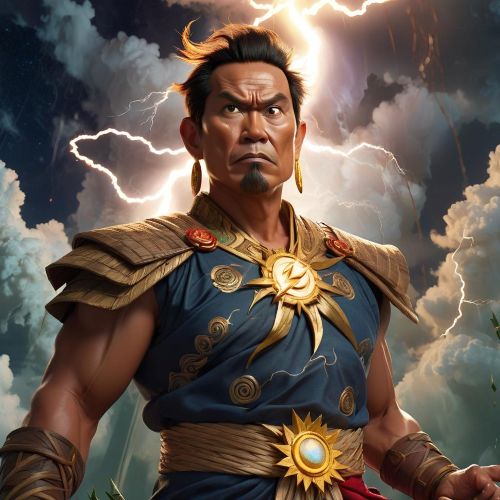
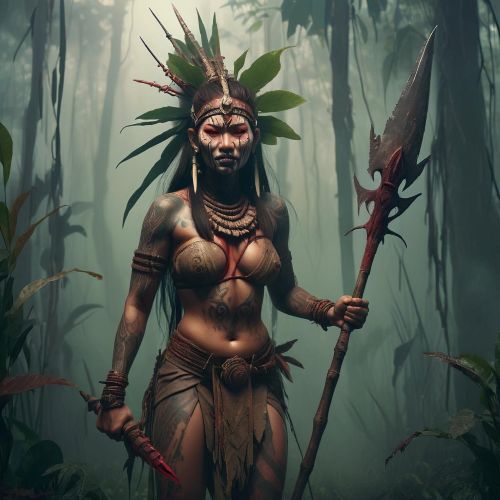
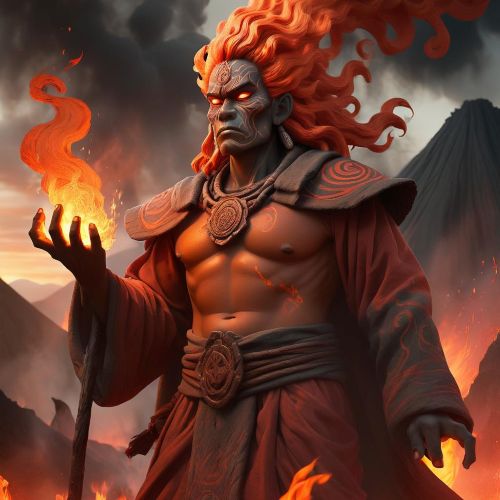
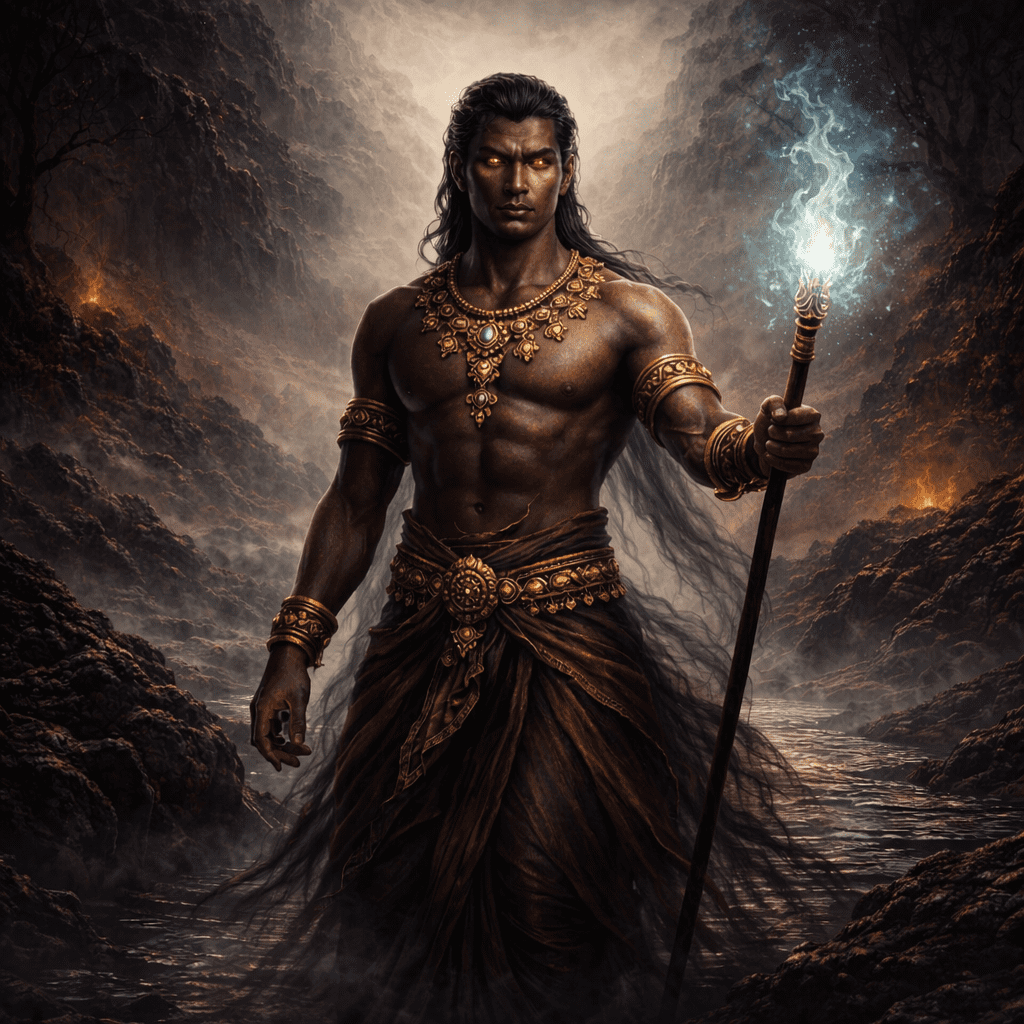
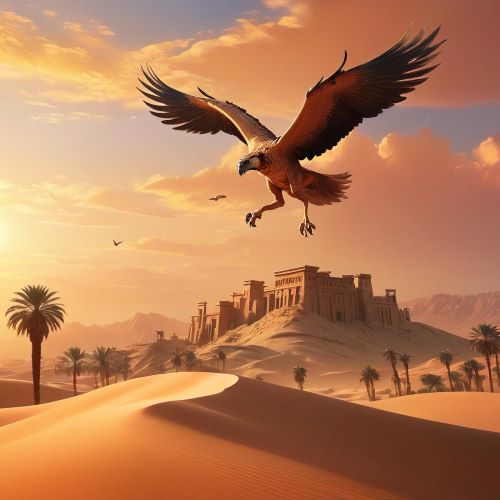
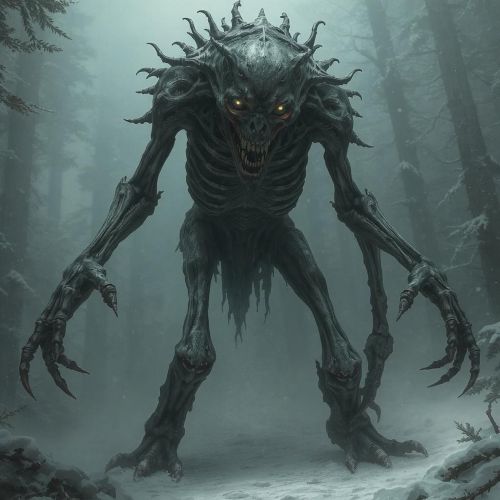
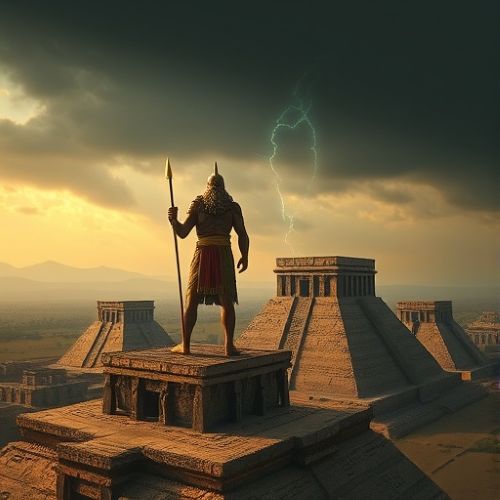
There are no historically verified descriptions of Sumpoy’s physical appearance. Unlike many mythological beings who are vividly described in texts or depicted in art, Sumpoy exists primarily as a functional presence rather than a visual one.
This absence is not unusual in early Visayan belief systems. Many deities were understood through their roles and influence rather than their physical form. Modern depictions that portray Sumpoy as shadowy, fiery, or fearsome are creative interpretations rather than evidence-based reconstructions. These artistic liberties often reflect his association with the underworld and the unknown, but they should not be mistaken for authentic traditional descriptions.
Family
Sumpoy is most often associated with a small network of underworld-related deities in Visayan belief. He is linked closely with Magyan (or Maguayen), the figure responsible for transporting souls across the boundary between the living world and the realm of the dead.
In reconstructed narratives, Magyan carries souls by boat to an underworld region, after which Sumpoy takes over. From there, he delivers these souls to a deeper domain governed by another entity, often identified as Sisiburanen.
Some modern interpretations describe Sumpoy and Magyan as siblings, though this relationship is not explicitly confirmed in early primary accounts. Rather than focusing on familial hierarchy, the system emphasizes functional cooperation. Each deity plays a specific role in a sequence, ensuring the orderly transition of souls. This structure reflects a broader cosmological principle: balance and continuity. No single deity controls the entire afterlife. Instead, it operates as a process involving multiple forces working together.
Other names
Sumpoy is consistently referred to by this name in both early colonial writings and later academic compilations. There are no widely accepted alternative names, titles, or regional variants associated with him.
This consistency suggests that his identity remained relatively stable in the surviving records. Unlike other figures who evolved or merged with different traditions over time, Sumpoy appears to have retained a singular identity, though limited in scope and narrative presence. The absence of multiple names may also indicate that his role was specialized and not widely mythologized through storytelling or ritual, which often leads to the development of alternate titles.
Powers and Abilities
Sumpoy’s power is rooted entirely in his role within the afterlife system. He is not portrayed as a creator, warrior, or judge. Instead, his significance lies in his function as a guide of souls. He operates within the realm often identified as Kasakitan, a domain associated with suffering or the underworld. His primary responsibility is to receive souls after they are transported by Magyan and escort them to their next destination, typically under the authority of Sisiburanen.
Unlike figures who determine the fate of souls, Sumpoy does not judge or punish. He does not decide who is worthy or unworthy. His role is transitional rather than authoritative. This distinction is important because it shows that the Visayan afterlife system separated the act of judgment from the act of guidance. In this sense, Sumpoy embodies inevitability. Every soul that enters his domain must move forward. He ensures that the journey continues, maintaining the flow between worlds.
Modern Day Influence
Sumpoy does not enjoy the same cultural visibility as other figures in Philippine folklore. He rarely appears in mainstream media, literature, or popular storytelling. However, his importance has grown within academic and cultural revival contexts.
As interest in indigenous Philippine belief systems increases, scholars and cultural advocates have begun revisiting lesser-known figures like Sumpoy. His role provides valuable insight into how early Filipinos conceptualized death, morality, and the structure of the cosmos.
In educational settings, Sumpoy is often mentioned as part of broader discussions on Visayan mythology. His presence helps illustrate the complexity of pre-colonial spiritual systems, which were far more structured than commonly assumed.
Although he is not widely represented in films or games, Sumpoy holds symbolic relevance in discussions about identity, heritage, and the preservation of indigenous narratives. His story, though minimal, contributes to a larger understanding of how ancient societies approached one of humanity’s most universal questions: what happens after death.
Related Images

Source
De Loarca, M. (1582). Relación de las Yslas Filipinas [Excerpts on Bisayan deities]. In The Bisayan deities: Who were the gods & goddesses? The Pinay Writer. https://thepinaywriter.com/the-bisayan-deities-who-were-the-gods-goddesses/
Jocano, F. L. (1969). Outline of Philippine mythology. Manila: Centro Escolar University Research and Development Center.
Pantheon World. (2008, March 17). Sumpoy | Facts, information, and mythology. https://pantheon.org/articles/s/sumpoy.html
Aswang Project. (2022, June 1). Download Karl Gaverza’s incredible Philippine mythology thesis.
https://www.aswangproject.com/download-karl-gaverzas-incredible-philippine-mythology-thesis/
Fandom. (2003, December 31). Philippine mythology. In Religion Wiki. https://religion.fandom.com/wiki/Philippine_mythology
Eugenio, D. L. (1993). Philippine Folk Literature: The Myths. Quezon City: University of the Philippines Press.
Demetrio, F. R. (1992). The Soul Book: Introduction to Philippine Pagan Religion. Quezon City: GCF Books.
Scott, W. H. (1994). Barangay: Sixteenth-Century Philippine Culture and Society. Quezon City: Ateneo de Manila University Press.
Frequently Asked Questions
Who is Sumpoy in Philippine belief?
Sumpoy is an underworld-associated deity in Visayan tradition who guides souls deeper into the afterlife after their initial journey from the living world.
Is Sumpoy a god of death?
No, Sumpoy is not a god of death or judgment. He functions as a guide who transports souls rather than deciding their fate.
What is Sumpoy’s role in the afterlife?
He receives souls from Magyan and leads them to the next realm, often associated with Sisiburanen’s domain.
Does Sumpoy have a physical form?
There are no historical descriptions of his appearance. Most modern visuals are artistic interpretations.
Is Sumpoy still worshipped today?
Sumpoy is not actively worshipped but is studied and discussed as part of Philippine cultural and mythological heritage.