Angrboda : The Mother Behind Ragnarök’s Monsters
At a glance
| Description | |
|---|---|
| Origin | Norse Mythology |
| Classification | Hybrids |
| Family Members | Loki (Husband), Fenrir, Jörmungandr, Hel (Children) |
| Region | Norway, Iceland |
| Associated With | Chaos, Fate, Sorrow, Motherhood, |
The Mythlok Perspective
In Mythlok’s Perspective, Angrboda is not merely a mother of monsters but a representation of nature’s silent inevitability. She exists at the edge of order, where creation and destruction are inseparable. Her role mirrors figures like Kali in Indian tradition, who embodies both creation and annihilation, and Echidna in Greek lore, the mother of monsters. Across cultures, such figures reveal a shared understanding that chaos is not external to the cosmos but born within it, waiting for its moment to emerge.
Angrboda
Introduction
Angrboda (Old Norse: Angrboða), often translated as “she who brings grief” or “harbinger of sorrow,” is one of the most enigmatic figures in Norse tradition. She is identified as a jötunn, a giantess associated with the wild and untamed forces that exist beyond the control of the gods. Her story survives in fragmentary form within the Poetic Edda and Prose Edda, where she is primarily remembered as the consort of Loki and the mother of three beings whose destinies shape Ragnarök.
Unlike many mythic figures with detailed narratives, Angrboda exists more as a presence than a character. Her role is subtle but powerful. She represents the inevitability of chaos, the quiet origins of destruction, and the unseen forces that eventually overturn even divine order. Through her children, she becomes one of the most consequential figures in Norse cosmology, despite her limited direct appearances in surviving texts.
Physical Traits
The early Norse sources offer no concrete description of Angrboda’s appearance. This absence is significant because it reflects how giants were often understood—not as individuals defined by physical detail, but as embodiments of primal forces. As a jötunn, Angrboda would have been perceived as powerful, imposing, and deeply connected to the natural and supernatural worlds beyond human control.
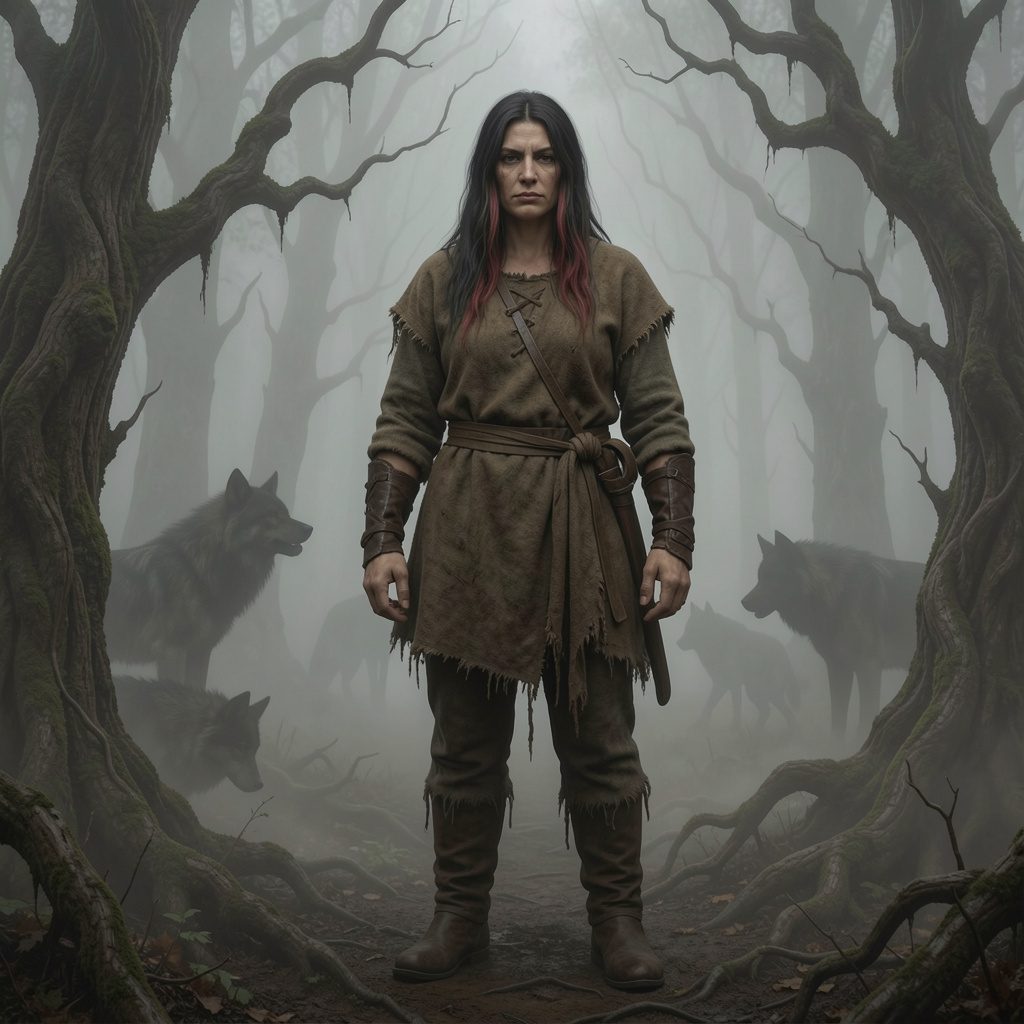
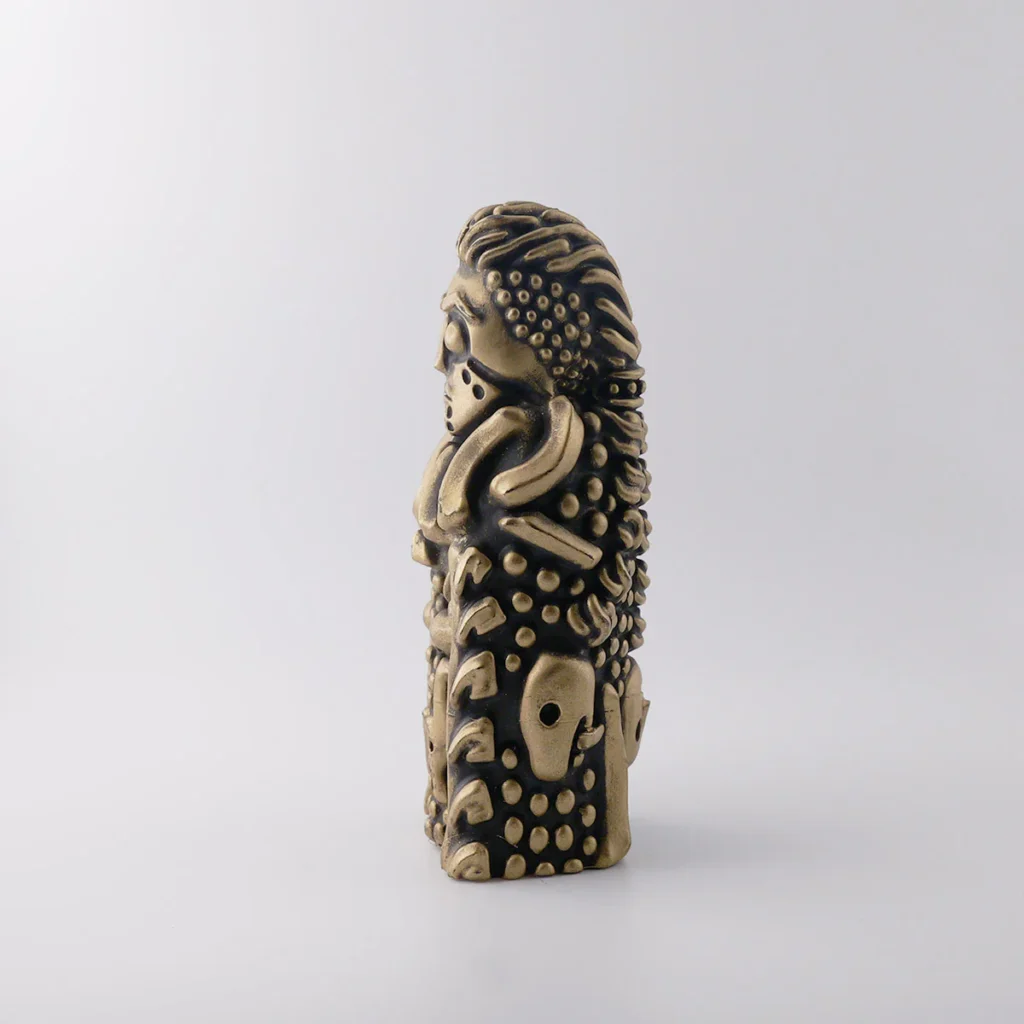
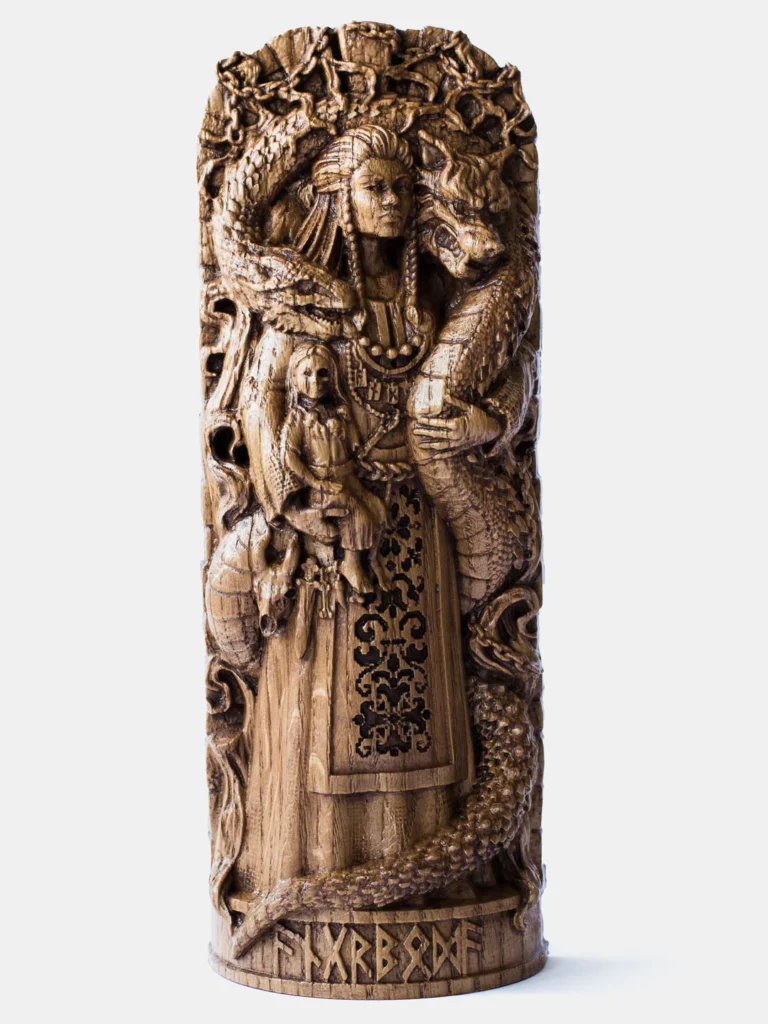
Later interpretations frequently imagine her as a tall and formidable woman, sometimes associated with the wilderness of Jötunheimr or the dark forests of Ironwood (Járnviðr). However, these visualizations are modern extrapolations rather than details drawn from the original texts.
Her ambiguity enhances her mythological role. Instead of being defined by appearance, Angrboda is defined by what she represents—hidden strength, ancient knowledge, and the quiet gestation of forces that will eventually reshape the cosmos.
Family
Angrboda’s importance in Norse mythology is inseparable from her role as a mother. She is the consort of Loki, the trickster figure who moves between the worlds of gods and giants. Together, they produce three children whose destinies are central to the apocalyptic events of Ragnarök.
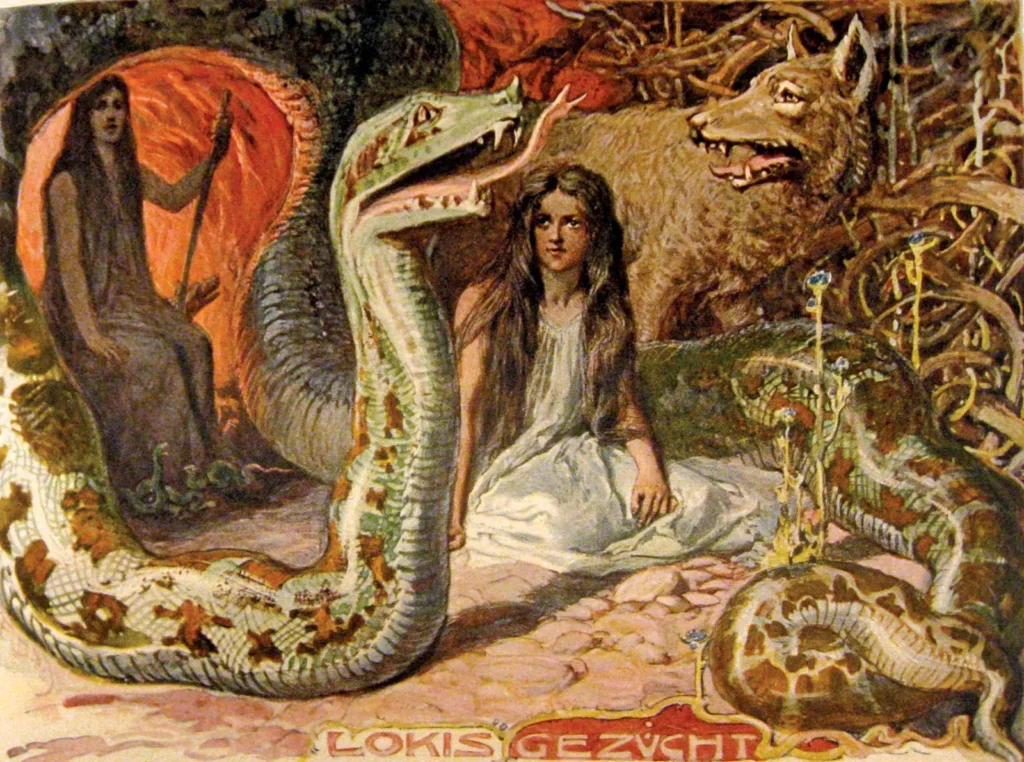
Fenrir, the monstrous wolf, is foretold to break free from his bonds and kill Odin during the final battle. Jörmungandr, the Midgard Serpent, grows so vast that it encircles the world and ultimately confronts Thor in a fatal encounter. Hel, their daughter, becomes the ruler of the realm of the dead, presiding over those who do not fall in battle.
The gods, aware of the danger these children pose, attempt to control their fate. Jörmungandr is cast into the ocean, Hel is sent to rule over Niflheim, and Fenrir is bound with a magical chain. These actions reflect the fear Angrboda’s lineage inspires among the gods, as her offspring embody forces that cannot be permanently contained.
Other names
Angrboda’s name itself carries her primary identity. Derived from Old Norse, “angr” refers to grief or sorrow, while “boða” means to announce or foretell. Together, the name suggests someone who brings or heralds misfortune. There are minor variations in spelling, such as Angerboda or Angrboða, depending on transliteration. However, unlike many mythological figures, she does not possess a wide range of alternative names or titles in early sources.
Some later interpretations and modern retellings assign descriptive epithets such as “Mother of Monsters” or associate her with the Ironwood, but these are interpretive rather than canonical. The consistency of her name across sources reinforces the clarity of her symbolic role—she is the bearer of inevitable sorrow within the cosmic cycle.
Powers and Abilities
The surviving Norse texts do not explicitly describe Angrboda wielding magic or engaging in battle. Her power is more abstract but no less significant. She is the origin point of beings whose strength surpasses even the gods, suggesting that her influence lies in creation rather than direct action.
As a jötunn, she belongs to a class of beings often associated with primordial forces such as chaos, nature, and destiny. Her union with Loki produces entities that represent destruction on a cosmic scale, linking her to the unfolding of fate itself.
Some later traditions and modern adaptations portray her as a seeress or practitioner of magic, sometimes connected to Ironwood and prophetic knowledge. While these ideas align with broader themes in Norse mythology, they are not explicitly supported by the earliest sources. Her true “ability” is symbolic. She embodies inevitability—the idea that even the gods cannot prevent the rise of forces destined to challenge and ultimately destroy them.
Modern Day Influence
Angrboda has gained increasing attention in modern storytelling, where creators expand on her limited mythological presence. In literature, she is often reimagined as a central character, particularly in works that explore her perspective as a mother and outsider.
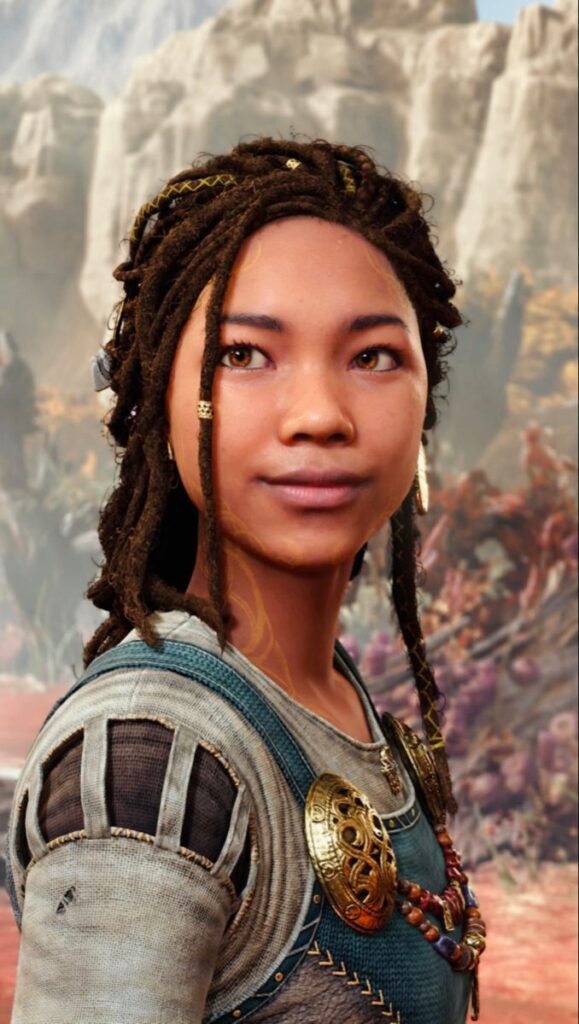
In popular media, she appears in comic books, fantasy novels, and video games. Marvel Comics depicts her with enhanced abilities such as shapeshifting and superhuman strength, while the video game God of War: Ragnarök presents her as a young giant with prophetic insight and a more emotionally grounded narrative role.
Scholarly interest in Angrboda has also grown, particularly in discussions of feminine power, motherhood, and the role of marginal figures in myth. She is increasingly interpreted as a symbol of hidden influence—someone whose impact is not immediately visible but becomes undeniable over time. Through these reinterpretations, Angrboda continues to evolve, reflecting contemporary interests while remaining rooted in her original identity as a quiet yet pivotal force in Norse cosmology.
Related Images
Mythical Events
Source
Lindow, J. (2002). Norse mythology: A guide to the gods, heroes, rituals, and beliefs. Oxford University Press.
Orchard, A. (1997). Dictionary of Norse myth and legend. Cassell.
Snorri Sturluson. (1987). The Prose Edda (A. Faulkes, Trans.). Everyman.
Unknown. (1270). Poetic Edda (Völuspá hin skamma). In Codex Regius.
Simek, R. (2007). Dictionary of Northern Mythology. D.S. Brewer.
Byock, J. (2005). Grettir’s saga. Oxford University Press.
Neil Gaiman. (2017). Norse mythology. W.W. Norton & Company.
Wikipedia contributors. (2026). Angrboða. In Wikipedia. Retrieved from https://en.wikipedia.org/wiki/Angrboða
Britannica. (2026). Angerboda Norse mythology. Retrieved from https://www.britannica.com/topic/Angerboda
Frequently Asked Questions
Who is Angrboda in Norse mythology?
Angrboda is a giantess associated with Loki and known as the mother of Fenrir, Jörmungandr, and Hel, all of whom play major roles in Ragnarök.
What does the name Angrboda mean?
Her name means “she who brings grief” or “harbinger of sorrow,” reflecting her symbolic role in Norse cosmology.
Where does Angrboda live?
She is associated with Jötunheimr and possibly the Ironwood, a forest linked to wolves and prophecy.
Does Angrboda have special powers?
The original myths do not describe specific powers, but her significance lies in her role as the mother of powerful and destructive beings.
Why is Angrboda important in Ragnarök?
Her children—Fenrir, Jörmungandr, and Hel—are central figures in the events of Ragnarök, making her a key origin point of the apocalypse.