


Werebear : The Bear-Warriors and Shapeshifters of Norse Legend
At a glance
| Description | |
|---|---|
| Origin | Norse Mythology |
| Classification | Hybrids |
| Family Members | Björn (Father), Bera (Mother), Elk-Fróði (Brother), Þorir Houndsfoot (Brother) |
| Region | Norway |
| Associated With | Shapeshifting, Battle frenzy, Supernatural strength, Bear symbolism, |
The Mythlok Perspective
In Mythlok’s Perspective, the werebear represents one of the clearest examples of how ancient cultures viewed animals as spiritual allies rather than monsters. Norse warriors did not merely imitate bears; they believed they could channel the animal’s essence through ritual, trance, and symbolic clothing. This idea appears in many cultures around the world. In Siberian and Central Asian traditions, shamans often transform into bears during spiritual journeys, treating the animal as a powerful ancestral guide. Similarly, certain Native American traditions regard the bear as a guardian spirit associated with healing and strength. The Norse werebear therefore reflects a broader human belief that the boundary between humans and animals is fluid. By stepping into the role of the bear, the warrior becomes a bridge between civilization and the wild forces of nature.
Werebear
Introduction
The legend of the Werebear occupies a fascinating space in Norse tradition, blending mythology, warrior culture, and shamanic belief. Unlike the more widely known werewolf, the werebear is associated with elite Viking warriors known as berserkers, fighters who were believed to channel the spirit and strength of bears in battle. These warriors entered states of intense fury and were said to fight with superhuman power, fearlessness, and endurance.
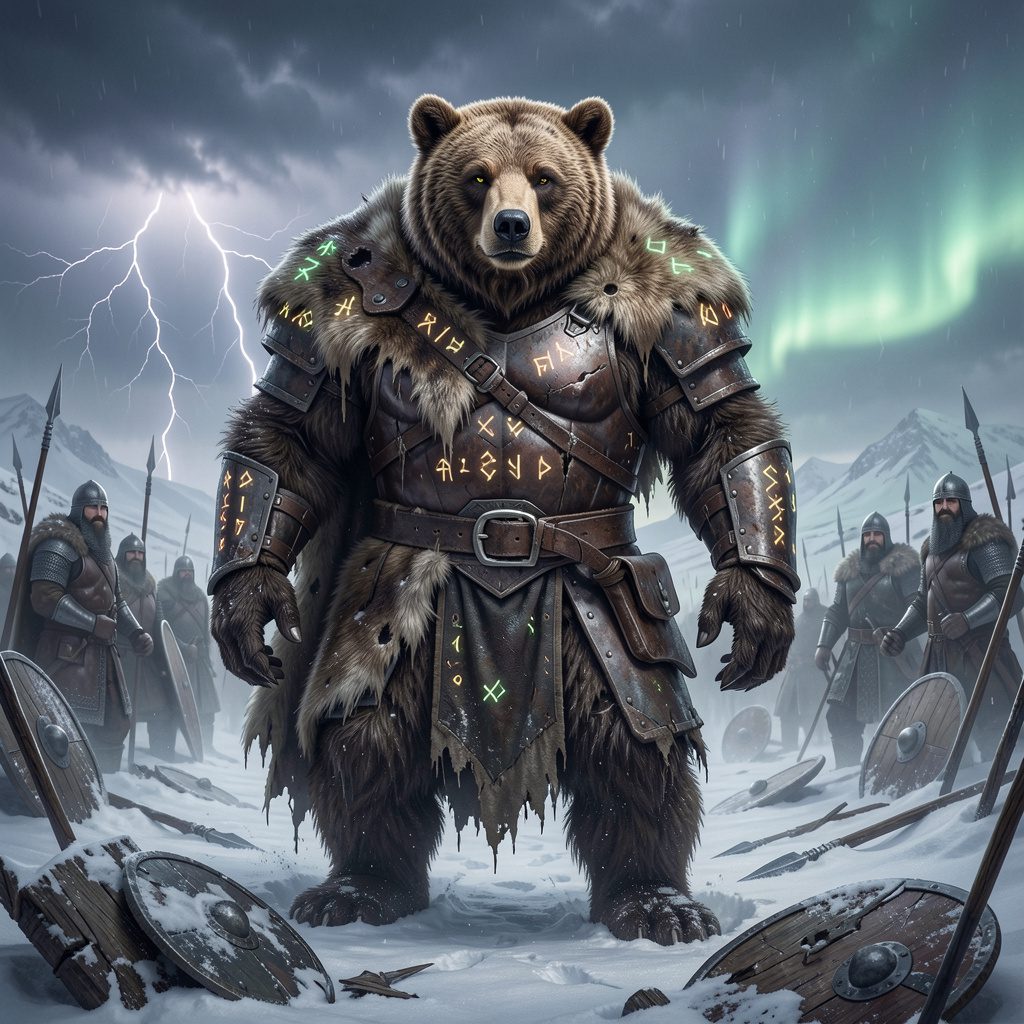
The word berserker itself comes from the Old Norse ber-serkr, which is often translated as “bear-shirt” or “bear-skin.” Scholars interpret this phrase as referring either to warriors who wore bear pelts into battle or to fighters who symbolically transformed into bears through ritual and trance. In saga literature, this transformation sometimes appears literal, while in other accounts it reflects a spiritual possession or battle trance that allowed the warrior to embody the bear’s ferocity.
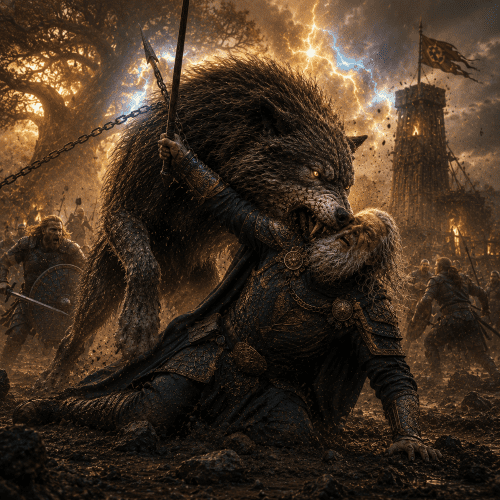
One of the most famous figures connected to this tradition is Bödvar Bjarki, a legendary hero from Hrólfs saga kraka. During a climactic battle, Bjarki’s companions report seeing a gigantic bear fighting on their side, tearing through enemies with unstoppable power. The bear vanishes when Bjarki is awakened from his trance, suggesting that the creature was either his spirit form or a magical manifestation of his inner strength.
Through these stories, the werebear becomes more than a monster or shapeshifter. It represents the merging of human and animal power, reflecting a worldview in which warriors could channel the primal forces of nature itself.
Physical Traits
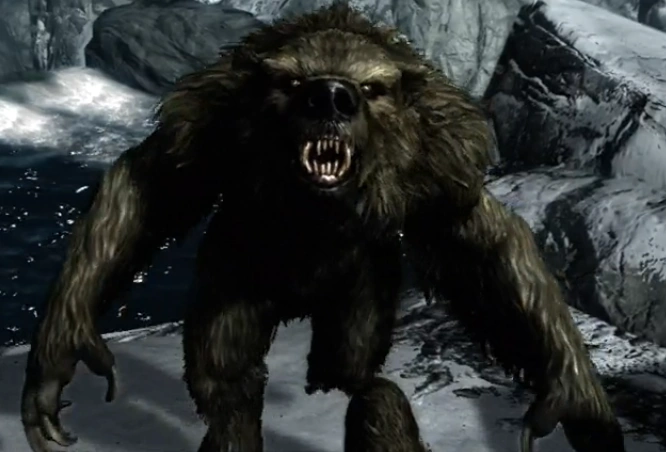
In traditional Norse accounts, werebears are not grotesque creatures like many modern horror monsters. Instead, they represent humans who temporarily adopt the physical power and presence of bears. This transformation could occur through ritual practices, spiritual possession, or magical shapeshifting.
Warriors associated with the werebear tradition were described as exceptionally strong and resilient. Their bodies were said to endure wounds that would incapacitate ordinary fighters, and they could fight for long periods without exhaustion. These traits reflected the bear’s reputation as one of the most formidable animals in northern Europe.
Many berserkers wore bear skins or cloaks, which served both symbolic and ritualistic purposes. The bear pelt marked the warrior as someone who had embraced the spirit of the animal, and it may also have been believed to transfer some of the creature’s power to the wearer. During battle, these warriors often fought without armor, relying instead on their ferocity and supernatural protection.
Saga descriptions also emphasize behavioral traits that mirror those of bears. Berserkers were said to roar, bite their shields, and enter uncontrollable rages before charging into battle. In such states they appeared almost animalistic, reinforcing the idea that they had crossed the boundary between human and beast.
Family
The lineage of Bödvar Bjarki provides one of the clearest mythological examples of the werebear tradition. His father was Björn, whose name literally means “bear.” According to the saga, Björn was cursed by a sorceress named Hvit to live as a bear during the day while retaining his human mind.
Björn later fathered children with a woman named Bera, and their offspring inherited unusual traits connected to the curse. The most famous of these children was Bödvar Bjarki, who grew into a powerful warrior. His brothers also displayed strange physical characteristics. One brother, Elk-Fróði, had the lower body of an elk, while another, Þorir Houndsfoot, possessed dog-like feet.
Although these features appear fantastical, they highlight an important theme in Norse storytelling: the blending of human and animal identities across generations. Bödvar Bjarki eventually became a hero in the service of King Hrólfr Kraki, where he gained fame as one of the king’s most powerful champions.
Other names
The term werebear is a modern label used to describe figures associated with bear shapeshifting in myth and folklore. In Norse sources, the closest equivalent is the word berserker, referring to warriors who fought in a state of animalistic fury.
Some berserkers were linked to wolves rather than bears and were known as úlfheðnar, meaning “wolf-coats.” These warriors served a similar role but drew their symbolism from wolves instead of bears.
The hero Bödvar Bjarki is another name closely associated with the werebear archetype. His name translates roughly as “Warlike Little Bear,” reinforcing his connection to the animal. In Latin chronicles such as Gesta Danorum, he appears under the name Biarco. Across different retellings, these figures are sometimes referred to as bear-warriors, bear-fighters, or Odin’s champions, reflecting the belief that their abilities were granted by the god Odin.
Powers and Abilities
The powers attributed to werebears revolve around their ability to channel the physical and spiritual strength of bears. These abilities often appear in the form of shapeshifting, battle trance, and supernatural resilience. In some saga accounts, warriors literally transform into bears during combat. In others, their spirit or hugr leaves the body and takes the form of a bear that fights alongside their allies. This spiritual projection is believed to explain the bear seen during Bödvar Bjarki’s final battle.
Another defining ability is the berserkergangr, a trance-like battle fury that allowed warriors to ignore pain and fear. While in this state, berserkers were described as unstoppable fighters who could defeat multiple enemies at once. They were believed to be immune to ordinary weapons and resistant to fire or iron. These abilities also carried a spiritual dimension. The bear was considered a sacred and powerful creature in northern Europe, often linked with protection, kingship, and the natural world. By embodying the bear, warriors symbolically became guardians of their people and land.
Modern Day Influence
The image of the werebear has survived far beyond the Viking Age, appearing in literature, fantasy worlds, and modern storytelling. Perhaps the most famous modern example is Beorn from The Hobbit, a character who can transform into a massive bear. Scholars widely believe this character was inspired by Norse traditions surrounding Bödvar Bjarki.
In fantasy games and novels, werebears often appear as noble shapeshifters who protect forests or wilderness regions. Unlike werewolves, which are often portrayed as cursed or monstrous, werebears are frequently depicted as guardians of nature and symbols of disciplined strength.
The concept has also influenced role-playing games, films, and historical interpretations of Viking culture. Berserkers are commonly portrayed in popular media as warriors who enter uncontrollable battle frenzies, echoing the descriptions found in medieval sagas.
Even today, the bear remains a powerful cultural symbol across Scandinavia. It represents endurance, courage, and connection to the wild landscape. Through the legend of the werebear, this ancient symbolism continues to inspire modern imagination.
Related Images

Source
Byock, J. (1998). Hrólfs saga kraka. In Viking Language 2: The Old Norse Reader.
Kershaw, K. (2000). The one-eyed god: Odin and the (Indo-)Germanic Männerbünde. Journal of Indo-European Studies.
Larrington, C. (Trans.). (2014). The Poetic Edda. Oxford University Press.
McKinnell, J. (2005). Meeting the other in Norse myth and legend. D.S. Brewer.
Page, R. I. (1995). Chronicles of the Vikings. University of Toronto Press.
Saxo Grammaticus. (1905). Gesta Danorum (O. Elton, Trans.). Norroena Society. (Biarco).
Creatures of Myth Wiki. (n.d.). Berserker. Retrieved from https://creaturesofmyth.fandom.com/wiki/Berserker
Mythical Beasts of Viking Lore. (n.d.). Bear’s Sacred Status in Norse Mythology. Retrieved from https://mythicalbeasts-vikinglore.com
Snorri Sturluson. (1999). Heimskringla (A. Finlay & A. Faulkes, Trans.). Viking Society. (Ynglinga Saga).
Simek, R. (2007). Dictionary of Northern Mythology. D.S. Brewer. (Berserkir entries)
Frequently Asked Questions
What is a werebear in mythology?
Were berserkers really werebears?
Historical berserkers were likely elite Viking warriors who entered battle trances and wore animal skins. Later myths and sagas interpreted their behavior as evidence of shapeshifting or spiritual transformation into bears.
Who is Bödvar Bjarki in Norse legend?
What powers do werebears have?
Werebears are often associated with shapeshifting, immense strength, endurance, battle frenzy, and resistance to pain or fear.
How are werebears different from werewolves?
Werewolves are typically portrayed as cursed or monstrous beings, while werebears in many traditions are seen as noble warriors or guardians connected to spiritual strength and nature.
