Chiloé Mythology
Chiloé mythology is a rich body of legends, supernatural traditions, and oral narratives from the Chiloé Archipelago in southern Chile. Shaped by the island environment, Indigenous traditions, and centuries of Spanish influence, Chiloé folklore developed a distinctive supernatural landscape filled with sea spirits, enchanted islands, magical creatures, witches, and beings connected to forests, beaches, and the waters surrounding the archipelago. Many of these stories remain an important part of Chiloé’s cultural identity.
The sea occupies a central place in Chiloé mythology. For communities living across an archipelago dependent on fishing, navigation, and maritime travel, the ocean became both a source of livelihood and a powerful supernatural space. One of the most famous figures is the Caleuche, a mysterious ghost ship said to travel through the waters around Chiloé. According to popular versions of the legend, the Caleuche can appear and disappear suddenly, often at night, and is associated with sailors, drowned people, and supernatural forces. Its changing appearance and elusive nature have made it one of the defining legends of Chiloé.
Another important pair of figures is Millalobo and Huenchula. Millalobo, whose name is associated with gold and the sea, is traditionally described as a powerful being connected with the marine world. In many versions of Chiloé tradition, he is the ruler or principal authority of the sea and the father of several important marine beings. His wife, Huenchula, is associated with the supernatural world of the archipelago. Their stories help connect human communities with the mysterious forces believed to inhabit the surrounding waters.
The Pincoya is one of the best-known female figures in Chiloé mythology. Often portrayed as a beautiful woman associated with the sea, she is connected with the abundance of marine life and the prosperity of fishing communities. In traditional accounts, the direction in which Pincoya faces or dances can indicate whether the waters will provide an abundant or poor harvest. The story reflects the dependence of island communities on changing marine conditions while giving those natural uncertainties a supernatural dimension.
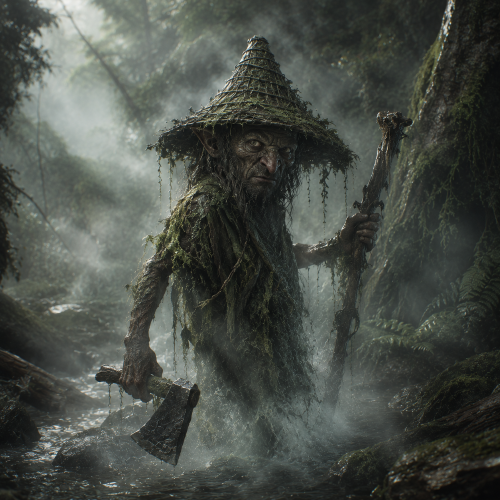
Chiloé mythology also contains numerous beings associated with forests and rural landscapes. The Trauco is a legendary forest being traditionally described as a short, powerful supernatural figure who lives in the woods. The Fiura, often presented as a female counterpart or related forest being, is associated with dangerous encounters and supernatural illness. These stories contributed to a landscape in which dense forests were not merely wilderness but places inhabited by mysterious and potentially dangerous forces.
Other legendary creatures further enrich the mythology of Chiloé. The Camahueto is a powerful horned creature associated with rivers, wetlands, and the countryside, while the Cuero is a dangerous aquatic being traditionally described as a large, flattened creature capable of attacking people in the water. The Basilisco appears in Chilean and Chiloé traditions as a serpentine or reptilian creature associated with supernatural danger. The Invunche, meanwhile, is a particularly disturbing figure associated with the mythology of Chiloé’s witches and magical traditions.
Witchcraft forms another important layer of Chiloé folklore. Traditional stories describe groups of brujos who possess supernatural abilities and gather in secret locations. The Cueva de los Brujos, or Witches’ Cave, is particularly prominent in popular accounts. Legends surrounding the brujos include magical transformation, flight, curses, secret knowledge, and supernatural travel. These traditions reflect the complex blending of Indigenous beliefs, colonial Catholic ideas, and European folklore that shaped Chiloé’s distinctive cultural landscape.
Chiloé mythology developed through interaction between Indigenous traditions, particularly those associated with the Chono and Mapuche-related peoples of the region, and Spanish colonial culture. Catholic beliefs, European supernatural motifs, and local Indigenous concepts were incorporated into an evolving body of oral tradition. As a result, individual legends often exist in multiple versions, and their origins cannot always be assigned to a single cultural source.
Today, Chiloé mythology remains an important expression of the archipelago’s cultural heritage. Stories of the Caleuche, Pincoya, Millalobo, Trauco, Fiura, Camahueto, Cuero, and Invunche continue to appear in local storytelling, literature, festivals, tourism, and popular culture. Together, these traditions create a supernatural world deeply rooted in the islands themselves, where the sea, forests, mountains, and human communities are connected through stories of enchantment, danger, mystery, and survival.