Ida : The Sacred Sword of Yoruba Tradition
At a glance
| Description | |
|---|---|
| Mythology | Yoruba Mythology |
| Type | Carried |
| Power | 08/10 |
Mythlok Perspective
From the Mythlok perspective, the Ida is a mythological weapon precisely because it refuses to remain fictional or historical alone. It exists in a liminal space where myth steps into reality and reality is reshaped by belief. The Ida shows how African mythologies treat weapons as ethical forces rather than heroic accessories. Across cultures, similar archetypes appear. The Ida parallels sacred swords like Japan’s Kusanagi or Europe’s coronation blades, all of which grant legitimacy only when wielded in accordance with cosmic order. What distinguishes the Ida is its explicit link to iron as a living, dangerous element. It is not a symbol of glory, but of consequence.
Ida
Introduction
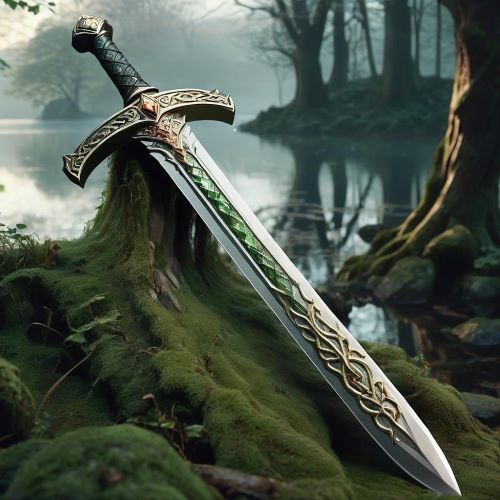
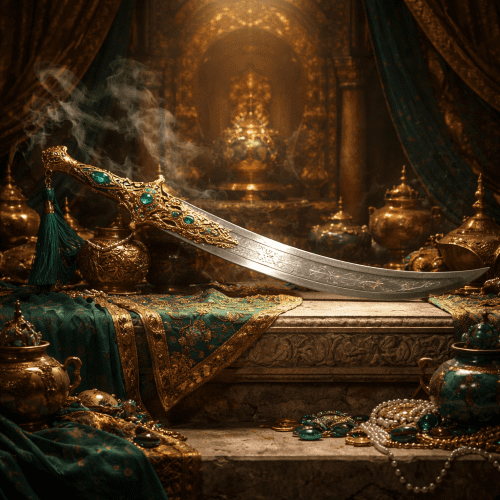
The Ida, also known as Ida gigun or “long sword,” occupies a unique place in Yoruba tradition as a weapon that exists at the intersection of myth, ritual, and history. While physical examples of the Ida were once wielded by warriors, its deeper identity lies in the mythological realm. In Yoruba cosmology, weapons are not neutral tools. Iron is alive, dangerous, and sacred, and any blade forged from it carries spiritual consequence.
Within mythic narratives and ritual memory, the Ida functions as a divine instrument rather than a mere sword. It is bound to the powers of iron, transformation, justice, and sanctioned violence. When invoked in stories, ceremonies, and royal traditions, the Ida becomes a weapon through which gods act, authority is legitimised, and cosmic order is enforced. In this sense, the Ida is best understood not as a historical artifact that later gained symbolism, but as a mythological weapon that briefly entered human hands.
Origins
Mythologically, the origin of the Ida is inseparable from the sacred nature of iron itself. Yoruba tradition holds that iron was not discovered accidentally but revealed through divine agency. The forge is treated as a liminal space where raw matter is transformed into purposeful power, mirroring the process by which chaos becomes order. In this worldview, the Ida is born not simply from metallurgy but from ritualised creation.
The physical form of the Ida reflects its mythic function. Its elongated blade, often leaf-shaped or gently flared toward the tip, is designed for decisive, sweeping cuts rather than prolonged struggle. This shape reinforces its symbolic role as an instrument of finality and judgement. The sword is light enough to move swiftly, suggesting speed, inevitability, and precision rather than brute force.
Traditional accounts emphasise that an Ida is not complete without ritual preparation. The blade must be consecrated, named, or linked to a shrine, ancestor, or deity. Without this process, it remains iron. With it, the Ida becomes something more: a vessel capable of carrying spiritual force. This distinction is what elevates the Ida from weapon to mythic object.
Powers
As a mythological weapon, the Ida is defined by what it represents rather than what it cuts. Its primary power is ase, the spiritual authority to make things happen. Through the Ida, divine will is enacted in the human world. It is a weapon of transition, used to end one state of being and inaugurate another.
The Ida is strongly associated with Ogun, the orisha of iron, war, and transformation. Ogun is both creator and destroyer, and the Ida reflects this duality. It clears paths, enforces justice, and punishes transgression, but it also protects communities and sanctifies leadership. In mythic logic, the same blade that kills can also preserve order.
The sword is also linked to Oya, particularly in her aspect as a warrior and agent of radical change. When Oya wields a blade, it is not for conquest but for upheaval. The Ida in her hands becomes a storm made solid, cutting away stagnation and forcing transformation.
Ritually empowered Idas are believed to carry lingering force. A strike is not merely physical; it disrupts destiny, breaks spiritual protection, and invokes consequences that extend beyond the moment of contact. This belief explains why the Ida appears in oaths, judicial ceremonies, and rites of succession.
Owners/Users
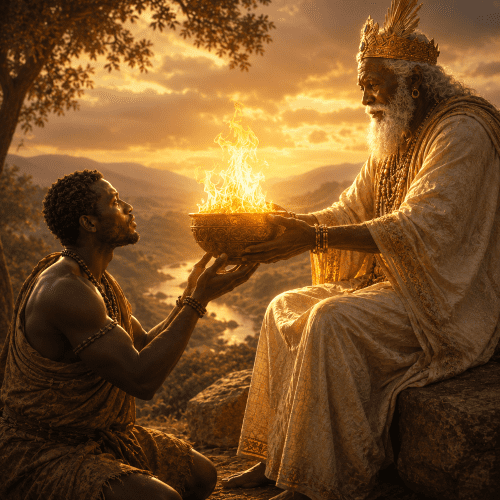
In mythological tradition, the Ida is not owned so much as entrusted. Deities, ancestors, and rightful rulers may bear it, but only while aligned with cosmic order. A king who loses legitimacy may retain the sword physically, yet be stripped of its power spiritually.
Divine figures such as Ogun and Oya are its primary mythic bearers, but ancestral heroes and founding kings are also remembered as wielders of named Idas. These swords become extensions of lineage itself. To inherit such a blade is to inherit responsibility, not privilege.
Human use of the Ida in stories is often conditional. Warriors succeed with it only when acting justly or under divine sanction. When misused, the blade turns against its bearer, bringing misfortune or death. This narrative pattern reinforces the idea that the Ida is not mastered through strength, but through alignment with spiritual law.
Instances used
In mythic accounts, the Ida appears at moments of rupture. It is drawn during wars that decide the fate of kingdoms, during rituals that mark the birth of new leadership, and during confrontations where moral balance must be restored. The sword often appears briefly, performs its function, and then disappears from the narrative, reinforcing its role as a tool of necessity rather than domination.
Stories tell of Idas used to swear unbreakable oaths, to seal treaties with ancestral witnesses, or to execute divine judgement. In festival traditions, symbolic uses of the Ida reenact these moments, ensuring that the weapon’s mythic role remains alive even when no blood is shed.


Source
Swordis. (n.d.). Ida sword: The leaf-shaped Nigerian sword explained. https://swordis.com/blog/ida-sword/
Wikipedia. (2025, April 14). Ida (sword). https://en.wikipedia.org/wiki/Ida_(sword)[3]
Yoruba Library. (2025, June 9). Yoruba folklore: Ida and King Ajalorun.
https://www.yorubalibrary.com/forum/articles/2024/2025/january/yoruba_folkore_ida_and_king.html
Falola, T., & Heaton, M. M. (2008). A History of Nigeria. Cambridge University Press.
Law, R. (1977). The Oyo Empire, c.1600–c.1836: A West African Imperialism in the Era of the Atlantic Slave Trade. Oxford University Press.
Ogundiran, A. (2020). The Yoruba: A New History. Indiana University Press.
Frequently Asked Questions
Is the Ida a mythological weapon?
Yes. While historical swords existed, the Ida is primarily understood as a mythological weapon empowered by ritual and divine association.
Which Yoruba deities are associated with the Ida?
The Ida is most strongly linked to Ogun and, in warrior contexts, to Oya.
Does the Ida have supernatural powers?
In myth, the Ida carries ase, allowing it to enforce justice, transformation, and divine will.
Was the Ida only used in war?
No. Mythologically, it appears in rituals, oaths, succession rites, and acts of divine judgement.
Is the Ida still important today?
Yes. It remains symbolically powerful in Yoruba ritual, kingship, and cultural memory.