


Utu : The Sumerian Sun God Who Illuminated Justice and Truth
At a glance
| Description | |
|---|---|
| Origin | Sumerian Mythology |
| Classification | Gods |
| Family Members | Nanna (Father), Ningal (Mother), Inanna (Sister) |
| Region | Iraq and parts of Iran, Syria, and Turkey. |
| Associated With | Sun |
Mythlok Perspective
In Mythlok’s Perspective, Utu occupies a role similar to that of Helios and Apollo in Greek mythology or Ra in Egyptian mythology, yet his defining quality is not simply that he brings daylight, it is that he reveals truth. While many solar deities symbolize life and power, Utu stands apart as a divine judge whose light exposes deception and restores justice. His daily journey across the sky reminds us that no action remains hidden forever. Utu’s mythology teaches that true justice, like the sunrise, may be delayed, but it is ultimately inevitable.
Utu
Introduction
Utu, also known as Shamash in Akkadian tradition, is the ancient Sumerian god of the sun and justice, embodying light, truth, and the natural cycle of time. As a vital force in Mesopotamian culture, his presence was deeply woven into the religious and daily life of Sumerian society. Depicted as a radiant figure, Utu not only symbolizes the life-sustaining power of the sun but also the moral authority to ensure justice and fairness. Revered in city-states like Ur and Lagash, his influence extended to both cosmic and human realms, reflecting the Sumerians’ belief in the crucial balance between truth and law.
Physical Traits
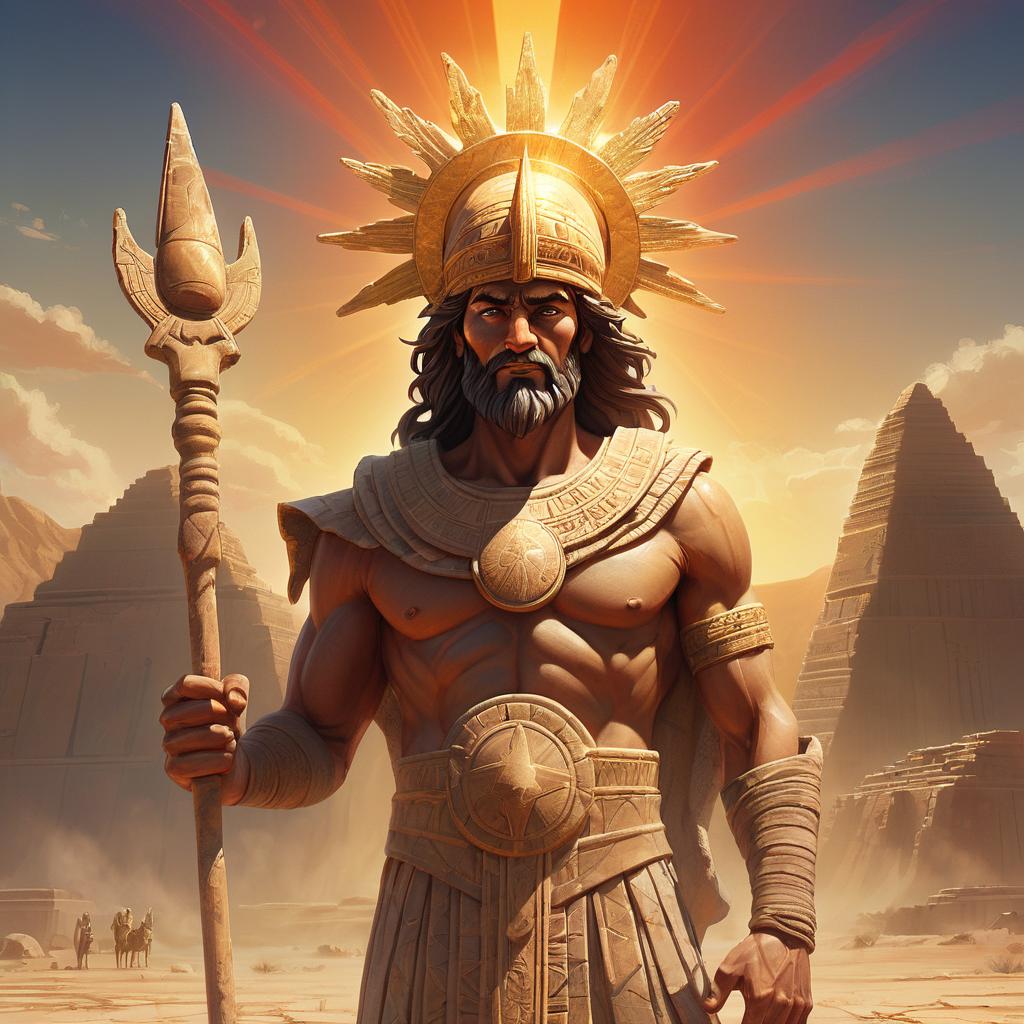
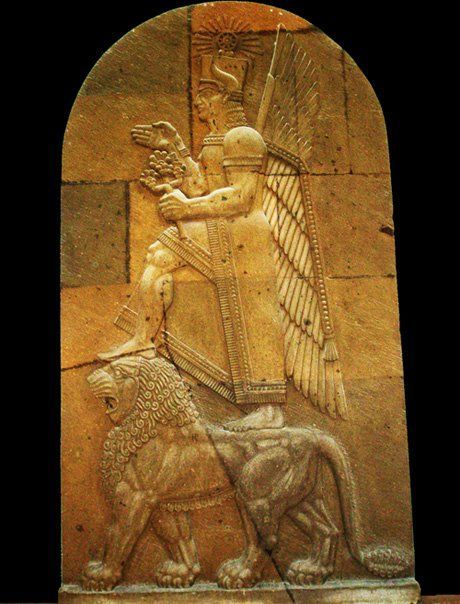
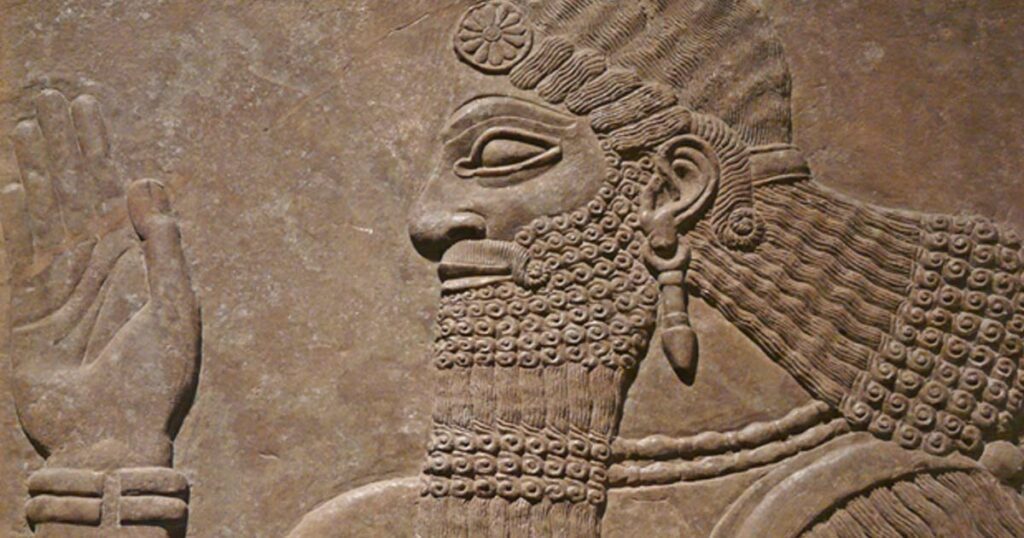
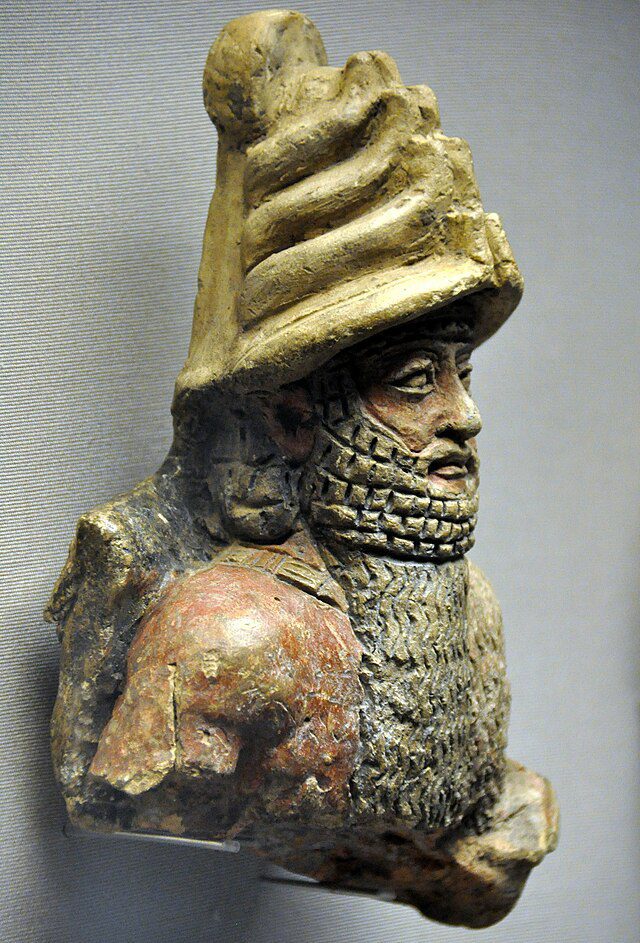
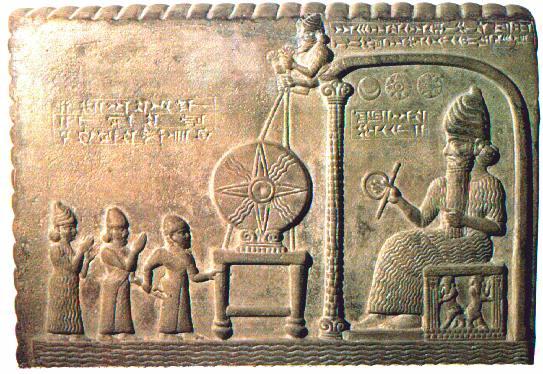
Utu is frequently portrayed as a youthful, radiant figure, exuding strength and vitality, with his connection to the sun clearly emphasized. In artistic depictions, he often bears a solar disk above his shoulders, a visual symbol of his reign over daylight. Whether holding a rod, sword, or even a saw, these tools underscore his role as the enforcer of justice, capable of cutting through darkness and deceit. His imagery consistently highlights his power to illuminate both the physical and moral worlds, reflecting his divine authority to maintain cosmic order and truth.
Family
In Sumerian mythology, Utu is the son of Nanna, the moon god, and Ningal, a goddess connected to reeds, which ties him to both the lunar cycles and nocturnal aspects of the cosmos. His role as the god of the sun perfectly complements his father’s rule over the night. Utu is also the twin brother of Inanna, the goddess of love, war, and fertility, creating a powerful dynamic between day and night, life and death. This celestial family structure reflects the Sumerians’ view of a balanced and interconnected universe, where Utu’s role is pivotal in maintaining cosmic harmony.
Other names
Utu is recognized by various names throughout ancient Mesopotamia, reflecting the rich tapestry of regional beliefs. In Akkadian mythology, he is often called Shamash, meaning “sun,” which emphasizes his associations with justice and truth. This name highlights the blending of Sumerian and Akkadian traditions, showcasing how Utu’s characteristics were adapted to fit new cultural contexts. Additionally, he is referred to as the “Radiant One,” emphasizing his role as a source of light and order in the world. Another title, Utu-kalama, translates to “Utu of the shining rays,” further underscoring his luminous qualities.
Powers and Abilities
Utu, the revered solar deity, wields a range of powers that highlight his significance in both the natural world and human affairs. At the forefront of his abilities is his capacity to illuminate the earth, providing warmth essential for growth and sustaining life. Utu is also regarded as a protector of justice, ensuring that laws are administered fairly and punishing those who act unjustly by exposing their wrongdoings. This role establishes him as a moral guide for humanity, promoting righteousness in society.
In addition to his judicial responsibilities, Utu is associated with divination, offering insights that help his followers navigate the future and make informed choices. He governs the sun’s cycles, orchestrating its daily rise and set, while also being linked to healing and fertility, believed to cure ailments and enhance agricultural productivity. Often portrayed as a wise and impartial judge, Utu’s ability to evaluate the actions of both deities and mortals underscores his pivotal role in maintaining cosmic order and fairness.
Modern Day Influence
Utu’s influence is evident in modern culture, manifesting in literature, art, and spirituality. The archetype of the solar deity he represents continues to embody themes of enlightenment, hope, and justice in contemporary storytelling. His qualities can be seen in various sun god figures across different mythologies, emphasizing the enduring symbolism of light as a metaphor for truth and order. Many modern spiritual practices also invoke Utu’s energy, as individuals look to the sun for inspiration and guidance.
Moreover, Utu’s attributes have permeated popular media, inspiring films and video games that draw on ancient myths. The classic struggle between light and darkness, as embodied by Utu, resonates in modern narratives that delve into justice, redemption, and moral equilibrium. This connection to ancestral roots showcases a growing appreciation for ancient beliefs and their relevance today.
Utu’s legacy even extends to scientific nomenclature, as seen in the asteroid 1945 Utu, and finds a place in fiction, such as Michael Moorcock’s novel “Utu: The Sun God.” While the worship of Utu has diminished since the fall of ancient Mesopotamian civilizations, his story continues to captivate audiences around the world. The themes he represents—justice, light, and the passage of time—align with contemporary values, signifying an ongoing quest for truth and order. His imagery remains a source of inspiration in various artistic forms, from literature to visual arts, ensuring that Utu’s presence endures in our collective cultural memory.
Related Images


Sources
Ancient Mesopotamian Gods and Goddesses. (n.d.). Utu (god). University of Pennsylvania Museum. https://oracc.museum.upenn.edu/amgg/listofdeities/utu/
Encyclopaedia Britannica. (n.d.). Shamash. https://www.britannica.com/topic/Shamash
World History Encyclopedia. (2021). Shamash. https://www.worldhistory.org/Shamash/
Livius. (n.d.). Shamash. https://www.livius.org/articles/deity/shamash/
Black, J., & Green, A. (1992). Gods, demons and symbols of ancient Mesopotamia: An illustrated dictionary. British Museum Press.
Jacobsen, T. (1976). The treasures of darkness: A history of Mesopotamian religion. Yale University Press.
Kramer, S. N. (1961). Mythologies of the ancient world. Doubleday.
Lambert, W. G. (1983). The Mesopotamian background of the sun god Shamash. Iraq, 45(2), 191–198.
Frequently Asked Questions
Who is Utu in Sumerian mythology?
Who are Utu's parents and siblings?
According to Sumerian mythology, Utu is the son of the moon god Nanna (Sin) and the goddess Ningal. He is the twin brother of Inanna, the powerful goddess of love, war, and fertility.
What are Utu's powers?
Utu possesses the power to illuminate the world with sunlight, oversee justice, expose lies and wrongdoing, and maintain cosmic order. He is also associated with healing, divination, and protecting the righteous through his all-seeing gaze.
What symbols are associated with Utu?
Utu is commonly represented by a solar disk with rays, a saw or serrated blade symbolizing his ability to cut through falsehood, and a rod and ring representing justice and divine authority.
What is the difference between Utu and Shamash?
Utu and Shamash are the same deity worshipped under different names. Utu is the Sumerian name, while Shamash is the Akkadian, Babylonian, and Assyrian name.



Renee Shie
You are an excellent writer. Thank you for sharing.