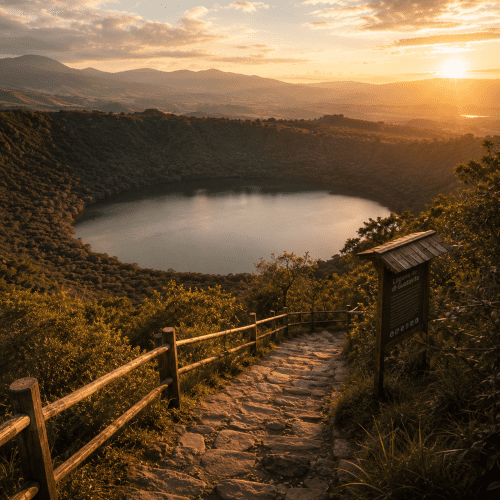


Ashur (Qal’at Sherqat) : The Sacred Assyrian Capital by the Tigris
At a glance
| Description | |
|---|---|
| Mythology | Assyrian Mythology |
| Country | Iraq |
| Closest airport | Erbil International Airport (EBL) |
| Type | Constructed |
| Accessibility | 01/10 |
Mythlok Perspective
In Mythlok’s View, Ashur is not just a city but a rare example where a civilization merged its identity with a single divine force. Unlike Greek city-states devoted to multiple gods or Egyptian centers aligned with cosmic balance, Ashur reflects a unified divine authority shaping empire and belief alike. This mirrors concepts seen in ancient Egypt’s Amun-Ra or the centralized divine kingship of early China, where power and divinity were inseparable.
Ashur (Qal’at Sherqat)
Introduction
Ashur, known today as Qal’at Sherqat, stands along the western bank of the Tigris River in northern Iraq and represents one of the oldest continuously inhabited cities in human history. Its origins trace back to the early 3rd millennium BCE, when it emerged as a modest settlement before rising into prominence as the first capital of the Assyrian Empire. Over centuries, Ashur evolved into a powerful political and spiritual center, shaping the identity of one of Mesopotamia’s most influential civilizations.
Unlike cities such as Babylon, which often dominate popular imagination, Ashur retains a quieter but deeper historical presence. It was not merely a capital but a sacred landscape where kings ruled under divine sanction. The city’s name itself is derived from its patron deity, Ashur, emphasizing the inseparable bond between land, ruler, and god. Today, the ruins of Ashur are recognized as a UNESCO World Heritage Site, preserving the legacy of Assyrian civilization despite modern challenges and restricted access.
Connection with Mythology
Ashur’s mythological significance is rooted in its role as the earthly domain of the god Ashur, the supreme deity of the Assyrian pantheon. Unlike many ancient cities that worshipped multiple gods equally, Ashur stood apart as a city where divine authority was centralized in a single figure who symbolized war, kingship, and cosmic order.
The god Ashur was more than a religious figure; he was considered the embodiment of the state itself. Assyrian kings ruled as his representatives, and every military campaign, political decision, and royal proclamation was believed to carry his divine approval. Victories in battle were interpreted as proof of Ashur’s favor, while defeats were seen as signs of divine displeasure.
Temples dedicated to Ashur formed the spiritual heart of the city, particularly the grand temple complex and its associated ziggurat. Rituals, offerings, and royal ceremonies were conducted here, reinforcing the idea that the empire functioned under divine supervision. Over time, Ashur was also syncretized with other Mesopotamian deities such as Enlil and linked to broader creation myths, elevating his status beyond a local god to a universal force within Assyrian belief systems.
Ways to Get There
Ashur is located near the modern town of Sherqat in Iraq’s Salah al-Din Governorate. Historically, access to the site was possible via major cities such as Baghdad or Mosul, followed by road travel along the Tigris region. In more recent travel frameworks, Erbil International Airport has been considered a safer entry point for northern Iraq.
However, as of 2026, travel to Ashur is strongly discouraged due to ongoing security risks. The area has experienced instability, including damage during conflicts and threats from unexploded ordnance. There is currently no structured tourism infrastructure at the site, and organized tours do not include Ashur as a destination.
For those interested in Assyrian heritage, safer alternatives include museum collections in Baghdad or restored Assyrian sites in more stable regions. Until conditions improve significantly, Ashur remains a destination primarily for academic study rather than tourism
What to Look For
Ashur’s ruins offer a powerful glimpse into the architectural and cultural achievements of the Assyrian Empire. The most striking feature is the remains of the ziggurat dedicated to the god Ashur. Once towering above the surrounding plains, this massive structure symbolized the connection between heaven and earth, serving as a focal point of religious life.
The city also contains multiple temple complexes, including those dedicated to Ishtar, Anu, Adad, and other deities, reflecting the layered spiritual traditions of Mesopotamia. These temples reveal how religious practices evolved while maintaining Ashur’s central authority.
Royal palaces, such as those attributed to Shamshi-Adad I, highlight the administrative and political importance of the city. Their remains, along with inscriptions and reliefs, provide valuable insights into Assyrian governance, warfare, and mythology.
Encircling the city are defensive walls stretching several kilometers, demonstrating advanced engineering and strategic planning. Gates like the Tabira Gate, though damaged, still stand as reminders of Ashur’s fortified strength. Together, these elements create a landscape where mythology, politics, and daily life were deeply interconnected.
Importance in cultural history
Ashur holds a unique position in world history as the birthplace of the Assyrian Empire. From this city, Assyria expanded into one of the most powerful empires of the ancient Near East, influencing regions across Mesopotamia, Anatolia, and the Levant.
Its location along the Tigris River made it a vital trade hub, connecting distant cultures and facilitating economic growth. This strategic advantage allowed Ashur to flourish not only as a political center but also as a melting pot of ideas, traditions, and innovations.
Even after its destruction by the Babylonians in 614 BCE, Ashur experienced periods of revival under later empires such as the Parthians. These layers of occupation reflect its enduring significance across different historical eras.
Today, Ashur is recognized by UNESCO as a site of outstanding universal value, offering a rare and continuous record of Mesopotamian civilization. Its ruins provide critical insights into early urban development, imperial governance, and the integration of religion into statecraft.
Best time to travel
Northern Iraq experiences a climate characterized by hot summers and mild winters. Historically, the most suitable times to explore Ashur were during spring, from March to May, and autumn, from September to November. During these periods, temperatures are moderate, making it easier to navigate archaeological landscapes.
Summers can be extremely harsh, with temperatures often exceeding 45°C, while winters, though cooler, can bring unpredictable conditions. These seasonal variations significantly impact travel comfort and accessibility.
However, due to the current security situation, travel to Ashur is not feasible in 2026. Any future plans to visit should depend entirely on improvements in regional stability and official travel advisories. Until then, Ashur remains a destination preserved in history rather than experienced firsthand.


Source
Leick, G. (n.d.). Ashur: The First Great Assyrian City – World History Encyclopedia. Retrieved April 7, 2026, from https://www.worldhistory.org/ashur/
World Heritage Explorer. (n.d.). Ashur (Qal’at Sherqat) – World Heritage Explorer. Retrieved April 7, 2026, from https://www.worldheritageexplorer.org/sites/ashur_qalat_sherqat.html
Visit Iraq. (2025, December 29). Ashur (Qal’at Sherqat) – Visit Iraq. Retrieved April 7, 2026, from https://visit-iraq.com/en/places/ashur-ancient-city
Britannica. (2026, March 27). Ashur | God of Assyria, Storms & War – Britannica. Retrieved April 7, 2026, from https://www.britannica.com/topic/Ashur-Mesopotamian-deity
Ancient Mesopotamia. (n.d.). Ashur – Settlements – Ancient Mesopotamia. Retrieved April 7, 2026, from https://ancientmesopotamia.org/settlements/ashur
Smithsonian Magazine. (n.d.). At the Iraqi Site of Assur, Ancient History Stands at Risk of Destruction. Retrieved April 7, 2026, from https://www.smithsonianmag.com/history/iraqi-site-assur-ancient-history-stands-risk-disappearing-180979241/
Britannica. (2026, March 27). Ashur | Ancient Assyrian City, Iraq History & Ruins – Britannica. Retrieved April 7, 2026, from https://www.britannica.com/place/Ashur-ancient-city-Iraq
UNESCO World Heritage Centre. (n.d.). Ashur (Qal’at Sherqat) – UNESCO World Heritage Centre. Retrieved April 7, 2026, from https://whc.unesco.org/en/list/1130/
Archiqoo. (n.d.). Assur | Archiqoo. Retrieved April 7, 2026, from https://archiqoo.com/locations/assur.php
Frequently Asked Questions
What is Ashur (Qal’at Sherqat)?
Ashur is an ancient Assyrian city in Iraq, once the empire’s first capital and religious center.
Why is Ashur important in history?
It was the birthplace of the Assyrian Empire and a key political and spiritual hub.
Who was the god Ashur?
Ashur was the chief Assyrian deity, symbolizing kingship, war, and divine authority.
Can you visit Ashur today?
No, travel is currently unsafe due to security risks and lack of infrastructure.
What remains can be seen at Ashur?
Ruins include a ziggurat, temples, palaces, and fortified city walls.