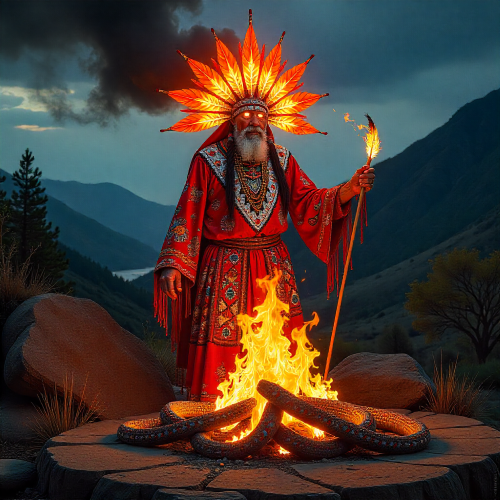
Takutsi Nakawe : The Grandmother of Growth and Creation
At a glance
| Description | |
|---|---|
| Origin | Huichol Mythology |
| Classification | Gods |
| Family Members | N/A |
| Region | United State if America |
| Associated With | Growth, Fertility, Agriculture, Creation, Protection, |
The Mythlok Perspective
In Mythlok’s Perspective, Takutsi Nakawe represents a rare form of divine identity where creation is not an act but a continuous state of being. She is not separate from the world she creates, but becomes it. This idea mirrors figures like Gaia in Greek tradition and Pachamama in Andean belief, yet Takutsi Nakawe stands apart through her role in both destruction and renewal. She embodies a cyclical truth where life emerges from decay, making her less a goddess of power and more a force of existence itself.
Takutsi Nakawe
Introduction
Takutsi Nakawe stands as one of the most ancient and powerful figures in Huichol tradition, known as the great grandmother of creation and the force behind all growth. In the spiritual worldview of the Wixárika people of Mexico, she is not just a deity but the origin of life itself, deeply tied to fertility, agriculture, and cosmic balance.
She is often understood as the mother of the gods and a foundational presence in the shaping of the world. Her influence extends beyond myth into everyday life, where cycles of planting, harvest, and survival reflect her enduring presence. Takutsi Nakawe is also remembered for her role in guiding humanity through destruction and renewal, especially in stories involving a great flood and the preservation of life.
Her identity merges with the land itself. She is not separate from nature but exists within it, representing the living connection between people, plants, animals, and the unseen spiritual forces that sustain them.
Physical Traits
Takutsi Nakawe is rarely described in conventional human terms. Instead, she appears as an elderly woman, symbolizing wisdom, age, and continuity. Her form reflects the idea of ancestral memory rather than physical beauty or power.
One of the most striking elements of her mythology is the idea that her body became the source of life. After creating the world, her form is said to have fragmented, with each part transforming into plants, animals, and essential elements of the natural world. This imagery reinforces her identity as the living foundation of existence rather than a distant divine figure.
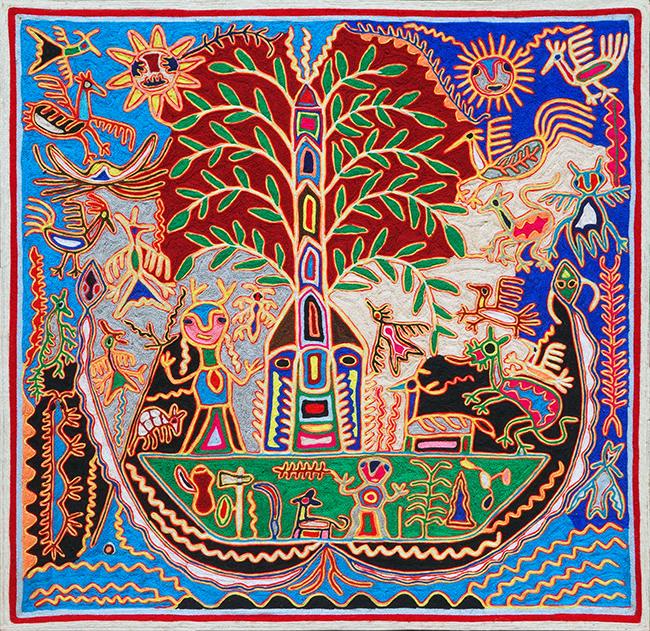
In artistic traditions such as yarn paintings and beadwork, she is often placed at the center of cosmic designs. These depictions do not focus on realistic anatomy but instead emphasize symbolic elements like growth, fertility, and interconnected life systems.
Family
Takutsi Nakawe occupies the highest maternal position in the Huichol cosmological structure. She is considered the mother of all deities and the origin point from which other sacred beings emerge. Among the figures connected to her are Tatewari, the grandfather fire spirit, who represents heat, transformation, and ritual knowledge.
Tatei Yurianaka, associated with the earth, is often described as her daughter, continuing the generative line of life. Kauyumari, the deer spirit and cultural guide, also operates within her extended mythological network.
Rather than functioning as a traditional family, these relationships represent natural forces working together. Fire, earth, animals, and growth are not separate domains but interconnected expressions of a single cosmic system rooted in Takutsi Nakawe.
Other names
Takutsi Nakawe is known by several names, each highlighting a different aspect of her nature. One of the most common meanings associated with her name is “Grandmother Growth,” emphasizing her role in fertility and life cycles.
She is also called Grandmother Rain, linking her to water, which is essential for agricultural abundance. In some interpretations, she is referred to as the Great Grandmother of the Hollow Ear, a symbolic phrase that may relate to listening, knowledge, or spiritual receptivity.
Other titles connect her to earth, creation, and germination, reinforcing her identity as the origin of all living processes. These variations are not contradictions but layers of meaning that reflect how deeply embedded she is in every aspect of existence.
Powers and Abilities
Takutsi Nakawe’s power is rooted in creation, transformation, and preservation. She governs fertility in all forms, ensuring that crops grow, animals reproduce, and life continues across generations.
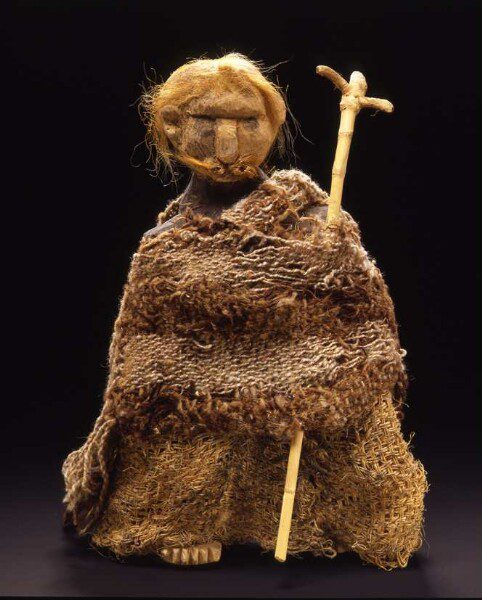
One of her most important roles appears in the flood narrative. In this story, she warns a human figure about an impending catastrophe and instructs him to prepare for survival. She ensures that seeds, animals, and essential elements are preserved, allowing life to begin again after destruction. This positions her not only as a creator but also as a protector of continuity.
She is also associated with shaping the physical world. Mountains, rivers, and sacred landscapes are often understood as manifestations of divine actions linked to her influence. In some traditions, she uses ritual tools such as a staff or basket to bring growth into existence.
Her abilities extend into healing, longevity, and emotional well-being. People invoke her during times of hardship, seeking balance, health, and renewal. She represents both the beginning and the restoration of life.
Modern Day Influence
Takutsi Nakawe remains a living presence in Huichol culture today. She is not confined to ancient myths but continues to influence rituals, art, and ecological beliefs. Agricultural ceremonies still honor her as the force behind successful harvests. Farmers and communities rely on her symbolic presence to maintain harmony with the land. Her association with corn and vegetation makes her central to survival and identity.
In art, she appears prominently in yarn paintings and beadwork, which serve both spiritual and cultural purposes. These works are not merely decorative but function as visual expressions of sacred knowledge and ancestral memory.
Her symbolism has also gained relevance in modern discussions around environmental protection. As a figure representing the interconnectedness of life, she embodies the values of sustainability and respect for nature. Indigenous movements often reflect these principles, drawing from traditions that have long recognized the balance between humans and the natural world.
Related Images



Source
MacLean, H. (n.d.). Huichol [PDF]. University of Missouri. https://dice.missouri.edu/assets/docs/utoaztec/Huichol.pdf
Negrín, J. (2003). The Huichol: A culture’s survival. University of Arizona Press.
Schaefer, S. B. (2015). Shifting ontologies in Huichol ritual and art. Anthropology and Humanism, 40(1). https://doi.org/10.1111/ANHU.12068
Smithsonian Institution. (n.d.). Watakame and Takutsi Nakawe. National Museum of the American Indian. https://americanindian.si.edu/collections-search/object/NMAI_278736
Unknown. (n.d.). Mythology. Huichol Museum of WixariKa Art. https://enmuseohuichol.weebly.com/mythology.html
Wixarika Research Center. (n.d.). The dismemberment of Takutsi Nakawé. https://www.wixarika.org/objects/dismemberment-tacutsi-nakaw%C3%A9
Zingg, R. M. (1998). Huichol mythology. University of Arizona Press.
Frequently Asked Questions
Who is Takutsi Nakawe?
Takutsi Nakawe is the primordial grandmother goddess of the Huichol people, associated with creation, fertility, and growth.
What does Takutsi Nakawe represent?
She represents life, agriculture, fertility, and the interconnected balance between humans and nature.
Is Takutsi Nakawe a creator goddess?
Yes, she is considered the origin of life and the mother of all deities in Huichol belief.
What is the flood myth of Takutsi Nakawe?
She warned humanity of a flood and helped preserve life by guiding survival and renewal.
Why is Takutsi Nakawe important today?
She remains central to Huichol rituals, art, and environmental values rooted in harmony with nature.