


Sira : The Dugong Woman of Malaita
At a glance
| Description | |
|---|---|
| Origin | Malaita Mythology |
| Classification | Spirits |
| Family Members | N/A |
| Region | Solomon Islands |
| Associated With | Dugongs, Kinship, Fertility, Abundance, Marine, Shapeshifting |
The Mythlok Perspective
In Mythlok’s Perspective, Sira is far more than a shape-shifting sea spirit. She represents an ancient understanding that humanity thrives when it recognizes its relationship with nature rather than its dominance over it. Her transformation into a dugong symbolizes a merging of identities, where the boundary between human and environment becomes almost invisible. Sira shares thematic similarities with figures such as the Celtic selkies, who move between human and seal forms, and the Japanese ningyo, whose existence links people to the mysteries of the sea. Yet Sira stands apart because her story is deeply tied to kinship and ecological responsibility. Rather than warning against the ocean’s dangers, she teaches respect for its gifts, making her one of the Pacific’s most meaningful symbols of harmony between culture and nature.
Sira
Introduction
Sira is a revered figure in the traditional folklore of Malaita, one of the largest islands in the Solomon Islands. Known as the “Dugong Woman,” she represents the profound bond between coastal communities and the marine world that sustains them. Unlike many mythological figures associated with warfare or cosmic power, Sira’s story is deeply rooted in everyday life, reflecting the values, relationships, and environmental knowledge of the people who have lived alongside the sea for generations.
The legend is particularly associated with the Lau Lagoon region, where dugongs have long occupied an important place in local belief systems. Oral traditions describe a woman who transformed into a dugong, creating a lasting connection between human communities and these gentle marine mammals. Through this transformation, Sira became more than a legendary individual. She evolved into a symbol of kinship, respect for nature, and the interconnectedness of land, sea, and spirit.
The story remains one of the most recognizable marine legends from Malaita and continues to be shared as an important part of cultural heritage. It also reflects a broader Oceanic worldview in which humans, animals, ancestors, and spiritual forces exist within a single living network rather than as separate realms.
Physical Traits
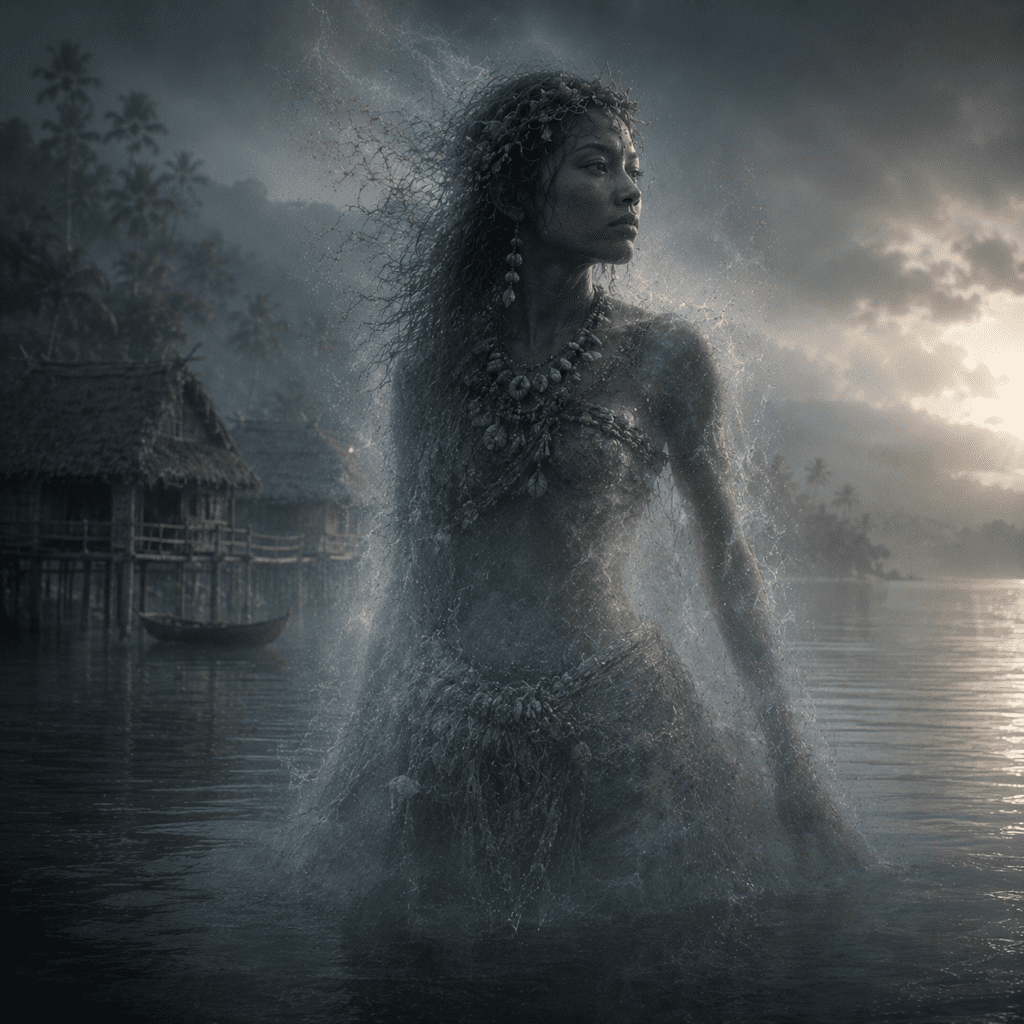
Sira is generally portrayed as a beautiful woman whose appearance reflects the grace and dignity associated with traditional Malaitan femininity. In many retellings, she begins as an ordinary human woman before undergoing a remarkable transformation into a dugong. This dual nature places her between two worlds, making her a liminal figure capable of representing both humanity and the ocean.
Her human form is often associated with gentleness, strength, and nurturing qualities. These characteristics parallel the perception of dugongs themselves, which are known for their calm behavior and close connection to seagrass meadows in sheltered coastal waters. Because dugongs move slowly and peacefully through lagoons, they have often been viewed as symbols of tranquility and abundance.
When depicted in transformed form, Sira is not presented as a fearsome creature. Instead, she embodies harmony with nature. Her identity as both woman and dugong highlights the belief that the boundary between humans and the natural world is more fluid than it may appear. This ability to exist in both forms makes her one of the most distinctive figures in Malaitan folklore.
Family
Family relationships play a central role in Sira’s story. Traditional accounts describe her marriage to a human man, a union that becomes the foundation for a deeper connection between people and the sea. Through this relationship, the legend explains how certain communities developed special obligations and taboos regarding dugongs.
The marriage is not simply a romantic narrative. It serves as a symbolic bridge between human society and the marine environment. By becoming part of a human family before her transformation, Sira establishes a permanent kinship link between particular clans and the dugong population of the surrounding waters.
This concept of shared ancestry is significant within many Pacific traditions, where lineage extends beyond human relatives to include animals, spirits, and natural features. Through Sira, the sea becomes part of the family structure itself. Her descendants and relatives are therefore expected to treat dugongs with respect, recognizing them not merely as wildlife but as connected beings with spiritual and ancestral significance.
Other names
The name “Sira” is the most commonly preserved designation associated with this legendary figure. However, she is frequently referred to by descriptive titles that emphasize her role rather than her personal identity.
The most widespread of these titles is “Dugong Woman.” This name immediately identifies her connection to the sea and highlights the transformative event that defines her story. In local interpretations, she may also be viewed within the broader category of ancestral or ocean-associated spirits that occupy an important place in Malaitan spiritual traditions.
These dual forms of identification are common throughout Pacific folklore. A figure may possess an individual name while also carrying a title that explains their function within the community’s worldview. In Sira’s case, the title “Dugong Woman” has become almost as important as her personal name because it communicates the central lesson of the legend: the enduring relationship between humans and the marine environment.
Powers and Abilities
Sira’s abilities are not typically described in terms of dramatic magical feats. Instead, her power lies in what she represents and the influence her story exerts on social and environmental behavior. Her most notable ability is transformation. The legend describes her changing from a human woman into a dugong, allowing her to exist in both human and marine realms. This transformation symbolizes the unity of land and sea, demonstrating that the two worlds are interconnected rather than separate.
Sira is also associated with fertility and abundance. Dugongs inhabit productive seagrass ecosystems that support numerous forms of marine life. As a result, she became linked to prosperity, nourishment, and the continued well-being of coastal communities.
Another important aspect of her power is the enforcement of taboos. Among some Malaitan groups, dugongs became protected through customary beliefs connected to Sira’s story. The legend warns that disrespecting these animals can bring misfortune, encouraging sustainable relationships with marine resources. Such traditions served as informal conservation practices long before modern environmental laws existed.
Finally, Sira functions as a mediator between different realms of existence. Through her unique status, she links humans, ancestors, spirits, and the natural world. This role reinforces social obligations and reminds communities that their survival depends on maintaining balance with the environment.
Modern Day Influence
Although Christianity is now the dominant religion throughout much of the Solomon Islands, traditional stories such as Sira’s continue to hold cultural importance. The legend remains part of oral history and is still shared in communities where connections to the sea remain central to daily life.
In recent decades, Sira has gained additional relevance through environmental conservation efforts. Dugongs are considered vulnerable across much of their range, facing threats from habitat loss, accidental capture, and hunting pressures. Conservation programs in the Solomon Islands have increasingly recognized the value of traditional knowledge and cultural stories in promoting marine stewardship.
Sira’s legend provides a powerful example of how indigenous beliefs can support modern conservation goals. The respect traditionally shown toward dugongs aligns closely with contemporary efforts to protect seagrass habitats and vulnerable marine species.
Beyond conservation, Sira remains a symbol of Malaita’s maritime identity. Her story preserves memories of ancestral relationships with the sea and offers a reminder that cultural heritage and environmental responsibility are often deeply connected. In a rapidly changing world, the Dugong Woman continues to represent the enduring bond between people and the waters that shape their lives.
Related Images

Source
Keesing, R. M. (1982). Kwaio Religion: The Living and the Dead in a Solomon Island Society. Columbia University Press.
Burt, B. (1994). Tradition and Christianity: The Colonial Transformation of a Solomon Islands Society. Harwood Academic Publishers.
Scott, M. W. (2007). The Severed Snake: Matrilineages, Making Place, and a Melanesian Christianity in Southeast Solomon Islands. Carolina Academic Press.
White, G. M. (1991). Identity Through History: Living Stories in a Solomon Islands Society. Cambridge University Press.
Hviding, E. (1996). Guardians of Marovo Lagoon: Practice, Place, and Politics in Maritime Melanesia. University of Hawaii Press.
World Culture Encyclopedia. (n.d.). Malaita – Religion and Expressive Culture. Retrieved June 9, 2026, from https://www.everyculture.com/Ma-Neg/Malaita-Religion-and-Expressive-Culture.html
Solomon Islands Historical Encyclopaedia. (n.d.). Myths and Legends of Malaita. Retrieved June 9, 2026, from http://www.solomonencyclopaedia.net/biogs/E000303b.htm
Frequently Asked Questions
Who is Sira in Malaita folklore?
Sira is a legendary Dugong Woman from Malaita in the Solomon Islands who symbolizes the connection between humans, the sea, and marine life.
What animal is associated with Sira?
Sira is associated with the dugong, a large marine mammal that inhabits seagrass meadows in shallow coastal waters.
Why is Sira important in Malaitan culture?
Her story explains kinship ties between people and the ocean while promoting respect for dugongs and marine resources.
What powers does Sira possess?
Sira is primarily known for her ability to transform between human and dugong forms and for her role as a symbol of abundance and harmony.
How does Sira influence modern conservation efforts?
Her legend supports contemporary conservation messages by encouraging protection of dugongs and the seagrass habitats they depend upon.

