
Nga : The Formidable Guardian of the Nenets Underworld
At a glance
| Description | |
|---|---|
| Origin | Nenets Mythology |
| Classification | Gods |
| Family Members | Num (Father) |
| Region | Russia |
| Associated With | Death, Underworld, Disease, Winter |
The Mythlok Perspective
In Mythlok’s Perspective, Nga is far more than an Arctic version of the Devil. He resembles figures such as Hades or Hel in ruling the realm of the dead, yet his purpose is deeply rooted in the harsh realities of Arctic life. Rather than representing pure evil, Nga reminds us that death, hardship, and suffering are inseparable from the cycle of existence. His relationship with Num reflects a worldview where creation cannot exist without destruction. That perspective makes Nga one of the most philosophically compelling deities in northern mythology, teaching that balance, not victory over darkness, is what sustains the universe.
Nga
Introduction
Among the spiritual beings of Nenets mythology, Nga stands as one of the most feared and significant. He is the ruler of the underworld, the master of death, and a powerful force associated with disease, darkness, and the inevitable end of life. While many traditions portray him as a destructive deity, Nenets beliefs do not treat him as evil in the absolute sense. Instead, he represents the unavoidable realities of existence that balance the creative forces of the universe.
Nga occupies a central place in the dualistic worldview of the Nenets, an Indigenous people of the Arctic regions of northern Siberia. Their mythology describes a cosmos shaped by opposing but interconnected powers. Above is Num, the heavenly creator associated with light and life, while below rules Nga, whose domain encompasses death, suffering, and the spirits of the underworld. Rather than existing as enemies in a simple battle between good and evil, these two divine beings maintain the natural order through their opposing influences. Without Nga, life would have no ending, and the cycle of renewal would cease.
Physical Traits
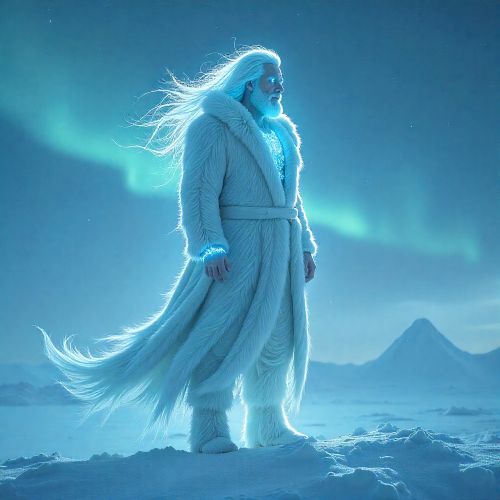
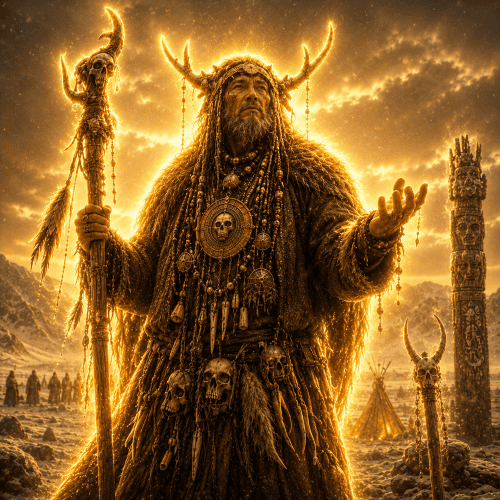
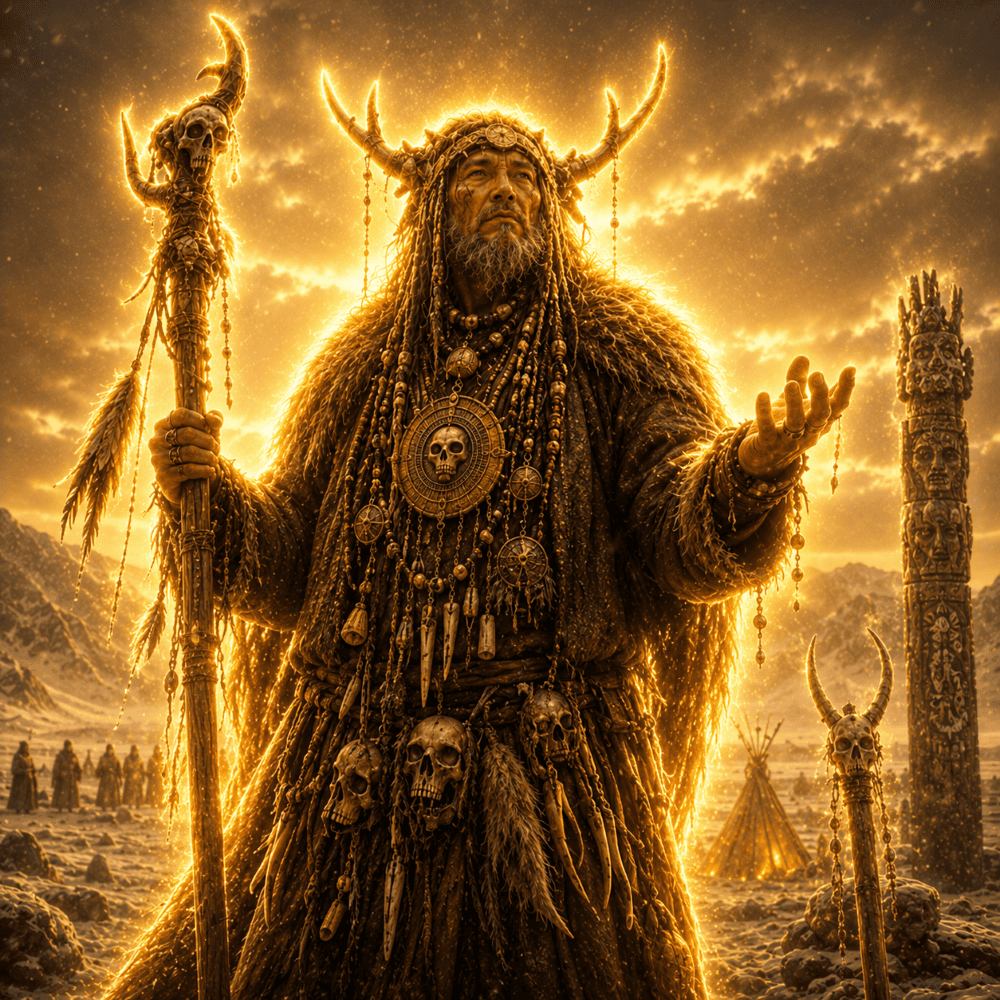
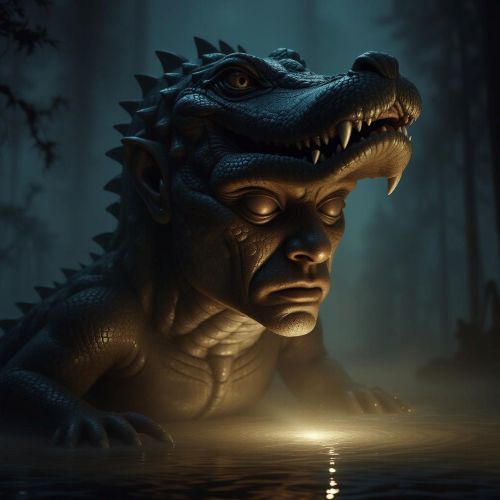
Unlike many mythological gods who are described with elaborate appearances, Nga has almost no fixed physical form in Nenets tradition. Oral stories and ethnographic records focus far more on his presence, authority, and domain than on his appearance. This reflects the broader style of Nenets mythology, where divine beings are often understood through the forces they control rather than through human-like features.
Nga is closely associated with the deep layers beneath the earth, where the underworld is believed to exist. His presence is symbolized by darkness, cold, and the unseen world beneath human existence. Instead of appearing as a king seated on a throne, he is imagined as a vast supernatural power whose influence extends through the land of the dead and among harmful spirits.
This mysterious nature makes Nga even more formidable. He is not confined to a recognizable body but exists as an ever-present force that reminds humanity of mortality and the hidden dangers lurking beyond the visible world.
Family
Nenets cosmology places Nga in a close relationship with Num, the supreme sky god. The exact nature of this relationship differs across regional traditions. Some stories describe Nga as Num’s son, while others portray the two as ancient cosmic counterparts or rival demiurges who together shaped the universe. Modern scholars generally consider the latter interpretation to be the most widely accepted across Nenets ethnographic sources.
Although detailed divine genealogies are uncommon in Nenets mythology, a few regional legends mention Nga’s daughter. In one well-known tale, she marries a powerful shaman who eventually becomes the guardian supporting the stability of the earth. These stories highlight the close connection between the spirit world and human shamans, who acted as intermediaries between the living and supernatural realms.
Rather than emphasizing family relationships, Nenets traditions focus on Nga’s responsibility as the ruler of the underworld and his role within the larger cosmic balance maintained alongside Num.
Other names
Nga is almost universally known simply by his name, which appears consistently in academic studies of Nenets mythology. Depending on transliteration from Russian or Nenets languages, minor spelling differences may appear, but Nga remains the standard English rendering.
Unlike many gods who possess numerous titles and epithets, Nga is more often identified by his function than by alternative names. Ethnographic works commonly describe him as the god of death, the lord of the underworld, or the master of harmful spirits. These descriptive titles emphasize his authority rather than serving as formal names.
Some related Samoyedic traditions contain similar figures with comparable names, but they should not automatically be treated as identical deities, since each culture developed its own unique religious traditions.
Powers and Abilities
Nga’s influence extends across every aspect of death and the unseen world. As ruler of the underworld, he governs the realm where many souls journey after death and commands numerous harmful spirits associated with illness and misfortune.
Disease is one of the powers most frequently connected to Nga. Traditional Nenets beliefs viewed many illnesses as spiritual events rather than purely physical conditions. Harmful spirits under Nga’s authority were believed to afflict humans and animals, making shamans responsible for negotiating with these supernatural forces to restore health.
Nga also represents the inevitable end of earthly life. Rather than randomly taking lives, he oversees the natural transition from the world of the living to the realm beyond. In some later traditions influenced by Christianity, he appears as a judge who punishes wicked souls. However, this concept is generally considered the result of religious syncretism rather than an original feature of Nenets belief.
Perhaps Nga’s greatest power is his role in maintaining cosmic balance. While Num creates and sustains life from the heavens, Nga governs decay, endings, and transformation beneath the earth. Together they represent the two opposing forces necessary for existence. This balance reflects the realities of Arctic life, where survival depends on accepting both abundance and hardship, life and death, summer and winter.
Modern Day Influence
Although many Nenets today identify with Christianity, traditional mythology continues to shape cultural identity and storytelling. Nga remains one of the best-known figures in Nenets cosmology and frequently appears in folklore, academic studies, and discussions of Indigenous Arctic spirituality.
During the Soviet era, many traditional religious practices declined under state atheism, yet oral traditions survived within families and local communities. As interest in Indigenous cultures has grown, Nga has regained attention as an important symbol of Nenets heritage.
Modern interpretations often compare Nga to the Devil because of his connection with death and the underworld. However, this comparison oversimplifies his original role. In traditional Nenets belief, Nga is not the embodiment of absolute evil but a necessary force within the natural order.
Today, scholars studying Arctic religions continue to examine Nga as an example of how Indigenous societies understood mortality, disease, and humanity’s relationship with nature. His stories also contribute to broader conversations about preserving Indigenous knowledge and appreciating the unique spiritual traditions of northern Eurasia.
Related Images

Source
Wikipedia contributors. (n.d.). Nga (god). In Wikipedia. Retrieved from https://en.wikipedia.org/wiki/Nga_(god).
Toulouze, E. (2003). On Forest Nenets view about the world beyond. Studies in Folk Culture, 46–76. Available from https://inalco.hal.science/hal-01283844/document.
Encyclopedia.com. (n.d.). Samoyed religion. In Encyclopedia.com. Retrieved from https://www.encyclopedia.com/environment/encyclopedias-almanacs-transcripts-and-maps/samoyed-religion.
GodsAndMonsters.info. (2024, July 13). Num: Nenets sky god of creation and Siberian heavens. Retrieved from https://godsandmonsters.info/num/.
Vértes, E. (1990). Szibériai nyelvrokonaink hitvilága. Budapest: Tankönyvkiadó.
Khomich, L. V. (1974). The Nenets: A Cultural Portrait. Moscow: Nauka.
Lehtisalo, T. (1947). Studies on the Religion of the Nenets. Helsinki: Suomalainen Tiedeakatemia
Frequently Asked Questions
Who is Nga in Nenets mythology?
Nga is the god of the underworld, death, disease, and harmful spirits in Nenets mythology. He serves as one of the principal cosmic beings who balances the creative power of the sky god Num.
Is Nga considered evil?
Not in the traditional Nenets worldview. Although Nga is associated with death and suffering, he represents a necessary part of the natural order rather than absolute evil.
What powers does Nga possess?
Nga rules the underworld, commands harmful spirits, influences disease, oversees the realm of the dead, and maintains cosmic balance alongside Num.
Who is Nga's family?
Traditions vary. Some describe Num as Nga’s father, while others present the two as opposing cosmic beings. Certain regional stories also mention Nga having a daughter.
Why is Nga important today?
Nga remains an important figure in Nenets cultural heritage and is widely studied as one of the central deities of Arctic Indigenous mythology, symbolizing the balance between life, death, and nature.