


Kulmking : The Cold Forest Spirit of Estonian Folklore
At a glance
| Description | |
|---|---|
| Origin | Estonian Mythology |
| Classification | Ghosts |
| Family Members | N/A |
| Region | Estonia |
| Associated With | Forest punishment, Unholy dead, Shapeshifting |
The Mythlok Perspective
In Mythlok’s Perspective, Kulmking represents a primal fear rooted in the relationship between humans and untamed nature. It is not merely a monster but a moral force, reflecting the consequences of disrespecting the natural world. Unlike structured deities, it exists as a raw manifestation of imbalance. Similar figures can be found across cultures, such as Slavic лесhy spirits or Japanese yōkai, all of which enforce boundaries between human behavior and sacred environments.
Kulmking
Introduction
Kulmking, also spelled Külmking, is a chilling figure from Estonian folklore, often described as a spirit of the unholy dead. Unlike protective nature spirits, Kulmking embodies punishment, fear, and the consequences of moral transgression. It is believed to arise from the souls of individuals who lived wicked lives and were denied peaceful rest after death. This origin places it firmly among the darker entities of Northern European tradition, where the boundary between the living and the dead is thin and often dangerous.
Deeply tied to forests, bogs, and remote landscapes, Kulmking reflects Estonia’s ancient animistic worldview. In these traditions, nature is not passive but alive with spirits that demand respect. Those who violate this balance, especially children or travelers who disturb sacred spaces, risk attracting the attention of entities like Kulmking. Its role is not random evil but a form of supernatural enforcement, ensuring that humans remain cautious in the wild.
The name “Külmking” is commonly associated with the idea of coldness, possibly translating loosely to “cold step” or “cold shoe.” This connection reinforces the creature’s association with sudden dread and an unnatural drop in temperature, symbolizing its presence as something both unseen and deeply unsettling.
Physical Traits
Kulmking does not have a fixed or universally agreed-upon appearance, which is part of what makes it so terrifying. Instead, it is known for its ability to blend into its surroundings through shapeshifting. In many accounts, it takes the form of common animals such as dogs or cats, allowing it to move unnoticed near human settlements. In other cases, it disguises itself as a haystack or other rural object, lying in wait for unsuspecting victims.
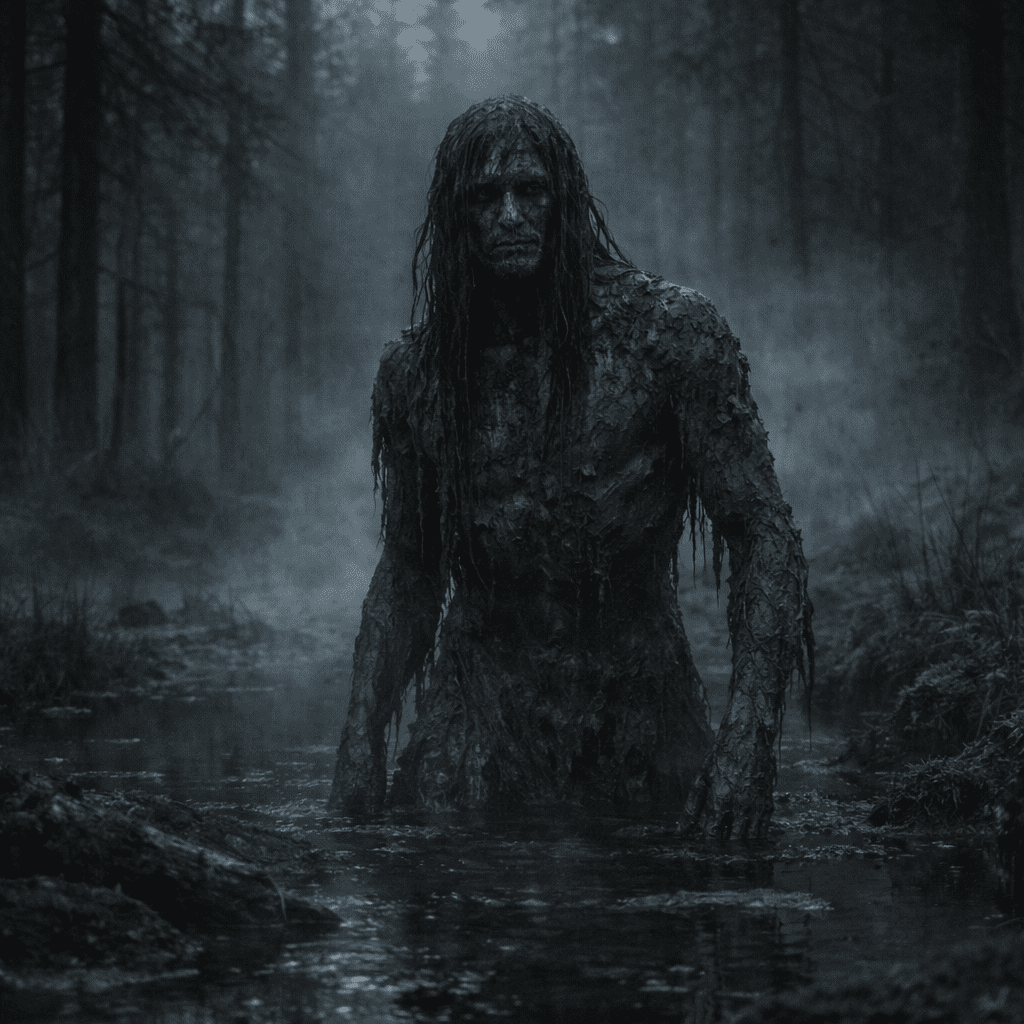
Rather than being defined by a specific body, Kulmking is characterized by its presence. It is often imagined as shadowy, distorted, and unnatural, as if it only partially exists in the physical world. This lack of a clear form aligns with its identity as an unclean spirit rather than a fully embodied creature.
Some later interpretations and modern artwork depict Kulmking as monstrous or demonic, but traditional folklore focuses more on its deceptive nature than its physical features. Its true danger lies not in how it looks, but in how easily it can remain unseen until it is too late.
Family
Kulmking stands apart from the structured divine families found in many mythological systems. It has no known relatives, lineage, or connections to gods. Instead, it exists as a solitary entity, born from the restless dead rather than divine creation.
In Estonian folklore, this distinction is important. While figures like sky gods or thunder spirits belong to organized pantheons, Kulmking represents a different category altogether. It is part of a broader group of malevolent beings that emerge independently, often tied to human wrongdoing rather than cosmic order.
This isolation enhances its unpredictability. Without family ties or allegiances, Kulmking operates alone, driven by instinct or purpose rather than loyalty. It is closer to a force of nature than a character within a larger mythological narrative.
Other names
The most widely recognized name for this entity is Külmking, though the simplified spelling “Kulmking” is often used in English contexts. Variations in pronunciation and spelling reflect the oral nature of Estonian folklore, where stories were passed down through generations rather than recorded in a fixed form.
Some regional traditions also refer to it as “Kümnekinglane,” meaning “Ten-Footed,” though this name is far less common and may represent a localized interpretation rather than a widely accepted identity. The association with “cold” remains consistent across variations, reinforcing the creature’s thematic link to chilling fear and environmental unease.
Unlike many mythological beings, Kulmking does not have a wide array of titles or epithets. Its identity is singular and focused, emphasizing its role as a specific type of malevolent spirit rather than a multifaceted deity.
Powers and Abilities
Kulmking is feared primarily for its predatory and manipulative nature. One of its most well-known traits is its tendency to target children, particularly those who wander into forests or disturb natural spirits. This aspect of the myth likely served as a warning, teaching younger generations to respect dangerous environments.
Beyond physical attacks, Kulmking is also associated with psychological terror. Some accounts suggest that it can influence or corrupt individuals, turning them against their own communities. This ability transforms it from a simple predator into a more complex symbol of moral decay and social disruption.
Its shapeshifting ability allows it to approach victims unnoticed, while its connection to cold is said to manifest through sudden drops in temperature when it is near. In certain traditions, it is even believed that a whistle from Kulmking can chill the surrounding area, signaling its presence before it strikes.
There are also suggestions that, like many European spirits, it cannot enter private spaces without invitation. While not universally attested in Estonian sources, this idea aligns with broader regional folklore and adds another layer to its behavior. Ultimately, Kulmking’s powers reinforce its role as both a physical and symbolic threat. It punishes disrespect, spreads fear, and embodies the unpredictable dangers of the wilderness.
Modern Day Influence
Although Kulmking is not as globally recognized as figures from Greek or Norse traditions, it continues to appear in modern cultural contexts. It has inspired creative works such as literature, music, and online folklore discussions, where its eerie qualities make it a compelling subject for reinterpretation.
In Estonia, there has been a renewed interest in traditional folklore, particularly during periods of cultural revival. Creatures like Kulmking are studied not only as myths but as reflections of historical beliefs and societal values. They provide insight into how communities once understood morality, nature, and the unknown.
Digital platforms have also played a role in preserving and expanding its legacy. From illustrated interpretations to video essays, Kulmking has found a place in contemporary storytelling. While these versions often expand on its abilities or appearance, they remain rooted in the core idea of a malevolent spirit tied to the natural world.
Related Images


Source
Eisen, M. J. (n.d.). Estonian folklore collections. Folklore.ee. https://www.folklore.ee/rl/pubte/ee/lru/lru2/
Kreutzwald, F. R. (1857–1861). Kalevipoeg. Heinrich Laakmann.
Meri, L. (1976). Silver in the turnip field. Estonian Encyclopedia Publishers.
Paër, P., Türnpuu, A., Järv, R., & Loigu, L. (Eds.). (2005). The heavenly wedding: Estonian folktales. Varrak. ISBN 9985-3-1146-9
Valk, U. (2000). Ex ovo omnia: Where does the Balto-Finnic cosmogony originate? Oral Tradition, 15(1), 145–158. https://journal.oraltradition.org/wp-content/uploads/files/articles/15i/Valk.pdf
Wikipedia contributors. (2024). Estonian mythology. Wikipedia. https://en.wikipedia.org/wiki/Estonian_mythology
Zobel, H. (2022). Külmkingauurija. Muhu Brands. https://muhubrands.com/en/product/book-kulmkingauurija/
Frequently Asked Questions
What is Kulmking in folklore?
Kulmking is a malevolent spirit from Estonian folklore believed to originate from the souls of immoral individuals who became restless after death.
Where does Kulmking live?
It is commonly associated with forests, swamps, and remote wilderness areas, reflecting its connection to nature and danger.
Can Kulmking change its form?
Yes, Kulmking is known for shapeshifting into animals like dogs or cats, or even objects like haystacks to deceive people.
Why does Kulmking target children?
In folklore, it punishes those who disrespect nature, and stories often emphasize children to serve as cautionary tales about wandering into dangerous places.
Is Kulmking similar to other European spirits?
Yes, it shares traits with other undead and forest spirits in European traditions, especially those tied to moral punishment and supernatural fear.
