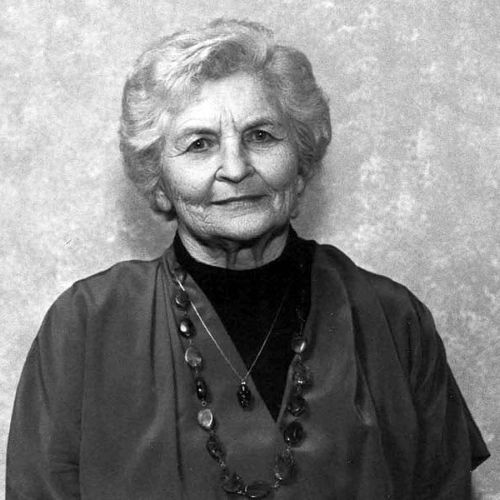


Dr. Geraldine Pinch : Interpreting Ancient Egyptian Religion
Mythlok Perspective
From the Mythlok perspective, Dr. Geraldine Pinch’s work reminds us that ancient Egyptian religion was not built on rigid dogma but on layered symbolism and ritual continuity. Her scholarship treats myth as theological philosophy expressed through image and spell. Compared with the narrative clarity of Greek epic or the structured hymns of Vedic tradition, Egyptian religious thought appears more symbolic and fluid. By reconstructing that fluidity from fragments, she reveals a civilization that valued cosmic balance above narrative consistency.
Dr. Geraldine Pinch
Introduction
Dr. Geraldine Pinch is a British Egyptologist whose scholarship has significantly shaped modern understanding of ancient Egyptian religion, myth, and magic. Trained at the University of Oxford, where she earned her D.Phil. in Egyptology, Dr. Geraldine Pinch is widely recognized for presenting complex theological material in a clear, historically grounded way. Her work does not treat Egyptian myth as a fixed storybook tradition. Instead, she reconstructs it from temple inscriptions, funerary texts, ritual objects, and archaeological evidence.
Across her academic and public-facing publications, Dr. Geraldine Pinch has consistently emphasized that ancient Egyptian religion was fluid, regionally diverse, and responsive to political change. By examining both elite theology and everyday devotional practice, she offers a complete picture of how ancient Egyptians understood their gods and their cosmos.
Area of Expertise
Dr. Geraldine Pinch specializes in ancient Egyptian religion from roughly 3200 BCE through the late pharaonic and Graeco-Roman periods. A defining feature of her scholarship is her insistence that Egyptian mythology was never canonized into a single authorized scripture. Unlike cultures that preserved unified epics, Egypt left behind fragments: hymns carved in temples, spells written on papyri, scenes painted inside tombs, and dedications left at shrines.
Through careful synthesis of these materials, Dr. Geraldine Pinch demonstrates how deities such as Isis, Osiris, and Horus evolved over centuries. Their roles shifted depending on geography, theology, and royal ideology. Rather than viewing contradictions as flaws, she interprets them as evidence of a living religious system.
Another major component of her expertise is magic in ancient Egypt. In Magic in Ancient Egypt, Dr. Geraldine Pinch explains that magic was not marginal superstition. It functioned as a legitimate extension of religion, intertwined with medicine, kingship, healing, and protection. Spells and amulets were tools used to sustain ma’at, the cosmic principle of balance and order.
Her doctoral research focused on votive practices, particularly offerings dedicated to Hathor. This research became the foundation of her book Votive Offerings to Hathor, establishing her reputation as a meticulous scholar of cult practice and devotional religion.
Books & Publications
Dr. Geraldine Pinch has authored several authoritative works that remain central in Egyptological study.
Her Handbook of Egyptian Mythology (2002) is one of the most comprehensive surveys of Egyptian myth available in English. It combines thematic essays on cosmology, time, and divine order with an extensive reference section on gods, demons, and symbolic concepts.
In Egyptian Myth: A Very Short Introduction (2004), published by Oxford University Press, she offers a concise yet scholarly overview of how myths expressed Egyptian values concerning kingship, the afterlife, and divine justice. The book also contextualizes myth through objects and monuments, illustrating how theology was embedded in physical space.
Her broader cultural study, Egyptian Mythology: A Guide to the Gods, Goddesses, and Traditions of Ancient Egypt (2004), introduces readers to figures such as Anubis and explores how divine identities were shaped by natural cycles like the Nile flood and celestial movement.
Earlier, Magic in Ancient Egypt (1994) established Dr. Geraldine Pinch as a leading authority on ritual practice and protective texts. This work remains widely cited for its balanced analysis of magical papyri, healing rituals, and divine invocation formulas.
Beyond academic writing, she also writes fiction and children’s literature under the name Geraldine Harris, demonstrating how myth continues to inspire imaginative storytelling.
Research & Contributions
Dr. Geraldine Pinch’s most significant contribution lies in methodology. She approaches Egyptian myth not as a unified narrative but as a mosaic assembled from textual and visual fragments. This interpretive framework has influenced how modern scholars teach and reconstruct Egyptian religious thought.
Her discussion of the “Contendings of Horus and Seth” illustrates this approach. Rather than treating the myth as simple rivalry, she situates it within royal ideology and theological debates about legitimacy and cosmic stability. By analyzing inscriptions alongside ritual context, she reveals the myth’s political and symbolic dimensions.
Dr. Geraldine Pinch has also contributed to public education through lectures, academic seminars, and advisory roles for documentaries. Her ability to translate complex philological material into accessible prose has made her books standard reading in university courses worldwide.
Awards & Recognitions
Although Dr. Geraldine Pinch is not primarily associated with headline awards, her recognition comes through sustained academic respect. Her works are widely adopted in higher education and translated into multiple languages. The ongoing reprinting of her books reflects their continued scholarly relevance.
Her affiliation with the Griffith Institute at Oxford further underscores her professional standing in Egyptology. Within academic circles, her name is frequently cited in discussions of Egyptian religion and ritual practice.
Social Media Profiles
Dr. Geraldine Pinch does not maintain an active public social media presence. Her professional visibility is primarily through academic institutions, publisher platforms, and scholarly references rather than personal digital branding.
Sources
Griffith Institute, University of Oxford. (n.d.). Dr Geraldine Pinch. https://www.griffith.ox.ac.uk/about-us/people/dr-geraldine-pinch/
Oxford University Press. (n.d.). Egyptian Myth: A Very Short Introduction by Geraldine Pinch. https://global.oup.com/academic/product/egyptian-myth-a-very-short-introduction-9780192803467
University of Texas Press. (n.d.). Magic in Ancient Egypt by Geraldine Pinch. https://utpress.utexas.edu/9780292765597/magic-in-ancient-egypt/
ABC-CLIO. (n.d.). Handbook of Egyptian Mythology by Geraldine Pinch. https://www.abc-clio.com/products/c6109c/
Pinch, G. (1989). Votive offerings to Hathor. Griffith Institute.
Pinch, G. (1994). Magic in ancient Egypt. University of Texas Press.
Pinch, G. (2002). Handbook of Egyptian mythology. ABC-CLIO.
Pinch, G. (1993). Votive offerings to Hathor. Journal of Egyptian Archaeology, 79, 201–207. Egypt Exploration Society.




Frequently Asked Questions
Is Dr. Geraldine Pinch a PhD?
Yes. She holds a D.Phil. in Egyptology from the University of Oxford, which is equivalent to a PhD.
What is Dr. Geraldine Pinch known for?
She is known for her research on ancient Egyptian religion and magic, especially her books Magic in Ancient Egypt and Handbook of Egyptian Mythology.
Did Dr. Geraldine Pinch study Hathor?
Yes. Her doctoral research focused on votive offerings dedicated to the goddess Hathor.
Where did Dr. Geraldine Pinch teach?
She has been affiliated with Oxford institutions, including the Griffith Institute, and has contributed to academic teaching and research programs.
Does Dr. Geraldine Pinch write fiction?
Yes. Under the name Geraldine Harris, she writes children’s books and fantasy literature.