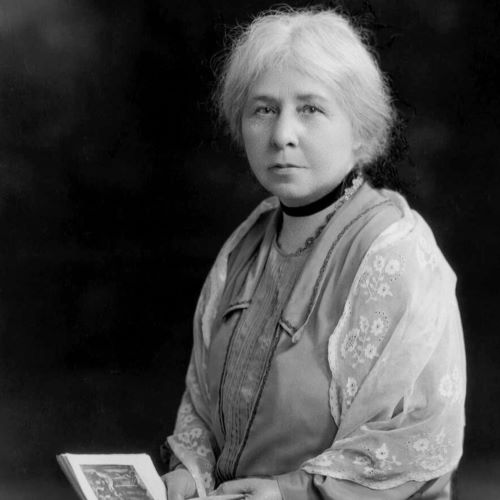


Dr. Bronislaw Malinowski : The Birth of Modern Anthropology
Mythlok Perspective
In Mythlok’s Perspective, Dr. Bronislaw Malinowski represents a turning point where myth stopped being seen as fiction and began to be understood as function. His ideas echo across cultures where stories act as living systems rather than symbolic relics. Much like Indian epics justify dharma or Greek myths reinforce divine order, Malinowski revealed that every culture builds narratives to stabilize existence. His work aligns with global traditions, showing that myth is not imagination but infrastructure for human life.
Dr. Bronislaw Malinowski
Introduction
Dr. Bronislaw Malinowski was one of the most influential figures in modern anthropology, a scholar whose work reshaped how cultures are studied and understood. Born in 1884 in Kraków, Poland, he later became a British anthropologist and pioneered immersive fieldwork that brought anthropology closer to lived human experience. His time among the Trobriand Islanders in present-day Papua New Guinea marked a turning point in the discipline.
What makes Dr. Bronislaw Malinowski particularly important is his interpretation of myth. Rather than dismissing myths as primitive or fictional narratives, he argued that they serve real, functional roles in society. Myths, in his view, are living frameworks that guide behavior, reinforce traditions, and help communities navigate both social and environmental challenges.
Area of Expertise
Dr. Bronislaw Malinowski specialized in cultural and social anthropology, with a strong emphasis on ethnographic fieldwork and functionalism. His research focused on Melanesian societies, particularly the Trobriand Islanders, where he studied kinship, exchange systems, rituals, and belief structures.
At the core of his work was functionalism, a theory that explained culture as a system designed to meet human needs. According to Dr. Malinowski, every aspect of culture, from myths and rituals to social institutions, exists because it serves a purpose. These purposes range from biological needs like survival and reproduction to social needs such as cooperation and stability.
In mythology, he introduced the idea that myths act as “charters” for society. They legitimize traditions, justify authority, and provide explanations for social practices. Among the Trobriand Islanders, for example, myths were closely tied to agricultural rituals and social hierarchies, ensuring continuity and order.
He also contributed significantly to linguistic anthropology by emphasizing the importance of context in language, showing that meaning emerges from usage within cultural settings rather than isolated structures.
Books & Publications
Dr. Bronislaw Malinowski authored several foundational works that continue to shape anthropology and cultural studies. His most renowned book, Argonauts of the Western Pacific (1922), transformed ethnographic writing by presenting a detailed account of the Kula ring, a ceremonial exchange system that connected communities through trade, myth, and social bonds.
In The Sexual Life of Savages in North-Western Melanesia (1929), he explored intimate aspects of Trobriand society, challenging Western assumptions about relationships and questioning elements of Freudian theory. Coral Gardens and Their Magic (1935) examined agricultural practices alongside magical beliefs, demonstrating how practical knowledge and ritual were deeply interconnected.
His theoretical framework was clearly articulated in A Scientific Theory of Culture (1944), where he outlined how cultural systems function to meet human needs. Other significant works include Sex and Repression in Savage Society (1927) and Myth in Primitive Psychology (1926), where he explored the role of myth in maintaining cultural systems.
Research & Contributions
Dr. Bronislaw Malinowski revolutionized anthropology through his method of participant observation. Instead of relying on second-hand accounts, he immersed himself in the communities he studied, learning their language and participating in their daily lives.
During his fieldwork in the Trobriand Islands between 1915 and 1918, he documented not only rituals and ceremonies but also everyday interactions and social dynamics. This approach allowed him to understand what he described as the “native’s point of view,” a concept that remains central to anthropological research.
His functionalist theory expanded the understanding of culture by showing how myths, rituals, and institutions work together to maintain social order. For instance, origin myths in Trobriand society were directly linked to kinship systems, reinforcing inheritance and social structure.
Beyond theory, Dr. Malinowski influenced applied anthropology by advocating for the practical use of anthropological knowledge in addressing real-world issues. His teaching at the London School of Economics shaped an entire generation of anthropologists, ensuring his methods and ideas became foundational to the discipline.
Awards & Recognitions
While Dr. Bronislaw Malinowski did not receive numerous formal awards during his lifetime, his impact has been widely recognized in the years since his passing. He held prestigious academic positions, including Professor of Anthropology at the London School of Economics and later at Yale University. In 1936, he received an honorary Doctor of Science degree from Harvard University, reflecting his global academic influence.
His legacy continues through the Bronislaw Malinowski Award, established by the Society for Applied Anthropology. This award honors individuals who apply social science to solve contemporary human challenges, reflecting his commitment to practical and impactful research.
Social Media Profiles
As a historical figure who passed away in 1942, Dr. Bronislaw Malinowski does not have personal social media profiles. However, his legacy continues to thrive across modern digital platforms. Academic institutions such as the London School of Economics and Yale University maintain archives of his work. His theories and contributions are widely discussed on platforms like ResearchGate and Google Scholar, while educational content about his research is frequently featured on YouTube and anthropology-focused websites.
Sources
Wikipedia. (2022). Bronisław Malinowski. https://en.wikipedia.org/wiki/Bronis%C5%82aw_Malinowski
Britannica. (n.d.). Bronisław Malinowski | Polish anthropologist, British scholar. https://www.britannica.com/biography/Bronislaw-Malinowski
Anthroholic. (2025). Bronislaw Malinowski (anthropologist). https://anthroholic.com/bronislaw-malinowski
Anthromania. (2023). Bronislaw Malinowski’s contributions. https://www.anthromania.com/2023/10/28/bronislaw-malinowskis-contributions/
Malinowski, B. (1922). Argonauts of the Western Pacific: An account of native enterprise and adventure in the archipelagoes of Melanesian New Guinea. Routledge & Kegan Paul.
Malinowski, B. (1935). Coral gardens and their magic: A study of the methods of tilling the soil and of agricultural rites in the Trobriand Islands (Vols. 1-2). George Allen & Unwin.
Malinowski, B. (1948). Magic, science and religion and other essays. Free Press.
Malinowski, B. (1926). Myth in primitive psychology. Journal of the Royal Anthropological Institute, 56, 45-62.



Frequently Asked Questions
Who was Dr. Bronislaw Malinowski?
Dr. Bronislaw Malinowski was a Polish-born British anthropologist known for pioneering participant observation and functionalism.
What is Malinowski’s functionalism theory?
It is the idea that every cultural element exists to fulfill specific human biological or social needs.
Why is Dr. Malinowski important in mythology studies?
He showed that myths serve practical roles in society, reinforcing traditions and guiding behavior.
What is participant observation?
It is a method where researchers live within a community to understand its culture from an insider’s perspective.
What did Malinowski study in the Trobriand Islands?
He studied kinship, trade systems like the Kula ring, rituals, and mythology.