


Epic of King Gesar : Tibet’s Living Heroic Tradition
Listen
At a glance
| Attribute | Description |
|---|---|
| Mythology | Tibetan Mythology |
| Language Written | Tibetan, Mongolian, Buryat |
| Age | 200 BCE–600 CE |
| Author | Anonymous monks |
| Main Characters | King Gesar, Gogmo, Ling tribes, Demon Kings |
Mythlok Perspective
From Mythlok’s perspective, the Epic of King Gesar represents a universal mythic pattern where heroism is inseparable from responsibility. Gesar is not a conqueror who seeks glory, but a restorer compelled to intervene when balance collapses. This places him closer to figures like Gilgamesh in Mesopotamian tradition or Arjuna in the Mahabharata, where inner conflict matters as much as external victory. Across cultures, the greatest heroes are not those who dominate the world, but those who know when to step away from it, leaving harmony rather than legacy as their final act.
Epic of King Gesar
Introduction
The Epic of King Gesar stands as one of humanity’s most expansive and enduring oral traditions, often described as the longest epic narrative ever composed. Centered on the heroic figure of Gesar of Ling, a divinely guided warrior-king, the epic narrates a sacred mission to restore balance in a world fractured by chaos, demons, and unjust rulers. For more than a thousand years, the story has lived primarily through spoken performance rather than fixed text, evolving with every generation of bards who carry it across the Tibetan Plateau and Central Asia.
Recognised by UNESCO in 2009 as Intangible Cultural Heritage, the epic remains a living tradition rather than a relic. It blends myth, memory, and spiritual teaching into a single narrative current, reflecting both the nomadic realities of Tibetan society and the deeper Buddhist worldview that later shaped its form. More than a tale of conquest, the Epic of King Gesar is a cultural mirror, revealing how power, justice, and enlightenment were understood in a world where survival and spirituality were inseparable.
Historical Background
The origins of the Epic of King Gesar lie deep within the early historical layers of Tibet and Central Asia. Most scholars place its formative period between the 3rd and 6th centuries CE, when clan-based societies, shifting alliances, and frequent warfare defined life on the plateau. Rather than emerging from a single author or court, the epic grew organically from tribal memory, absorbing historical conflicts, ancestral heroes, and ritual storytelling practices.
Some historians see echoes of real rulers within the mythic Gesar figure, including parallels to the 8th-century Turkic leader Fromo Kesaro, whose name and victories may have influenced later heroic imagery. During the era of the Tubo Kingdom from the 7th to 9th centuries, the epic gained wider circulation as Tibetan political power expanded. Its spiritual dimension deepened after the 11th century, when Nyingma Buddhist monks incorporated tantric symbolism, reframing Gesar as a cosmic protector rather than a purely martial hero.
Transmission flourished through oral performance across regions such as Kham, Amdo, Lingtsang, Ladakh, Mongolia, and Baltistan. Each region reshaped the story to reflect its own customs, dialects, and beliefs, resulting in hundreds of distinct versions. Today, more than 200 manuscript collections exist, yet none are considered definitive. The epic’s true continuity survives in the voices of performers who preserve linguistic forms and cultural memory spanning nearly a hundred ethnic communities.
Synopsis & Themes
The Epic of King Gesar traditionally unfolds in three broad movements that together map both a heroic life and a spiritual journey. The narrative begins with Gesar’s miraculous birth, foretold by divine beings and marked by hardship, exile, and ridicule. Raised among humble herders in the kingdom of Ling, he overcomes adversity through supernatural insight and strength, ultimately claiming the throne through contests of skill, magical horse races, and ritual trials.
The central body of the epic focuses on Gesar’s campaigns against forces that threaten cosmic and social order. These include demon-kings of the north, the invading Hor kingdom, and dozens of rival realms whose rulers embody greed, cruelty, or spiritual corruption. Each victory restores harmony not only through warfare but through moral realignment, often converting enemies rather than annihilating them. The final phase sees Gesar withdrawing from worldly rule and returning to the divine realm, completing a cycle of descent, intervention, and transcendence.
Thematically, the epic frames conflict as both external and internal. Gesar’s enemies symbolize ignorance, unchecked desire, and moral imbalance, positioning him as a chakravartin, a universal ruler whose duty is ethical as much as political. Ideas of justice, perseverance, unity, and harmony with nature recur throughout, alongside a deep respect for community bonds. The story consistently affirms that true victory lies not in domination, but in restoring balance between humans, spirits, and the land itself.
Key Characters
At the heart of the epic stands Gesar himself, a figure of immense strength guided by wisdom and compassion. He rides the magical steed Kyang Go Karkar, whose speed and intelligence mirror his rider’s destiny, and wields enchanted weapons that respond to moral intent rather than brute force. Gesar’s authority is never absolute; it is reinforced by counsel, loyalty, and ritual legitimacy.
Queen Yumchenmo emerges as one of the epic’s most influential figures, offering strategic insight and moral clarity that repeatedly guides Gesar’s decisions. Ministers such as Tho-Kar, Joru, and Dorje Lekpa represent martial strategy, magical knowledge, and spiritual authority, forming a balance essential to Ling’s survival. Antagonists like the Hor king Salmak and the demon lord Lung-ring embody different expressions of chaos, allowing the epic to explore varied forms of tyranny and disorder.
Beyond major figures, the narrative is populated by tricksters, shamans, tribal leaders, and everyday villagers. These characters ground the epic in lived reality, reinforcing its role as a social document rather than a distant heroic fantasy.
Cultural & Religious Significance
The Epic of King Gesar functions as a cultural archive, preserving centuries of Tibetan social structure, legal customs, ritual practice, and inter-tribal relations. Its language retains archaic forms no longer used in daily speech, making performances valuable not only artistically but linguistically. As oral literature, it reflects a worldview shaped by memory, improvisation, and communal participation rather than textual authority.
Religiously, Gesar is widely revered as an emanation of Guru Padmasambhava or Avalokiteshvara, transforming his battles into symbolic acts of tantric subjugation. Performances by inspired bards, often believed to enter trance states, serve ritual functions that reinforce ethical teaching and communal identity. In Mongolia and Bhutan, regional variants further emphasize shared Central Asian heritage, highlighting the epic’s role as a unifying cultural bridge.
Modern Adaptations
In the modern era, the Epic of King Gesar continues to evolve through scholarship, media, and performance. Large-scale documentation projects from the late 20th century onward have recorded millions of words from living performers, safeguarding traditions once threatened by cultural disruption. Animated series, films, theatrical productions, and illustrated books have introduced Gesar to younger audiences, while digital archives and audio recordings allow global access to regional performances.
Writers such as Chögyam Trungpa and contemporary Tibetan novelists have reinterpreted Gesar’s themes for modern spiritual discourse. Across formats, adaptations consistently return to the epic’s core question: how power should be exercised in a world that demands both strength and compassion.

Source
Epstein, L., & Loh, J. (1990). The epic of King Gesar: A retailer’s tale. Tibetan Review, 25(10), 12-18.
Gyurme Dorje. (2009). The epic of King Gesar. In R. A. Stein (Ed.), Tibetan civilization (pp. 234-250). Stanford University Press.
Haslund, H. (2015). Men and gods in Mongolia. Kodansha USA. (Original work published 1935)
MacDonald, D. (2018). Tibetan folktales. Library of Tibetan Works & Archives. https://www.tibetanclassics.org/tibetan-folktales
Rinpoche, K. (1995). The legend of the Great Stupa and the life story of the Kagyu lineage. Shechen Publications.
Samuel, G. (1993). Civilized shamans: Buddhism in Tibetan societies. Smithsonian Institution Press.
Stein, R. A. (1972). Tibetan civilization. Faber & Faber.
Wang, D. (2020). Oral epic traditions in China and beyond. Routledge. https://www.routledge.com/Oral-Epic-Traditions-in-China-and-Beyond/Wang/p/book/9780367859289
Windhorse Tour. (2025). Epic of King Gesar – Tibet’s timeless heroic legend.
https://windhorsetour.com/tibet-culture/king-gesar-epic
Frequently Asked Questions
What is the Epic of King Gesar about?
The Epic of King Gesar tells the story of a divinely guided warrior-king who restores balance by defeating demonic and unjust rulers across ancient Tibet and Central Asia.
Why is the Epic of King Gesar important?
It preserves centuries of Tibetan history, culture, language, and spiritual philosophy through a living oral tradition.
Is King Gesar a historical figure or a myth?
Gesar is a mythic hero inspired by historical memory, combining real cultural experiences with spiritual symbolism.
How long is the Epic of King Gesar?
It is considered the longest epic in the world, with some versions extending to over a million verses.
Is the Epic of King Gesar still performed today?
Yes, it continues to be performed by traditional bards across Tibet, Mongolia, Ladakh, and beyond.

rome
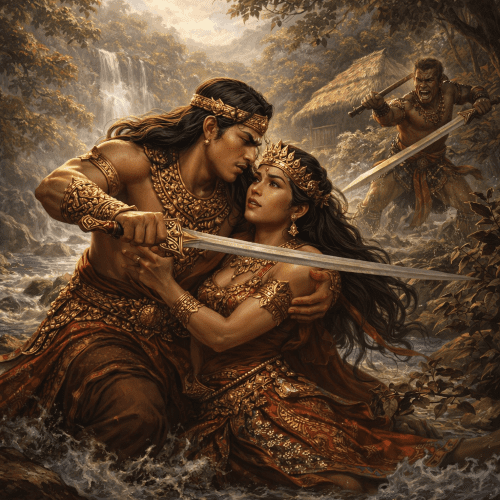
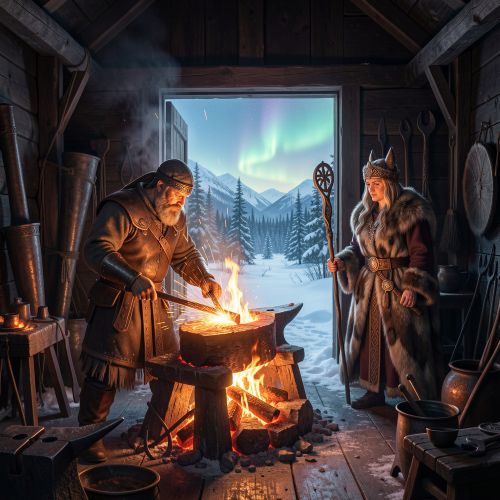
This is the myth of Geser Khan, a legend of Central Asia encompassing Mongolia, Kazakhstan, Kyrgyzstan, Uzbekistan, Turkmenistan, and Türkiye. The Buryat people are of Mongolic descent, as they are the descendants of the soldiers stationed during the conquest of Russia and Siberia by the Great Mongol Empire—the world’s strongest empire that conquered the world. Therefore, in Mongolian mythology, Geser Khan is the god of the world’s strongest soldier-emperor, the god of war, the god of world conquest, and the deity of war horses, war dogs, and the steel sword.