

Kolomane : The Serpent Beings of Kanuri Folklore
| Description | |
|---|---|
| Origin | Kanuri Mythology |
| Nature | Malevolent |
| Notable Members | N/A |
| Symbolism | Danger, Chaos, Hidden treasures |
| Epics | Oral folklore |
Mythlok Perspective
In Mythlok’s Perspective, the Kolomane feel less like fantasy monsters and more like living embodiments of environmental fear. Their mythology emerges directly from the realities of the Lake Chad Basin, where water could sustain entire communities or destroy them without warning. Unlike dragons that often become symbols of kingship or wisdom in other traditions, the Kolomane remain raw and territorial forces of nature. They resemble the darker side of African water-spirit traditions, where rivers are not merely sacred but unpredictable and dangerous. The absence of individual named Kolomane actually strengthens their mythological impact because they become universal threats hidden within every body of water. Across cultures, serpent beings often represent mystery and transformation, but in Kanuri folklore the Kolomane are primarily reminders that nature itself can become monstrous when disrespected.
Kolomane
Introduction
Kanuri mythology preserves a rich network of oral traditions shaped by centuries of life around the Lake Chad Basin in present-day Nigeria, Niger, Chad, and Libya. These traditions reflect the worldview of the Kanuri people, who historically formed the heart of the Kanem-Bornu Empire. Even after Islam became deeply rooted in the region, older beliefs surrounding spirits, sacred landscapes, and supernatural creatures continued to survive through storytelling and folklore. Among the most feared beings in these traditions are the Kolomane, monstrous serpent-like creatures associated with rivers, lakes, and wetlands.
The Kolomane are not individual characters but a race or class of dangerous aquatic beings. Stories describe them as predators lurking beneath the waters of Lake Chad and nearby rivers, attacking travelers and guarding hidden treasures. Their mythology reflects the practical fears of communities that depended on unstable waterways for survival. Drownings, floods, disappearing fishermen, and the mysteries of deep waters likely contributed to the development of these terrifying legends.
In Kanuri cosmology, supernatural beings are often grouped within a wider spirit world connected to nature and unseen forces. The Kolomane represent the hostile side of this system, embodying danger, chaos, and the unpredictable power of water. Unlike protective spirits connected with mountains or ancestral guidance, the Kolomane symbolize natural threats that humans must respect or avoid.
Physical Description
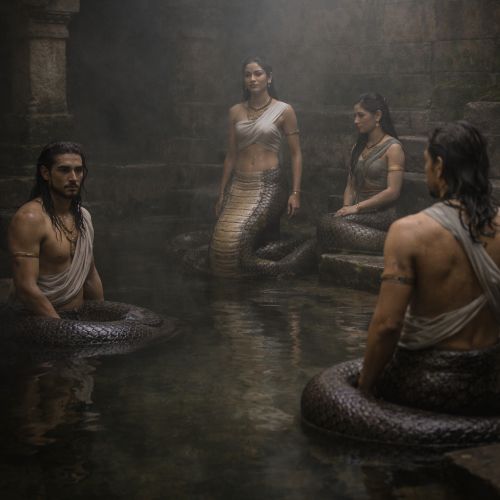
The Kolomane are consistently described as enormous serpent-like beings inhabiting lakes and rivers. Their exact appearance varies across oral retellings, but the core imagery remains the same: giant aquatic serpents with frightening, predatory characteristics. They are portrayed as distinctly non-human creatures designed to inspire fear in those who encounter them.
Kanuri folklore emphasizes their massive size and dominance over aquatic landscapes. Their bodies are imagined as long and powerful enough to move silently through deep waters before suddenly emerging to strike victims. Unlike divine serpents found in some mythologies, the Kolomane are not symbols of wisdom or cosmic balance. They are dangerous creatures linked to hidden depths and hostile territory.
Their habitat is central to their identity. Rivers, marshes, and the waters surrounding Lake Chad were vital to the Kanuri people, but these environments also carried significant risks. Crocodiles, seasonal flooding, and unpredictable currents created a natural atmosphere of fear and respect. The Kolomane became mythological extensions of these environmental dangers.
Although detailed descriptions of scales, colors, or facial features are rare in surviving sources, the serpent form itself carries strong symbolic meaning across African traditions. Serpents are often associated with hidden power, water, fertility, and destruction. In the case of the Kolomane, however, the symbolism leans heavily toward menace and predatory force rather than spiritual blessing.
Mythological Context
Within Kanuri folklore, the Kolomane belong to the wider supernatural framework sometimes associated with the Bili spirit world. These entities occupy the unseen spaces between nature and humanity. Some spirits within Kanuri tradition are benevolent, while others are hostile or dangerous. The Kolomane fall firmly into the latter category.
The Kanuri mythological landscape also includes other supernatural races and beings. Karewa are generally portrayed as protective mountain or cave spirits, while Ahalak are invisible entities associated with misfortune and harmful influence. Hyena-people or shapeshifting predators appear in certain folkloric traditions as well. Together, these beings create a cosmology where different terrains and natural environments possess their own supernatural inhabitants.
The Kolomane specifically represent the fear of water. Unlike the Karewa, who may guide or protect humans, the Kolomane are associated with ambush, death, and forbidden spaces. Their presence reinforces the idea that rivers and lakes are spiritually dangerous places requiring caution and respect.
This distinction between protective and destructive forces is common in African oral traditions, where the natural world is viewed as spiritually alive. Water may provide life, food, and trade, but it can also bring floods, disease, and death. The Kolomane embody this darker aspect of the environment.
Origins
The origins of the Kolomane lie in the oral traditions of the Lake Chad region, one of the oldest continuously inhabited areas in the Sahel. For centuries, Kanuri communities relied on rivers and lakes for fishing, farming, and transportation. These waterways were essential for survival, yet they also remained unpredictable and dangerous.
Many scholars believe that myths like the Kolomane developed as symbolic explanations for environmental threats. Before modern scientific understanding, mysterious disappearances, sudden storms, and deadly waters were often interpreted through supernatural narratives. Giant serpent creatures became a way to personify these fears.
The serpent archetype itself appears widely across African mythology. Water serpents are frequently linked with hidden wealth, spiritual gateways, fertility, or destructive natural power. In West and Central African traditions, serpent beings often inhabit rivers, lakes, or underground waters. The Kolomane fit within this broader cultural pattern while retaining their specifically Kanuri identity.
Unlike gods with detailed creation stories or heroic lineages, the Kolomane appear to have emerged gradually through collective oral storytelling. They function more as a recurring species of dangerous beings than as individual mythological personalities.
Notable Members
There are no individually named Kolomane recorded in surviving Kanuri folklore. The term refers collectively to a race or category of monstrous serpent beings rather than to singular characters.
This distinguishes the Kolomane from mythological traditions built around specific gods or heroes. In Kanuri folklore, the emphasis is often placed on the supernatural presence of a creature type rather than on the biography of one named entity. The Kolomane operate as recurring threats within oral storytelling, appearing wherever dangerous waters exist.
Their anonymity actually strengthens their role in folklore. Because they are not tied to one individual story, the Kolomane can exist everywhere at once. Any river, lake, or hidden marsh may potentially contain one of these terrifying beings. This transforms them into a permanent symbol of danger within the landscape itself.
Relationship with Other Beings
The relationship between the Kolomane and humans is overwhelmingly hostile. Stories portray them as predators attacking travelers, fishermen, or anyone reckless enough to approach dangerous waters without caution. They symbolize humanity’s vulnerability against the unseen forces of nature.
The Kolomane also contrast strongly with the Karewa spirits. While Karewa are connected with protection and guidance, the Kolomane represent destruction and fear. This duality reflects a broader balance within Kanuri cosmology between helpful and harmful supernatural forces.
Although associated with the wider spirit world, the Kolomane are not typically worshipped. Instead, they exist as feared entities whose territories must be respected. Some traditions suggest that rituals or spiritual protections could help people avoid hostile spirits, particularly after Islamic influence blended older beliefs with prayers and protective practices.
Similar Beings
The Kolomane resemble several serpent or water-spirit traditions found across Africa. In many cultures, serpentine beings symbolize the mysterious relationship between humanity and water. One comparison is with Mami Wata, a powerful water-associated spirit found across West and Central Africa. However, Mami Wata is often depicted as seductive or spiritually beneficial, while the Kolomane are almost entirely malevolent.
Another parallel appears in Nyami Nyami, the serpent-like river being associated with the Zambezi River. Both traditions connect serpents with waterways and supernatural authority, though Nyami Nyami is often viewed as protective toward local communities. The Kolomane also resemble the broader African tradition of sacred water serpents tied to fertility, storms, or hidden treasure. What makes the Kanuri interpretation distinct is its emphasis on predatory hostility rather than divine guardianship.
Symbolism and Interpretations
The Kolomane symbolize the dangers hidden within the natural world. For communities living around unstable rivers and lakes, these creatures represented real environmental fears transformed into mythology. Drowning, sudden flooding, and disappearing travelers could all be explained through the existence of monstrous water serpents.
Their role as guardians of treasure may also carry symbolic meaning. Hidden wealth beneath dangerous waters reflects the idea that nature contains both valuable resources and deadly risks. Only those who respect spiritual boundaries can safely navigate these spaces.
On a deeper level, the Kolomane embody chaos and unpredictability. They stand opposite to social order, human settlement, and sacred authority. In this sense, they function as reminders that not all parts of the world can be controlled by humanity.
Modern Influence
Today, the Kolomane survive mainly through oral storytelling, folklore preservation, and academic studies of Kanuri culture. Although Islam dominates religious life across Kanuri communities, older myths remain important cultural memories passed down through generations.
Modern researchers studying African oral traditions continue documenting stories about supernatural beings from the Lake Chad region. These efforts help preserve cultural identities that might otherwise disappear due to modernization and conflict in the Sahel.
The Kolomane also hold value in comparative mythology. Scholars often compare them with water-serpent traditions across Africa and beyond, showing how many societies use serpentine creatures to express fear of deep waters and unknown environments. Even without widespread representation in modern films or games, the Kolomane remain powerful symbols of Kanuri cultural heritage and environmental storytelling.
Sources
101 Last Tribes. (n.d.). Kanuri people. Retrieved from https://www.101lasttribes.com/tribes/kanuri.html
Mythic Remembering. (n.d.). Kanuri Cosmology by Oral Tradition. Retrieved from https://mythicremembering.com/books/kanuri-cosmology/
Lange, D. (2004). Ancient Kingdoms of West Africa: African-centred and Canaanite-Israelite Perspectives. Dettelbach: Röll.
Brenner, L. (1984). The Shehus of Kukawa: A History of the Al-Kanemi Dynasty of Bornu. Oxford University Press.
Cohen, R. (1967). The Kanuri of Bornu. Holt, Rinehart and Winston.
Hiskett, M. (1994). The Development of Islam in West Africa. Longman.
Journal of African Studies. (2010). Water Spirits and Serpent Archetypes in African Mythology. University of Ibadan Press.
Frequently Asked Questions
What are the Kolomane in Kanuri mythology?
Kolomane are serpent-like aquatic beings from Kanuri folklore associated with rivers, lakes, and dangerous waters.
Are the Kolomane connected to spirits?
Yes. They are associated with the wider supernatural spirit world in Kanuri cosmology, though they function more as a race of beings than individual spirits.
Are the Kolomane individual monsters or a race?
The Kolomane are considered a race or class of monstrous water beings rather than a single named creature.
Where do Kolomane legends originate?
Their legends originate from the Lake Chad Basin among the Kanuri people of Nigeria, Niger, Chad, and Libya.
What do the Kolomane symbolize?
They symbolize the dangers of deep water, environmental uncertainty, hidden wealth, and predatory natural forces.