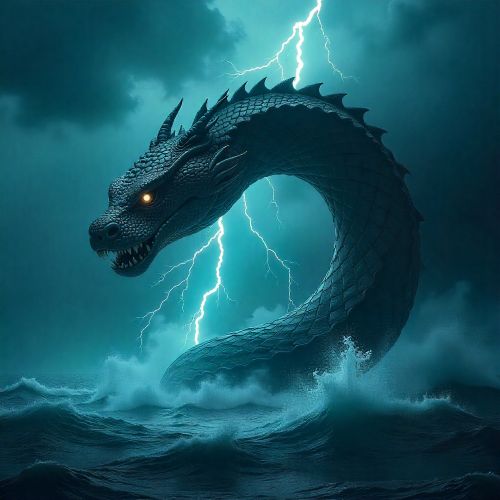


Bakwa : The Diamond Crested Serpent in Kalinago Traditions
At a glance
| Description | |
|---|---|
| Origin | Kalinago Mythology |
| Classification | Spirits |
| Family Members | N/A |
| Region | Dominica |
| Associated With | Protection, Guardianship, Resilience, Nature |
The Mythlok Perspective
In Mythlok’s Perspective, Bakwa represents more than a giant serpent hidden within Kalinago folklore. The figure embodies the living spirit of the land itself, where mountains, oceans, and forests become sacred extensions of identity and memory. Unlike many serpent myths that focus on chaos or destruction, Bakwa functions primarily as a guardian connected to survival and continuity. Cross-culturally, Bakwa resembles protective serpent beings such as Quetzalcoatl from Mesoamerican tradition and Naga from Indian tradition. Like those figures, Bakwa connects spiritual power with nature, sacred geography, and ancestral wisdom. The serpent ultimately represents a universal mythological idea: that the land itself remembers and protects its people.
Bakwa
Introduction
Bakwa is one of the most fascinating figures in Caribbean Mythology and is deeply connected to the traditions of the Kalinago people, also known as the Island Caribs. The legend survives through oral storytelling in Dominica, where Bakwa is remembered as a massive serpent spirit that emerged from the Atlantic Ocean and claimed the island as sacred ground for the Kalinago. More than a simple monster or mythical snake, Bakwa became a guardian figure whose presence symbolized protection, survival, and spiritual connection with the land.
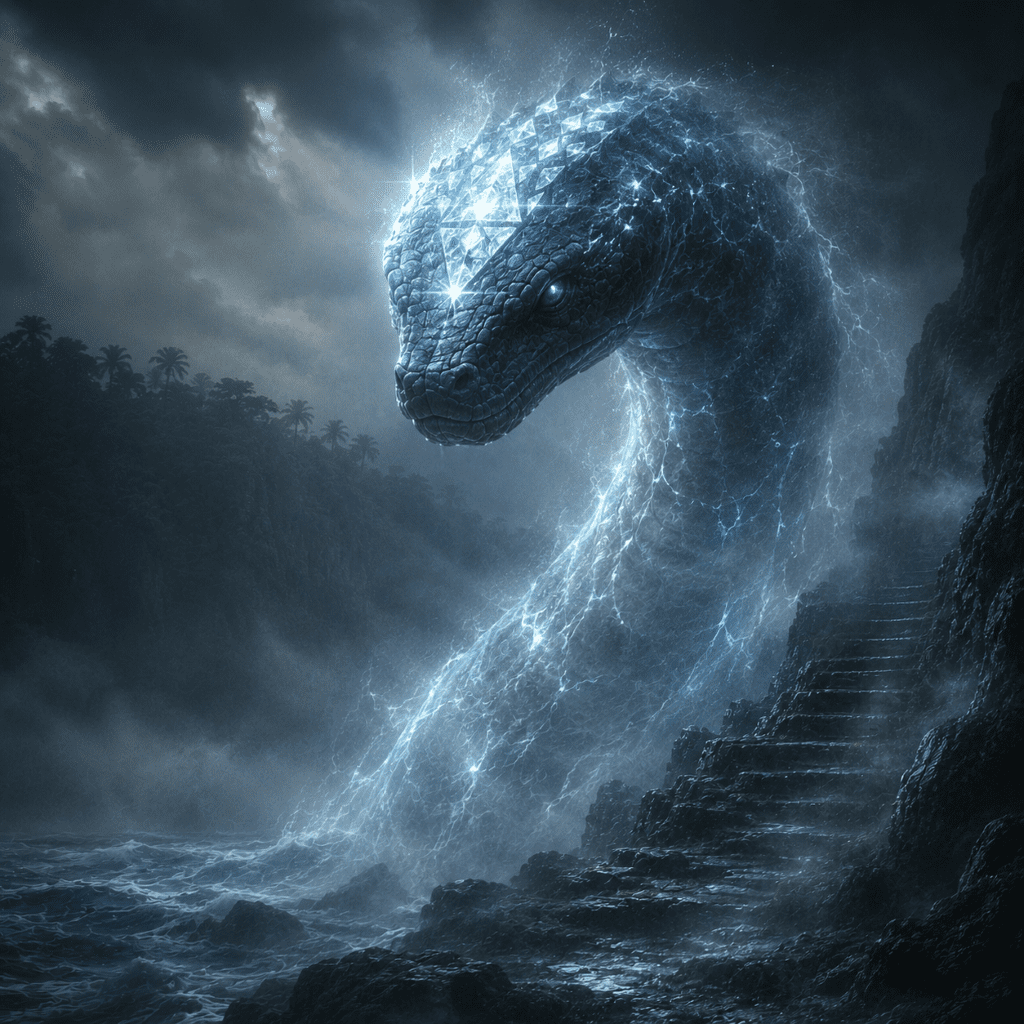
According to Kalinago tradition, Bakwa traveled from the Minoco River region in South America before arriving on the island known historically as Waitukubuli, now called Dominica. The serpent climbed the steep volcanic cliffs after emerging from the sea, leaving behind marks that later became associated with the famous rocky formation known as L’Escalier Tête Chien. The site is still linked with the myth today and remains an important cultural landmark tied to Indigenous Caribbean identity.
The story of Bakwa also reflects historical memory. Many modern retellings connect the serpent with the struggles faced by the Kalinago during European colonization. Oral traditions describe Bakwa protecting the people from invading forces and helping them survive during periods of violence and displacement. Because of this, the serpent became more than a supernatural creature. It evolved into a symbol of endurance and resistance.
Unlike many myths that focus purely on battles or destruction, the legend of Bakwa carries a spiritual and environmental meaning. The serpent is tied directly to the mountains, oceans, forests, and volcanic terrain of Dominica. In Kalinago belief, the natural world is alive with spirit, and Bakwa represents the protective force within nature itself.
Physical Traits
Bakwa is traditionally described as a gigantic serpent resembling a boa constrictor or anaconda. Its enormous size is one of the defining aspects of the legend. Stories portray the creature as large enough to climb cliffs, move across mountains, and reshape parts of the landscape itself. This immense scale gives Bakwa an almost primordial presence, making it feel ancient and inseparable from the island.
One of Bakwa’s most recognizable features is its diamond-shaped crest. This detail appears repeatedly in oral traditions and distinguishes the serpent from ordinary snakes. The crest is often interpreted as a sign of supernatural authority or sacred status. In some retellings, it symbolizes Bakwa’s role as a kingly guardian spirit watching over the Kalinago people.
The serpent is closely linked to the rocky formation called L’Escalier Tête Chien, often translated as “the staircase of the great serpent” or “dog-head snake staircase.” The grooves and rocky steps along the cliffs are believed to be traces left behind by Bakwa as it moved inland from the sea. This physical connection between the myth and the landscape makes the legend feel rooted in reality for many local communities.
Descriptions of Bakwa rarely focus on specific colors or decorative markings. Instead, the emphasis is placed on presence, movement, and scale. The serpent is imagined as a force of nature rather than a decorative fantasy creature. In many ways, Bakwa represents the raw and untamed spirit of Dominica itself.
Family
There are no surviving traditions that describe Bakwa as having parents, siblings, children, or a divine family structure. Unlike mythological systems built around large pantheons of gods, Kalinago traditions often focus more on spirits, ancestors, and natural beings connected to the environment.
Although Bakwa lacks a biological family in mythology, the serpent maintains a powerful relationship with the Kalinago people. Oral stories portray the creature as a guardian and protector who treated the Indigenous population as its chosen community. This bond gives the myth a strong sense of collective identity rather than dynastic lineage.
Some versions of the story mention Bakwa interacting with individual humans, including farmers or travelers who encounter the serpent in sacred spaces. These interactions usually reinforce the idea that Bakwa watches over the land and rewards those who respect nature and tradition. However, these stories remain symbolic rather than familial.
The absence of a divine family also adds to Bakwa’s mysterious nature. The serpent exists almost like an eternal spirit of the island itself, independent from the family structures found in many other mythological traditions.
Other names
Bakwa is known by several titles and regional variations throughout Kalinago and Caribbean folklore. One of the most common titles is the “Snake King of the Kalinago,” which highlights the creature’s authority and sacred status within the community.
The serpent is also associated with the name Akayima in certain Kalinago traditions. This variation reflects the linguistic diversity of Indigenous Caribbean storytelling and the survival of ancient oral narratives across generations.
Another important association is L’Escalier Tête Chien, the name connected to the famous rocky formation in Dominica. Over time, the landmark itself became inseparable from the legend of Bakwa, turning geography into living mythology.
In English retellings, Bakwa is frequently referred to as the “Great Serpent” or “Spirit Serpent.” These names emphasize its supernatural qualities rather than portraying it as a normal animal. Although similar-sounding names like “bakru” or “baccoo” appear in Caribbean folklore elsewhere, those spirits belong to different traditions and should not be confused with the Kalinago Bakwa.
Powers and Abilities
Bakwa possesses immense supernatural power within Kalinago tradition. One of its most important abilities is spiritual guardianship. The serpent acts as a protector of the Kalinago people, defending their homeland and watching over the island during times of danger.
The legend also credits Bakwa with transforming the landscape itself. The formation of L’Escalier Tête Chien is believed to be the physical result of the serpent’s movement across Dominica’s volcanic cliffs. This gives Bakwa powers connected to earth, geography, and natural creation.
Another remarkable ability is Bakwa’s mastery of both sea and land. Stories describe the serpent crossing vast ocean distances from South America before climbing steep mountains after arriving in Dominica. This movement between environments reinforces the idea that Bakwa exists beyond the limits of ordinary creatures.
Some modern retellings also describe Bakwa as having magical or prophetic qualities. In certain traditions, the serpent lies dormant within a hidden cave and will awaken when peace finally returns to the world. This belief transforms Bakwa into a symbol of renewal, hope, and spiritual balance.
Modern Day Influence
The legend of Bakwa remains an important part of Kalinago cultural identity in Dominica today. The myth is frequently shared through storytelling projects, heritage programs, and local education initiatives designed to preserve Indigenous traditions for younger generations.
One of the most significant modern interpretations appears in the children’s book The Snake King of the Kalinago, written with contributions from Dominican students. The project helped preserve oral traditions while introducing younger readers to Indigenous Caribbean heritage in an accessible format.
Bakwa also continues to influence tourism and cultural preservation in Dominica. Sites connected with the legend, particularly L’Escalier Tête Chien and the Kalinago Territory, attract visitors interested in Indigenous history and folklore. The serpent has effectively become a symbol of the island’s ancient spiritual traditions.
The story additionally carries environmental meaning in modern discussions. Because Bakwa is tied directly to forests, cliffs, rivers, and oceans, the legend is increasingly viewed as a reminder of the relationship between Indigenous communities and the natural world. In this sense, Bakwa remains spiritually relevant even in contemporary Caribbean culture.
Related Images
Source
Atkinson School Grade 6. (2010). The snake king of the Kalinago. Papillote Press. https://books.google.com/books/about/The_Snake_King_of_the_Kalinago.html?id=nzaERAAACAAJ
Iyatina Kalinago. (n.d.). Kalinago Territory. https://kalinago.ictu.gov.dm/kalinago-territory/
Morgan, A. (2012, August 22). Dominica: Myth making. A year of reading the world. https://ayearofreadingtheworld.com/2012/08/22/dominica-myth-making/
Caribbean Beat Magazine. (2010). Book reviews – May/June 2010. https://www.caribbean-beat.com/issue-103/book-reviews-mayjune-2010
Kalinago Territory. (n.d.). Iyatina Kalinago. https://kalinago.ictu.gov.dm/kalinago-territory/
Brooklyn Rail. (2023, November). Jungle siren. https://brooklynrail.org/2023/11/fiction/Jungle-Siren/
Caribbean Book Blog. (2010, January 31). The snake king of the Kalinago. https://caribbeanbookblog.wordpress.com/2010/01/31/the-snake-king-of-the-kalinago-dominicas-kalinago-children-celebrate-their-cu/
Frequently Asked Questions
Who is Bakwa in Kalinago mythology?
Bakwa is a giant serpent guardian from Kalinago tradition believed to protect the Indigenous people of Dominica.
What does Bakwa symbolize?
Bakwa symbolizes protection, resilience, sacred land, and the spiritual connection between nature and the Kalinago people.
Is Bakwa based on a real snake?
Legends describe Bakwa as resembling a massive boa constrictor or anaconda native to South America.
What is L’Escalier Tête Chien?
It is a rocky formation in Dominica believed to have been created by Bakwa as the serpent climbed inland.
Is Bakwa still important today?
Yes, Bakwa remains an important symbol of Kalinago heritage, storytelling, and Indigenous Caribbean identity.