Lizards in Ancient Civilizations and Sacred Traditions
Lizards occupy a fascinating place in mythology as creatures associated with regeneration, survival, transformation, the earth, water, and the mysterious boundaries between the natural and supernatural worlds. Their ability to shed their skin, move between rocks and vegetation, disappear into crevices, and survive in harsh environments has given reptiles a distinctive symbolic presence across many traditions. Mythical lizards can appear as enormous supernatural creatures, sacred animals, guardian spirits, or dangerous beings possessing powers far beyond those of ordinary reptiles.
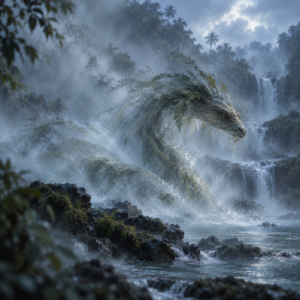
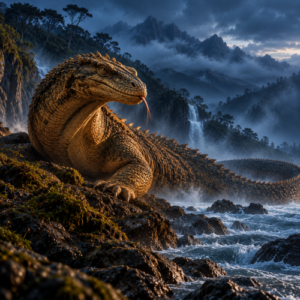
In Hawaiian mythology and traditional Hawaiian belief, moʻo are powerful reptilian supernatural beings commonly described as enormous lizard- or dragon-like creatures. They can inhabit freshwater pools, rivers, caves, and other liminal places. Some moʻo are dangerous guardians, while others appear in stories involving transformation and supernatural encounters. Their association with water and hidden places makes them particularly important examples of reptilian beings that exist between the natural landscape and the spirit world.
European traditions contain another famous reptilian creature in the Basilisk. Often described as a serpent or serpent-like reptile, later traditions gave it increasingly lizard-like characteristics, including a crest or crown. The basilisk was believed to possess extraordinarily dangerous powers, with its gaze or breath capable of killing. Its mythology demonstrates how an ordinary reptile could be transformed into a supernatural embodiment of deadly power.
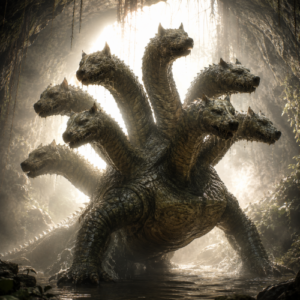
The Amphisbaena, another creature from Greek and later European traditions, was imagined as a serpentine being with a head at each end of its body. Although it is often classified among legendary serpents, its reptilian anatomy and unusual form place it within the broader family of mythical reptilian creatures. Its name derives from the idea of moving in both directions, reflecting ancient fascination with creatures that seemed to violate ordinary natural laws.
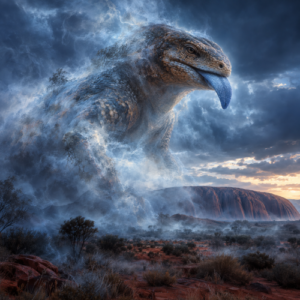
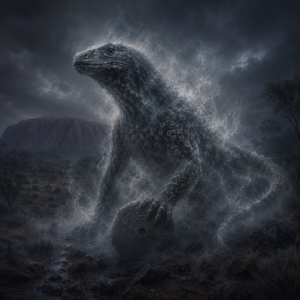
Across Indigenous traditions, reptiles can also appear as ancestral or spiritually significant beings. In some Australian Aboriginal traditions, lizard and goanna beings occur within ancestral narratives and landscapes, with particular species carrying significance within individual cultural traditions. These stories should not be treated as a single pan-Australian mythology; relationships between animals, ancestors, landscapes, and spiritual law vary considerably between communities.
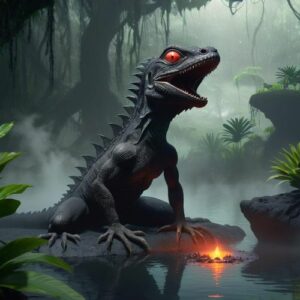
Lizard-like creatures also appear throughout folklore as guardians of sacred places, inhabitants of hidden waters, and supernatural beings capable of changing form. Their ability to remain motionless before suddenly disappearing makes them particularly suited to stories about concealment, watchfulness, and the unseen world.
The mythical lizard therefore occupies a space between animal and supernatural guardian. Unlike dragons, which are usually imagined as enormous composite or serpentine creatures with distinctly fantastical attributes, mythical lizards often retain a recognizably reptilian identity. Their supernatural qualities may come from extraordinary size, magical abilities, sacred status, transformation, or their connection to particular landscapes.
From the Hawaiian moʻo to the deadly basilisk and other legendary reptilian beings, mythical lizards demonstrate how cultures transformed familiar animals into creatures of mystery and supernatural power. Their stories connect the small reptile found beneath a stone or beside a pool with a much larger mythological world of guardians, transformations, danger, survival, and hidden forces.