
Amomonggo : The Ape Creature of Philippine Folklore
At a glance
| Description | |
|---|---|
| Origin | Philippine Mythology |
| Classification | Hybrids |
| Family Members | N/A |
| Region | Philippines |
| Associated With | Strength, Aggression, Wilderness, Predatory behavior |
The Mythlok Perspective
In Mythlok’s Perspective, the Amomonggo reflects humanity’s instinct to personify the unknown forces of nature, especially those that dwell in remote and untamed landscapes. It is less a monster and more a projection of wilderness itself. Similar figures appear globally, such as Bigfoot in North America or the Yeti in the Himalayas, each embodying fear of isolation and the unseen. Unlike supernatural beings, the Amomonggo stands closer to nature, representing a universal archetype of the wild made flesh.
Amomonggo
Introduction
The Amomonggo, sometimes spelled Amomongo, is a mysterious creature deeply rooted in Philippine folklore, particularly in the Western Visayas region. It is most strongly associated with Negros Occidental, where stories describe it as a violent, ape-like being living in caves near Mount Kanlaon. Unlike many creatures in Philippine tradition that are tied to sorcery or the supernatural, the Amomonggo is often perceived as something more primal, closer to a wild animal than a spirit.
Its name comes from the Hiligaynon word “amó,” meaning ape or monkey, which directly reflects how locals interpret its appearance and behavior. The creature gained widespread attention in 2008 after reported attacks in La Castellana, where residents claimed that a hairy being with long claws injured people and killed livestock. These accounts brought the Amomonggo out of oral tradition and into modern discussion, blurring the line between folklore and cryptid sightings.
Beyond fear, the Amomonggo also appears in traditional storytelling, most notably in the tale “Amomonggo and Iput-Iput,” where it plays the role of a powerful but ultimately outwitted creature. This dual presence in both fear-based sightings and moral tales gives the Amomonggo a unique place in Philippine cultural memory.
Physical Traits
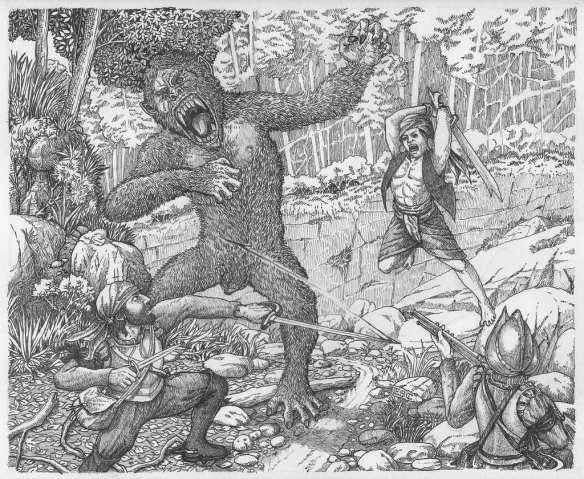
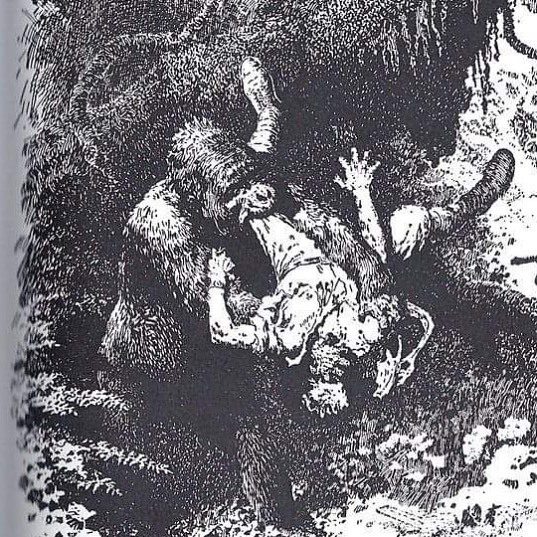
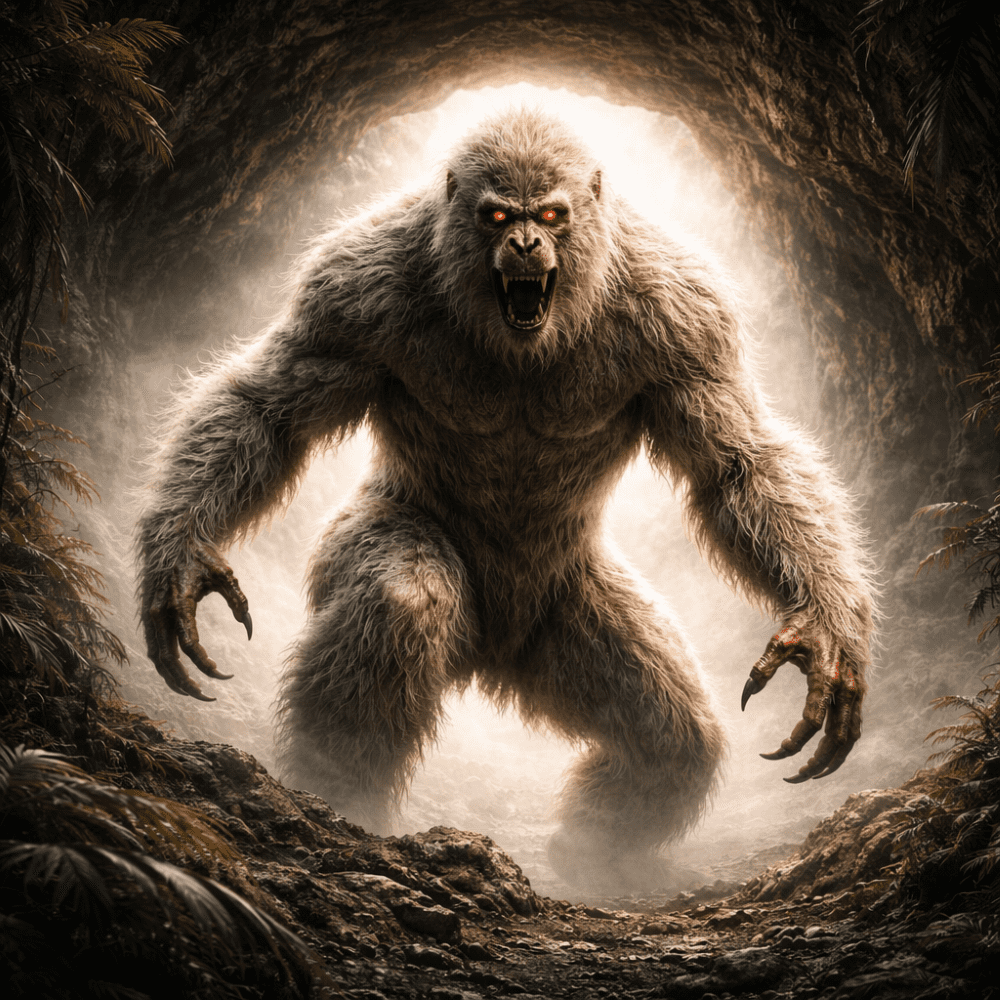
Descriptions of the Amomonggo are remarkably consistent across different accounts. It is typically portrayed as a man-sized ape, standing roughly around 5 feet to 5 feet 5 inches tall. Its body is covered in thick hair, sometimes described as white or light-colored, which distinguishes it from typical primates known in other parts of the world.
One of its most defining features is its unusually long, sharp nails. These claws are said to be its primary weapon, capable of inflicting deep scratches and tearing into flesh. Reports from alleged encounters describe wounds that align with claw-like injuries rather than bites or blunt force.
Although locals sometimes compare it to a gorilla, this comparison is symbolic rather than biological, as gorillas are not native to the Philippines. The resemblance instead reflects how people attempt to understand the creature using familiar imagery. In some areas of Negros, similar beings are referred to as Ikugan, suggesting a broader category of large, simian-like entities in regional folklore.
Family
The Amomonggo does not have a defined family structure within Philippine folklore. Unlike gods, spirits, or legendary heroes, it is not part of a larger mythological lineage. It is most often depicted as a solitary creature, living and hunting alone in remote mountainous regions.
In narrative folklore, particularly in the story “Amomonggo and Iput-Iput,” the creature is sometimes shown alongside groups of similar beings. However, this appears to serve a symbolic or storytelling function rather than representing an established biological or mythological family system. Across eyewitness accounts and oral traditions, the Amomonggo remains an isolated presence, reinforcing its image as a wild and unpredictable entity.
Other names
The Amomonggo is known by a few alternate names and associations, though they are often regional or interpretative rather than formally established. In some contexts, it has been linked to terms like Orang Mawas, a name used in parts of Southeast Asia for ape-like cryptids. It has also been referred to as Impakta in certain local narratives.
In Negros Occidental, creatures similar to the Amomonggo are sometimes called Ikugan, reinforcing the idea that this being may belong to a broader category of simian-like folklore entities. Additionally, translations of the name sometimes render it as “gorilla,” not because of scientific accuracy but due to its perceived resemblance to a large ape.
Powers and Abilities
The Amomonggo is primarily defined by its physical power and aggressive behavior. It is believed to possess immense strength, allowing it to overpower animals and potentially humans. Reports from Negros Occidental describe incidents where goats and chickens were disemboweled, with the creature allegedly consuming their entrails.
In 2008, two individuals reported being attacked by a hairy creature with long nails, sustaining multiple scratches across their bodies. These injuries added a layer of credibility to local fears, even though no definitive evidence confirmed the creature’s existence.
Despite its fearsome reputation, the Amomonggo is not typically described as having supernatural abilities. It does not shapeshift, cast spells, or exhibit intelligence associated with entities like the aswang. Instead, it behaves more like a territorial predator, driven by hunger and instinct.
Some local interpretations suggest that environmental factors, such as habitat disruption or food scarcity near Mount Kanlaon, could explain its aggressive behavior. This perspective frames the Amomonggo not as an evil being, but as a creature reacting to ecological pressures.
Modern Day Influence
The Amomonggo continues to hold a place in both folklore and modern curiosity. The 2008 sightings brought renewed attention to the creature, leading to comparisons with global cryptids such as Bigfoot and the Yeti. While science generally attributes such sightings to misidentification or folklore, the persistence of these stories reflects their cultural significance.
In Philippine storytelling, the Amomonggo remains a symbol of raw القوة contrasted with intelligence, especially in tales like “Amomonggo and Iput-Iput.” These narratives continue to be shared across generations, preserving moral lessons within entertaining frameworks.
The creature has also entered modern media, appearing in local films, online storytelling platforms, and discussions about cryptozoology. Its connection to Mount Kanlaon adds an additional layer of intrigue, blending natural geography with mythic imagination.
More broadly, the Amomonggo represents how folklore adapts to modern contexts. It exists at the intersection of tradition, fear, and curiosity, reminding us that even in a scientific age, unexplained stories continue to shape cultural identity.
Related Images
Source
American Folklore Society. (n.d.). Philippine folk literature: An anthology. University of the Philippines Press.
Clark, J. (2022, June 2). AMOMONGO: Visayan Folkloric Being or Cryptid? The Aswang Project.
https://www.aswangproject.com/amomongo/
Eugenio, D. L. (2007). Philippine folk literature: An anthology. University of the Philippines Press.
Ramos, M. (2026, March 15). Philippine mythology: Legendary creatures [PDF]. Scribd.
https://www.scribd.com/document/685989150/ELT-212
SunStar. (2008, June). Creature terrorizing residents of farms. SunStar.com.ph.
Wikipedia contributors. (2024). Amomongo. Wikipedia. https://en.wikipedia.org/wiki/Amomongo
World of Animals Forum. (2016, November 25). Amomongo. ProBoards.
https://theworldofanimals.proboards.com/thread/1457/amomongo
Frequently Asked Questions
What is the Amomonggo?
The Amomonggo is an ape-like creature from Philippine folklore, known for its violent behavior and association with caves near Mount Kanlaon.
.Is the Amomonggo considered supernatural?
No, it is generally viewed as a wild, animal-like creature rather than a supernatural being like an aswang.
Where was the Amomonggo sighted?
Most reports come from La Castellana in Negros Occidental, particularly around Mount Kanlaon.
What does the Amomonggo look like?
It is described as a hairy, man-sized ape with long, sharp claws and sometimes light-colored fur.
Is the Amomonggo similar to Bigfoot?
Yes, it is often compared to Bigfoot or the Yeti, as all are ape-like cryptids linked to remote wilderness areas.