


ʻAhoʻeitu : The Divine Founder of Tonga’s First Royal Dynasty
At a glance
| Description | |
|---|---|
| Origin | Tongan Mythology |
| Classification | Demigods |
| Family Members | Tangaloa ʻEitumatupuʻa (Father), ‘Ilaheva Vaʻepopua (Mother), Talafale, Matakehe, Māliepō, Tuʻi Loloko, Tuʻi Folaha (Half-brothers) |
| Region | Tonga |
| Associated With | Sacred kingship, Divine ancestry, Origin of the Tuʻi Tonga line, Resurrection |
The Mythlok Perspective
In Mythlok’s Perspective, ʻAhoʻeitu represents the connection between divine ancestry and earthly authority. His birth, resurrection, and rise as the first Tuʻi Tonga transform a royal genealogy into a sacred origin story. Like Māui, he exists between the human and supernatural worlds, but his story is more directly tied to kingship and social order. His myth shows how mythology can preserve a culture’s understanding of ancestry, authority, and identity.
ʻAhoʻeitu
Introduction
ʻAhoʻeitu is one of the most important ancestral figures in Tongan mythology and traditional history. He is remembered as the first Tuʻi Tonga, the sacred chiefly title associated with Tonga’s earliest royal dynasty. His story connects the human and divine worlds through his parentage: his father is Tangaloa ʻEitumatupuʻa, a sky deity, while his mother is the mortal woman ʻIlaheva Vaʻepopua. Through this union, ʻAhoʻeitu becomes a figure whose ancestry explains the sacred foundations of Tongan kingship.
Traditional accounts do not present his story as a straightforward historical biography. Instead, his legend has been preserved through genealogy, oral tradition, and later written accounts, where mythology and political history overlap. Scholars have also noted that Tongan genealogical traditions contain different versions and chronological interpretations. Some traditional calculations place ʻAhoʻeitu around the 10th century, while other scholarship treats the dating as approximate rather than historically certain.
The central story follows ʻAhoʻeitu’s journey from the earthly world to the realm of his divine father, his encounter with his celestial half-brothers, his death and miraculous restoration, and his return to Tonga as the first Tuʻi Tonga. The narrative consequently explains not only royal ancestry but also relationships between different chiefly lines.
Physical Traits
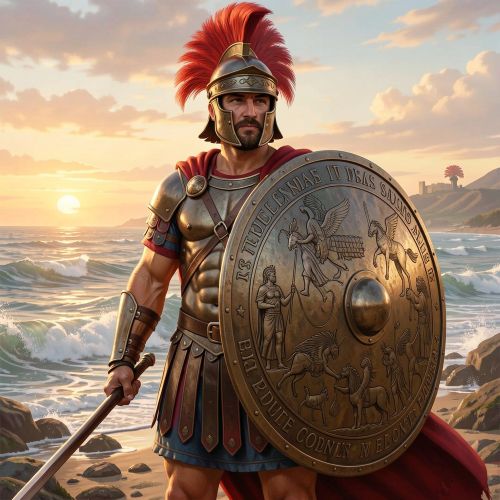
Tongan traditions do not preserve a detailed physical description of ʻAhoʻeitu. There is no reliable traditional account specifying his height, body type, complexion, hairstyle, or distinctive physical markings. For this reason, modern depictions that give him highly specific features should be understood as artistic interpretations rather than established elements of the mythology.
One popular Tongan retelling does describe ʻAhoʻeitu as having handsome or attractive features. This detail is significant because his appearance contributes to the jealousy of his five older half-brothers when they meet him in the sky. The emphasis, however, is on his exceptional presence rather than on a catalogue of physical characteristics.
His identity is ultimately defined less by his appearance than by his unusual status. He is born from a union between a divine father and a mortal mother, making him a bridge between the human and celestial realms. His journey to the sky reinforces this connection, while his return to Tonga transforms that divine ancestry into earthly authority. For a historically grounded representation, ʻAhoʻeitu is therefore best imagined as a young Tongan man of chiefly status rather than as a conventionally Europeanized fantasy king. Traditional Tongan cultural elements should take precedence over later artistic conventions.
Family
ʻAhoʻeitu’s parentage is central to his mythology. His father is Tangaloa ʻEitumatupuʻa, a member of the Tangaloa family of deities associated with the sky and divine ancestry. His mother is ʻIlaheva Vaʻepopua, a mortal woman connected in different traditions with Tongatapu and Niuatoputapu. Sources differ over some details of her ancestry and place of origin, illustrating the variations that occur within oral genealogical traditions.
According to the traditional narrative, Tangaloa encountered ʻIlaheva while descending from the sky to the earthly world. Their union resulted in the birth of ʻAhoʻeitu. As he grew older, ʻAhoʻeitu became curious about the identity of his father. His mother eventually directed him toward a great toa, or ironwood tree, through which he could travel toward the sky and meet Tangaloa.
There he encountered five older half-brothers: Talafale, Matakehe, Māliepō, Tuʻi Loloko, and Tuʻi Folaha. They were sons of Tangaloa and celestial women. Their jealousy of ʻAhoʻeitu eventually led them to kill him. In versions of the story, they consumed his body and discarded his remains.
Tangaloa discovered what had happened and ordered his sons to restore their brother. ʻAhoʻeitu was eventually brought back to life, after which he returned to Tonga. His brothers later followed him, but their relationship with his line was transformed. Traditional accounts explain that they and their descendants would serve ʻAhoʻeitu and his descendants, providing a mythological foundation for important chiefly relationships. The Polynesian Cultural Center associates the brothers with the Falefa, or Four Houses, and with the chiefly title Tuʻi Pelehake. The family story therefore functions as more than a tale of divine ancestry. It provides a traditional explanation for relationships among Tonga’s chiefly houses and the sacred hierarchy surrounding the Tuʻi Tonga.
Other names
The name is most accurately written ʻAhoʻeitu, using the Tongan ʻokina to represent the glottal stop. English-language sources also use forms such as Ahoʻeitu, Ahoeitu, and Aho’eitu, largely because older publications and digital systems handle Tongan orthography differently. The title most closely associated with him is Tuʻi Tonga, traditionally understood as the sacred king or ruler of Tonga. Traditional accounts identify ʻAhoʻeitu as the first holder of this title and the ancestral figure from whom the Tuʻi Tonga line developed.
It is important to distinguish the personal name ʻAhoʻeitu from the title Tuʻi Tonga. The former identifies the mythological ancestor, while the latter became a hereditary institution associated with successive generations of Tongan sacred rulers. The name also has continuing cultural resonance. Tonga’s present monarch, Tupou VI, was born with the name ʻAhoʻeitu ʻUnuakiʻotonga Tukuʻaho, demonstrating that the name remains part of the naming traditions surrounding Tonga’s royal family.
Powers and Abilities
ʻAhoʻeitu is not described in traditional sources as a god with a catalogue of independent supernatural powers. His importance comes primarily from his divine ancestry, his extraordinary journey, his resurrection, and his role as the first Tuʻi Tonga. His most remarkable mythological episode is his return from death. After his brothers killed him, Tangaloa intervened and restored him to life. Some versions describe his remains being recovered and placed in a kumete, or wooden bowl, with water and medicinal leaves before the resurrection occurred. The details vary between retellings, so the specific ritual ingredients should not be treated as universal features of every Tongan version.
His journey into the sky is equally important. ʻAhoʻeitu climbs the great toa tree to meet his divine father, making the tree a symbolic pathway between Maama, the earthly realm, and Langi, the heavenly realm. His descent back to Tonga then reverses the journey and brings divine ancestry into human society. His greatest mythological attribute is therefore sacred kingship. Tangaloa appoints him as the first Tuʻi Tonga, establishing a connection between divine ancestry and earthly authority. The resurrection reinforces the idea that his lineage possesses a sacred legitimacy that distinguishes it from earlier traditions of rulership.
Modern Day Influence
ʻAhoʻeitu remains important because his story sits at the intersection of Tongan mythology, genealogy, chiefly rank, and ideas about sacred authority. The Tuʻi Tonga institution continued for centuries after its traditional founding, although the exact chronology of its earliest period remains difficult to establish independently from oral tradition.
The final Tuʻi Tonga, Laufilitonga, died in 1865, bringing the historical Tuʻi Tonga title to an end. The political structure of Tonga subsequently developed under different chiefly and royal institutions.
ʻAhoʻeitu’s influence therefore should not be reduced to the claim that the modern Tongan monarchy is simply identical to the ancient Tuʻi Tonga dynasty. The relationship is more complex. Tongan genealogical traditions connect later chiefly and royal lines to the ancient Tuʻi Tonga ancestry, while the modern Tupou dynasty emerged through the changing political relationships among Tonga’s major chiefly lines.
His story also remains part of cultural education. The Polynesian Cultural Center continues to present the legend of ʻAhoʻeitu as part of its interpretation of Tongan heritage, including the relationship between the Tuʻi Tonga, the Falefa, and traditional kava ceremonies.
More broadly, ʻAhoʻeitu represents a recurring Polynesian mythological theme: the meeting of divine ancestry and human society. His story explores questions of inheritance, legitimacy, jealousy, death, restoration, and authority. Through his journey between earth and sky, ʻAhoʻeitu becomes more than a legendary king. He is a cultural ancestor through whom traditional Tongan ideas about genealogy and sacred rank have been remembered and interpreted across generations.
Related Images



Source
Craig, R. D. (1989). Dictionary of Polynesian mythology. Greenwood Press.
Gifford, E. W. (1924). Tongan myths and tales (Bernice P. Bishop Museum Bulletin 8). Bernice P. Bishop Museum.
Māhina, ʻO. (n.d.). The Tongan legend of ʻAhoʻeitu. Polynesian Cultural Center. https://www.polynesia.com/blog/tongan-legend-ahoeitu
Rutherford, N. (1977). Friendly islands: A history of Tonga. Oxford University Press.
Tongan Kava Ceremony–Taumafa Kava. (n.d.). In Wikipedia. https://en.wikipedia.org/wiki/Tongan_Kava_Ceremony-Taumafa_Kava
ʻAhoʻeitu. (n.d.). In Wikipedia. https://en.wikipedia.org/wiki/%CA%BBAho%CA%BBeitu
ʻAhoʻeitu. (n.d.). In DBpedia. https://dbpedia.org/page/%CA%BBAho%CA%BBeitu
Ahoeitu. (n.d.). In Godchecker. https://www.godchecker.com/polynesian-mythology/AHOEITU/
Frequently Asked Questions
Who was ʻAhoʻeitu in Tongan mythology?
ʻAhoʻeitu was the legendary first Tuʻi Tonga, born to the sky god Tangaloa ʻEitumatupuʻa and the mortal woman ʻIlaheva Vaʻepopua.
Who were the parents of ʻAhoʻeitu?
ʻAhoʻeitu was the son of Tangaloa ʻEitumatupuʻa, a Tongan sky deity, and ʻIlaheva Vaʻepopua, a mortal woman associated with Tonga.
Why was ʻAhoʻeitu killed by his brothers?
Traditional accounts say ʻAhoʻeitu’s five celestial half-brothers became jealous of him after meeting him and eventually killed him.
How was ʻAhoʻeitu brought back to life?
In traditional versions, Tangaloa ordered his brothers to restore his remains, after which ʻAhoʻeitu was miraculously resurrected.
Why is ʻAhoʻeitu important to Tonga?
ʻAhoʻeitu is important because Tongan tradition identifies him as the first Tuʻi Tonga and a foundational ancestor of sacred chiefly and royal traditions.


