


Taleju Bhawani : The Royal Guardian Goddess of Nepal
At a glance
| Description | |
|---|---|
| Origin | Nepali Mythology |
| Classification | Gods |
| Family Members | Shiva (Husband) |
| Region | Nepal |
| Associated With | Royal protection, Kingship, Tantric power, Victory, Kumari tradition, |
The Mythlok Perspective
In Mythlok’s Perspective, Taleju Bhawani stands apart from most guardian goddesses because her influence extended far beyond temples into the very foundation of a nation’s political identity. While figures like Athena protected cities through wisdom and Durga defended the cosmos from evil, Taleju determined whether kings were worthy to rule. Her transition from royal deity to the spiritual force behind the Living Kumari also makes her one of mythology’s most fascinating examples of divine authority evolving with society. She reminds us that true power endures not because of kingdoms, but because people continue to believe in the ideals a deity represents.
Taleju Bhawani
Introduction
Taleju Bhawani is one of the most revered goddesses in Nepali mythology, celebrated as the divine protector of kings, kingdoms, and the Kathmandu Valley itself. Worshipped as a powerful Tantric manifestation of the Hindu goddess Durga, she became the royal tutelary deity of the Malla dynasty during the medieval period and later continued to be honored by the Shah rulers. More than a goddess of war, Taleju represented divine authority, justice, and the spiritual legitimacy of Nepal’s rulers.
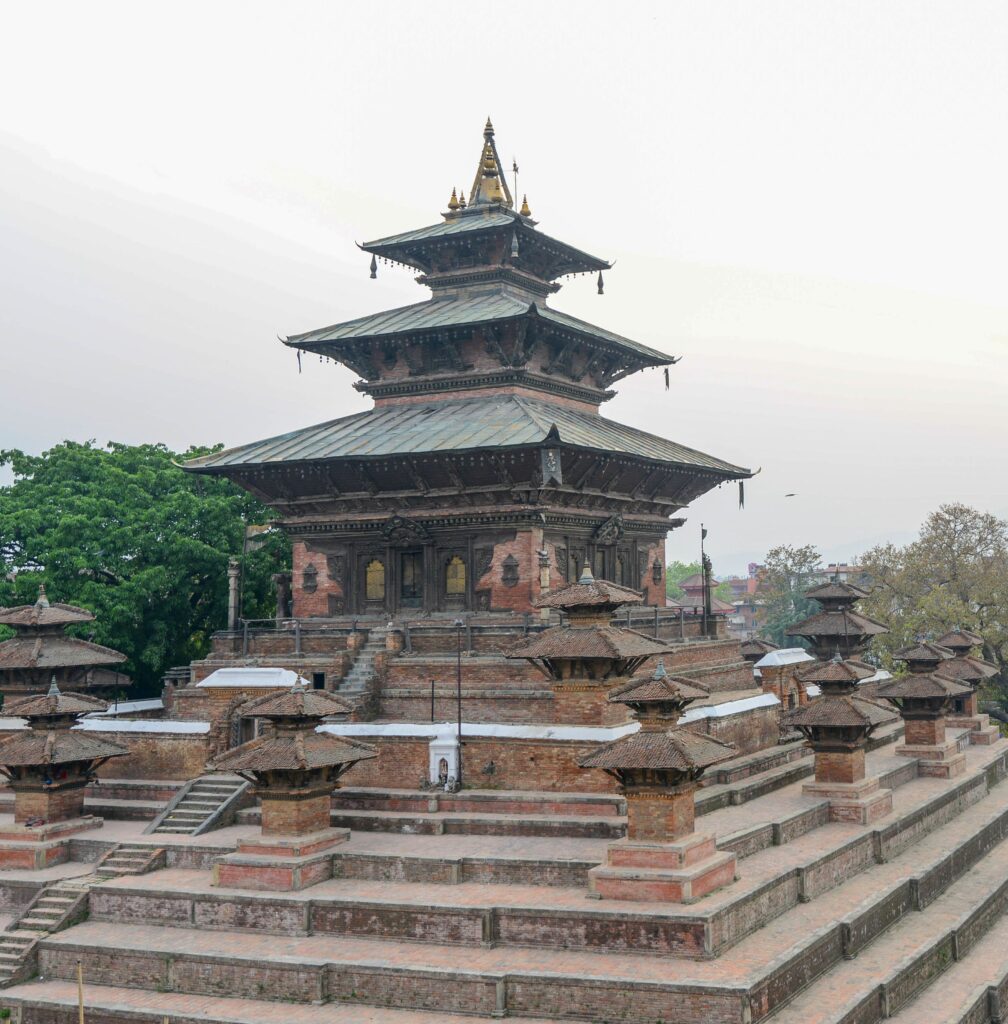
Her worship shaped the political and religious identity of the Kathmandu Valley for centuries. Magnificent temples dedicated to her stand within the historic Durbar Squares of Kathmandu, Patan, and Bhaktapur, where royal ceremonies once revolved around her blessings. Although Nepal is no longer a monarchy, Taleju Bhawani continues to occupy an important place in the country’s religious life. Her enduring connection with the Living Goddess, or Kumari, has ensured that her presence remains deeply woven into Nepal’s cultural identity.
Physical Traits
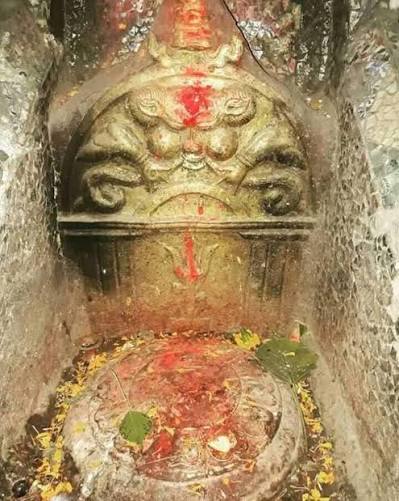
Unlike many Hindu deities whose idols are widely displayed for public worship, Taleju Bhawani is surrounded by an air of sacred secrecy. In keeping with Tantric traditions, she is often worshipped through sacred yantras and esoteric rituals rather than through openly accessible images. The innermost sanctuaries of her temples remain restricted, reinforcing her status as a mysterious and powerful divine presence.
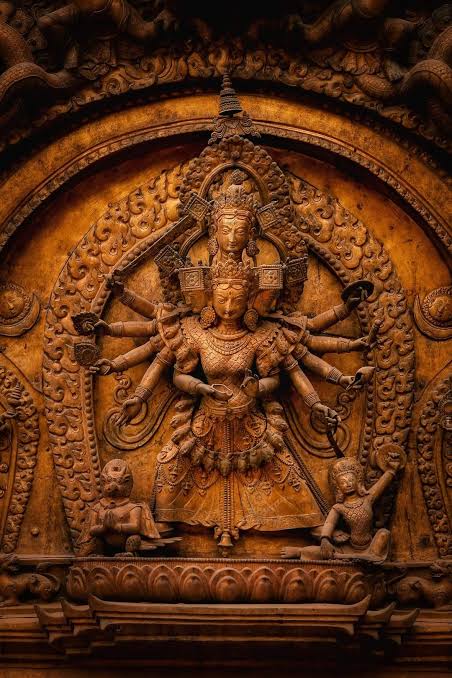
When represented in artistic depictions, Taleju closely resembles the fierce forms of Durga. She is commonly portrayed with multiple heads and numerous arms, each carrying symbolic weapons that represent her ability to destroy evil and protect righteousness. One of the most famous depictions appears above the Golden Gate in Bhaktapur Durbar Square, where she is shown with eight heads and multiple arms, surrounded by protective symbols including Garuda and serpentine Nagas.
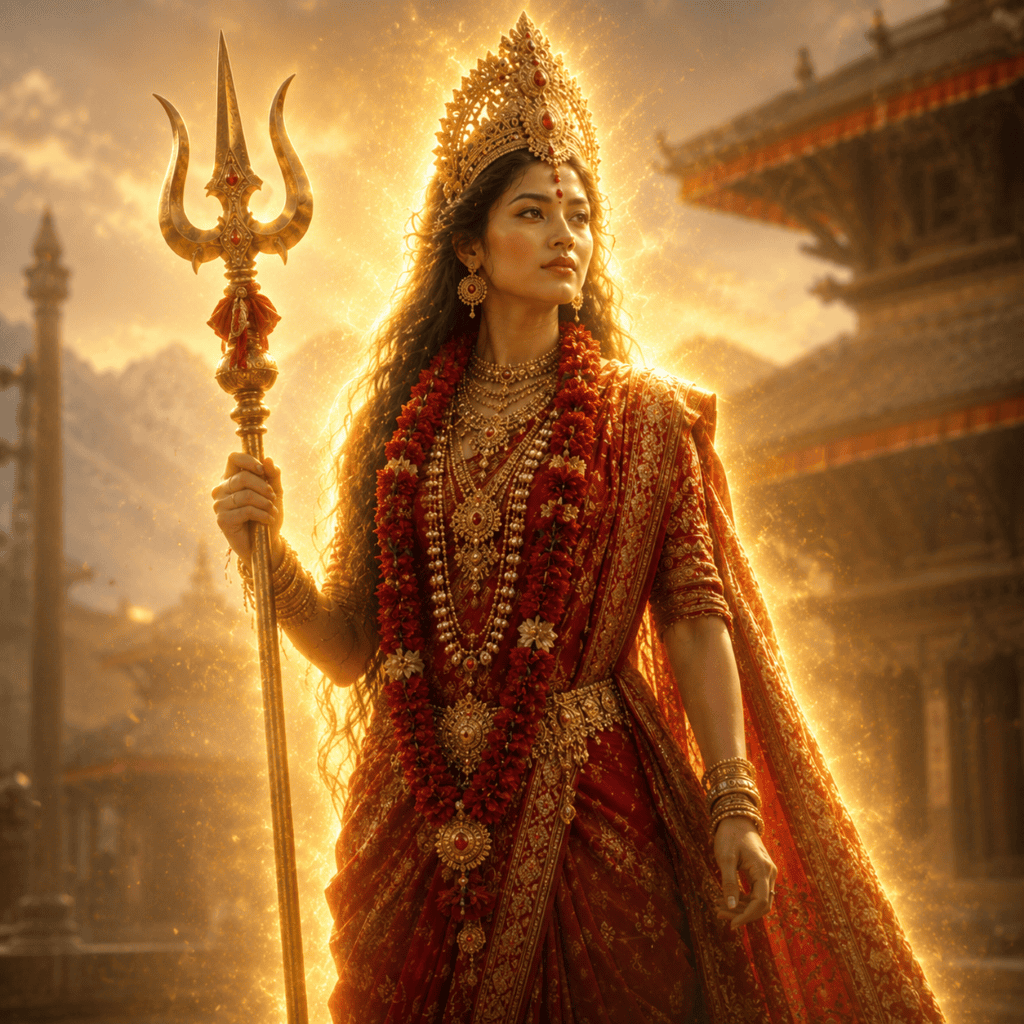
Her lion mount further emphasizes her fearless nature and martial power. Like Mahishasuramardini, the slayer of the buffalo demon Mahishasura, Taleju embodies courage, divine justice, and the triumph of order over chaos. Her traditional iconography often features brilliant red and golden garments, a radiant crown, and a prominent third eye, symbolizing wisdom, spiritual awareness, and supreme authority.
Family
Taleju Bhawani is widely regarded as a form of Durga or Tripura Sundari, placing her within the broader Hindu tradition of Shakti, the divine feminine energy. As an aspect of Durga, she is closely associated with Shiva, whose cosmic power is expressed through Shakti’s active force. Rather than possessing an independent family lineage unique to Nepali mythology, Taleju shares the divine relationships commonly attributed to Durga and Parvati.
Her most significant relationship, however, is not defined through genealogy but through devotion. For centuries, she served as the kuladevi, or royal guardian goddess, of the Malla kings. According to tradition, the prosperity and stability of the kingdom depended upon the rulers maintaining her favor through elaborate rituals and Tantric worship. Her blessings were believed to grant kings the divine right to rule, making her an essential figure in Nepal’s political and spiritual history.
Within Newar religious traditions, Taleju also shares ritual associations with deities such as Bhairava, who frequently appears as a guardian in ceremonies connected with her worship. These relationships highlight her central role within the sacred landscape of the Kathmandu Valley.
Other names
Over the centuries, Taleju Bhawani has been known by several names that reflect both regional traditions and her association with other forms of the Divine Mother. The most common names include Taleju, Taleju Bhawani, and Taleju Maju, with the latter meaning “Mother Taleju” in the Newar language. She is also linked with Tripura Sundari, emphasizing her role within Tantric worship.
Many historians believe her cult may have connections with Tulja Bhavani of present-day Maharashtra, introduced to Nepal through the migration of royal families and priests during the medieval period. Although the precise historical origins remain debated, this connection illustrates how goddess traditions evolved and merged across South Asia while developing distinctive local identities in Nepal.
Powers and Abilities
Taleju Bhawani’s greatest power lies in her role as the divine protector of kingdoms. She was believed to determine the fate of rulers, granting legitimacy, military success, and prosperity to kings who worshipped her with sincerity. Medieval chronicles describe her as the invisible guardian whose blessings ensured political stability throughout the Kathmandu Valley.
Her worship is deeply rooted in Tantric practice. Rather than relying solely on public rituals, priests invoke her through sacred mantras, yantras, meditation, and highly structured ceremonial worship. These rituals are intended to awaken her immense spiritual energy, or Shakti, which is believed to shield both the kingdom and its people from misfortune. Like Durga, Taleju is also regarded as Mahishasuramardini, symbolizing the eternal victory of good over evil. She embodies courage, righteous power, and the destruction of forces that threaten harmony and justice.
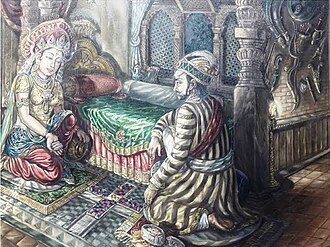
One of the most distinctive aspects of her mythology is her connection with Nepal’s Kumari tradition. According to Newar legends, Taleju once appeared regularly before the Malla king. When the sacred relationship between the goddess and the king was broken, she withdrew from the royal palace and declared that she would instead reside within a young prepubescent girl chosen according to strict ritual criteria. This girl became the Kumari, the Living Goddess, through whom Taleju continues to bless the nation. Even today, devotees closely observe the Kumari’s expressions and behavior during festivals, believing they may reveal signs of prosperity, danger, or important national events.
Modern Day Influence
Although Nepal’s monarchy ended in 2008, Taleju Bhawani continues to play a significant role in the country’s religious and cultural life. Her temples remain among the most sacred sites in the Kathmandu Valley and are treasured monuments within the UNESCO World Heritage-listed Durbar Squares.
Her most famous temple in Kathmandu opens to the public only during Maha Navami, the final days of the Dashain festival. Thousands of devotees gather annually for this rare opportunity to receive her blessings, preserving traditions that have continued for centuries.
The Kumari tradition remains one of Taleju’s most visible legacies. The Living Goddess participates in major festivals such as Indra Jatra, where she is carried through Kathmandu in an elaborate chariot procession. Although the monarchy no longer exists, Nepal’s President continues the longstanding tradition of receiving blessings from the Kumari, reflecting Taleju’s enduring symbolic role in the nation’s identity.
Beyond religion, Taleju Bhawani has become a powerful symbol of Newar heritage, medieval architecture, and Nepal’s unique blend of Hinduism and Tantric spirituality. Historians, conservationists, and cultural scholars continue to study her temples and rituals, recognizing them as invaluable parts of Nepal’s living cultural heritage.
Related Images


Source
Brown, T. (2005). Patron Deity: Taleju Bhawani. ECS Nepal. https://ecs.com.np/features/patron-deity-taleju-bhawani
Daya Foundation. (n.d.). Tulaja Bhavani. Daya Foundation. https://dayafoundation.org.np/updates/detail/tulaja-bhavani-/41/
“Taleju Bhawani.” (2025). Wikipedia. https://en.wikipedia.org/wiki/Taleju_Bhawani
“Taleju Bhawani Temple: The Royal Goddess of Kathmandu Durbar.” (2025). Travelling Camera. https://travellingcamera.com/2025/05/taleju-bhawani-temple-royal-goddess-of.html
OnlineKhabar. (2017, September 27). Taleju Bhawani in Kathmandu: The story of a king and his ‘living goddess’. https://english.onlinekhabar.com/taleju-bhawani-in-kathmandu-the-story-of-a-king-and-his-living-goddess.html
NepaliClass. (2025). Taleju Bhawani Temple in Nepal. http://www.nepaliclass.com/taleju-bhawani-temple-in-nepal/
Nepal Legacy. (2024). The Royal Kumari and Taleju. https://nepallegacy.com/cultural/the-royal-kumari-and-taleju/
Mandalas Life. (2022, August 19). The Mysterious Goddess Taleju Bhawani, A Terrifying Demon and the Living Goddess. https://mandalas.life/2022/the-mysterious-goddess-taleju-bhawani-a-terrifying-demon-and-the-living-goddess/
Frequently Asked Questions
Who is Taleju Bhawani in Nepali mythology?
Taleju Bhawani is the royal guardian goddess of Nepali mythology. Worshipped as a Tantric form of Durga, she served as the tutelary deity of the Malla kings and remains one of Nepal’s most important goddesses.
Why is Taleju Bhawani associated with the Kumari?
According to Newar tradition, Taleju withdrew from appearing before the Malla kings and chose to manifest through the Kumari, the Living Goddess, allowing her divine presence to continue among the people.
Where is the main temple of Taleju Bhawani?
Her principal temple is located in Kathmandu Durbar Square, with other important Taleju temples in Patan and Bhaktapur.
Is Taleju Bhawani the same as Durga?
Taleju Bhawani is considered a powerful Tantric manifestation of Durga, although her worship developed unique traditions specific to the Kathmandu Valley and Newar culture.
Why is Taleju Bhawani important in Nepal today?
She remains a central figure in Nepal’s religious heritage through the Dashain festival, the Kumari tradition, and the historic temples that continue to symbolize the country’s spiritual and cultural identity.
