
Nepali Mythology
Nepali mythology is a diverse collection of Hindu, Buddhist, and indigenous Himalayan traditions shaped by the landscapes and communities of Nepal. Mountains, rivers, forests, temples, and sacred cities all feature prominently in its stories, creating a close relationship between mythology, geography, and everyday religious life. Rather than belonging to one unified tradition, Nepali mythology reflects centuries of interaction between different cultures and belief systems.
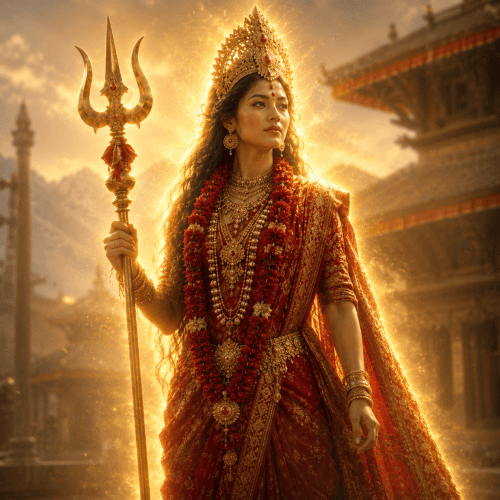
Hindu traditions form an important part of Nepal’s mythological heritage. Deities such as <a class="wpil_keyword_link" href="https://mythlok.com/love-stories/shiva-parvati/" title="Shiva and Parvati : The Eternal Love Story of Divine Balance” data-wpil-keyword-link=”linked” data-wpil-monitor-id=”321401″>Shiva, Parvati, Vishnu, Lakshmi, and Durga appear throughout Nepalese religious stories, festivals, temples, and sacred landscapes. Shiva holds particular importance, with the Pashupatinath Temple in Kathmandu serving as one of the country’s most significant sacred sites. Mount Kailash, although located beyond Nepal’s borders, is also deeply connected to the Himalayan religious imagination as the legendary abode of Shiva.
One of Nepal’s most distinctive creation traditions surrounds the Kathmandu Valley. According to the Swayambhu Purana, the valley was once a great lake containing a sacred lotus. The bodhisattva Manjushri is said to have opened a passage through the surrounding hills, allowing the waters to drain and making the valley suitable for human settlement. The emergence of Swayambhunath, whose name means “self-created,” connects the landscape itself with divine and Buddhist origins.
Buddhist mythology is equally important, particularly within the Newar Buddhist traditions of the Kathmandu Valley and among Himalayan communities. Nepal is traditionally regarded as the birthplace of Siddhartha Gautama, who became the Buddha, and Lumbini remains one of the most important Buddhist pilgrimage sites in the world. Bodhisattvas such as Avalokiteshvara and Tara, along with Padmasambhava, are prominent in Nepal’s Buddhist religious culture. Their stories emphasize compassion, wisdom, spiritual transformation, and the possibility of liberation.
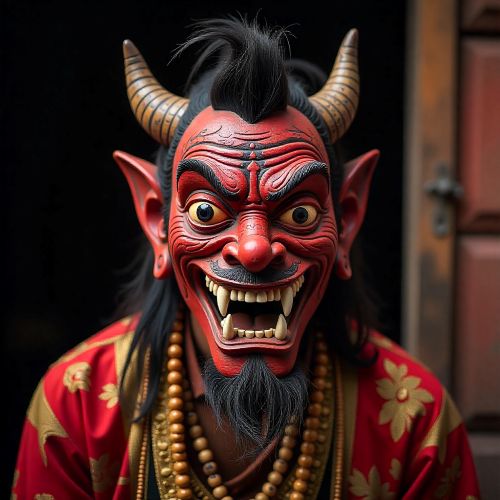
Nepali mythology also preserves traditions belonging to Indigenous communities and local cultures. The Kirati, Gurung, Tamang, and Newar peoples maintain distinct stories concerning ancestors, nature spirits, guardian deities, and sacred places. Newar mythology in particular contains a complex mixture of Hindu and Buddhist figures alongside local deities such as the Ajima goddesses. Festivals and rituals preserve these traditions through masked dances, processions, offerings, music, and ceremonial performances.
The natural environment is another major element of Nepali mythology. Mountains and forests may be associated with deities or spirits, while rivers and springs can become sacred places connected with particular legends. This relationship between landscape and belief gives Nepali mythology a strong regional character: sacred stories are often inseparable from the places where they are believed to have occurred.
Today, Nepali mythology continues to shape festivals, architecture, sculpture, painting, literature, and religious practice. Temples, stupas, pilgrimage sites, and traditional celebrations keep ancient narratives visible within modern communities. Its greatest characteristic is its diversity. Hindu, Buddhist, and Indigenous traditions have developed alongside one another while retaining their own identities, making Nepali mythology a rich expression of the country’s Himalayan cultural heritage.