
Kaos : A Modern Reimagining of Greek Legends
| Description | |
|---|---|
| Origin | Greek Mythology |
| Language | English |
| Type | Reimagining |
| Seasons | 1 (2024) |
| Cast | Jeff Goldblum (Zeus), Janet McTeer (Hera), Stephen Dillane (Prometheus), David Thewlis (Hades), Rakie Ayola (Persephone) |
| OTT Platform / TV Channel | Netflix |
Kaos
Introduction
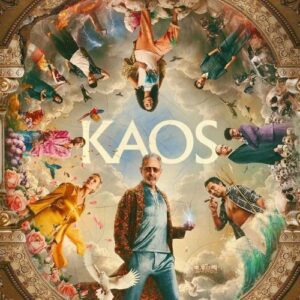
Kaos is a British dark comedy-drama series created by Charlie Covell and released on Netflix in August 2024. The show reimagines the world of Greek legends in a contemporary setting where the Olympian gods continue to rule over humanity while enjoying the privileges of modern life. Rather than presenting the gods as distant and majestic beings, Kaos portrays them as flawed, insecure, and deeply human in their behavior.
The series combines fantasy, satire, mythology, and social commentary to explore themes such as power, destiny, mortality, and rebellion. At its core, Kaos examines what happens when a ruling class becomes obsessed with maintaining control. Through its unique blend of humor and drama, the show transforms ancient stories into a reflection of modern society, making classical mythology accessible to a new generation of viewers.
Despite receiving strong reviews for its originality, performances, and visual style, Netflix cancelled the series after its first season. Even so, Kaos remains one of the most distinctive mythological adaptations of recent years and has generated significant discussion among fans of both mythology and modern fantasy television.
Plot
The story begins when Zeus, the king of the gods, notices a wrinkle on his forehead. Although it seems insignificant, he interprets it as evidence that an ancient prophecy predicting the fall of the Olympians may finally be coming true. The discovery triggers a spiral of fear and paranoia that causes Zeus to become increasingly unstable.
As his anxiety grows, Zeus begins seeing threats everywhere. His attempts to preserve his power only deepen the problems facing both gods and mortals. Behind the scenes, Prometheus, who has endured centuries of punishment for helping humanity, quietly works toward bringing about the downfall of Olympus.
The narrative follows three mortals whose lives become intertwined with this larger struggle. Riddy, a modern interpretation of Eurydice, finds herself navigating the mysteries of death and the afterlife. Caeneus wrestles with questions of identity and destiny, while Ari becomes entangled in events that connect her to the future of both humanity and the gods.
As the prophecy unfolds, the boundaries between mortal and divine worlds begin to weaken. Ancient rivalries, personal ambitions, and long-hidden truths collide, forcing characters on both sides of the cosmic divide to confront the consequences of their choices. The season builds toward a confrontation that challenges the legitimacy of Olympus itself and raises questions about whether fate can truly be changed.
Mythological Basis
Kaos draws inspiration from a wide range of Greek myths while adapting them into a connected modern narrative. The series remains rooted in the fundamental idea that the Olympian gods are powerful yet imperfect beings whose actions often create suffering for both themselves and humanity.
One of the strongest mythological influences is the recurring theme of succession and prophecy. Greek mythology frequently features rulers who fear being overthrown. Uranus was replaced by Cronus, and Cronus was later defeated by Zeus. Ancient stories also contain prophecies warning Zeus about future threats to his rule. Kaos builds upon this tradition by making fear of replacement the driving force behind Zeus’s actions.
Prometheus also retains his traditional role as a champion of humanity. In Greek mythology, he defied Zeus by giving fire to humans and was condemned to eternal punishment. The series expands this idea by portraying him as a long-term strategist working against the corrupt system that punished him.
The Underworld is another major source of inspiration. Classical Greek beliefs described a complex realm of the dead governed by Hades and populated by judges, ferrymen, and countless souls. Kaos preserves many of these concepts while reshaping them into a modern afterlife filled with bureaucracy and inefficiency.
The show additionally incorporates elements from myths involving Orpheus and Eurydice, Ariadne, Cassandra, Medusa, and several other legendary figures. While these stories are altered significantly, their essential themes of love, sacrifice, fate, and transformation remain recognizable throughout the series.
Characters & Archetypes
The characters in Kaos are based on familiar mythological figures, but the series presents them through a contemporary lens that highlights their psychological complexity.
Zeus, portrayed by Jeff Goldblum, serves as the embodiment of unchecked authority. Rather than appearing as a wise ruler, he is depicted as a leader consumed by insecurity and fear. His growing obsession with prophecy reveals how absolute power can become self-destructive when challenged.
Hera occupies a more nuanced role than many traditional portrayals. As queen of the gods, she understands the political realities of Olympus and must navigate the instability caused by Zeus’s behavior. Her character demonstrates both resilience and ambition within a deeply dysfunctional divine family.
Prometheus functions as the archetypal rebel. His suffering has not broken his determination, and he continues to represent resistance against oppression. Throughout the story, he acts as a catalyst for change while maintaining sympathy for humanity.
Hades differs significantly from many modern interpretations of the god of death. Instead of serving as a villain, he appears as an overworked administrator attempting to maintain order in an increasingly chaotic afterlife. This portrayal adds both humor and depth to a figure often misunderstood in popular culture.
Among the mortals, Riddy emerges as a character seeking agency in a world shaped by forces beyond her control. Caeneus reflects themes of transformation, identity, and resilience, while Ari represents courage and self-discovery. Together, they embody humanity’s capacity to challenge systems of power that seem impossible to overcome.
Creative Liberties
One of the defining features of Kaos is its willingness to reinterpret ancient material for modern audiences. Rather than attempting historical accuracy, the series uses mythology as a framework for discussing contemporary issues.
The most obvious change is the setting. The Olympian gods inhabit a world filled with modern technology, luxury lifestyles, and contemporary social structures. This choice allows the show to explore how ancient power dynamics might operate in today’s society.
The series also expands the roles of several mythological figures, particularly women who often had limited agency in ancient sources. Characters inspired by Eurydice and Ariadne are given greater independence and influence over the narrative, reflecting modern storytelling priorities.
Another notable departure is the show’s diverse casting. Ancient myths are presented through a multicultural lens, emphasizing the universal nature of these stories rather than restricting them to traditional visual interpretations. This approach broadens the appeal of the myths while encouraging new perspectives on familiar characters.
The tone of Kaos further distinguishes it from traditional mythological adaptations. Comedy, satire, tragedy, and fantasy exist side by side, creating a world where profound questions about mortality and power coexist with absurd situations and sharp humor.
Ultimately, Kaos is less concerned with faithfully retelling Greek myths and more interested in exploring why these stories continue to matter. By blending ancient legends with contemporary themes, the series demonstrates how mythology can remain relevant in the modern world. Its interpretation may not satisfy every purist, but it successfully introduces timeless ideas about fate, authority, and human resilience to a new audience.