
Bulu : The Ancient Fijian Realm Between Life and Death
| Description | |
|---|---|
| Mythology | Fijian Mythology |
| Description | Shadowy spirit-land |
| Ruler/Guardian | Ravuyalo, Degei |
| Inhabitants | Souls of the Dead |
| Nature | Neutral |
Mythlok Perspective
In Mythlok’s Perspective, Bulu stands out because it treats death as a continuation rather than a final judgment. The realm is neither a paradise nor a hell in the conventional sense. Instead, it reflects a worldview where ancestors remain active participants in the cosmic order and where the dead continue to influence the living. This perspective closely resembles the ancestral spirit realms found across Oceania, yet it also carries a unique agricultural dimension through Ratumaibulu’s connection to fertility and seasonal renewal. In this way, Bulu can be compared to the Celtic Otherworld, where the dead remain close to the living, and to the Japanese concept of Yomi, another hidden realm beyond mortal sight. What makes Bulu distinctive is its emphasis on continuity, showing that life, death, ancestry, and nature are all part of the same eternal cycle.
Bulu
Introduction
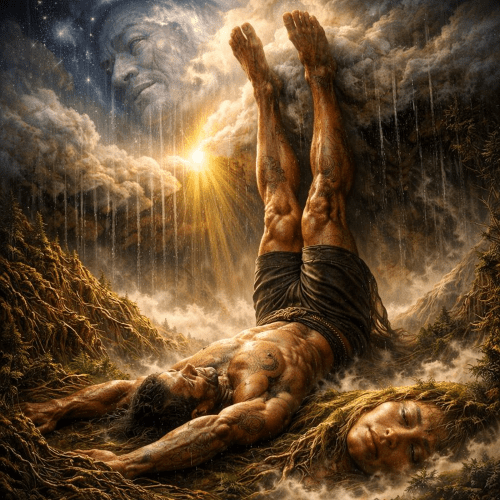
Bulu is one of the most fascinating concepts in Fijian tradition. Often described as the world of spirits, it is the destination where souls travel after death and continue their existence beyond the physical world. Unlike many underworlds that are portrayed as places of eternal punishment, Bulu occupies a more nuanced role within Fijian cosmology. It is a realm of ancestors, deities, and spirits that remains closely connected to the living world.
The idea of Bulu reflects a worldview in which death is not an ending but a transition. The deceased leave behind their earthly lives and begin a journey into a hidden spiritual landscape governed by divine beings and ancient customs. Bulu is also linked to fertility, agriculture, and the cyclical renewal of life through the actions of powerful gods such as Ratumaibulu. As a result, it serves not only as a destination for the dead but also as a source of blessings for the living.
Description
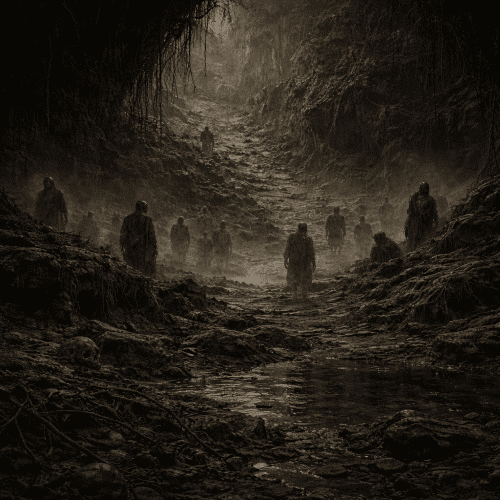
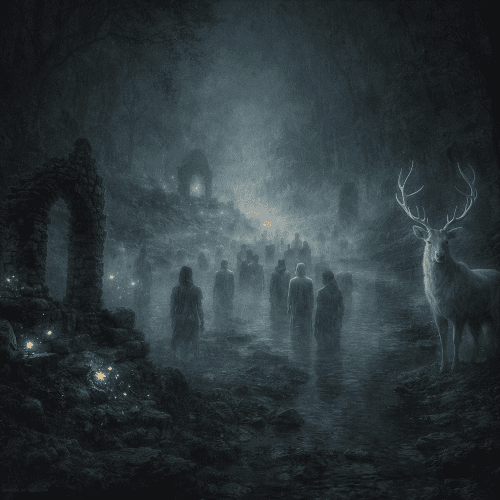
Bulu is traditionally understood as the land of souls, a separate spiritual realm that exists alongside the human world. It is often portrayed as an unseen domain where the spirits of the deceased gather after completing their journey from the mortal realm. Rather than functioning solely as a place of reward or punishment, Bulu is generally viewed as the natural home of departed spirits.
Many Fijian traditions describe the realm as having familiar social structures. Villages, pathways, and gathering places appear in stories about the spirit world, suggesting that life after death continues in a recognizable form. One important location associated with Bulu is Nabagatai, a place on the road taken by souls as they travel toward their final destination. The existence of such landmarks emphasizes that the afterlife was imagined as a real and structured world rather than an abstract concept.
Ruler/Guardian
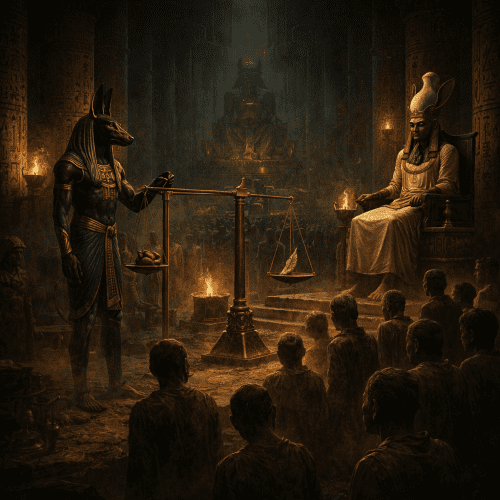
Several divine figures are associated with Bulu, each playing a different role in the spiritual order. The most important is Degei, the supreme serpent deity of Fiji. As creator and judge, Degei determines the fate of souls after death. According to traditional beliefs, spirits pass through sacred locations connected to him before receiving judgment. Some souls are directed toward more blessed destinations, while others face trials or punishment according to their actions in life.
Another significant figure is Ratumaibulu, the agricultural deity who resides in Bulu. He is closely associated with breadfruit, fertility, and seasonal abundance. During the sacred month known as Vula-i-Ratumaibulu, he is believed to emerge from the spirit world and encourage fruit trees to blossom and bear fruit. This connection links the underworld directly to the prosperity of the living community. In some regional traditions, Lewalevu, a powerful female figure associated with the underworld, is also connected with the reception of souls entering the spirit realm.
Inhabitants
The primary inhabitants of Bulu are the spirits of the dead. Chiefs, warriors, commoners, and ancestors all eventually become part of this realm. Unlike many afterlife traditions that separate souls into entirely different destinations, Bulu is often portrayed as a collective spirit-land where various categories of spirits coexist.
The realm is also home to divine beings and supernatural entities. Ratumaibulu and other spirits connected with fertility and agriculture dwell there, reinforcing the belief that the world of the dead continues to influence life on earth. Ancestors remain important figures as well. Their presence reflects the enduring relationship between the living and the deceased, a theme found throughout many Oceanian traditions.
Some stories describe guardian spirits and supernatural beings that guide, challenge, or observe souls during their journey. These figures highlight the idea that entry into Bulu is not automatic but requires passing through a series of spiritual stages.
Access
The path to Bulu is one of the most detailed aspects of Fijian afterlife traditions. After death, the soul embarks on a difficult journey toward the spirit world. Various locations across Fiji were believed to serve as gateways where spirits entered the road leading to Bulu.
One important element of this journey is Wainiyalo, often described as the River of Souls. Spirits must cross this supernatural waterway before continuing into the realm of the dead. A ferryman is sometimes said to transport souls across the river, a motif that echoes afterlife traditions found throughout the world.
Traditional beliefs also identify the western extremity of Vanua Levu as a departure point for spirits beginning their final journey. This geographical connection demonstrates how physical landscapes became integrated into spiritual beliefs, transforming natural locations into sacred portals between worlds.
Instances of Visit
Although Bulu is primarily the destination of the dead, myths describe occasions when beings travel between the spirit realm and the world of the living. The most famous example involves Ratumaibulu. Each year, during the month dedicated to him, he emerges from Bulu to encourage the growth of breadfruit and other fruit-bearing trees. His seasonal return symbolizes renewal, fertility, and the continuing connection between the spiritual and physical worlds.
Traditional stories also tell of heroes, chiefs, and spirits who enter the underworld or encounter beings travelling from it. These narratives reinforce the idea that the boundary separating life and death is permeable under exceptional circumstances. Rather than being completely isolated, Bulu remains intertwined with earthly existence.
Symbolism
Bulu symbolizes far more than death. At its core, it represents continuity. Life does not end when a person dies; instead, existence moves into another phase within a larger cosmic cycle. The realm also symbolizes ancestral presence. The dead remain part of the community, continuing to influence the living through memory, guidance, and spiritual power. This perspective reflects a worldview in which family and community bonds extend beyond mortality.
Another important symbolic dimension is fertility. Through Ratumaibulu’s annual emergence, Bulu becomes associated with agricultural abundance and seasonal renewal. Death and life are therefore not opposites but interconnected forces that sustain the natural order. The spirit world nourishes the physical world just as the living eventually contribute to the realm of ancestors.
Comparative Analysis
Bulu shares similarities with several other Oceanian concepts of the afterlife. In Tongan and Samoan traditions, Pulotu serves as a spirit-land connected to gods and ancestors. Linguistically and culturally, Pulotu and Bulu appear to share common roots, reflecting the interconnected heritage of Pacific cultures.
The concept also resembles Tuma in Trobriand traditions, where spirits continue their existence after death in a separate realm. Like Bulu, these destinations are not defined solely by punishment but by ongoing spiritual life.
Outside Oceania, Bulu can be compared to the Greek underworld ruled by Hades. However, unlike the highly structured divisions of Greek belief, Bulu generally presents a more unified vision of the afterlife. It also differs from many later religious concepts of hell because its primary function is not eternal punishment but spiritual continuity and ancestral existence.
Modern Influence
Although Christianity has become the dominant religion in Fiji, the concept of Bulu remains an important part of cultural memory and traditional storytelling. Many legends surrounding the spirit world continue to be preserved through oral traditions, folklore collections, and cultural education programs.
Bulu also remains significant in discussions of Fijian identity and heritage. Scholars, cultural organizations, and storytellers frequently explore the role of the spirit world in understanding indigenous beliefs about death, community, and nature. The stories of Degei and Ratumaibulu continue to be retold, ensuring that the ancient vision of Bulu survives in contemporary Fiji.

Sources
Wikipedia. “Bulu (Fijian mythology).” https://en.wikipedia.org/wiki/Bulu_(Fijian_mythology)
Encyclopedia Mythica. “Lewalevu | Facts, Information, and Mythology.” https://pantheon.org/articles/l/lewalevu.html
Savasi Island. “The Legend Of Fiji’s Lost Island.” https://savasiisland.com/the-legend-of-fijis-lost-island/
Williams, Thomas, and James Calvert. Fiji and the Fijians. Heylin, 1858.
Reed, A.W., and Inez Hames. Myths and Legends of Fiji and Rotuma. A.H. & A.W. Reed, 1967.
Freese, John. The Philosophy of the Immortality of the Soul and the Resurrection of the Human Body. Kessinger Publishing, 2005
Williams, T. & Calvert, J. Fiji and the Fijians (1858).
Freese, J. The Philosophy of the Immortality of the Soul (1864; reprint 2005).
Hocart, A.M. The Lau Islands of Fiji (1929).
Frequently Asked Questions
What is Bulu in Fijian tradition?
Bulu is the world of spirits in Fijian belief, a realm where souls travel after death and continue their existence.
Who rules Bulu?
Bulu is associated with Degei, the supreme serpent deity and judge of souls, while Ratumaibulu resides there as a powerful agricultural god.
Is Bulu the same as hell?
No. Bulu is primarily a spirit realm and ancestral homeland rather than a place of eternal punishment.
How do souls reach Bulu?
Traditional beliefs describe a journey involving sacred pathways, spirit portals, and the crossing of Wainiyalo, the River of Souls.
Why is Ratumaibulu connected to Bulu?
Ratumaibulu lives in Bulu and is believed to emerge annually to make fruit trees blossom and ensure agricultural abundance.