Delbaeth : The Fire Shaped King of Irish Tradition
At a glance
| Description | |
|---|---|
| Origin | Irish Mythology |
| Classification | Gods |
| Family Members | The Dagda (Grandfather), Ogma or Elatha (Father, varies), Ernmas (Wife), Ériu, Banba, Fódla, Fiacha, Brian, Iuchar, Iucharba (Children) |
| Region | Ireland |
| Associated With | Kingship, Fire symbolism, Transformation, Sovereignty, Lineage |
The Mythlok Perspective
In Mythlok’s Perspective, Delbaeth represents a transitional force rather than a fully defined character. He embodies the shift between opposing worlds, where fire becomes a symbol of change rather than destruction. His importance lies in lineage and continuity, not individual heroism. This places him alongside figures like Oceanus in Greek tradition, whose significance comes through descendants rather than direct action. Similarly, he echoes Brahma, where creation and origin matter more than narrative presence. Delbaeth stands as a reminder that some mythic figures shape worlds quietly, through legacy rather than spectacle.
Delbaeth
Introduction
Delbaeth, also spelled Delbáeth or Dealbhaodh, is a complex and often overlooked figure in early Irish tradition. He belongs to the mythic world of the Tuatha Dé Danann, a supernatural people associated with knowledge, magic, and kingship. In several sources, especially the Lebor Gabála Érenn, Delbaeth appears as a High King of Ireland who succeeds his grandfather, The Dagda.
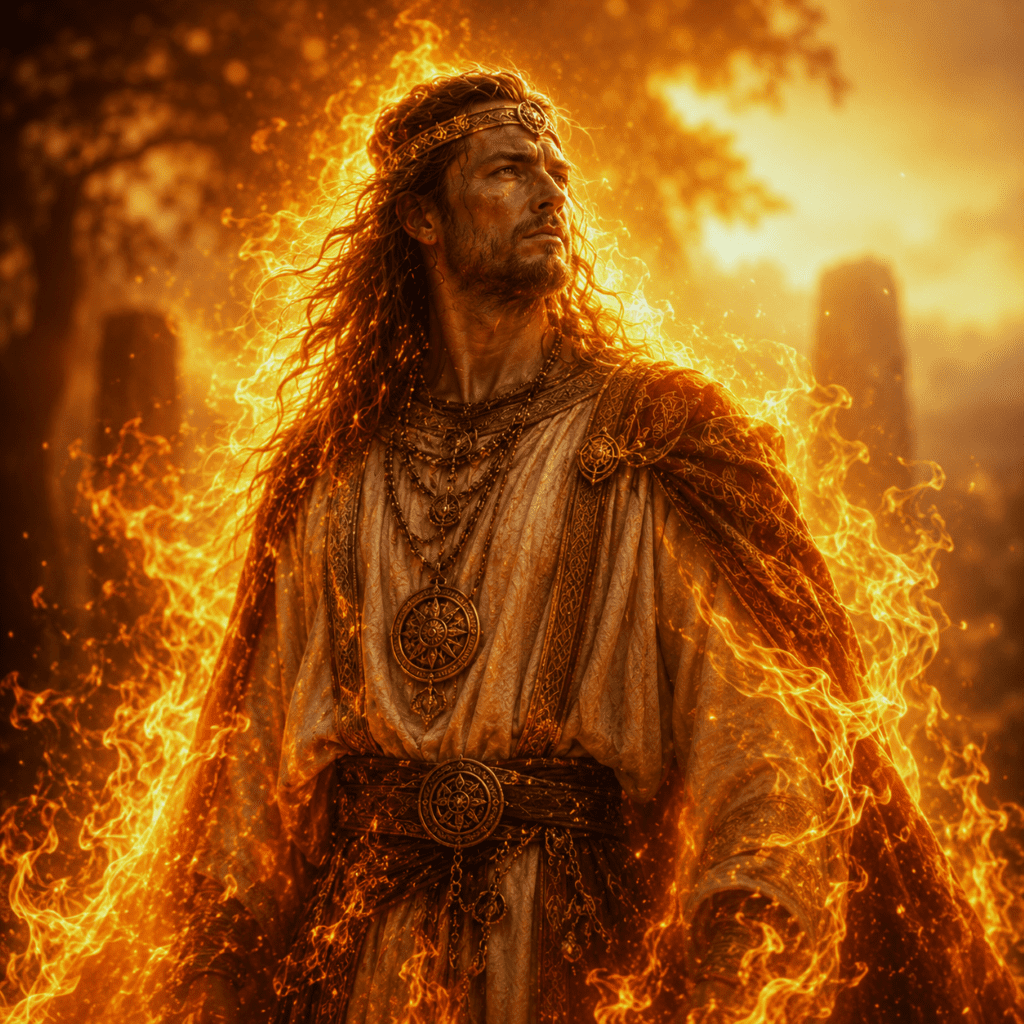
His importance lies less in dramatic storytelling and more in what he represents. Delbaeth stands at the intersection of divine ancestry, political authority, and mythic transformation. Some traditions even connect him to the Fomorians, a rival supernatural group, suggesting that his reign symbolized a rare moment of unity between opposing forces. His name, often interpreted as “fire-shape” or “form shaped by fire,” reflects themes of creation and transformation that run through his story.
Physical Traits
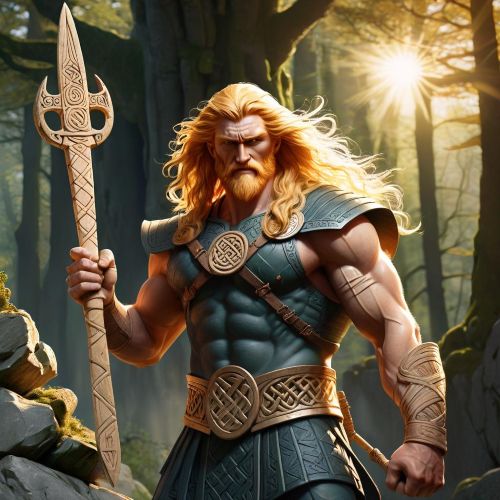
Unlike many mythological figures, Delbaeth is not described in vivid physical detail in surviving texts. Early Irish tradition tends to prioritise lineage and symbolic meaning over visual description, and Delbaeth is a clear example of this approach.
However, indirect clues offer some insight. As a member of the Tuatha Dé Danann, he would have been imagined as more than human, possessing an otherworldly presence rather than a fixed appearance. His name itself implies fluidity. The idea of “shape-shaper” suggests that Delbaeth may not have been bound to a single form, but instead associated with transformation and elemental force.
Some traditions hint at nobility and radiance through his descendants. His lineage includes figures described as beautiful or divine, reinforcing the idea that Delbaeth belonged to a refined and elevated race. Rather than a warrior defined by physical strength alone, he appears as a figure shaped by symbolism, fire, and identity.
Family
Delbaeth’s genealogy varies across sources, reflecting the layered nature of Irish myth. In some accounts, he is the son of Ogma, a powerful figure associated with language and strength. In others, he is linked to Elatha, which connects him directly to the Fomorians.
What remains consistent is his connection to the Dagda, one of the most important figures in Irish tradition. As the Dagda’s grandson, Delbaeth inherits a legacy of authority and wisdom. His rise to kingship continues this lineage, reinforcing the idea of divine succession.
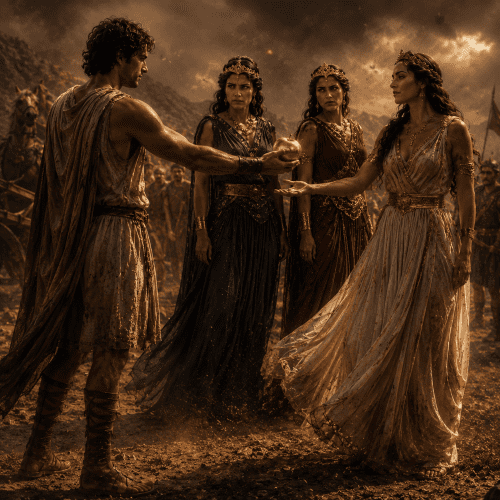
Delbaeth’s role as a father is central to his mythological importance. With Ernmas, he is often said to have fathered Ériu, Banba, and Fódla, the three goddesses who personify Ireland itself. Some traditions also associate him with the war figures Badb, Macha, and The Morrigan, though these connections vary across texts.
His sons include Fiacha, who ultimately succeeds him, as well as Brian, Iuchar, and Iucharba in traditions that identify him with Tuireann. The fact that his own son Fiacha kills him reflects a recurring theme in Irish tradition, where succession is often tied to conflict within families.
Other names
Delbaeth is a figure shaped by overlapping identities, and this is reflected in his many alternative names. In some traditions, he is equated with Tuireann, the father of Brian, Iuchar, and Iucharba. This identification links him to themes of vengeance and tragic heroism.
He is also connected to Lugaid mac Tail in certain texts, particularly in the Dindsenchas, where his actions are tied to the landscape. Other variations, such as Delbaeth mac Neit, appear in genealogical traditions, showing how the same name can refer to multiple figures across different timelines. These variations are not contradictions but reflections of how Irish tradition evolved through oral storytelling and later manuscript compilation.
Powers and Abilities
Delbaeth’s abilities are closely tied to symbolism rather than explicit descriptions of combat or magic. His name alone suggests a deep connection to transformation, particularly through fire. Fire in Irish tradition is often linked to creation, knowledge, and ritual power, making it a fitting association for a king of divine descent.
One of the most notable stories describes him creating a magical or druidic fire from which multiple streams emerged. This act connects him to the shaping of the land itself, reinforcing his role as a figure of creation and influence.
His kingship is another form of power. Ruling both the Tuatha Dé Danann and, in some traditions, maintaining ties with the Fomorians, he represents balance between opposing forces. This dual authority is rare and suggests a figure capable of navigating both conflict and unity. Rather than being remembered as a warrior alone, Delbaeth stands as a symbol of transformation, leadership, and generative power.
Modern Day Influence
Delbaeth does not enjoy the same popularity as figures like Lugh or the Morrigan, yet his influence persists in quieter ways. His legacy survives through the sovereignty goddesses who define Ireland’s mythic identity, ensuring that his presence remains embedded in the cultural imagination.
Modern interpretations sometimes reframe him as a fire-associated deity or a chaotic force, especially in fantasy settings and games. While these interpretations are not always faithful to early sources, they highlight how adaptable his character is.
Scholarly interest in Delbaeth continues, particularly in studies of Irish genealogy and mythic kingship. His shifting identity offers valuable insight into how early Irish narratives were constructed, preserved, and transformed over time.
Related Images
Source
Gray, E. (1982). Cath Maige Tuired: The second battle of Mag Tuired. Irish Texts Society.
Macalister, R. A. S. (1941). Lebor Gabála Érenn: The book of the taking of Ireland (Vol. 4). Irish Texts Society.
Monaghan, J. (2004). The encyclopedia of Celtic mythology and folklore. Facts on File.
Squire, C. (2000). Celtic myth and legend: Poetry and romance. Greenwich House.
Gwynn, E. J. (1903–1935). The metrical Dindsenchas (Vols. 1–5). Todd Lecture Series.
Wikipedia. (2024). Delbáeth. https://en.wikipedia.org/wiki/Delb%C3%A1eth .
Findwords.info. (n.d.). Delbaeth. https://findwords.info/term/delbaeth.
Notes from the Ninth Circle. (2013). The ancient Delbhna of central Ireland. https://notesfromtheninthcircle.blogspot.com/2013/08/the-ancient-delbhna-of-central-ireland.html.
Frequently Asked Questions
Who is Delbaeth in Irish tradition?
Delbaeth is a High King linked to the Tuatha Dé Danann, known for his lineage and connection to fire symbolism and sovereignty.
What does the name Delbaeth mean?
His name is often interpreted as “fire-shape” or “form shaped by fire,” symbolising transformation and creation.
Who were Delbaeth’s children?
He is linked to Ériu, Banba, and Fódla, the sovereignty goddesses of Ireland, and in some accounts several sons including Fiacha.
Was Delbaeth a god or a king?
He is both, a divine figure of the Tuatha Dé Danann who ruled as a mythological High King of Ireland.
How did Delbaeth die?
Traditions state he was killed by his son Fiacha, reflecting themes of succession and conflict in Irish narratives.