


Michael Cremo : The Researcher Who Challenged Human History
Mythlok Perspective
From the Mythlok perspective, Michael Cremo represents the intersection of ancient wisdom and the contested boundaries of scientific knowledge. His work brings Vedic cosmology into conversations about human origins, challenging the assumption that humanity’s past can be understood through material evidence alone. While his archaeological conclusions remain outside mainstream scientific acceptance, his approach raises a broader question about how cultures shape our understanding of time, existence, and human beginnings.
Michael Cremo
Introduction
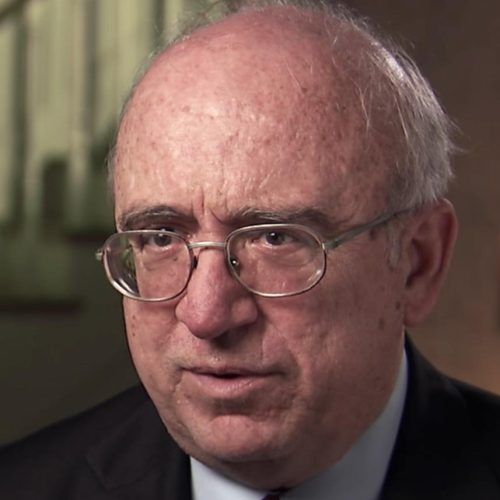
Michael A. Cremo (July 15, 1948 – October 14, 2026) was an American independent researcher and author best known for challenging conventional explanations of human origins. Also known by his devotional name Drutakarmā dāsa, he identified himself as a Vedic creationist and became internationally recognised through his controversial work on alternative archaeology. Born in Schenectady, New York, Cremo developed an interest in spirituality, ancient knowledge and the history of science, eventually bringing these subjects together in his writing.
His most influential publication, Forbidden Archaeology: The Hidden History of the Human Race (1993), co-authored with Richard L. Thompson, examined archaeological discoveries that the authors believed challenged accepted timelines of human evolution. Cremo argued that evidence suggesting a much older human presence had been overlooked or dismissed by mainstream scientific institutions.
His ideas drew heavily from Vedic literature, particularly its descriptions of enormous cosmic timescales and recurring cycles of existence. This approach placed him at an unusual intersection of archaeology, religious philosophy and alternative interpretations of prehistory.
Although mainstream archaeologists and evolutionary scientists rejected many of his conclusions, Michael Cremo became an influential personality within alternative archaeology. His work encouraged discussions about how scientific evidence is evaluated, interpreted and incorporated into established historical narratives.
Area of Expertise
Michael Cremo’s research interests centred on human origins, the history and philosophy of science, archaeological anomalies and Vedic perspectives on antiquity. Rather than following conventional archaeological interpretations, he examined historical discoveries that he believed contradicted accepted models of human evolution.
One of his central concepts was knowledge filtration. Cremo used this expression to describe what he considered the tendency of scientific institutions to exclude discoveries that challenged dominant theoretical frameworks. He maintained that certain archaeological reports had been forgotten, inadequately investigated or dismissed because they did not fit established understandings of prehistoric humanity.
Vedic cosmology was another important influence on his work. Cremo interpreted ancient Indian texts, including the Bhagavata Purana, as describing cycles of existence extending across immense periods. He used these traditions to develop an alternative understanding of human antiquity and the relationship between consciousness and physical existence.
His interests also extended to the philosophy of science and consciousness studies. Cremo argued that human beings should not be understood exclusively as biological organisms, proposing instead that consciousness and spiritual identity were fundamental aspects of human existence. It is important to distinguish his intellectual interests from recognised academic expertise. Cremo was an independent researcher rather than a professionally trained archaeologist or palaeoanthropologist. His interpretations of archaeological evidence remain outside mainstream scientific consensus.
Books & Publications
Michael Cremo’s literary career was largely defined by his attempts to reconsider conventional explanations of human origins through archaeological reports and Vedic philosophy. His most recognised publication was Forbidden Archaeology: The Hidden History of the Human Race (1993), written with Richard L. Thompson. The extensive volume examined historical discoveries of tools, fossils and other objects that the authors interpreted as evidence of an extremely ancient human presence. Its arguments challenged conventional evolutionary chronology and attracted considerable attention from both alternative-history enthusiasts and scientific critics.
A more accessible presentation of these arguments appeared in The Hidden History of the Human Race (1994). This condensed publication introduced the central ideas of the original work to a wider readership and helped establish Cremo’s international reputation. In 1998, he published Forbidden Archaeology’s Impact: How a Controversial New Book Shocked the Scientific Community and Became an Underground Classic. The publication documented the responses, correspondence and criticism generated by his earlier research.
Another significant contribution was Human Devolution: A Vedic Alternative to Darwin’s Theory (2003). In this book, Cremo explored the relationship between biological evolution, consciousness and spiritual origins, presenting a Vedic interpretation of human existence. His other publications included My Science, My Religion and Puranic Time and the Archaeological Record. Together, these works demonstrate his sustained interest in bringing ancient Indian philosophical traditions into discussions about science and humanity’s past.
Research & Contributions
Michael Cremo’s most significant contribution to alternative archaeology was his extensive compilation of historical reports describing discoveries that appeared inconsistent with conventional interpretations of prehistoric human existence. Through Forbidden Archaeology, he examined reports involving stone tools, skeletal remains, footprints and objects supposedly discovered in geological deposits considered far older than the accepted appearance of modern humans. He argued that these discoveries deserved greater attention and that their exclusion from mainstream accounts illustrated the influence of established scientific assumptions.
His research also explored the relationship between archaeological chronology and Puranic accounts of time. Traditional Indian cosmology describes enormous cycles of creation and dissolution, providing a philosophical framework that Cremo believed could offer a different perspective on humanity’s history.
However, his interpretations have attracted substantial criticism. Reviews of Forbidden Archaeology have questioned the reliability of several historical reports, the condition and provenance of purported discoveries, and the geological interpretations used to support claims of extreme human antiquity. Mainstream evolutionary biology and palaeoanthropology do not accept his proposed chronology.
Beyond publishing, Cremo participated in international discussions about archaeology and the history of science. His curriculum vitae identifies participation in professional conferences, including the World Archaeological Congress and the European Association of Archaeologists. His broader legacy lies in bringing debates about archaeological anomalies, scientific assumptions and Vedic interpretations of human origins to audiences well beyond specialist academic circles.
Awards & Recognitions
Michael Cremo’s recognition came through a combination of publishing achievements, international lectures, conference participation and engagement with alternative scientific and spiritual communities. His curriculum vitae records an honorary PhD in Vaishnava Theology and Science from Bhaktivedanta College for Religious Science in Budapest, Hungary. It also lists a National Science Foundation travel award, administered through the History of Science Society, to attend the International Congress for History of Science in Mexico City in 2001.
Cremo’s professional engagements included participation in conferences organised by the World Archaeological Congress and the European Association of Archaeologists. These appearances provided opportunities to present his perspectives on archaeological evidence, scientific assumptions and the concept of knowledge filtration.
His books achieved considerable international reach. The official biography and publication information associated with his work report that Forbidden Archaeology and its related editions were translated into more than twenty languages. Nevertheless, his recognition should be understood in context. His honorary qualification and professional engagements do not establish acceptance of his archaeological conclusions by mainstream scientific institutions. His work remained controversial throughout his career.
Social Media Profiles
Michael Cremo maintained an online presence through his official website, where readers could explore his publications, lectures, interviews, research interests and media appearances. His website also documented his work on archaeological anomalies and Vedic interpretations of human origins. It remains an important starting point for readers seeking information about his intellectual contributions and published material.
His public presence extended to video interviews, recorded lectures and discussions available through online media platforms. These recordings introduced his ideas to audiences interested in alternative archaeology, consciousness, ancient Indian traditions and the history of humanity. A Facebook page titled Michael Cremo (It’s Really Me) has also been associated with his public identity. However, readers should distinguish historical profiles and archived appearances from accounts that remain actively managed.
Following his death in October 2026, his published works, recorded discussions and official online archives provide the principal means of exploring his intellectual legacy. Michael Cremo remains a controversial figure in discussions about archaeology and human origins. His work brought Vedic philosophical interpretations into conversations about scientific evidence, challenging readers to consider how humanity understands its distant past.
Sources
Cremo, M. A. (n.d.). Michael A. Cremo: Forbidden Archaeology. https://www.mcremo.com/
National Center for Science Education. (2008). Review: Forbidden Archaeology’s Impact. https://ncse.ngo/review-forbidden-archaeologys-impact
World Archaeological Congress. (n.d.). Colonialism, Identity and Social Responsibility.
https://worldarchaeologicalcongress.com/wac5/wac-5/wac5-program/colonialism-identity-and-social-responsibility/
Wellcome Collection. (n.d.). Human Devolution: A Vedic Alternative to Darwin’s Theory.
https://wellcomecollection.org/works/wy58fykx
Cremo, M. A., & Thompson, R. L. (1993). Forbidden Archaeology: The Hidden History of the Human Race. Govardhan Hill Publishing.
Cremo, M. A. (1998). Forbidden Archaeology’s Impact: How a Controversial New Book Shocked the Scientific Community and Became an Underground Classic. Torchlight Publishing.
Cremo, M. A. (2003). Human Devolution: A Vedic Alternative to Darwin’s Theory. Bhaktivedanta Book Publishing.
Murray, T. (1995). Michael A. Cremo and Richard L. Thompson, Forbidden Archeology: The Hidden History of the Human Race. The British Journal for the History of Science, 28(3), 377–379. https://doi.org/10.1017/S0007087400033410
Frequently Asked Questions
Who was Michael Cremo?
Michael Cremo was an American independent researcher and author known for his alternative interpretations of human origins. He co-authored Forbidden Archaeology and promoted Vedic perspectives on humanity’s antiquity.
What is Michael Cremo famous for?
Michael Cremo is best known for Forbidden Archaeology: The Hidden History of the Human Race, a 1993 book arguing that archaeological discoveries suggest humans existed much earlier than conventional evolutionary timelines indicate.
What was Michael Cremo's theory of human origins?
Cremo proposed that humans had existed for millions of years and that conventional evolutionary explanations overlooked important archaeological evidence. His interpretation incorporated Vedic cosmology and spiritual understandings of human existence.
Was Michael Cremo's Forbidden Archaeology accepted by mainstream scientists?
No. Mainstream archaeologists and evolutionary scientists have criticised the book’s interpretation of archaeological discoveries, questioning the reliability of several findings and the conclusions drawn from them.
When did Michael Cremo die?
Michael Cremo died on October 14, 2026. He was born on July 15, 1948, in Schenectady, New York. His devotional name was Drutakarmā dāsa.


