

Tonatiuh : The Aztec Sun God Who Powered the Fifth Sun
At a glance
| Description | |
|---|---|
| Origin | Aztec Mythology |
| Classification | Gods |
| Family Members | Nanahuatzin (Father) |
| Region | Mexico |
| Associated With | Sun |
Mythlok Perspective
From Mythlok’s Perspective, Tonatiuh represents one of the most demanding interpretations of a sun deity in world mythology. Unlike Ra in Egyptian tradition or Helios in Greek mythology, who primarily embody the sun’s celestial journey, Tonatiuh reflects the Aztec belief that cosmic order required continual sacrifice. His mythology reveals a worldview where sustaining creation was a shared responsibility between gods and humanity, making him a powerful symbol of reciprocity and survival.
Tonatiuh
Introduction
Tonatiuh was the Aztec god of the sun and the divine ruler of the Fifth Sun, the current age in Aztec cosmology. According to the traditions of the Nahua peoples of Mesoamerica, four previous worlds had existed before the present one, each ending in catastrophic destruction. The current era began only after the gods sacrificed themselves to set the sun into motion, making Tonatiuh both the life-giving force of the world and a constant reminder of the importance of sacrifice.
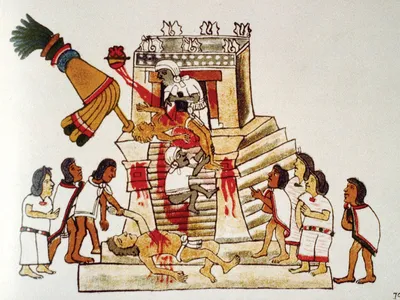
Often referred to as Ollin Tonatiuh (“Sun of Movement”), he was closely associated with the eagle, particularly during sunrise and sunset, and shared important symbolic connections with the war god Huitzilopochtli in Aztec state religion. The Aztecs believed that Tonatiuh’s daily journey across the sky required continual nourishment through sacred offerings. Human sacrifice, especially the offering of hearts and blood, was therefore considered essential to sustain the sun and preserve the balance of the cosmos.
Physical Traits
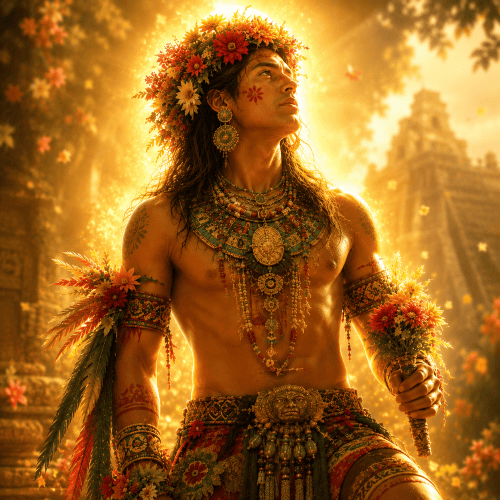
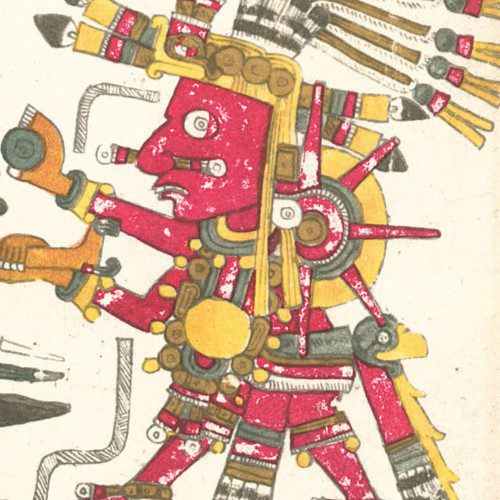
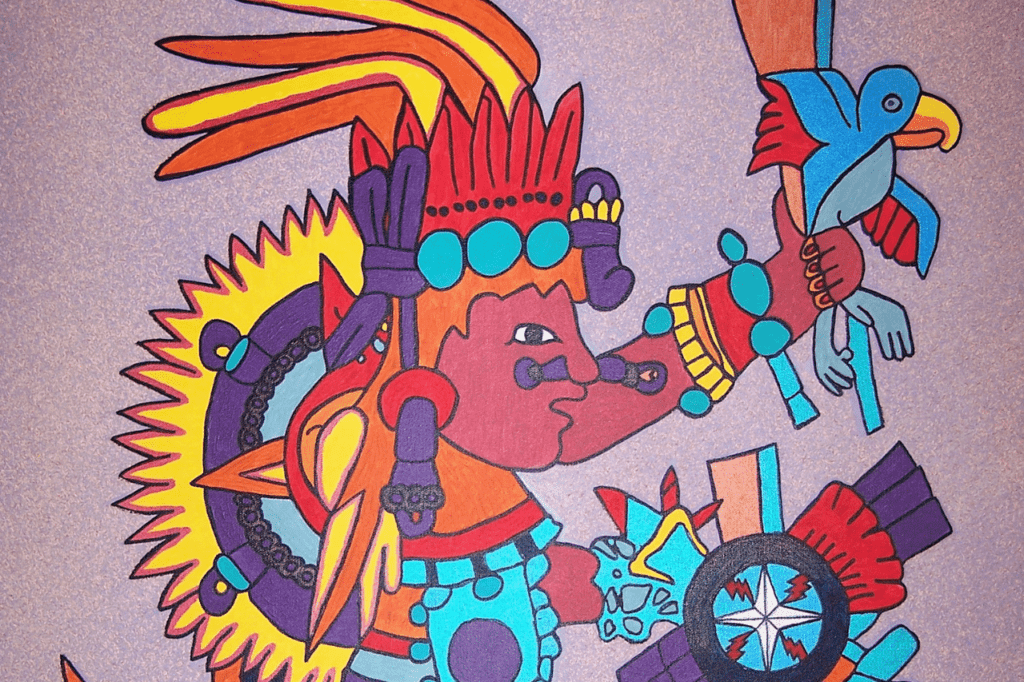
Tonatiuh is one of the most recognizable deities in Aztec art. He is typically depicted with a red-painted face, symbolizing the blazing sun, and wears an elaborate eagle-feather headdress. He often carries a round shield decorated like a solar disk, reinforcing his role as the celestial sun.
His association with the eagle reflected the bird’s power and its connection to the heavens. Eagle warriors, among the most elite military orders of the Aztec Empire, were particularly linked to Tonatiuh. In Aztec symbolism, the eagle represented strength, courage, and the taking of enemy hearts during ritual sacrifice, a practice believed to sustain the sun.
Family
Unlike many gods with clear genealogies, Tonatiuh’s origins are rooted in sacrifice rather than birth. According to the myth recorded in the Leyenda de los Soles, the humble god Nanahuatzin threw himself into the sacred fire at Teotihuacan, transforming into the new sun. Some traditions therefore regard Tonatiuh as the transformed Nanahuatzin rather than a separate deity.
Although Tonatiuh does not possess a well-defined divine family in Aztec mythology, his existence is inseparable from the collective sacrifice of the gods who gave their lives to create and sustain the Fifth Sun.
Other Names
The name Tōnatiuh comes from the Nahuatl verb tona, meaning “to shine,” “to warm,” or “to give off heat.” The name can be interpreted as “He Who Goes Forth Shining” or “He Who Travels Giving Heat,” reflecting the sun’s daily journey across the sky.
Tonatiuh was also known as Nahui Ollin (“Four Movement”), the calendrical name associated with his creation. According to Aztec cosmology, the Fifth Sun was born on the day Four Movement, and prophecy foretold that this present age would one day end through devastating earthquakes.
Powers and Abilities
As the embodiment of the sun, Tonatiuh governed light, warmth, and the continuation of life. The Aztecs believed that although the gods had created the Fifth Sun through their own sacrifice, Tonatiuh required continual nourishment through ritual offerings to maintain his movement across the heavens.
Human sacrifice occupied a central place in his worship because the offering of blood and hearts was believed to renew the sun’s strength and ensure the survival of the world. Warriors played a vital role in this religious system by capturing prisoners who would serve as sacrificial offerings. Those who died in battle or were sacrificed in Tonatiuh’s honor were believed to accompany the sun on its journey across the sky before eventually returning to Earth in the form of hummingbirds or butterflies.
Because of his close association with warfare and royal authority, Tonatiuh was honored during imperial ceremonies, including the coronation of Aztec rulers. During periods of famine, drought, or war, additional sacrifices were often performed in the hope of securing his favor and preserving cosmic order.
Modern Day Influence
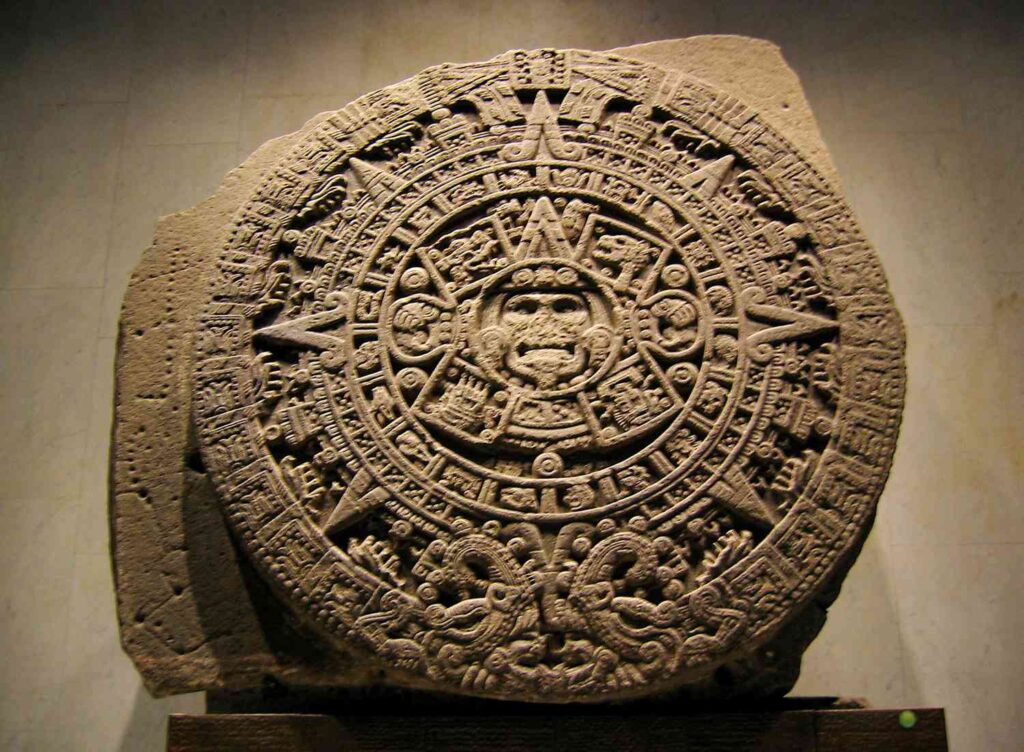
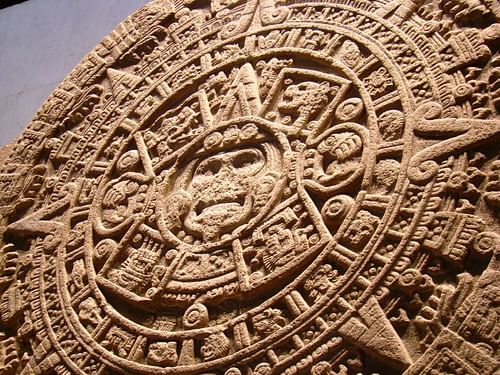
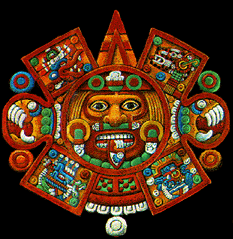
Tonatiuh remains one of the most recognizable figures of Aztec mythology due to his prominent position at the center of the famous Aztec Sun Stone, often mistakenly called the Aztec Calendar Stone. His imagery continues to inspire historians, artists, archaeologists, and popular culture.
Although he is less frequently portrayed than gods such as Quetzalcoatl or Huitzilopochtli, Tonatiuh has appeared in modern video games, novels, documentaries, and educational media exploring Mesoamerican civilizations. His enduring symbolism as the sun and the central figure of the Fifth Age ensures that he remains an important representation of Aztec mythology and cosmology.
Related Images


Sources
Encyclopaedia Britannica. (n.d.). Tonatiuh. https://www.britannica.com/topic/Tonatiuh
World History Encyclopedia. (2021). Aztec religion. https://www.worldhistory.org/Aztec_Religion/
Mexicolore. (n.d.). Tonatiuh. https://www.mexicolore.co.uk/aztecs/gods/tonatiuh
ThoughtCo. (2020, August 27). Tonatiuh: The Aztec sun god. https://www.thoughtco.com/tonatiuh-aztec-sun-god-169341
Miller, M., & Taube, K. (1997). An illustrated dictionary of the gods and symbols of ancient Mexico and the Maya. Thames & Hudson.
Read, K. M., & González, J. J. (2000). Mesoamerican mythology: A guide to the gods, heroes, rituals, and beliefs of Mexico and Central America. Oxford University Press.
Townsend, R. F. (2009). The Aztecs (3rd ed.). Thames & Hudson.
Graulich, M. (1997). The Aztec festival of the sun: An interpretation. Ancient Mesoamerica, 8(2), 359–381. https://doi.org/10.1017/S095653610000179X
Frequently Asked Questions
Who was Tonatiuh in Aztec mythology?
Tonatiuh was the Aztec sun god who ruled the Fifth Sun. He symbolized life, warfare, and cosmic order, and was believed to need sacrifices to keep the sun moving.
Why did the Aztecs sacrifice people to Tonatiuh?
The Aztecs believed human hearts and blood nourished Tonatiuh, giving him the strength to cross the sky each day and ensuring the survival of the world.
Is Tonatiuh the same as Huitzilopochtli?
No. Tonatiuh and Huitzilopochtli were separate deities, though they shared strong associations with the sun, warfare, and Aztec state religion.
What does the name Tonatiuh mean?
Tonatiuh comes from the Nahuatl language and means “He Who Goes Forth Shining” or “He Who Travels Giving Heat,” referring to the sun’s daily journey.
Why is Tonatiuh on the Aztec Sun Stone?
Tonatiuh appears at the center of the Aztec Sun Stone because he represents the Fifth Sun, the current age in Aztec cosmology, and the cycle of time and creation.