


Zwangendaba Gumbi : The Historical King Behind the Ngoni Legends
At a glance
| Description | |
|---|---|
| Origin | Ngoni Mythology |
| Classification | Mortals |
| Family Members | Hlatshwayo (Father) |
| Region | South Africa |
| Associated With | Leadership, Migration, Military strategy, Nation-building |
The Mythlok Perspective
In Mythlok’s Perspective, Zwangendaba Gumbi occupies the fascinating space where history becomes mythology. Unlike gods or spirits, he was a real king whose remarkable achievements inspired generations to tell his story with increasing reverence. The miraculous tales surrounding the Zambezi crossing and his perceived connection to ancestral powers reflect how communities preserve the memory of exceptional leaders. Rather than diminishing his historical importance, these legends reveal the cultural need to elevate transformative figures into symbols of destiny, resilience, and unity. Zwangendaba reminds us that mythology is not always born from fiction—it often begins with extraordinary human lives that become larger than history itself.
Zwangendaba Gumbi
Introduction
Zwangendaba Gumbi (c. 1785–1848) was one of the most influential leaders in southern and central African history. Originally a chief of the Jere (Jele) clan within the Ndwandwe confederation, he became the founding ruler of the Ngoni people after leading an extraordinary migration across thousands of kilometres during the upheaval known as the Mfecane. His journey began after the defeat of King Zwide’s forces by Shaka Zulu around 1819, forcing many Nguni communities to seek new lands.
Over the next three decades, Zwangendaba guided his followers through present-day Eswatini, Mozambique, Zimbabwe, Zambia, Malawi, and eventually into western Tanzania. Along the way, he absorbed different communities into the growing Ngoni nation while preserving a strong military and cultural identity. Although history remembers him as an exceptional strategist and nation-builder, later oral traditions elevated him into a near-mythical figure. Stories surrounding miraculous events, prophetic leadership, and divine favour transformed him from a respected historical king into one of the legendary ancestors of Ngoni mythology.
Physical Traits
Unlike many legendary rulers, there are no surviving contemporary portraits or reliable physical descriptions of Zwangendaba Gumbi. Historical records written by missionaries and early explorers focus almost entirely on his leadership, military campaigns, and migration rather than his appearance.
Ngoni oral traditions instead describe him through symbolic qualities. He is remembered as a commanding warrior whose presence inspired loyalty during decades of hardship. His authority was said to come not from physical size alone but from remarkable endurance, discipline, and confidence. Leading thousands of followers across unfamiliar landscapes required extraordinary resilience, and these qualities gradually became part of his legendary image.
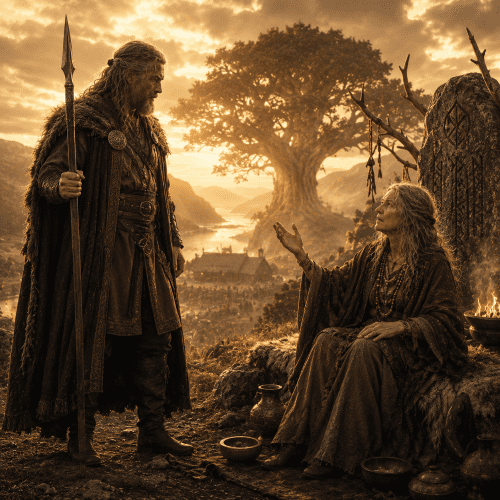
Traditional depictions often portray him wearing the attire of a nineteenth-century Nguni king, carrying a shield and spear while dressed in ceremonial animal skins and feathered regalia. These artistic representations reflect cultural memory rather than historical certainty, presenting him as the ideal warrior-king who embodied courage, wisdom, and unwavering determination.
Family
Zwangendaba belonged to the respected Jere or Jele lineage, sometimes associated with the Gumbi branch of the clan. His father was Chief Hlatshwayo, whose ancestry traced back to Magangatha, placing Zwangendaba within an established line of Nguni leadership.
Historical traditions identify Somkhanda kaZiguda Jele, who remained in the Pongola region of present-day South Africa, as his close relative, often described as his brother or near kinsman depending on the oral source. While Zwangendaba journeyed north, this branch continued the Gumbi lineage in its ancestral homeland.
Like many rulers of his era, Zwangendaba maintained a large royal household. After his death in 1848 near Mapupo in present-day Tanzania, disagreements among his sons and senior commanders led to the fragmentation of his kingdom. Rather than ending his influence, this division spread Ngoni culture across Central Africa, giving rise to several independent kingdoms in present-day Malawi, Zambia, and Tanzania. Many Ngoni royal families today continue to trace their ancestry directly to him, making his lineage central to their historical identity.
Other names
Historical documents and oral traditions record Zwangendaba under several names, reflecting differences in regional languages and clan traditions. The most commonly accepted form is Zwangendaba kaZiguda Jele Gumbi, although variants such as Zwangendaba Gwaza kaZiguda Jele also appear in historical literature.
Within Ngoni praise poetry, he is frequently associated with the Jele or Jere clan, while the surname Gumbi survives through related family traditions in southern Africa. European travellers and colonial writers often simplified these names to simply “Zwangendaba,” while local traditions preserved the longer genealogical forms that connected him to his ancestors.
Today, regardless of the variation used, the name Zwangendaba represents far more than an individual. It symbolises the founding father of the Ngoni nation and one of the greatest migration leaders in African history.
Powers and Abilities
Historically, Zwangendaba possessed no supernatural powers. His greatest abilities lay in leadership, military organisation, diplomacy, and strategic thinking. He successfully adapted the disciplined battlefield formations introduced during the rise of the Zulu Kingdom, enabling relatively small forces to defeat larger opponents while maintaining cohesion during decades of migration.
His political skills were equally impressive. Rather than simply conquering neighbouring communities, he incorporated many of them into the expanding Ngoni society. Groups such as the Tumbuka, Chewa, Kalanga, Rozvi, and others contributed to the development of a distinctive Ngoni identity while retaining aspects of their own traditions.
Over time, however, history blended with mythology. The most famous legend concerns the crossing of the Zambezi River in November 1835. According to Ngoni oral tradition, a solar eclipse occurred as Zwangendaba prepared to cross the flooded river. Some versions claim he performed sacred rituals before leading his people safely across waters that appeared to part or become passable through divine intervention. Historians generally interpret this story as a symbolic account shaped by the coincidence of the eclipse and a successful river crossing, rather than a literal miracle.
These legends reveal how later generations viewed Zwangendaba not merely as a successful king but as a leader favoured by ancestral spirits. In Ngoni mythology, his wisdom, courage, and seemingly impossible achievements gradually became signs of supernatural destiny, elevating him from history into legend.
Modern Day Influence
The legacy of Zwangendaba Gumbi continues to shape the identity of Ngoni communities across Malawi, Zambia, Tanzania, and parts of Mozambique. Traditional ceremonies still honour the migration he led, while royal genealogies preserve his memory as the founding ancestor of numerous Ngoni chiefdoms.
One of the most significant commemorations is the remembrance of the historic Zambezi crossing, which remains an important event in Ngoni cultural history. Traditional leaders, including descendants of Paramount Chief Mpezeni in Zambia, continue to celebrate their shared heritage through ceremonies, storytelling, and cultural festivals that reinforce connections to Zwangendaba’s remarkable journey.
Modern historians also regard him as a transformative political leader whose migration reshaped the demographic and political landscape of Central Africa. His military organisation influenced regional state formation, while the cultural traditions carried by the Ngoni remain visible in language, dance, ceremonies, and royal customs.
For many Africans today, Zwangendaba represents resilience in the face of upheaval. His story demonstrates how determined leadership can preserve a people’s identity even during decades of displacement. Although history provides the foundation of his life, the legends surrounding him continue to inspire generations, illustrating how extraordinary historical figures often become mythologised within the collective memory of their people.
Related Images




Source
Beresford, D. (1970). The Ngoni and their history. In M. Ranger (Ed.), African studies in history (pp. 45–67). University Press.
Glenn, S. (2018). Zwangendaba and the Ngoni migrations. Journal of African History, 59(2), 221–245.
“Ngoni people.” (n.d.). In Wikipedia. Retrieved July 10, 2026, from https://en.wikipedia.org/wiki/Ngoni_people
“Zwangendaba Jele.” (n.d.). In Wikipedia. Retrieved July 10, 2026, from https://en.wikipedia.org/wiki/Zwangendaba
“Zwangendaba’s long journey.” (2025, January 31). Sunday News (Zimbabwe). Retrieved from https://www.sundaynews.co.zw/zwangendabas-long-journey/.
Ndwandwe and the Ngoni. (n.d.). Scribd. Retrieved July 10, 2026, from https://www.scribd.com/document/270400912/Ndwandwe-and-the-Ngoni.
Langworthy, H. (1972). Oral traditions and the migrations of the Ngoni. African Oral History Review, 4(1), 12–36.
Omer-Cooper, J. D. (1966). The Zulu Aftermath: A Nineteenth-Century Revolution in Bantu Africa. London: Longman.
Roberts, A. D. (1976). A History of Zambia. London: Heinemann.
Ranger, T. O. (1985). The Invention of Tribalism in Zimbabwe. Cambridge: Cambridge University Press.
Pachai, B. (1973). The Early History of Malawi. Evanston: Northwestern University Press.
Frequently Asked Questions
Who was Zwangendaba Gumbi?
Zwangendaba Gumbi was a nineteenth-century Ngoni king who led one of Africa’s greatest migrations, establishing Ngoni kingdoms across present-day Malawi, Zambia, Tanzania, and Mozambique.
Why is Zwangendaba Gumbi important in Ngoni mythology?
Although he was a historical ruler, later oral traditions transformed him into a legendary ancestor whose leadership and miraculous deeds became part of Ngoni mythology.
Did Zwangendaba Gumbi really part the Zambezi River?
There is no historical evidence that he literally parted the river. The story comes from Ngoni oral tradition, which connects a successful crossing during a solar eclipse with divine favour.
What was the Mfecane and how did it affect Zwangendaba?
The Mfecane was a period of conflict and migration in southern Africa during the early nineteenth century. It prompted Zwangendaba to lead his followers north, eventually creating the Ngoni nation.
Where are the descendants of Zwangendaba Gumbi today?
Descendants of Zwangendaba and the Ngoni people are primarily found in Malawi, Zambia, Tanzania, and parts of Mozambique, where his legacy remains central to cultural identity.


