Circassian Mythology
Circassian mythology is a rich body of traditional beliefs, heroic narratives, legends, and ritual traditions associated with the Circassian people, also known as the Adyghe, of the Northwest Caucasus. Closely connected with the mountains, forests, rivers, and communities of the region, these traditions reflect values such as courage, honor, hospitality, loyalty, justice, and communal responsibility. Much of Circassian traditional culture was transmitted orally through songs, storytelling, ritual practices, and customary law rather than through a surviving corpus of ancient religious texts. As a result, what is now described as Circassian mythology represents layers of religious belief, folklore, epic storytelling, and cultural memory that developed over centuries.
The most famous expression of Circassian traditional storytelling is the Nart saga, a large body of heroic narratives also found, in different forms, among several peoples of the Caucasus. The Circassian versions are particularly important within Adyghe cultural heritage and contain distinctive characters, episodes, and themes. The Narts are not simply a conventional race of semi-divine heroes. They are a legendary heroic community whose stories explore relationships between individuals, families, communities, and supernatural forces. Their adventures include warfare, feasting, rivalry, trickery, journeys, magical encounters, and conflicts arising from pride and ambition.
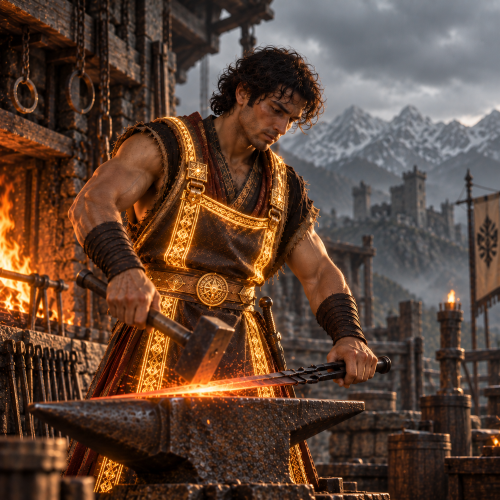
Among the best-known figures in the Circassian Nart tradition is Sosruko, a powerful and frequently cunning hero associated with fire and numerous extraordinary adventures. His character varies across different versions of the tradition, but he is often portrayed as an unconventional figure whose intelligence and boldness are as important as his physical strength. Another central figure is Satanaya, the remarkable mother of the Narts. She is frequently portrayed as wise, resourceful, powerful, and capable of influencing the fortunes of heroes. Her role is much broader than that of a simple fertility goddess: she functions as a maternal, strategic, and sometimes supernatural figure within the heroic tradition.
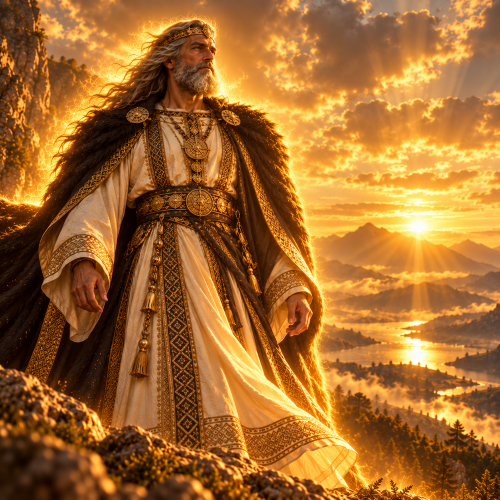
Circassian traditional religion also included supernatural beings and divine or semi-divine figures associated with particular aspects of nature and human life. Theshxwe is often described in modern sources as a supreme or highest deity, although interpretations of his role vary between sources and traditions. The Circassian religious worldview was not necessarily organized as a rigid pantheon comparable to the Olympian or Norse systems. Different deities, spirits, and supernatural beings could be associated with natural forces, occupations, places, or aspects of communal life. This diversity makes it important to avoid presenting Circassian religion as a standardized hierarchy of gods.
Nature occupies an important place in Circassian traditional beliefs. Mountains, forests, rivers, trees, animals, and other elements of the natural world could possess sacred or supernatural significance. Fire also held an important cultural and ritual role, although claims that Circassians universally worshipped fire as a single divine entity should be treated cautiously. Fire could represent the household, continuity, protection, and communal life, and traditional practices surrounding the hearth became closely associated with family and social identity.
The Nart stories contain numerous encounters with supernatural beings, monsters, giants, dragons, and other extraordinary forces. These figures often create challenges for the heroes, but the narratives are not simply battles between good and evil. The stories explore complicated questions about courage, cleverness, pride, loyalty, revenge, responsibility, and the consequences of individual actions. Trickery and intelligence can be as valuable as strength, while heroic status does not necessarily protect characters from failure or tragedy.
The oral nature of Circassian tradition is particularly important to its survival. Nart stories were performed and transmitted through generations, allowing different communities and storytellers to preserve their own versions. This means that characters, episodes, and details can differ between collections and Circassian communities. The tradition therefore should not be treated as a single fixed mythology with one authoritative version.
Circassian history has also profoundly shaped the survival of these traditions. The 19th-century Caucasian War and the mass displacement of Circassian populations, particularly the diaspora that developed in the Ottoman Empire, disrupted communities and transformed the ways in which traditional culture was transmitted. Despite this history, Circassian communities in the Caucasus and diaspora have continued to preserve elements of their heritage through language, oral literature, <a class="wpil_keyword_link" href="https://mythlok.com/archetypes/music-dance/” title=”Music and Dance : Gods, Spirits and Legendary Figures of Rhythm” data-wpil-keyword-link=”linked” data-wpil-monitor-id=”534500″>music, dance, cultural organizations, scholarship, and contemporary artistic expression.
Circassian mythology is therefore best understood as a living cultural tradition rather than simply an ancient collection of gods and monsters. The Nart sagas provide its most celebrated heroic literature, while traditional beliefs surrounding nature, supernatural beings, sacred practices, and communal values provide a broader cultural context. Through figures such as Sosruko and Satanaya and through the many stories preserved across generations, Circassian mythology continues to express the resilience, creativity, and cultural identity of the Adyghe people.