Gambanteinn : The Norse Weapon of Hidden Power
Mythlok Perspective
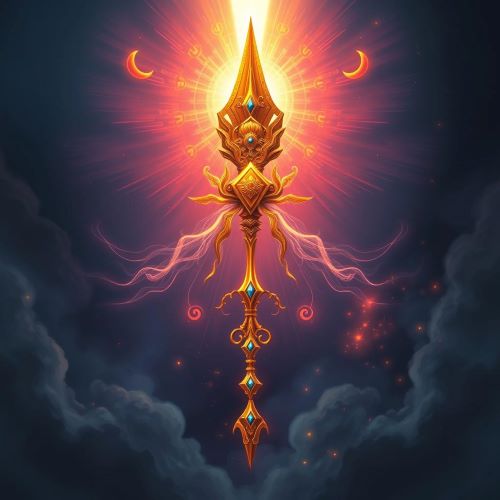
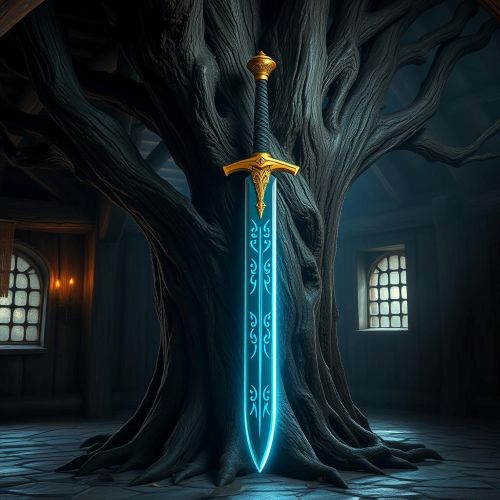
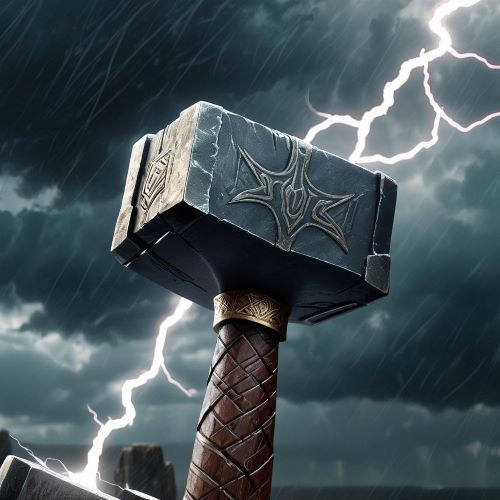
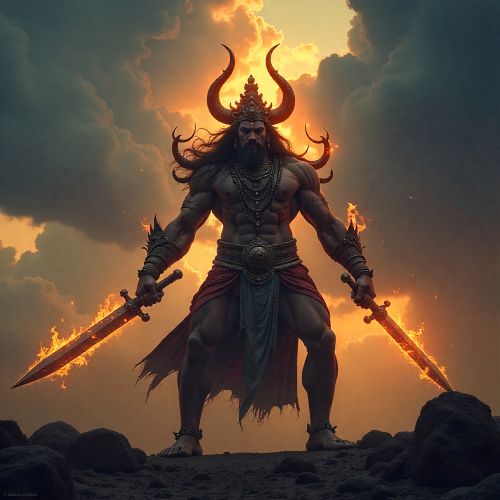
In Mythlok’s perspective, Gambanteinn is ambiguity forged into weaponry. Its form shifts between sword and wand, suggesting that power need not rely on brute force alone. Associated in later traditions with Loki and sometimes linked to Surtr, it represents concealed potency and catalytic destruction. This is a weapon of initiation, not spectacle. Unlike Mjölnir’s thunderous certainty, Gambanteinn operates through subtle disruption. It parallels the Celtic Gáe Bulg in its mysterious lethality, yet stands closer to ritual implements like the Vajra, where symbolism often outweighs physical form.
Gambanteinn
Introduction
Gambanteinn is one of the most mysterious and fascinating magical objects in Norse mythology. Unlike the well-known hammer of Thor or Odin’s mighty spear, this artifact takes the form of a wand or staff, deeply tied to ancient Norse magical practices and poetry. The name Gambanteinn, which roughly translates to “mighty twig” or “magic wand,” appears in the Poetic Edda — particularly in the poems Skírnismál and Hárbarðsljóð. Although it does not appear frequently in the surviving mythological corpus, its symbolic meaning offers profound insight into how the Norse understood magic, coercion, and divine authority.
Origins
The origins of Gambanteinn are rooted in the mythic world of Old Norse poetry, where language, ritual, and symbolism intertwine. The term itself combines gamban, meaning “powerful” or “magical,” and teinn, meaning “twig,” “rod,” or “staff.” Scholars believe that Gambanteinn refers to a wooden wand imbued with supernatural energy, perhaps similar to those used by vǫlur — seeresses who practiced seiðr, the Norse form of ritual magic and prophecy.
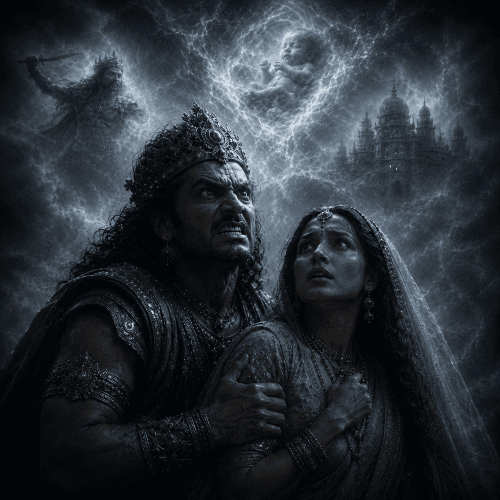
The first major appearance of Gambanteinn occurs in Skírnismál, one of the mythological lays of the Poetic Edda. In this poem, Skírnir, the messenger and servant of the fertility god Freyr, carries the wand on his mission to woo the giantess Gerðr. When she refuses his proposal, Skírnir resorts to magical threats and curses, using the Gambanteinn as a conduit for enchantment and intimidation. The object thus emerges as both a symbol and an instrument of supernatural coercion.
A second reference appears in Hárbarðsljóð, where Odin, disguised as a ferryman named Hárbarðr, boasts about seizing a Gambanteinn from the giant Hlébarð. This episode links the wand with the themes of theft, wisdom, and the transfer of magical power — a recurring motif in Odin’s myths. These two instances together establish Gambanteinn as an implement that bridges divine and human magic, carrying connotations of both wisdom and manipulation.
Powers
The power of Gambanteinn lies not in physical destruction but in control and transformation. In Skírnismál, the wand becomes an extension of Skírnir’s will as he utters elaborate curses to bend Gerðr’s mind and fate. He threatens her with isolation, madness, and endless longing if she refuses Freyr’s love, effectively weaponizing the wand’s magic through words and ritual. The power it channels is psychological and metaphysical — it compels submission not through violence but through the alteration of consciousness and destiny.
In Hárbarðsljóð, Odin’s claim that he used the wand to “rob a giant of his wits” adds another layer to its potency. Here, Gambanteinn embodies the power to manipulate thought, obscure reason, and dominate minds. Its association with mental confusion connects it to seiðr, a form of Norse sorcery that often involved illusion, trance, and psychological control. Thus, Gambanteinn is both a tool and a symbol of authority — a manifestation of the belief that knowledge and willpower could reshape the world.
Owners/Users
The two primary figures associated with Gambanteinn are Skírnir and Odin. Skírnir’s use of the wand in Skírnismál portrays him as a ritual practitioner rather than a warrior, reinforcing the idea that his mission was one of magical diplomacy and coercion. As the intermediary of Freyr, Skírnir embodies the Vanir’s connection to fertility, peace, and magic — domains where persuasion and enchantment often held more power than weapons.
Odin’s mention of Gambanteinn in Hárbarðsljóð further elevates its importance. The Allfather’s constant pursuit of hidden wisdom and magical mastery makes his association with the wand fitting. By claiming to have taken it from a giant, Odin continues his mythic pattern of acquiring sacred knowledge from otherworldly beings — whether through sacrifice, deceit, or daring theft.
While these divine and semi-divine figures wield Gambanteinn in myth, its symbolism also resonates with the ritual practices of human magicians and vǫlur. Archaeological and literary evidence suggests that such wands or staffs were real objects used in Norse magical ceremonies. Therefore, the Gambanteinn may reflect a mythologized version of the ritual tools employed by seeresses and sorcerers in pre-Christian Scandinavia.
Instances used
In Skírnismál, Gambanteinn plays a central role in one of the most striking examples of magical coercion in Norse literature. Skírnir, acting on Freyr’s behalf, first attempts to woo Gerðr with gifts. When persuasion fails, he brandishes the Gambanteinn and begins a series of spells and threats, invoking runes that promise despair and damnation unless she yields. The wand is not explicitly described as glowing or emitting force; rather, its power manifests through Skírnir’s words, rhythm, and ritual gesture. The scene illustrates how deeply intertwined speech and magic were in the Norse worldview — the wand amplifies the spell but the true power lies in language.
In Hárbarðsljóð, Odin’s reference to having stolen a Gambanteinn from the giant Hlébarð provides a contrasting perspective. Here, the wand is not used directly in battle but serves as a trophy and token of magical conquest. Odin’s boasting highlights the wand’s symbolic value as a source of wisdom and mental control, reinforcing his identity as the god of magic and cunning. Together, these two literary appearances define Gambanteinn as a weapon of the mind and spirit rather than of physical might.

Source
Orchard, A. (1997). Dictionary of Norse Myth and Legend. Cassell.
Larrington, C. (1996). The Poetic Edda. Oxford World’s Classics.
Lindow, J. (2001). Norse Mythology: A Guide to Gods, Heroes, Rituals, and Beliefs. Oxford University Press.
Ström, F. (1996). Freyr, Skírnir and Gerðr. In Open Book Publishers (Vol. 7). https://books.openbookpublishers.com/10.11647/obp.0190/ch7.xhtml
Wikipedia contributors. (2025, April 9). Gambanteinn. In Wikipedia. https://en.wikipedia.org/wiki/Gambanteinn
Frequently Asked Questions
What is Gambanteinn in Norse tradition?
Gambanteinn is a legendary weapon mentioned in Old Norse sources, most notably in the poem Skírnismál. It is described as a powerful object used in magical coercion, though its exact form remains debated.
Who wielded Gambanteinn?
In Skírnismál, the god Freyr’s messenger Skírnir uses Gambanteinn to threaten the giantess Gerðr. Later interpretations sometimes associate it with Loki, though this link is not clearly attested in primary sources.
Is Gambanteinn a sword or a staff?
Scholars debate its form. The Old Norse term “teinn” often means twig or rod, suggesting it may have been a magical staff rather than a traditional sword.
What does Gambanteinn symbolize?
Gambanteinn symbolizes magical authority, coercion, and transformative power. Unlike physical weapons, it represents influence through enchantment and fate rather than direct combat.
How is Gambanteinn different from Mjölnir?
Mjölnir is a clearly defined hammer associated with thunder and protection, while Gambanteinn is obscure and magical in nature, tied more to ritual power and intimidation than battlefield strength.