

Vanant : The Celestial Protector of Ancient Persia
At a glance
| Description | |
|---|---|
| Origin | Iranian Mythology |
| Classification | Gods |
| Family Members | N/A |
| Region | Iran |
| Associated With | Victory, Protection, Healing, Celestial guardianship, Stars |
The Mythlok Perspective
In Mythlok’s Perspective, Vanant reveals a different kind of divine heroism. While celestial guardians such as Archangel Michael in Abrahamic traditions or Heimdall in Norse mythology are remembered for actively standing watch over the heavens, Vanant embodies a quieter form of protection through the unwavering light of the stars. Iranian mythology suggests that victory is not always won through battle, but through the constant preservation of truth, order, and hope. In an age that often celebrates dramatic heroes, Vanant reminds us that the greatest guardians are sometimes those whose presence is steady, unseen, and enduring.
Vanant
Introduction
Vanant is one of the lesser-known yet fascinating divine beings in Iranian mythology and the Zoroastrian faith. Revered as a yazata, or “worthy of worship,” Vanant represents victory, protection, and the triumph of truth over evil. The name originates from the Avestan word vanant, meaning “conqueror” or “victor,” perfectly reflecting the deity’s purpose within Zoroastrian cosmology.
Unlike many mythological figures who are remembered through elaborate legends or heroic adventures, Vanant’s importance lies in the heavens. Rather than appearing as a human-like deity, Vanant is closely associated with a brilliant star that serves as a guardian of the cosmic order established by Ahura Mazda. Ancient texts consistently describe Vanant as one of the celestial protectors who defend creation against the forces of Angra Mainyu, the destructive spirit of chaos and falsehood.
The primary source for understanding Vanant is the Vanant Yasht (Yasht 21), one of the shortest hymns in the Khorda Avesta. Although brief, it highlights the yazata’s protective nature, particularly against sorcery, harmful spirits, disease, and destructive creatures. Vanant is frequently invoked alongside other astral yazatas, especially Tishtrya, demonstrating the collaborative role celestial beings play in preserving balance within the universe.
Modern scholars have proposed different astronomical identifications for Vanant, including Vega, Fomalhaut, Altair, and occasionally Sargas. However, no single identification has achieved universal scholarly agreement. What remains consistent across traditions is Vanant’s role as a victorious celestial guardian whose light symbolizes the enduring triumph of order over chaos.
Physical Traits
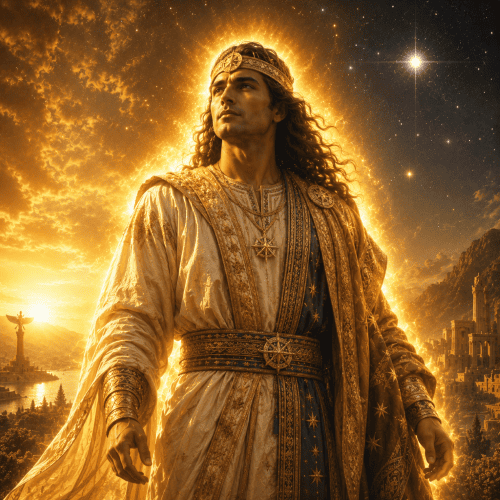
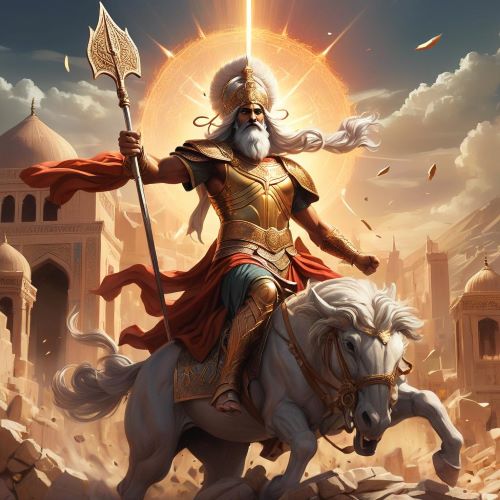
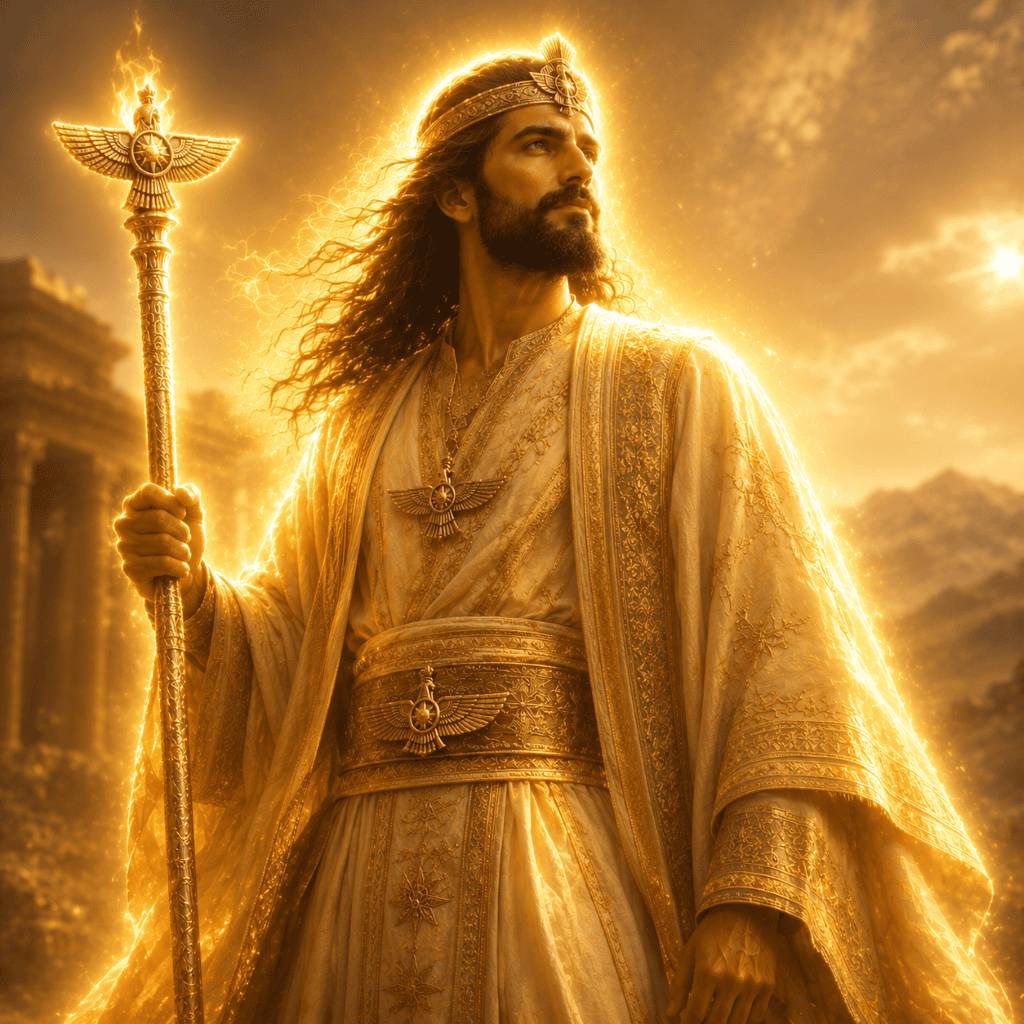
Vanant differs significantly from many gods found in world mythology because ancient Zoroastrian scriptures do not describe the deity with a human body or distinctive physical appearance. Instead, Vanant is fundamentally portrayed as a celestial being whose presence is expressed through the brilliance of a star.
This absence of anthropomorphic imagery reflects an important feature of Zoroastrian belief. Rather than focusing on physical form, the religion emphasizes divine qualities and cosmic function. Vanant embodies radiance, purity, vigilance, and victory, serving as a constant reminder that light ultimately overcomes darkness.
Various later traditions associate Vanant with different prominent stars, though these identifications remain debated among historians and astronomers. Regardless of the exact celestial body, the symbolism remains unchanged. Vanant’s shining presence in the night sky represents divine protection watching over creation.
Some later Persian traditions also describe Vanant as one of the guardian stars positioned to defend the world from destructive cosmic influences. This reinforces the idea that Vanant’s true “form” is not physical but celestial—a living manifestation of divine order itself.
Family
Unlike many mythological deities, Vanant has no recorded genealogy or family lineage in surviving Zoroastrian texts. The scriptures do not identify parents, siblings, spouses, or children, making Vanant unique among many divine figures who are often embedded within extensive family trees.
Instead, Vanant’s closest relationships are functional rather than biological. The yazata is frequently associated with Tishtrya, the star deity identified with Sirius, who is famous for bringing rain and battling the demon of drought. Together, these celestial guardians help defend Ahura Mazda’s creation from evil forces.
As one of the astral yazatas created by Ahura Mazda, Vanant belongs to the divine host that supports asha, the Zoroastrian principle of truth, righteousness, and cosmic order. Rather than existing within a family structure, Vanant is part of a larger spiritual community dedicated to preserving harmony throughout the universe.
Other names
The oldest surviving name of the deity appears in the Avestan language as Vanant, meaning “conqueror” or “victor.” As the Iranian languages evolved over time, the name also appeared in Middle Persian texts as Vanand or Wanand.
Some scholarly works use the transliterated form Venant, although this is simply an alternative spelling rather than a separate identity. Historical references occasionally describe Vanant as the Guardian Star of the West, reflecting the deity’s astronomical role in certain later traditions.
Although Vanant has been linked with different stars by various scholars, these associations should not be confused with alternate names. They represent attempts to identify the celestial body connected with the yazata rather than different manifestations of the deity.
Powers and Abilities
Vanant’s powers revolve around protection, healing, and the preservation of cosmic order. Unlike warrior gods who defeat enemies through physical combat, Vanant’s strength lies in spiritual victory over the forces of evil.
The Vanant Yasht portrays the yazata as a powerful defender against black magic, sorcery, curses, and malevolent spirits. Worshippers traditionally recited the hymn to seek protection from unseen dangers and harmful supernatural influences.
Vanant is also associated with healing. Ancient prayers invoke the deity to relieve illnesses believed to be caused by evil forces, including fevers, stomach ailments, and pain affecting different parts of the body. While these beliefs belong to the religious worldview of ancient Zoroastrianism, they illustrate Vanant’s role as both protector and divine healer.
Another important responsibility is safeguarding the cosmic balance between asha (truth) and druj (falsehood). As one of Ahura Mazda’s celestial guardians, Vanant helps ensure that order continues to prevail over chaos.
Some ritual traditions further credit Vanant with restraining harmful creatures such as snakes, wolves, rats, and other dangerous animals that symbolized destructive forces. Whether interpreted literally or symbolically, these powers reinforce Vanant’s identity as a guardian who shields both individuals and the wider world from harm.
Modern Day Influence
Although Vanant is not as widely recognized as figures like Ahura Mazda or Anahita, the yazata continues to hold religious significance within Zoroastrian communities. The Vanant Yasht remains part of the Khorda Avesta and is still recited by some believers seeking spiritual protection and inner strength.
Beyond religious practice, he has become an important subject in the academic study of Iranian mythology and ancient astronomy. Researchers continue to examine the relationship between Zoroastrian cosmology and the night sky, particularly the role played by the guardian stars in maintaining the universe’s divine order.
Modern discussions of Vanant also highlight the enduring symbolism of light overcoming darkness. In a world where moral and psychological challenges often replace the demons of ancient mythology, Vanant represents resilience, courage, and unwavering commitment to truth.
Although the deity rarely appears in modern popular culture, Vanant remains an important reminder of how ancient Iranian civilizations viewed the cosmos—not as an empty expanse of stars, but as a living battlefield where divine guardians continually defended creation against chaos.
Related Images



Source
Circle of Ancient Iranian Studies. (n.d.). Iranian mythology; Gods & Goddesses. https://www.cais-soas.com/CAIS/Mythology/gods_goddesses.htm
Ramiyar Karanjia. (2016, November 18). Hom and Vanant Yashts. https://ramiyarkaranjia.com/hom-and-vanant-yashts/
World History Encyclopedia. (2020, January 15). Ancient Persian gods, heroes, and creatures – The complete list. https://www.worldhistory.org/article/1488/ancient-persian-gods-heroes-and-creatures—the-co/
Encyclopaedia Iranica. (n.d.). Yazata and related entries in Iranian religious studies. https://www.iranicaonline.org/
Boyce, M. (1975). A history of Zoroastrianism, Vol. 1: The early period. Brill.
de Jong, A. (1997). Traditions of the magi: Zoroastrianism in Greek and Latin literature. Brill.
Zaehner, R. C. (1961). The dawn and twilight of Zoroastrianism. Phoenix Press.
Gnoli, G. (Ed.). (1987). The history of ancient Iran. Bibliotheca Persica.
Frequently Asked Questions
Who is Vanant in Iranian mythology?
Vanant is a Zoroastrian yazata associated with victory, protection, and a guardian star that helps preserve cosmic order against the forces of evil.
What does the name Vanant mean?
The name Vanant comes from the Avestan language and means “conqueror” or “victor.”
Which star is associated with Vanant?
Vanant has been associated with several stars, including Vega, Fomalhaut, Altair, and Sargas, although no single identification is universally accepted by scholars.
What is the Vanant Yasht?
The Vanant Yasht (Yasht 21) is a short hymn in the Khorda Avesta dedicated to Vanant, praising the yazata’s protective and healing powers.
Is Vanant still worshipped today?
Vanant remains part of Zoroastrian religious tradition, and the Vanant Yasht is still recited by some practitioners seeking spiritual protection and divine guidance.