

Ulupoka : The Fijian Headless Spirit of Disease and Misfortune
At a glance
| Description | |
|---|---|
| Origin | Fijian Mythology |
| Classification | Spirits |
| Family Members | N/A |
| Region | Fiji |
| Associated With | Disease, Misfortune, Chaos, |
The Mythlok Perspective
In Mythlok’s Perspective, Ulupoka represents the idea that separation can create something more dangerous than unity. He is not simply a broken being but a transformed one, where fragmentation becomes power. Across cultures, similar patterns appear in stories of dismembered entities that continue to exist. The Japanese nukekubi and the preserved head of Mímir in Norse tradition both reflect this idea of survival beyond physical integrity. Ulupoka, however, stands apart in his connection to disease and movement, making him less a keeper of knowledge and more a carrier of disruption. He is not a ruler or a guardian. He is a reminder that some forces do not need purpose to be feared.
Ulupoka
Introduction
Ulupoka is one of the most unsettling figures in Fijian tradition, remembered not as a god to be worshipped but as a spirit to be feared. His story emerges from oral narratives that describe the consequences of divine conflict and the lingering presence of destructive forces in the human world.
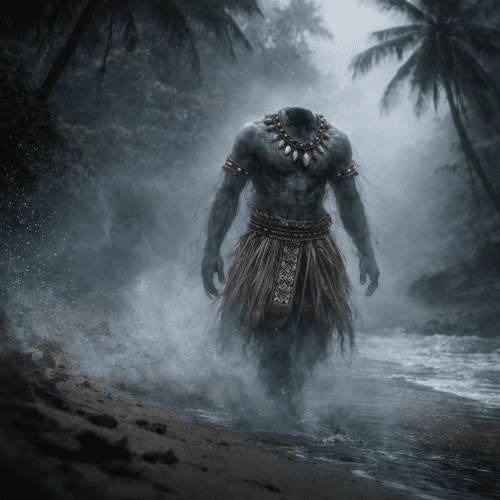
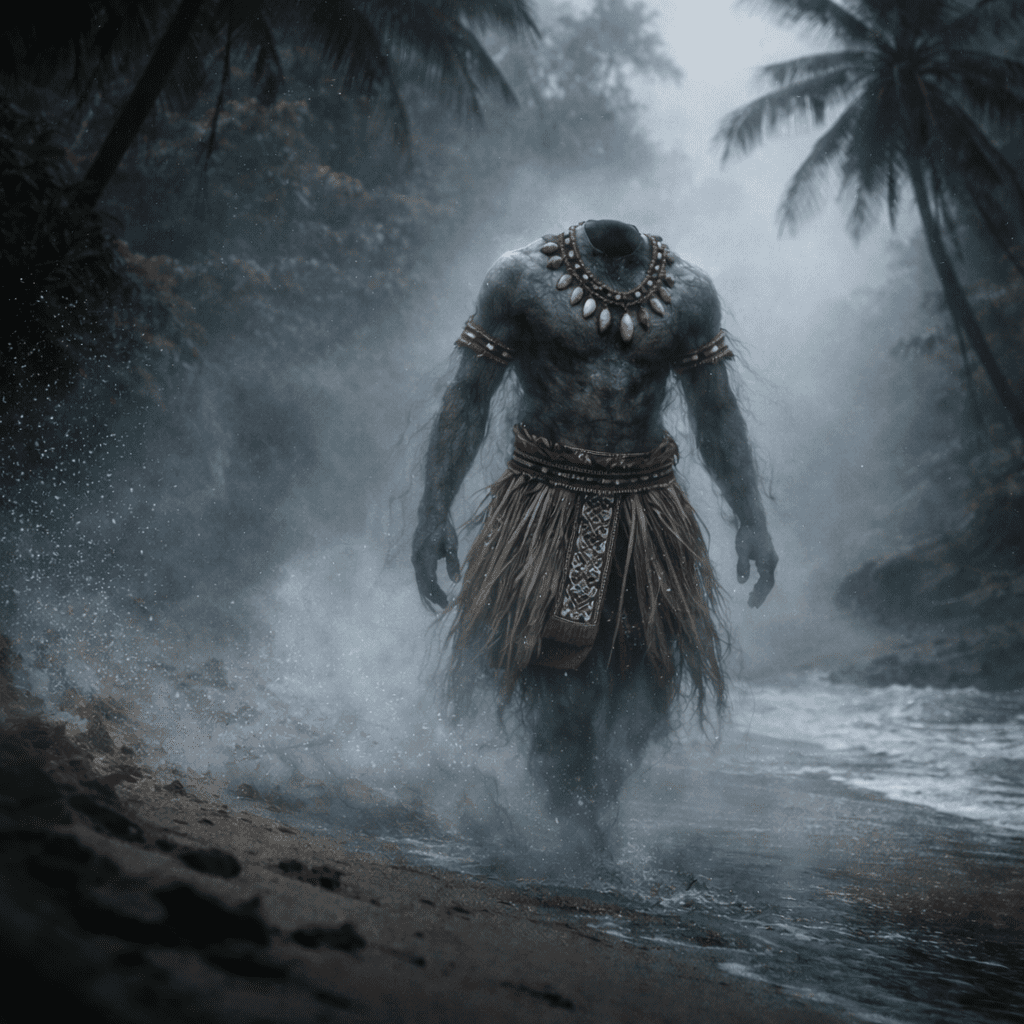
According to tradition, Ulupoka was once involved in a violent struggle among powerful beings. During this conflict, he was decapitated. Unlike mortals, however, he did not die. His existence continued in a fractured state, with his head and body separated yet still active. This unnatural survival defines his identity and transforms him into a wandering force of harm.
Ulupoka’s tale is not about creation or protection. It is about imbalance. He represents a presence that continues to move through the world long after the original conflict has ended, carrying with it disease, fear, and disruption.
Physical Traits
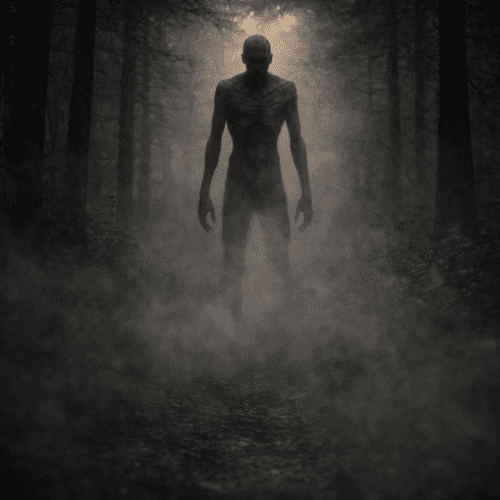
Ulupoka is defined by his division into two independent forms, each acting with its own disturbing purpose. His severed head is the most commonly described aspect, often imagined rolling across landscapes with intent and awareness.
This head is not lifeless. It moves, reacts, and seeks. In some accounts, it travels across vast distances, carried by forces as powerful as storm winds. The imagery evokes speed and unpredictability, reinforcing the idea that Ulupoka cannot be contained within one place.
His body, though separated, continues to wander. It moves without direction yet leaves consequences behind. The absence of a head does not weaken it. Instead, it highlights the unnatural nature of his existence. The body becomes a silent carrier of misfortune, spreading illness wherever it passes. Together, these two forms create a fragmented presence that feels incomplete yet dangerously active. Ulupoka is not whole, but he is far from powerless.
Family
There are no clear records or oral accounts that describe Ulupoka’s family or lineage. Unlike many figures in Fijian tradition who are defined by their relationships, Ulupoka exists in isolation. This absence of familial context is significant. It removes him from any structured hierarchy and places him outside the typical framework of mythological beings. He is not remembered as a descendant or ancestor. He is remembered for his impact. In oral storytelling, such omissions often serve a purpose. They shift focus away from origin and toward experience. In Ulupoka’s case, that experience is one of fear and disruption.
Other names
Ulupoka is consistently referred to by the same name across available sources. There are no widely recognized alternative names or regional variations associated with him. This consistency reflects the clarity of his role. Unlike figures whose identities evolve across cultures, Ulupoka remains singular in both name and nature.
Powers and Abilities
Ulupoka’s abilities stem from his unnatural state of existence. His continued life after decapitation is not a form of regeneration but a suspension of natural order. This makes him fundamentally different from other supernatural beings.
His wandering body is associated with the spread of disease and misfortune. Wherever it moves, it leaves behind signs of imbalance. This reflects traditional attempts to explain the movement of illness through communities.
His head, on the other hand, acts with more direct intent. Some accounts describe it attacking sleeping individuals, biting them and causing sickness or death. These actions emphasize vulnerability and the unseen dangers that can strike without warning.
The speed attributed to his head further enhances his threat. It is said to move rapidly across regions, making Ulupoka a presence that is not confined by geography. He is both local and far-reaching at the same time. In some traditions, Ulupoka is also associated with darker forces, including the ability to influence or direct malevolent entities. This positions him not just as a source of harm but as a catalyst for it.
Modern Day Influence
Ulupoka does not play a role in modern religious practice in Fiji, where Christianity is the dominant faith. However, his story continues to exist within the broader framework of oral tradition, which remains an essential part of cultural identity.
Storytelling in Fiji is more than entertainment. It is a way of preserving knowledge, history, and belief. Figures like Ulupoka are remembered through these narratives, passed down across generations.
Today, Ulupoka’s relevance lies in symbolism rather than ritual. He represents the fear of unseen forces, particularly illness and misfortune. Even without direct belief, such figures continue to shape cultural imagination.
His story also contributes to the wider understanding of Oceanian traditions, where not all supernatural beings are benevolent or balanced. Some exist purely as reminders of chaos and consequence.
Related Images

Source
Wikipedia contributors. (n.d.). Ulupoka. Wikipedia. https://a.osmarks.net/content/wikipedia_en_all_maxi_2020-08/A/Ulupoka
Godchecker. (2019, April 30). ULUPOKA – the Fijian Demon (Fijian mythology). https://www.godchecker.com/fijian-mythology/ULUPOKA/
En-academic.com. (n.d.). Ulupoka. https://en-academic.com/dic.nsf/enwiki/58708
DBpedia. (n.d.). About: Ulupoka. https://dbpedia.org/page/Ulupoka
Brewster, A. B. (1922). The king of the cannibal isles: Real adventures in Fiji. E.P. Dutton & Company.
Derrick, R. A. (1950). A history of Fiji. Government Printer.
Hocart, A. M. (1929). The Lau Islands, Fiji. Bernice P. Bishop Museum Bulletin. Honolulu: Bishop Museum Press.
Stimson, J. F. (1933). Myths and Legends of Polynesia. Boston: Little, Brown and Company.
Reed, A. W. (1963). Treasury of Polynesian Mythology. Wellington: A. H. & A. W. Reed.
Kaeppler, A. L. (1999). The Pacific Arts of Polynesia and Micronesia. Oxford: Oxford University Press.
Frequently Asked Questions
Who is Ulupoka?
Ulupoka is a malevolent spirit from Fijian tradition associated with disease, misfortune, and chaos. He is not a god but a wandering supernatural entity whose fragmented existence reflects fear of unseen forces affecting human life.
Why is Ulupoka headless?
Ulupoka was decapitated during a supernatural conflict among powerful beings. Instead of dying, he continued to exist with his head and body separated.
What does Ulupoka do?
Ulupoka spreads disease and misfortune through both his wandering body and his moving head. Some traditions describe his head attacking sleeping individuals, while his presence in general is linked to illness and disruption.
Is Ulupoka a god or a spirit?
Ulupoka is classified as a spirit, not a god. He lacks worship, hierarchy, and a defined domain. Instead, he exists as a feared entity that directly impacts humans through illness and chaos.
What does Ulupoka represent?
Ulupoka represents disease, fear, and the unpredictability of unseen forces. His fragmented form symbolizes imbalance, while his actions reflect early cultural attempts to understand and explain the spread of illness.
