


Seveki : The Creator Spirit of the Evenki World
At a glance
| Description | |
|---|---|
| Origin | Evenki Mytholology |
| Classification | Spirits |
| Family Members | Khargi (Brother) |
| Region | Russia, Mongolia, Northern China |
| Associated With | Creation, Nature balance, Upper world, |
The Mythlok Perspective
In Mythlok’s Perspective, Seveki represents a form of creation that is deeply ecological rather than dominative. Unlike creator figures who rule from a distance, Seveki exists within the system he creates, shaping not just life but the rules of coexistence. This reflects a worldview where survival depends on balance, not control. This idea finds parallels in other traditions. Seveki’s role resembles the Great Spirit in many Native American beliefs, where creation and nature are inseparable. At the same time, his opposition to Khargi mirrors dualistic systems like Ahura Mazda and Angra Mainyu in Zoroastrian thought, where creation is defined through moral contrast.
Seveki
Introduction
Seveki stands as one of the most important spiritual figures in Evenki tradition, representing creation, balance, and moral order. The Evenki people, a Tungusic-speaking community spread across Siberia, Mongolia, and northern China, developed a worldview deeply rooted in animism and shamanism. In this belief system, every part of nature carries a spirit, and human life is inseparable from the land.
Within this cosmology, the universe is divided into three distinct realms: the upper world, the middle world where humans live, and the lower world inhabited by darker forces. Seveki belongs to the upper world and is regarded as a benevolent creator who shaped existence itself. He is not just responsible for forming the earth and living beings but also for establishing the ethical structure that governs how humans interact with nature.
Evenki oral traditions, often preserved through storytelling forms like nimngakan, portray Seveki as a guiding presence rather than a distant god. His role reflects a worldview where survival depends on respect for the environment, and spiritual harmony is essential to everyday life.
Physical Traits
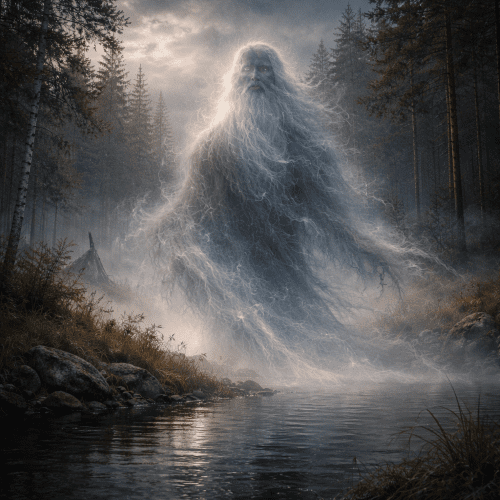
Unlike many mythological figures from other traditions, Seveki is not described in physical or human-like terms. There are no consistent depictions of his form, clothing, or appearance. This absence is not accidental but reflects a deeper cultural perspective.
In Evenki belief, powerful spirits are not confined to bodies. They exist within the natural world, moving through landscapes, animals, and unseen forces. Seveki is therefore understood as a presence rather than a figure. His identity is tied to function and influence rather than visual representation.
This approach aligns with animistic traditions, where the sacred is felt rather than seen. Instead of imagining Seveki as a person, Evenki culture understands him as an overarching force of creation and order, present in the sky, land, and life itself.
Family
Seveki’s role in mythology becomes clearer through his relationship with his brother, Khargi. Khargi is often portrayed as the master of the lower world and represents destructive or chaotic forces. Together, the two brothers form a duality that defines the balance of existence.
In several creation stories, Seveki and Khargi participate in shaping the earth and humanity. While Seveki brings life and order, Khargi introduces disruption and moral tension. This contrast reflects a universal mythological theme where creation is not purely harmonious but shaped through opposing forces.
Seveki is also assisted by animals during the creation process. Birds like the loon and goldeneye are said to dive into primordial waters to retrieve soil, helping form the land. In some regional variations, a frog plays a similar role. These details highlight the Evenki belief that animals are not separate from creation but active participants in it.
Beyond this brotherly opposition and animal assistance, Seveki does not have a defined family structure. His importance lies in his cosmic role rather than lineage.
Other names
Seveki is also known as Eksheri in various Evenki traditions. This alternate name appears in different regional narratives but refers to the same upper-world creator spirit. While some traditions also mention a supreme sky entity such as Buga or Num, these figures are often seen as broader cosmic authorities, whereas Seveki is more directly involved in creation stories and human life. The distinction is subtle and varies across regions, but Seveki consistently remains the active creator figure. The consistency of his identity across variations suggests that his role is deeply rooted in Evenki cultural memory, even when names and interpretations shift slightly.
Powers and Abilities
Seveki’s primary power is creation. He is credited with forming the earth, shaping humans, and bringing animals into existence. In some myths, he creates human beings from clay and stone before giving them life, a theme that echoes across many global traditions.
Beyond physical creation, Seveki establishes the moral structure of the Evenki world through what is known as the “ity niti,” or the laws of the taiga. These are not written rules but guiding principles that shape behavior. They emphasize respect for nature, sharing of resources, and awareness that actions have consequences.
For example, one belief suggests that harmful words or actions will eventually return to the person who caused them. This reflects a worldview where balance is constantly maintained, and nothing exists in isolation.
Seveki is also associated with protection and prosperity, especially in hunting and reindeer herding. Sacred objects and amulets linked to him are believed to safeguard animals and ensure successful survival in the harsh taiga environment. His power is therefore not just about creating life but sustaining harmony between all living things.
Modern Day Influence
Even today, Seveki continues to influence Evenki culture, though often in subtle and evolving ways. Despite historical disruptions, including the spread of Orthodox Christianity and Soviet-era suppression of indigenous beliefs, many elements of traditional spirituality have survived.
The ethical principles associated with Seveki remain especially relevant. Respect for nature, sustainable use of resources, and communal responsibility are still passed down through generations. These ideas align closely with modern environmental values, making Seveki’s teachings surprisingly contemporary.
Cultural revival efforts have also brought renewed attention to Evenki traditions. Festivals, storytelling, and art forms are being preserved and reinterpreted, often blending ancient beliefs with modern identity. Ritual practices, such as offerings to fire spirits, continue in some communities, reflecting the enduring presence of animistic thought.
Even in artistic expressions, traditional patterns and symbols inspired by creation myths still appear in clothing and crafts. While their meanings may have evolved, they continue to carry a sense of connection to ancestral knowledge. Seveki, therefore, remains more than a mythological figure. He represents a living philosophy that continues to shape how people understand their relationship with the world around them.
Related Images


Source
Anisimov, A. F. (1950). Evenki religious beliefs.
Atlaskmns.ru. (n.d.). The Evenks. Spiritual culture. Institute of Ethnology and Anthropology, Russian Academy of Sciences. https://atlaskmns.ru/page/en/people_evenki_spirit.html
Sirina, A. (n.d.). Evenk folklore and myths. In Interactive atlas of indigenous small-numbered peoples. https://mobile.atlaskmns.ru/page/en/people_evenki_spirit.html
Vasilevich, V. A. (1969). Evenki religious worldview.
Zamaraeva, Y. S., Luzan, V. S., Metlyaeva, S. V., Seredkina, N. N., Koptseva, N. P., Fil’ko, A. I., & Khrebtov, M. Y. (2019). Religion of the Evenki: History and modern times. Journal of Siberian Federal University. Humanities & Social Sciences, 12(5), 853–871. https://pdfs.semanticscholar.org/b056/bbfbf5b3cc98bf4c9f0bf335b7b8a84f9c3c.pdf
Znamenski, A. A. (1999). Shamanism in Siberia: Russian records of Siberian spirituality. Routledge.
Anuchin, D. N. (1914). Materials for the study of shamanism in Siberia.
Frequently Asked Questions
Who is Seveki in Evenki tradition?
Seveki is the creator spirit and master of the upper world, responsible for creating life and establishing moral laws.
What did Seveki create?
He created the earth, humans, animals, and the natural order, often shaping humans from clay and stone.
Does Seveki have a physical form?
No, Seveki is not described physically and is understood as a spiritual presence rather than a humanoid figure.
Who is Khargi in relation to Seveki?
Khargi is Seveki’s brother and represents the opposing force of the lower world, often associated with chaos or evil.
Why is Seveki important today?
Seveki’s teachings about respecting nature and maintaining balance remain relevant in modern environmental and cultural contexts.
