

November (2017) : Estonian Folk Magic and the World of Kratt
| Description | |
|---|---|
| Country of Origin | Estonia |
| Language | Estonian |
| Genre | Horror |
| Cast | Rea Lest, Jörgen Liik, Arvo Kukumägi, Katariina Unt, Taavi Eelmaa |
| Directed by | Rainer Sarnet |
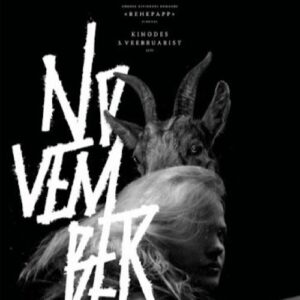
November
November (2017), directed by Rainer Sarnet, is a haunting Estonian film that immerses viewers in a surreal landscape shaped by rural folklore, pagan beliefs, and the strange moral universe of Baltic peasant traditions. Rather than presenting mythology as distant legend, the film portrays a world where supernatural forces are part of everyday life. Humans bargain with spirits, magical creatures wander through farms and forests, and survival often depends on cunning rather than virtue. Through its striking black-and-white imagery and dreamlike storytelling, November becomes less a conventional narrative and more a cinematic exploration of Estonian mythic imagination.
At the heart of the film lies the figure of the kratt, one of the most fascinating beings in Estonian folklore. A kratt is a magical servant constructed from household objects such as tools, bones, or scraps of wood, then brought to life through a pact with the Devil. Once animated, the kratt must constantly work for its master, stealing grain, livestock, or goods from neighboring farms. The creature embodies a peculiar moral logic found in many European folk traditions: prosperity gained through trickery and supernatural bargains. In rural legend, owning a kratt could bring immense wealth, but it also required careful management, as the creature’s insatiable need for work could become dangerous if left idle.
The presence of the Devil in these stories reflects the blending of ancient pagan beliefs with Christian cosmology. Baltic folklore often portrays the Devil not simply as a figure of ultimate evil but as a cunning spirit who interacts regularly with humans. In the world of November, villagers treat dealings with the Devil as a practical matter. People borrow souls, negotiate contracts, and exploit supernatural loopholes in order to survive harsh winters and poverty. This portrayal reveals a folklore tradition where morality is flexible and survival often takes precedence over religious ideals.
The film also reflects the deep animistic roots of Estonian cultural memory. Long before Christian influence reached the Baltic region, local belief systems centered on spirits inhabiting forests, lakes, and household spaces. Even after Christianity spread through the region, these earlier traditions remained embedded in rural storytelling. November captures this layered spiritual world by depicting ghosts, plague spirits, and enchanted landscapes as natural elements of village life. The supernatural does not appear as a sudden intrusion but as an extension of the environment itself.
Love and longing form another mythic thread running through the story. The characters move through a world governed by invisible forces, yet their emotional struggles remain deeply human. Folk tales often use supernatural settings to explore themes of desire, jealousy, and sacrifice, and November continues that tradition. The mythic environment amplifies the emotional intensity of the characters’ lives, suggesting that human passions are just as unpredictable as the spirits that surround them.
The film’s visual style reinforces its folkloric atmosphere. The stark black-and-white cinematography resembles old photographs or woodcut illustrations, evoking the feeling of stepping into an ancient story preserved in cultural memory. The landscapes appear both beautiful and unsettling, reflecting the ambiguous nature of the folklore itself. In many Baltic traditions, the natural world is neither benevolent nor hostile; it is a mysterious realm where humans coexist with forces they cannot fully control.
What makes November particularly compelling from a mythological perspective is its refusal to separate myth from everyday reality. In this village, magical creatures and supernatural bargains are treated with the same matter-of-fact acceptance as farming or trading. The villagers’ worldview reflects an older cultural mindset in which the unseen world constantly interacts with the visible one. This perspective allows the film to present folklore not as fantasy but as a living belief system that once shaped how communities understood luck, misfortune, and prosperity.
Ultimately, November stands as one of the most visually distinctive cinematic interpretations of Baltic folklore. By weaving together kratt legends, devilish bargains, and animistic spirits, the film reveals the richness of Estonian mythic tradition. Its strange humor, haunting imagery, and morally ambiguous characters echo the unpredictable nature of folktales themselves, where cleverness can triumph over virtue and supernatural forces often reward the bold rather than the righteous. Through this dreamlike portrayal of rural mythology, November invites viewers to step into a world where magic is not extraordinary but simply another part of life.