


Mame Ndeye Kumba : The Enigmatic Figure of Wolof Spiritual Tradition
At a glance
| Description | |
|---|---|
| Origin | Wolof Mythology |
| Classification | Mortals |
| Family Members | N/A |
| Region | Senegal |
| Associated With | Spiritual Traditions |
The Mythlok Perspective
In Mythlok’s Perspective, Mame Ndeye Kumba highlights the importance of preserving cultural memory without losing sight of historical evidence. Like Mame Coumba Bang in Senegalese water traditions, she invites exploration of the relationship between spiritual identity, community, and the natural world. Yet their identities cannot be assumed to be the same. Where oral traditions preserve meaning through generations, historical research helps distinguish individual figures and their cultural roles. Together, these approaches ensure that the richness of Wolof spiritual heritage is explored with both curiosity and respect.
Mame Ndeye Kumba
Introduction
Mame Ndeye Kumba is a name associated with the spiritual heritage of Senegal and the rich oral traditions of the Wolof people. Wolof culture preserves stories about spiritual beings, ancestral powers, and the unseen forces believed to influence everyday life. These traditions reflect a close relationship between communities, their environment, and the spiritual world that forms part of their cultural identity.
The name also invites comparison with Mame Coumba Bang, a prominent water spirit associated with Saint-Louis, where the Senegal River meets the Atlantic Ocean. Her traditions reveal how female spiritual figures can embody the power of nature, the responsibilities of community life, and the delicate relationship between human beings and the natural world. Although the available evidence does not establish Mame Ndeye Kumba and Mame Coumba Bang as the same figure, their names sit within a broader cultural landscape shaped by Senegalese spiritual beliefs.
In Wolof tradition, spiritual identity is often preserved through oral narratives, local customs, and practices passed between generations. These traditions do not always follow the fixed genealogies and canonical stories found in written religious systems. Instead, their meaning emerges through the relationships between people, places, ancestors, and the unseen forces that communities recognize in their surroundings.
Physical Traits
Descriptions of female spiritual beings in Senegalese traditions vary according to local accounts and oral interpretations. Water spirits, in particular, may appear in human form while retaining qualities that distinguish them from ordinary people. Beauty, unusual hair, and features associated with aquatic life occur in some accounts of these beings, reflecting the mysterious character attributed to rivers and coastal waters.
Mame Coumba Bang, for example, appears in different descriptions collected from the Saint-Louis region. Some portray her as a beautiful woman with long hair, while others depict an elderly woman or a mermaid-like being with scaly skin. These contrasting appearances convey the dual nature of water: it sustains life and provides livelihoods, yet it can also conceal danger.
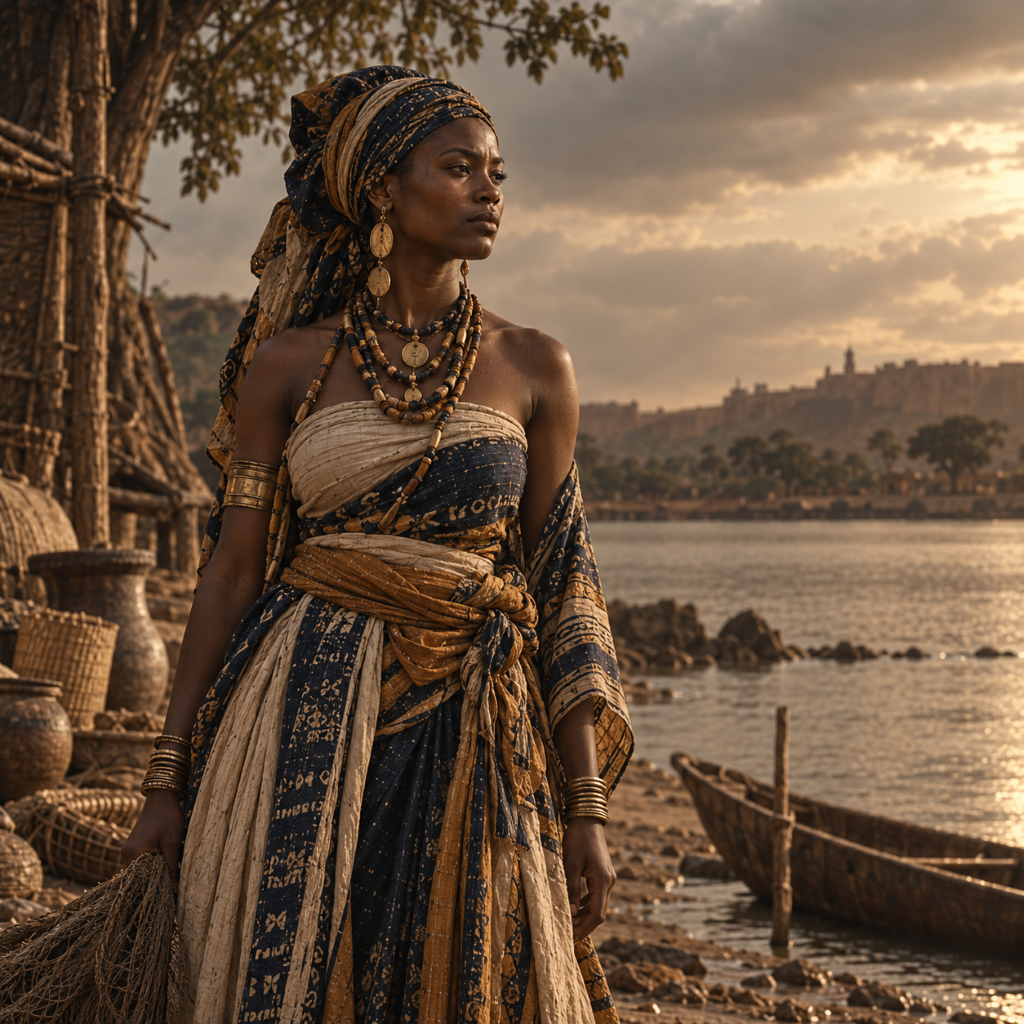
Such descriptions provide cultural context for understanding female spiritual figures in Senegal, but they should not be treated as a definitive portrait of Mame Ndeye Kumba. Her appearance remains undocumented in the available sources. Any visual interpretation of her should therefore draw carefully on Wolof cultural references rather than present an invented appearance as established tradition.
Family
The spiritual traditions of Senegal include numerous female guardian figures associated with particular settlements, waterways, and coastal communities. Their identities are frequently connected to the places where they are venerated, reflecting the close relationship between spiritual heritage and local geography.
Among these figures, Mame Coumba Bang is associated with Saint-Louis, Mame Coumba Lamb with Rufisque, Mame Coumba Castel with Gorée, and Mame Ndiaré with Yoff. Their traditions demonstrate how communities preserve distinct spiritual identities while sharing cultural practices and related naming conventions.
Some accounts describe relationships between particular guardian spirits through descent or spiritual affiliation. Such connections form part of a wider sacred landscape in which spiritual figures may be understood through their relationships with specific communities and places.
For Mame Ndeye Kumba, however, a verified family genealogy has not been established. Her parents, siblings, spouse, and children cannot be reliably identified from the available evidence. The wider tradition nevertheless illustrates the cultural importance of female spiritual figures and the ways their identities may be preserved through community memory rather than formal written genealogies.
Other names
The names Kumba and Coumba appear in different Senegalese oral traditions, while the honorific Mame or Maam conveys respect and is associated with the idea of a grandparent. These naming conventions provide useful context for understanding the region’s spiritual vocabulary. Mame Coumba Bang is also known as Maam Kumba Bang and Mame Kumba Bang. She is associated with the waters around Saint-Louis and occupies an important place in local traditions concerning the Senegal River.
Other related names include Mame Coumba Lamb, associated with Rufisque, and Mame Coumba Castel, associated with Gorée. Mame Ndiaré is another female spiritual figure connected with Yoff. Although these figures share certain naming elements and regional cultural associations, each has a distinct identity within the traditions that preserve her memory.
Wolof oral literature also contains narratives featuring characters named Coumba. One example is Kumba am ndey ak kuma amul ndey, a traditional tale whose title distinguishes characters according to whether they have a mother. The existence of such narratives demonstrates the prominence of the name in Wolof storytelling, although the tale does not establish an alternate identity for Mame Ndeye Kumba.
Powers and Abilities
Female spiritual beings in Senegalese traditions are often associated with protection, fertility, community wellbeing, and the forces of nature. Their influence reflects a worldview in which the natural environment is not merely a physical setting but a place of spiritual significance. Mame Coumba Bang offers a well-documented example of this relationship. Associated with the Senegal River and the Atlantic coast, she is traditionally regarded as a powerful water spirit whose goodwill can influence fishing, safety, and the wellbeing of people living near the water.
Her character combines protection with danger. Fishermen depend on the river for their livelihoods, yet its currents and changing conditions can threaten their lives. Traditional beliefs surrounding Mame Coumba Bang express this uncertainty through a spiritual relationship that requires respect, observance of customs, and offerings intended to seek protection or avert misfortune.
Historical and ethnographic accounts describe offerings such as curdled milk and other ritual gifts associated with her veneration. Some traditions also connect the spirit with protection during childbirth and important family ceremonies. These practices reflect the importance of water and community wellbeing in the spiritual life of Saint-Louis.
For Mame Ndeye Kumba, specific supernatural abilities remain unestablished. The traditions surrounding Senegalese female guardian spirits nevertheless provide a broader cultural context for understanding how spiritual authority can be associated with protection, natural forces, and the responsibilities of community life.
Modern Day Influence
Senegalese spiritual traditions continue to influence cultural identity, artistic expression, and local understandings of the relationship between people and nature. Figures such as Mame Coumba Bang remain part of the cultural memory of Saint-Louis, where stories and ritual practices connect the community with the Senegal River. Offerings and ceremonies associated with the water spirit illustrate how inherited traditions can survive alongside Islam and Christianity. Rather than existing only in historical accounts, these practices form part of a changing cultural landscape in which older beliefs continue to be remembered, interpreted, and discussed.
Mame Coumba Bang has also inspired artistic representations of Senegalese spiritual heritage. Such works preserve the memory of local guardian figures and introduce their stories to wider audiences. Through painting, storytelling, and cultural research, these traditions remain accessible to people beyond the communities where they originated.
Environmental concerns offer another way to understand the continuing significance of water-related spiritual beliefs. Rivers and coastal waters sustain fishing communities, provide food, and shape settlement patterns. Pollution and ecological degradation threaten these resources, making cultural traditions that emphasize respect for water relevant to contemporary discussions about environmental responsibility.
Mame Ndeye Kumba’s specific place in modern Senegalese culture remains to be established through further documentation. Her name nevertheless provides an opportunity to explore the wider Wolof tradition of preserving spiritual identities through oral history, regional customs, and relationships with the natural world. The spiritual heritage of Senegal demonstrates how cultural memory can endure through stories, places, and community practices. Understanding these traditions requires attention to their individual identities and local meanings, ensuring that the richness of Wolof heritage is represented without conflating distinct figures.
Related Images




Source
Babacar M’Baye. (2021). Mame Coumba Bang. In African religions: Beliefs and practices through history. ABC-CLIO. https://ebin.pub/african-religions-beliefs-and-practices-through-history-kindlenbsped-1610697510-9781610697514.html
Institut de recherche et de valorisation des ressources marines. (2022). Maam Kumba Bang: Mythe ou légende? Internet Archive. https://archive.org/details/maam-kumba-bang
La Jornada Maya. (2019, December 26). El río Senegal, sagrado pero muy contaminado.
https://www.lajornadamaya.mx/internacional/110941/el-rio-senegal-sagrado-pero-muy-contaminado
Mundus Maris. (n.d.). Contributions to the cultural rights report with focus on nature conservation. Office of the United Nations High Commissioner for Human Rights. https://www.ohchr.org/sites/default/files/documents/issues/culturalrights/cfis/nature-conservation/subm-nature-conservation-cso-81-mundusmaris-annsenegal.pdf
Museum of Modern Art. (2026, February 25). The defacing of Younousse Seye’s Mame Coumba Bang. https://post.moma.org/a-painting-in-pieces-the-defacing-of-younousse-seyes-mame-coumba-bang/
Smithsonian Folkways Recordings. (n.d.). Wolof music of Senegal and the Gambia [Album].
https://folkways.si.edu/wolof-music-of-senegal-and-the-gambia/world/album/smithsonian
Thames21. (2023, August 30). River deities, explained. https://www.thames21.org.uk/2023/08/river-deities-explained/
University of Pennsylvania. (n.d.). Beyond resistance: Therapeutic itinerary in Saint-Louis-du-Senegal between indigenous and scientific medicine, 1820–1920. Bryn Mawr College Repository.
https://repository.brynmawr.edu/cgi/viewcontent.cgi?article=1035&context=history_pubs
Frequently Asked Questions
Who is Mame Ndeye Kumba in Wolof tradition?
Mame Ndeye Kumba is a name associated with questions about Wolof spiritual heritage in Senegal. Her precise identity and role remain unverified in the available scholarly sources.
Is Mame Ndeye Kumba a goddess?
Is Mame Ndeye Kumba the same as Mame Coumba Bang?
There is no confirmed evidence that Mame Ndeye Kumba and Mame Coumba Bang are the same figure. Mame Coumba Bang is a water spirit associated with Saint-Louis and the Senegal River.
What powers does Mame Ndeye Kumba possess?
No specific supernatural powers have been reliably documented for Mame Ndeye Kumba. Water protection and fishing-related traditions are associated with Mame Coumba Bang, a distinct spiritual figure.
What is the cultural significance of Mame Ndeye Kumba?
Her specific cultural significance remains uncertain. The name provides an opportunity to explore Wolof oral traditions and Senegal’s broader heritage of female spiritual figures and guardian spirits.


