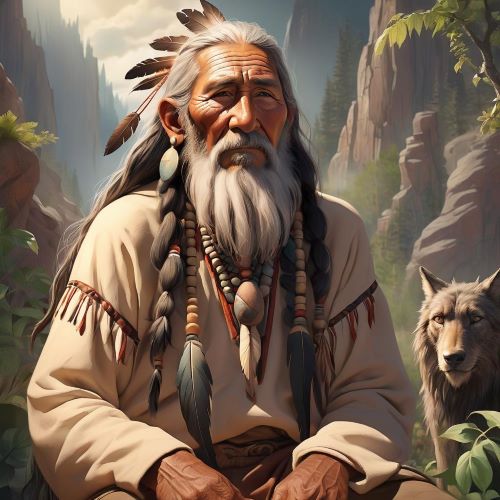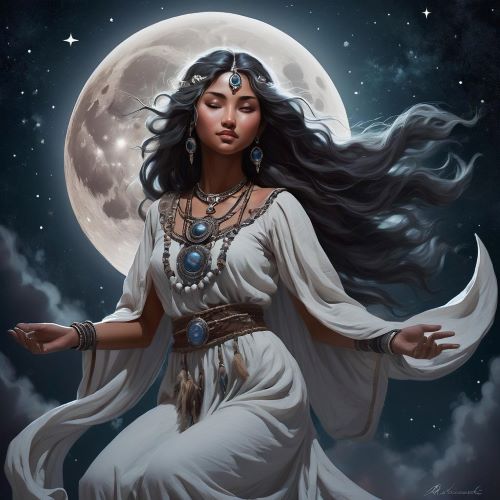


Kipitaakii : The Blackfoot Goddess of Mortality and Balance
Listen
At a glance
| Description | |
|---|---|
| Origin | Blackfoot Mythology |
| Classification | Gods |
| Family Members | Napi (Husband) |
| Region | United States of America |
| Associated With | Mortality, Wisdom, Divine balance, Human destiny |
The Mythlok Perspective
In Mythlok’s perspective, Kipitaakii is not simply the wife of a creator but the divine force that gives creation its meaning. Napi may shape the world, but she defines its limits. By making death permanent, she transforms existence from an endless cycle into something rare and sacred. Her decision introduces urgency, empathy, and moral weight into human life. Across cultures, similar roles appear in figures like the Greek Moirai who fix the thread of life and the Norse Hel who governs the inevitability of death. Yet Kipitaakii differs because she does not merely administer fate; she establishes it through dialogue and partnership. Where others enforce destiny, she co-authors it.
Kipitaakii
Introduction
Kipitaakii, often translated as “Old Woman,” is a divine figure in the sacred narratives of the Blackfoot people, also known as the Niitsitapi. The Blackfoot Confederacy traditionally inhabits the northern Great Plains, particularly regions of present-day Montana in the United States and Alberta in Canada. Within their oral tradition, Kipitaakii stands as the wife and counterpart of Napi, the powerful creator and transformer figure who shapes the world after its formation.
In Blackfoot cosmology, creation unfolds in stages. A supreme creative force, often referred to as Apistotoke, brings the world into existence. Napi then organizes and transforms the earth, preparing it for human life. Kipitaakii appears beside him not as a passive companion but as a co-determining force in shaping human destiny. Through her arguments, decisions, and interventions, she establishes fundamental conditions of existence, including mortality. Her presence reflects the sacred balance between creation and limitation, impulse and wisdom. The stories of Kipitaakii are not marginal episodes but foundational teachings within Blackfoot spiritual thought.
Physical Traits
Traditional Blackfoot oral narratives do not emphasize detailed physical descriptions of Kipitaakii. She is referred to primarily by her title, “Old Woman,” which signifies elder status, wisdom, and spiritual authority rather than age in a biological sense. In Indigenous Plains cultures, the term “old” often conveys reverence and accumulated knowledge.
Unlike figures in mythologies where divine beings are described with elaborate visual symbolism, Kipitaakii’s identity is defined by her role and actions. She is understood as human-like in form, dwelling and moving within the early world alongside Napi. There is no consistent tradition portraying her as an animal spirit or shapeshifter. Her power is intellectual and cosmological rather than physical. This lack of ornamental detail reflects the priorities of Blackfoot storytelling, where moral authority and consequence matter more than spectacle.
Family
Kipitaakii is best known as the wife of Napi, the creator and transformer figure in Blackfoot mythology. Their union forms a divine partnership that structures the human world. Napi creates, experiments, and reshapes the land, animals, and early humans. Kipitaakii challenges, refines, and corrects his decisions. Together, they represent complementary divine forces.
One of the most significant narratives involving Kipitaakii concerns the nature of death. Napi proposes that humans should die temporarily and return to life after four days. Kipitaakii rejects this idea. In a symbolic act, she throws an object into water and demonstrates that, unlike Napi’s example, it sinks and does not return. Through this act, she establishes permanent death as a law of existence. Some versions of the story suggest her decision is influenced by grief over the loss of a daughter, reinforcing the emotional and moral depth behind her choice.
Other traditions describe debates between the divine pair regarding human form and survival. In each case, Kipitaakii’s voice alters the structure of humanity. Her authority is equal in consequence to Napi’s creative power. She does not merely accompany the creator; she shapes the outcome of creation.
Other names
Due to transliteration variations from the Blackfoot language into English, Kipitaakii appears under several spellings, including Kipitaki and Kiipitakii. In English retellings, she is frequently called Old Woman or Old Lady. These titles reflect respect rather than diminishment.
Unlike some Plains traditions where trickster figures are associated with Coyote imagery, Kipitaakii herself is not consistently depicted as a coyote in authoritative Blackfoot accounts. Her identity remains rooted in her role as a divine elder and cosmic decision-maker. The variation in spelling reflects dialect differences among the Siksika, Kainai, and Piikani nations within the Blackfoot Confederacy.
Powers and Abilities
Kipitaakii’s greatest power lies in her authority to determine the conditions under which humans live. While Napi transforms landscapes and organizes creation, Kipitaakii legislates consequence. Her establishment of permanent mortality is one of the defining theological moments in Blackfoot mythology. By ensuring that death is final, she introduces urgency, compassion, and moral accountability into human life.
Her influence extends beyond mortality. She participates in shaping aspects of human existence, from physical characteristics to survival knowledge. In various oral traditions, she contributes to teaching early humans how to live within the Plains environment, reinforcing the idea that divine beings impart both structure and culture.
Unlike destructive deities who wield chaos, Kipitaakii embodies necessary limitation. Her interventions may appear restrictive, yet they create the framework for empathy and community. Without mortality, human relationships would lack gravity. Without consequence, choice would have no meaning. Her divine authority is expressed through wisdom, foresight, and decisive action.
Modern Day Influence
Kipitaakii continues to hold cultural significance within Blackfoot communities. Oral storytelling remains central to Niitsitapi identity, and narratives involving Napi and Kipitaakii are shared in educational programs, cultural gatherings, and preservation initiatives. These stories are part of a living tradition rather than a closed historical archive.
In academic and cultural discussions of Indigenous cosmology, Kipitaakii is increasingly recognized as a powerful female divine figure within Plains spirituality. Her role highlights how Indigenous mythic systems often feature balanced gender dynamics in creation narratives. Rather than a subordinate consort, she stands as a theological equal whose decisions shape the human condition.
As global interest in Indigenous knowledge systems grows, Kipitaakii’s stories contribute to broader conversations about mortality, balance, and responsibility. Her continued presence demonstrates the enduring power of oral tradition to shape worldview across generations.
Related Images

Source
Grinnell, G. B. (1892). Blackfoot lodge tales: The story of a prairie people. Charles Scribner’s Sons.
McClintock, W. (1910). The old North trail: Life, legends and religion of the Blackfeet Indians. Macmillan.
Wissler, C., & Duvall, D. C. (1908). Mythology of the Blackfoot Indians. Anthropological Papers of the American Museum of Natural History, 2(1). https://www.jstor.org/stable/27819869
Blackfoot mythology. (2009). In Wikipedia. https://en.wikipedia.org/wiki/Blackfoot_mythology
Old Man and Old Woman. (n.d.). In Encyclopedia.com. https://www.encyclopedia.com/history/encyclopedias-almanacs-transcripts-and-maps/old-man-and-old-woman
The story of the Blackfoot people: Niitsitapiisinni. (2022). Glenbow Museum.
https://www.steelinghome.ca/products/the-story-of-the-blackfoot-people-niitsitapiisinni-book
Napi. (n.d.). HG Distribution. https://www.hgdistribution.com/products/napi
Frequently Asked Questions
Who is Kipitaakii in Blackfoot mythology?
Kipitaakii is a goddess in Blackfoot tradition and the wife of the creator figure Napi, playing a decisive role in shaping human destiny.
What did Kipitaakii decide about death?
She established that death would be permanent, rejecting Napi’s proposal that humans would return to life after four days.
Is Kipitaakii equal to Napi?
In many oral traditions, Kipitaakii acts as a divine counterpart whose decisions carry equal cosmological weight.
Where does the story of Kipitaakii originate?
Her stories originate from the Blackfoot Confederacy of the northern Great Plains, particularly in Montana and Alberta.
Why is Kipitaakii important today?
She remains central to Blackfoot cultural identity and represents wisdom, balance, and moral responsibility within Indigenous cosmology.