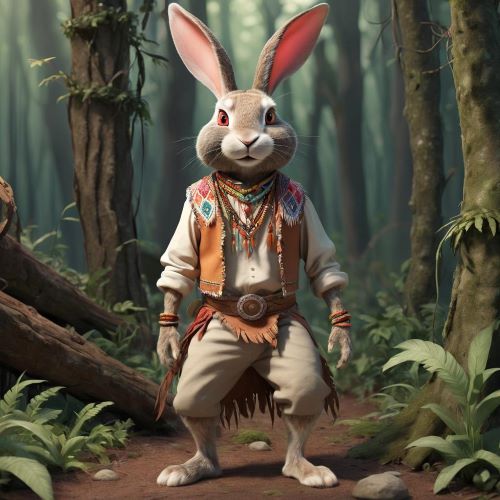


Kanane’sgi Amayehi : The Water Spider Who Brought Fire
Listen
At a glance
| Description | |
|---|---|
| Origin | Cherokee Mythology |
| Classification | Animals |
| Family Members | N/A |
| Region | United States of America |
| Associated With | Fire |
Mythlok Perspective
In Mythlok’s view, Kanane’sgi Amayehi represents a distinctive fire-bringer archetype. While Prometheus in Greek tradition steals fire through rebellion and Māui in Polynesian lore wrestles for it, the Cherokee story centers on patience and craftsmanship. Fire is not seized through defiance but retrieved through balance and skill. This difference reflects a worldview rooted in harmony rather than conquest, where transformation arises from wisdom, not domination.
Kanane’sgi Amayehi
Introduction
Kanane’sgi Amayehi, known in English as the Water Spider, is a sacred figure in Cherokee oral tradition. She appears in the fire origin story, one of the most important narratives in Cherokee cosmology. In this story, fire once existed across a vast body of water, inaccessible to the people. Various animals attempted to retrieve it and failed. It was the small and patient Water Spider who ultimately succeeded.
Her story is not one of domination or rebellion, but of intelligence and quiet determination. By weaving a small container and carefully carrying fire across the water, she transformed human life forever. Through her act, warmth, cooking, protection, and ceremony became possible. Kanane’sgi Amayehi stands as a culture hero whose strength lies in wisdom rather than force.
Unlike Indo-European mythological systems that organize beings into rigid pantheons, Cherokee spirituality centers on balance, sacred relationships, and interconnected forces. Kanane’sgi Amayehi is not traditionally framed as a “goddess of fire,” but as a powerful sacred being whose action altered the human condition.
Physical Traits
In traditional accounts, Kanane’sgi Amayehi is simply described as a spider. There are no early ethnographic sources portraying her as a humanoid deity with exaggerated features. Her defining characteristic is not her appearance, but her craft.
When the larger and stronger animals failed to retrieve fire—often burning themselves in the attempt—the small Water Spider devised a solution. She spun a webbed bowl or container, sometimes described as being formed from clay, which she carried on her back. With careful movement and patience, she crossed the water, gathered embers from a hollow tree, and brought fire safely back to the people.
Her small size is central to the story’s meaning. In Cherokee storytelling, power does not always reside in physical strength. Intelligence, patience, and harmony with the natural world carry equal, if not greater, weight.
Family
There is no reliable traditional source that assigns Kanane’sgi Amayehi a divine lineage or identifies her as the daughter of a sun deity. Cherokee cosmology does not emphasize genealogical pantheons in the same way as Greek or Norse traditions.
Her importance derives from her deed rather than ancestry. The fire origin story focuses on action, cooperation, and balance within creation rather than divine hierarchy. Kanane’sgi Amayehi’s legacy is rooted in contribution, not parentage.
Other names
Kanane’sgi Amayehi is the Cherokee term most closely associated with the Water Spider in the fire origin story. The name is sometimes translated directly as “Water Spider,” referencing her crossing of the water to retrieve fire. In English retellings, she is often called Grandmother Spider. The term “Grandmother” signifies respect and wisdom rather than literal age. In many Indigenous traditions, elder feminine figures represent knowledge, continuity, and guidance. It is important not to confuse her with the Cherokee word “Anayehi,” which means “immortal.” While phonetically similar, this is a separate term and not traditionally applied to the Water Spider in documented fire origin narratives.
Powers and Abilities
Kanane’sgi Amayehi’s central power lies in ingenuity. She does not command fire, create it, or embody destructive flame. Instead, she retrieves it. Her role is that of a benefactor who bridges the gap between the natural world and humanity.
Fire in Cherokee tradition is sacred. It provides warmth during cold seasons, enables cooking, offers protection, and plays a central role in ceremony. The sacred fire remains an important element in community gatherings and rituals.
By bringing fire to the people, Kanane’sgi Amayehi becomes a symbol of transformation. Her action represents the moment when human life shifts from vulnerability to stability. The spider’s web itself symbolizes interconnectedness. Each strand supports the whole, reflecting a worldview in which all living things are linked.
Her success after the failure of stronger animals reinforces a moral lesson that humility and wisdom can achieve what brute force cannot. The story honors careful thought, patience, and balance.
Modern Day Influence
Kanane’sgi Amayehi continues to hold significance in Cherokee cultural education and storytelling. The fire origin story is still shared in schools, cultural programs, and oral retellings as a foundational narrative of identity.
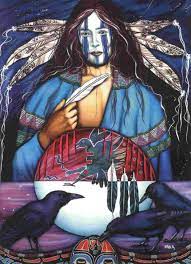
Contemporary art sometimes portrays her as a Spider Woman, blending human and arachnid features to emphasize her sacred status. While visually compelling, these representations should be understood as artistic interpretations rather than early documented descriptions.
Today, she represents resilience and intelligence. Her story reminds audiences that transformative change often comes from unexpected sources. In a world that frequently celebrates dominance, Kanane’sgi Amayehi embodies a different kind of strength—one rooted in harmony with the natural world.
Related Images






Sources
Mooney, J. (1900). Myths of the Cherokee (19th Annual Report of the Bureau of American Ethnology, 1897–1898, Part 1). Smithsonian Institution. https://www.gutenberg.org/files/45634/45634-h/45634-h.htm
Mooney, J. (1902). Myths of the Cherokee. Bureau of American Ethnology Bulletin 19.
Kilpatrick, J., & Kilpatrick, A. (1966). Run Toward the Nightland: Magic of the Oklahoma Cherokees. Southern Methodist University Press
University of Arkansas. (n.d.). Origins of Fire (Cherokee).
https://archeology.uark.edu/indiansofarkansas/index.html?pageName=Origins+of+Fire+(Cherokee)
Smithsonian National Museum of the American Indian. (n.d.). Native Knowledge 360° – Cherokee perspectives.
https://americanindian.si.edu/nk360
Frequently Asked Questions
Who is Kanane’sgi Amayehi in Cherokee tradition?
Kanane’sgi Amayehi is the Water Spider in Cherokee oral tradition who brought fire to humanity by carrying a glowing ember across the water in a woven container.
What does Kanane’sgi Amayehi mean?
The name is commonly translated as “Water Spider” in Cherokee and refers to the sacred being who retrieved fire in the origin story.
How did the Cherokee get fire according to legend?
In the Cherokee fire origin story, animals tried to retrieve fire from across a body of water but failed. Kanane’sgi Amayehi succeeded by weaving a small bowl and safely carrying an ember back to the people.
Is Kanane’sgi Amayehi a goddess?
Traditional Cherokee sources describe her as a sacred being and culture hero, not a goddess in the Greco-Roman sense of a structured pantheon deity.
Why is the Water Spider important in Cherokee culture?
Kanane’sgi Amayehi represents intelligence, patience, and balance with nature. Her story explains the sacred origin of fire and emphasizes wisdom over brute strength.