
Guayota : The Underworld God of Guanche Legend
At a glance
| Description | |
|---|---|
| Origin | Guanche Mythology |
| Classification | Gods |
| Family Members | N/A |
| Region | Canary Islands |
| Associated With | Darkness, Volcanoes, Destruction, Chaos, Underworld |
The Mythlok Perspective
In Mythlok’s Perspective, Guayota represents a rare form of divine antagonism where evil is not secondary but equal in scale to creation. Unlike many traditions where destructive forces are lesser beings, Guayota stands as a true counterforce to Achamán. This places him closer to figures like Surtr in Norse belief and Pele in Hawaiian tradition, where fire is both sacred and destructive. Across cultures, volcanic gods are not merely feared—they are respected as forces that shape the world itself.
Guayota
Introduction
Guayota is one of the most powerful and feared figures in the traditions of the Guanches, the indigenous people of Tenerife in the Canary Islands. Rather than being a mere spirit or demon, he is best understood as a god of evil, darkness, and destruction, standing in direct opposition to Achamán, the creator god. His presence reflects a cosmic tension between order and chaos, light and darkness.
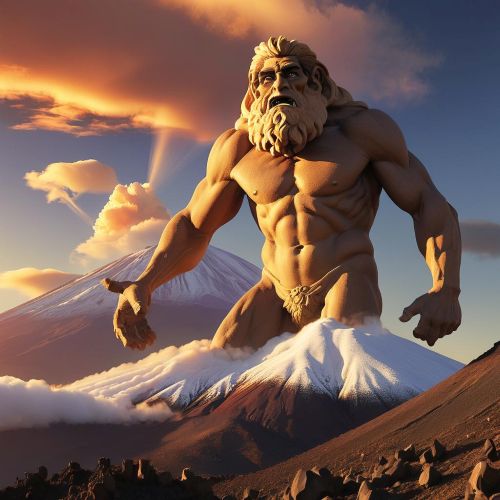
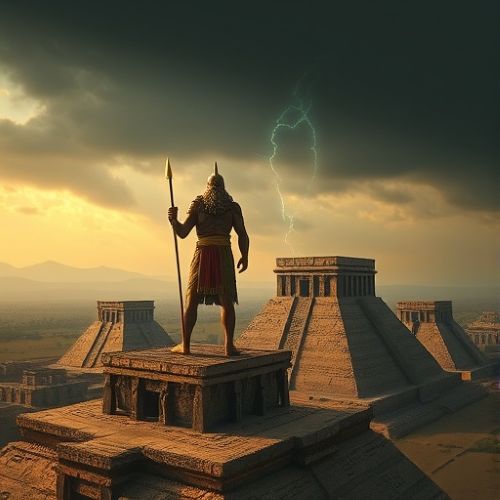
Guayota was believed to dwell inside Mount Teide, known to the Guanches as Echeyde—a hellish realm beneath the volcano. This association firmly ties him to fire, eruption, and the terrifying unpredictability of nature.
The most famous myth describes how Guayota abducted Magec, the sun, imprisoning it within the volcano and plunging the world into darkness. As fear spread, the Guanches prayed to Achamán, who descended, defeated Guayota, freed Magec, and sealed the evil god back within Teide. This story is not just symbolic but reflects how the Guanches understood volcanic eruptions and celestial disruptions through divine conflict.
Physical Traits
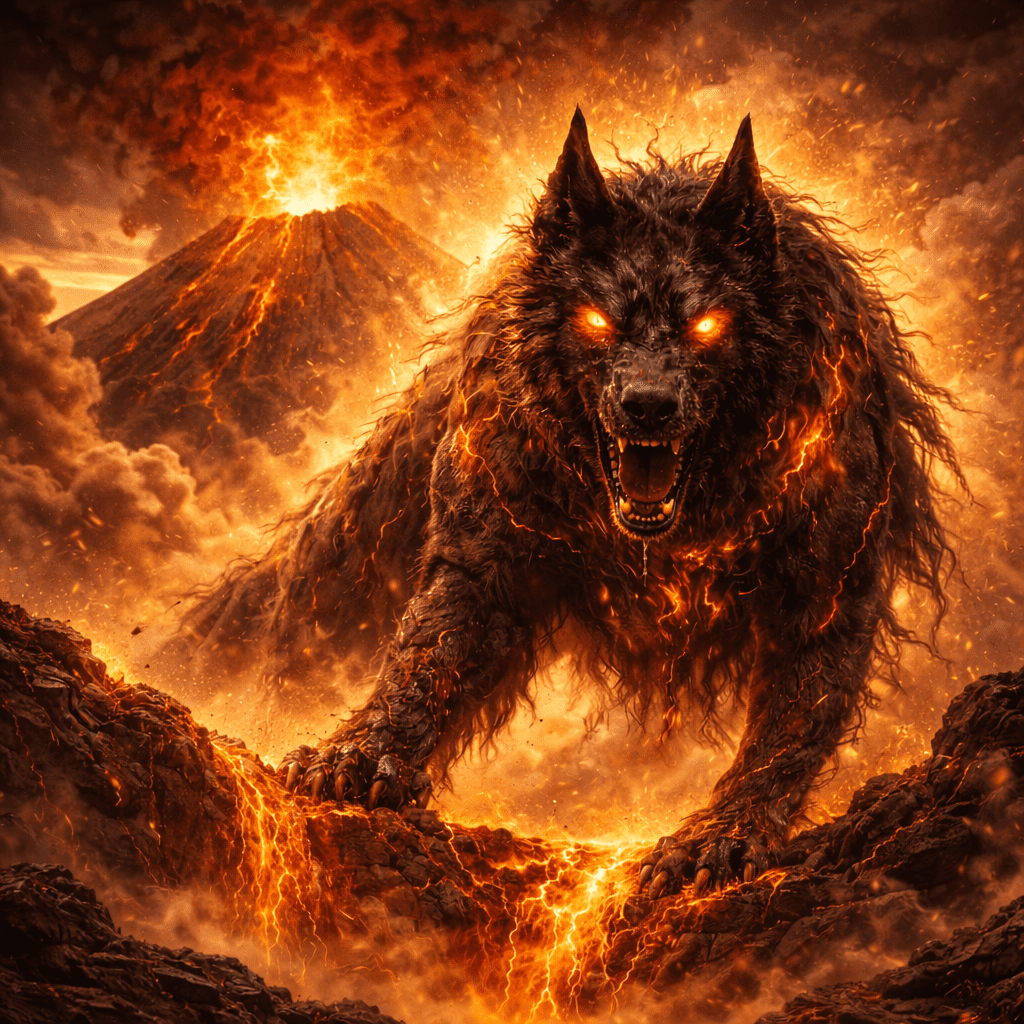
Guayota is most commonly depicted as a massive black dog, a form deeply associated with death, omens, and supernatural danger. Unlike many gods who take human-like shapes, his appearance is deliberately non-human, reinforcing his identity as a force of fear rather than a relatable deity.
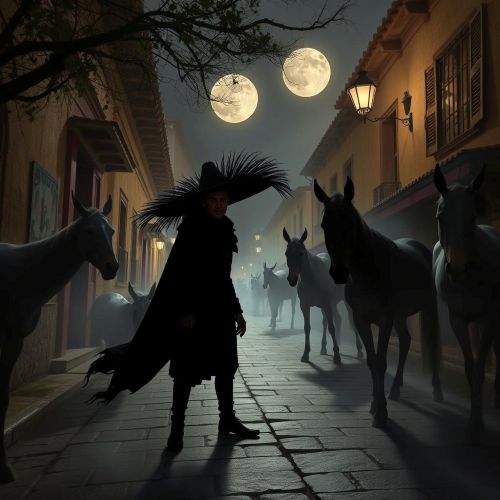
This canine form is not unique to him alone. Guayota is said to command the tibicenas—demonic beings that also appear as black dogs. These creatures were believed to roam Tenerife at night, attacking livestock and spreading terror among the Guanches. Some variations describe them with exaggerated features such as glowing eyes or unnatural size, while others hint at hybrid forms resembling wild boars or bear-like beasts.
There are no consistent descriptions of Guayota in a human form. Instead, his identity remains tied to this monstrous animal manifestation, emphasizing his role as an embodiment of primal fear and chaos emerging from the volcanic depths.
Family
Guanche mythology does not provide a structured genealogy for Guayota, which is unusual compared to many mythological traditions. He exists largely in isolation, reinforcing his role as a disruptive and opposing force rather than a member of a divine family.
His primary relationship is adversarial. As the enemy of Achamán, Guayota represents the destructive counterbalance to creation and order. His interaction with Magec further highlights his role as a destabilizer of the natural world.
The tibicenas are sometimes described as his creations or extensions of his power rather than true offspring. There are no clear references to parents, consorts, or siblings. This absence suggests that Guayota is less a social deity and more a manifestation of destructive divinity itself.
Other names
Guayota is consistently referred to by this name in Guanche tradition, with no widely accepted alternate names. This consistency reflects the localized and oral nature of Guanche mythology, where figures retained strong, singular identities.
However, he is often described through titles that emphasize his nature. He is referred to as the “evil god,” the “lord of darkness,” and the “ruler of Echeyde.” These descriptors are not alternate names but interpretations of his role within the mythological framework. His association with Echeyde—the volcanic underworld—further reinforces his identity as a god tied to fire, imprisonment, and destruction.
Powers and Abilities
As a god of evil and destruction, Guayota possesses powers that directly impact both the natural and cosmic order. His most significant act—the abduction of Magec—demonstrates his ability to disrupt the balance of the universe itself.
By imprisoning the sun inside Mount Teide, Guayota plunged the world into darkness, creating fear and uncertainty. This myth likely reflects real experiences of ash clouds or environmental disturbances caused by volcanic activity. He also commands the tibicenas, unleashing them as agents of chaos across the island. These creatures extend his influence beyond the volcano, making his presence felt in everyday life.
Most importantly, Guayota is intrinsically linked to volcanic eruptions. The Guanches believed that eruptions were signs of his anger or attempts to escape imprisonment. Rituals, including offerings and bonfires, were performed either to appease or provoke him, ensuring he remained confined within Teide.
Modern Day Influence
Despite the decline of traditional Guanche religion following Spanish colonization, Guayota remains a powerful cultural symbol in the Canary Islands.
His legend continues to be shared through folklore, tourism narratives, and cultural revival movements. Mount Teide is not only a natural landmark but also a mythological one, deeply tied to the identity of Tenerife.
Guayota’s name appears in local businesses, music groups, and sports teams, reflecting a lasting cultural connection. He has also entered global pop culture through literature and games, often portrayed as a volcanic god or ancient force of darkness. Rather than fading into obscurity, Guayota has evolved into a symbol of Tenerife’s ancient past and its enduring relationship with the powerful forces of nature.
Related Images
Mythical Events
Source
Esteban, A. (2022). Leyendas de Canarias: Guayota, el maligno. Guanchipedia. https://guanchipedia.com/la-leyenda-de-guayota-el-maligno/
Evans, Z. (2021). Guayota – Under the influence! Ztevet Evans. https://ztevetevans.wordpress.com/tag/guayota/
For 91 Days. (2020). The Guanches of Tenerife. https://tenerife.for91days.com/2020/09/07/guanches-of-tenerife-travel-blog/
The Demonic Paradise Wiki. (2007). Guayota. Fandom. https://the-demonic-paradise.fandom.com/wiki/Guayota
Wikipedia. (2024). Guayota. https://en.wikipedia.org/wiki/Guayota
Aptos Ambassador. (2016). Mysteries and legends of Tenerife. https://aptosambassador.com/en/mysteries-and-legends-of-tenerife/
Carzrent. (2023). Reclaiming the past: The revival of indigenous Guanche culture in Tenerife. https://carzrent.com/blog/reclaiming-the-past-the-revival-of-indigenous-guanche-culture-in-tenerife/
Frequently Asked Questions
Who is Guayota?
Guayota is the evil god in Guanche belief, associated with darkness, volcanic destruction, and the underworld beneath Mount Teide.
Why is Guayota linked to Mount Teide?
The Guanches believed Mount Teide was his prison, where he was sealed after stealing the sun and causing darkness.
What did Guayota do to the sun?
He kidnapped the sun god Magec and trapped it inside the volcano, plunging the world into darkness.
What are tibicenas?
Tibicenas are demonic black dog-like beings linked to Guayota, believed to spread fear and attack at night.
Is Guayota a god or a demon?
In Guanche belief, Guayota is best understood as an evil god, not just a demon or spirit.