Category: West African Gods

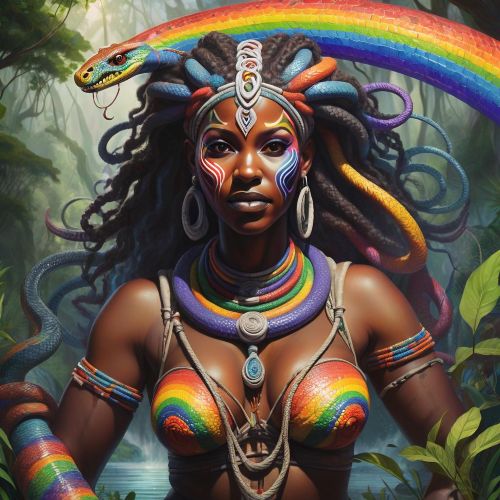
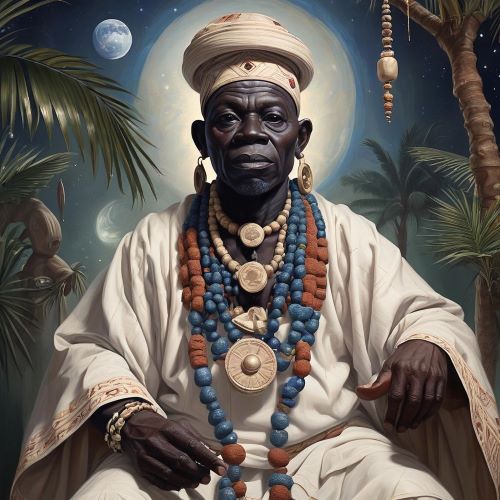
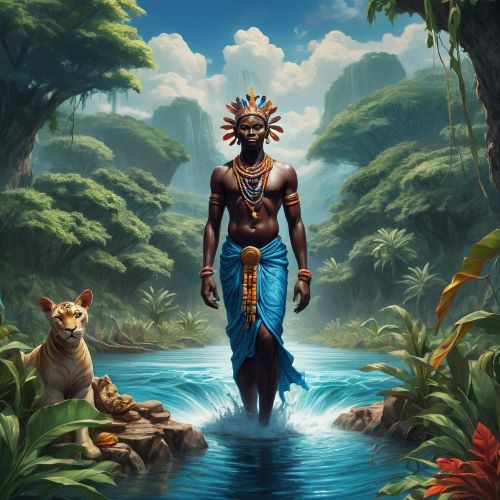
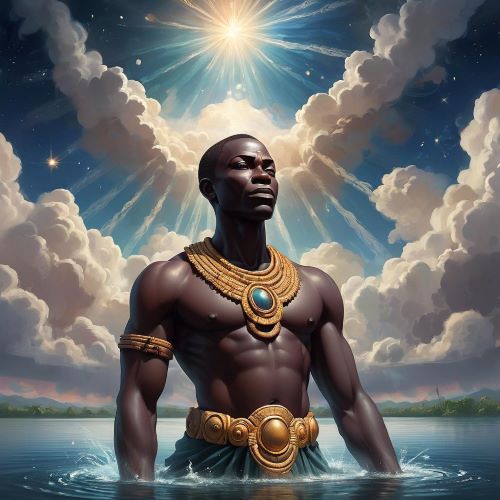
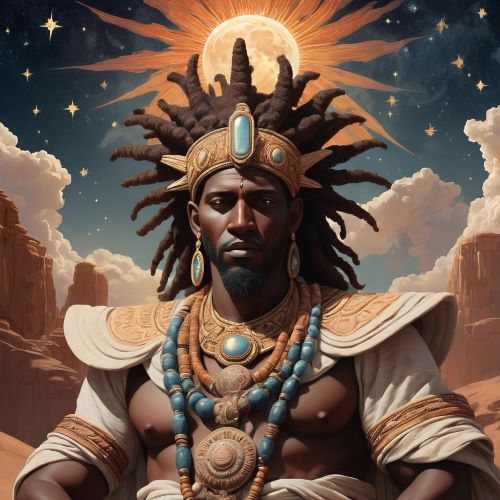
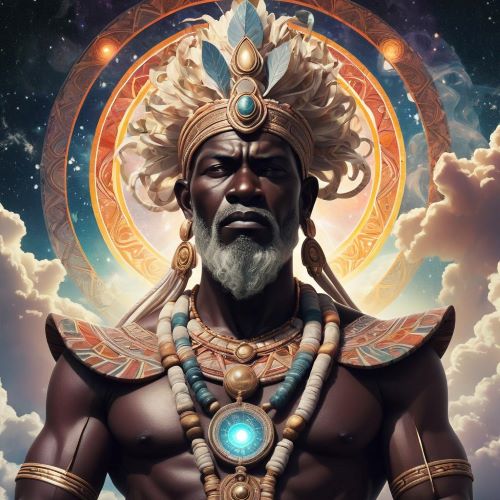
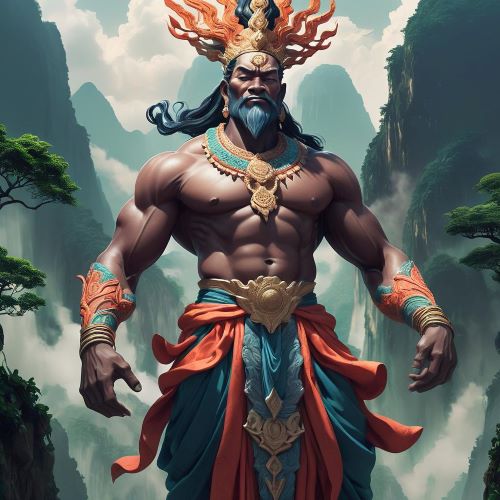
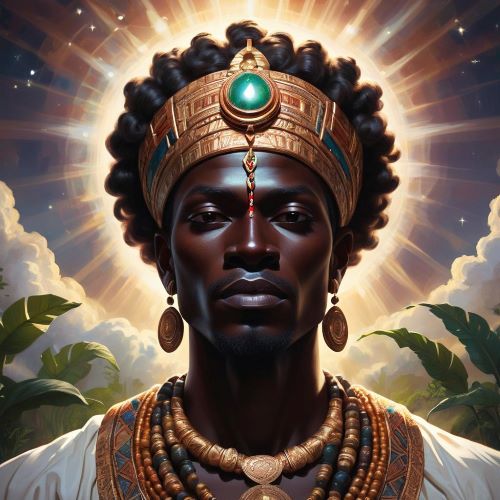
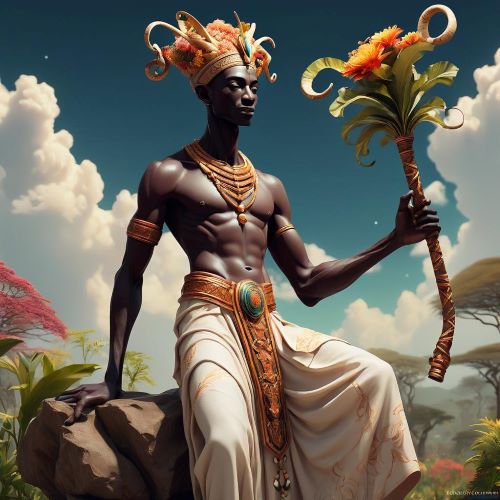
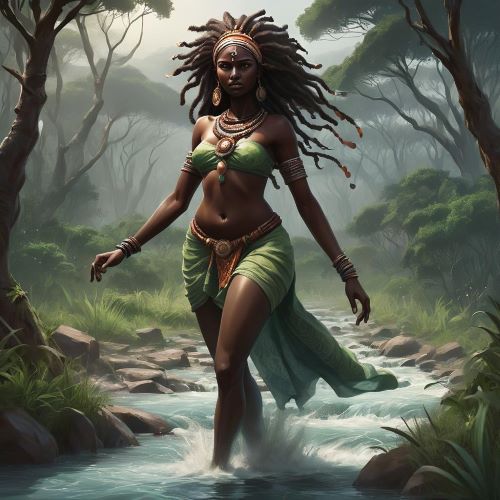
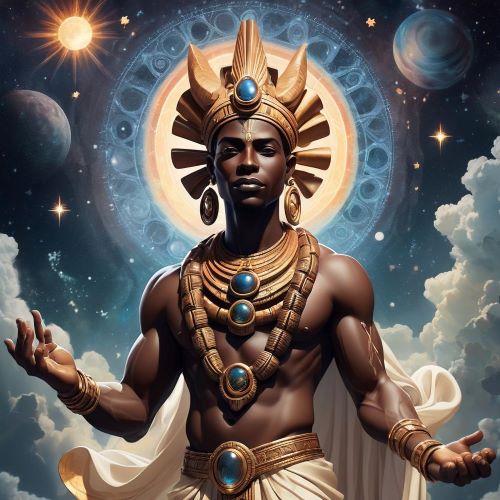
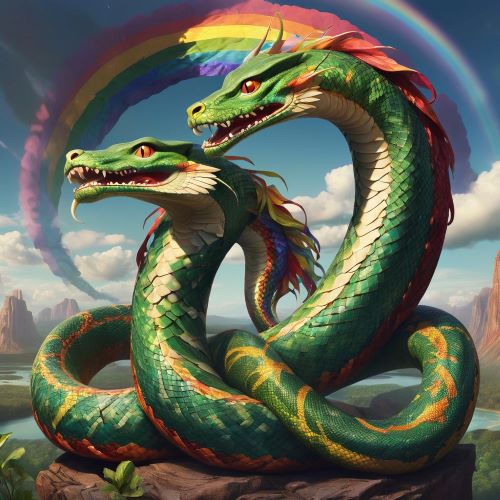
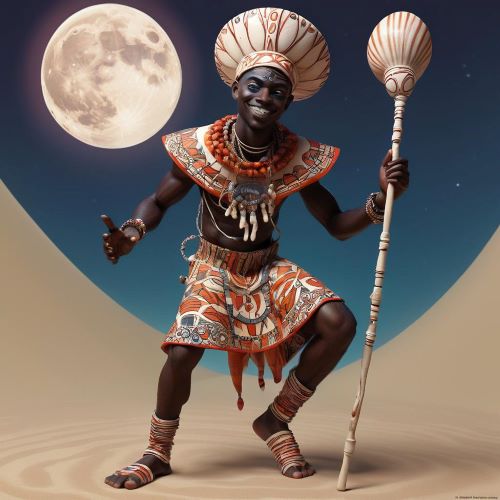
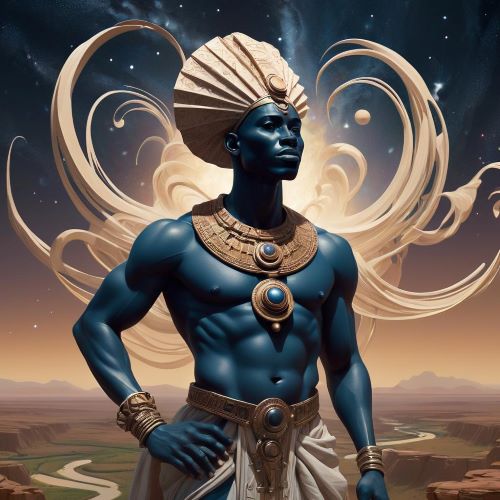
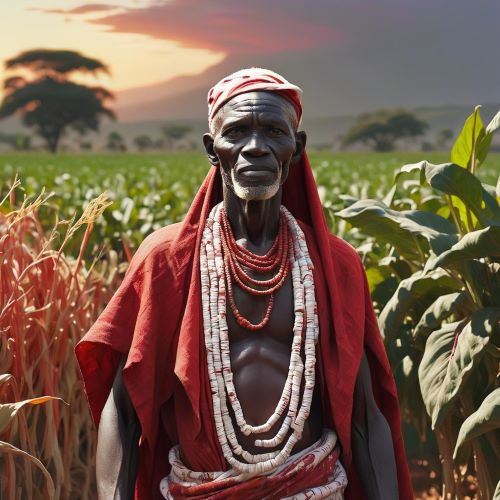
In the vast expanse of West Africa, mythology is woven deeply into the fabric of everyday life, reflecting the beliefs, values, and experiences of its people. At the heart of this intricate tapestry are the gods – powerful beings who embody the forces of nature, human virtues, and the mysteries of the cosmos.

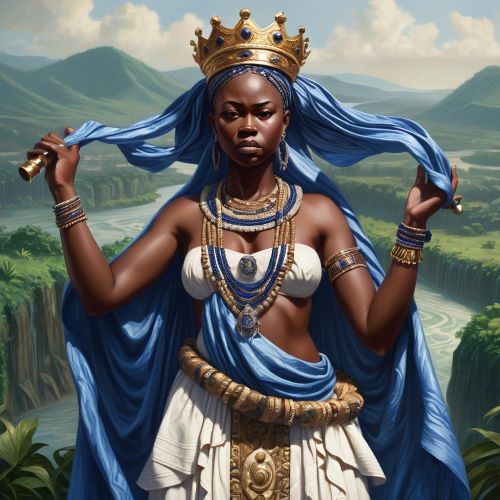
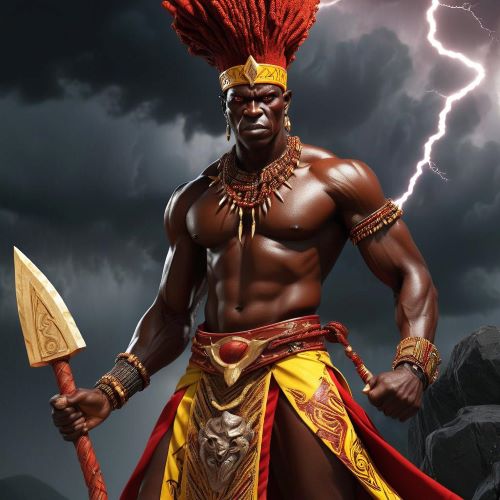
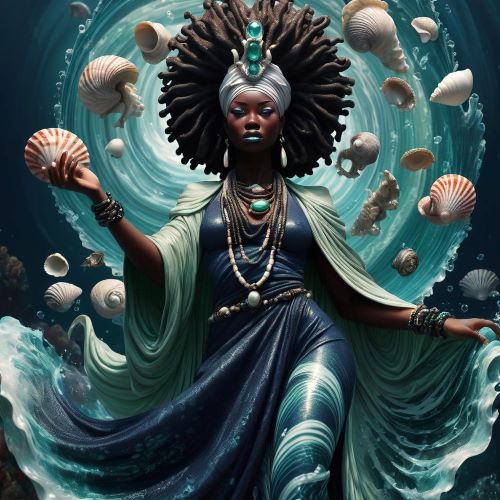
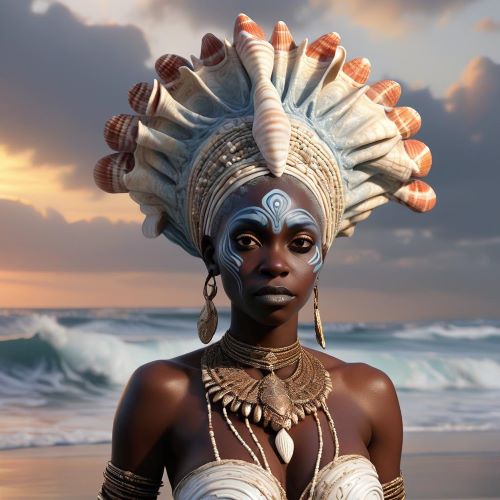
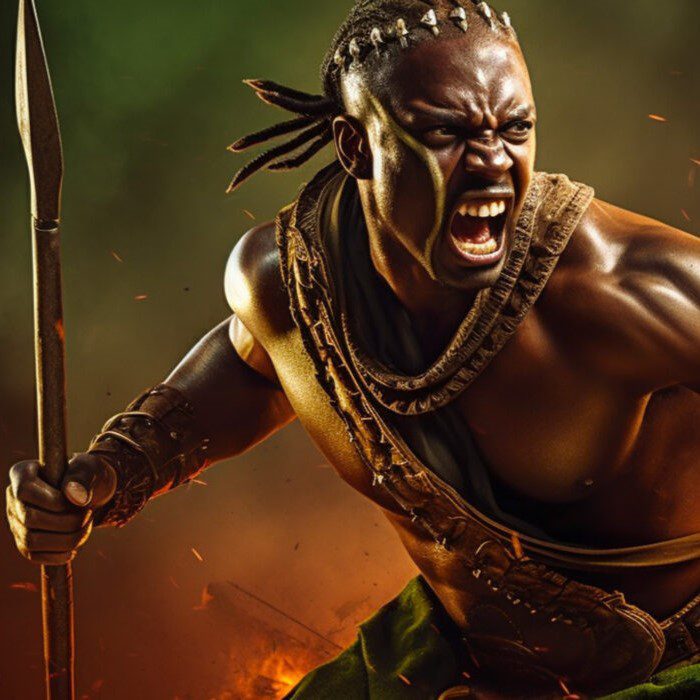
Among the most revered figures in West African mythology are the Orishas, divine entities worshipped by various ethnic groups across the region. From the thunderous Shango, god of thunder and lightning, to the serene Yemoja, goddess of the oceans and motherhood, each Orisha holds sway over a particular aspect of existence, guiding and protecting those who invoke their name.

Beyond the Orishas, West African mythology boasts a diverse array of deities, spirits, and mythical beings. From the trickster figure of Anansi, the spider god known for his cunning and wit, to the fearsome Mami Wata, the water spirit who tempts mortals with her beauty and allure, these figures inhabit a rich and vivid world populated by gods, heroes, and monsters.

The relationships between West African gods are as complex and nuanced as the cultures they represent. Familial bonds, rivalries, and alliances shape the dynamics of the divine pantheon, mirroring the intricacies of human relationships and society. Through myths and legends passed down through generations, we gain insight into the drama and intrigue that unfolds among these immortal beings.

Central to West African mythology is the concept of divine intervention – the belief that gods and spirits actively intervene in the affairs of mortals, shaping destiny and guiding the course of history. Through rituals, prayers, and offerings, believers seek to honor and appease these divine entities, invoking their blessings and protection in times of need.

  • Olorun : The Supreme Creator in Yoruba Belief

    Olorun : The Supreme Creator in Yoruba Belief

    Listen

    At a glance

    Description
    Origin Yoruba Mythology
    Classification Gods
    Family Members N/A
    Region Nigeria
    Associated With Creation, Ase

    Olorun

    Introduction

    Olorun stands at the summit of Yoruba cosmology as the supreme, self-existent source of all creation. Often identified with Olodumare, Olorun represents the ultimate divine authority from whom existence, order, and destiny flow. In traditional Yoruba thought, the universe emerged from a primordial state of formlessness, with Olorun dwelling in the upper realm of Orun, the celestial domain. Rather than shaping the world directly, he delegated creative responsibilities to the orishas, establishing a divine hierarchy that governs the relationship between heaven and earth.

    Unlike the orishas, who interact actively with humanity through ritual, possession, and daily devotion, Olorun remains transcendent and distant. He is not approached through shrines or sacrifices but acknowledged through prayer, moral conduct, and reverence for cosmic balance. This distance is not indifference; it reflects his role as the final arbiter of destiny and justice, the one who aligns human life with universal order through ori, the spiritual consciousness chosen before birth. Olorun’s presence is therefore constant yet unseen, shaping existence without direct intervention.

    Central to his creative authority is ase, the vital force that animates all beings and empowers both speech and action. Every ritual, blessing, and transformation traces its potency back to Olorun, even when mediated by lesser divinities. In this way, Yoruba spirituality maintains a complex but coherent structure in which multiplicity flows from a single, unifying source.

    Physical Traits

    Yoruba tradition deliberately avoids assigning Olorun a concrete physical form. His nature is understood as beyond human perception, transcending shape, gender, and limitation. This absence of anthropomorphic imagery distinguishes him sharply from the orishas, whose personalities and appearances are vividly described through myth, art, and ritual performance. Olorun exists not as a figure but as an all-encompassing presence.

    Symbolically, he is associated with the sky, sunlight, vastness, and whiteness, elements that convey purity, infinity, and divine clarity. The open heavens serve as his most immediate representation, reinforcing his identity as the “Owner of Heaven.” In ritual contexts, white cloth, light, and expansive space may allude to him indirectly, though never as idols or images intended for worship.

    This formlessness reinforces a key theological idea within Yoruba belief: ultimate divinity cannot be contained. Olorun is experienced through breath, life, and order rather than vision. His essence is perceived in the rhythm of nature, the continuity of life, and the moral structure that binds the cosmos together.

    Family

    Olorun occupies a singular position as the uncreated progenitor of all divine beings without belonging to a familial structure in the human sense. He has no parents, consorts, or siblings, and his “children” are not born but emanated through his creative authority. All orishas owe their existence to his ase, functioning as administrators of specific aspects of reality rather than independent gods.

    Among these divine agents, Obatala is most closely associated with Olorun’s creative will. Tasked with shaping humanity from clay, Obatala acts as a direct executor of divine intention. Other orishas such as Ogun, Yemoja, Shango, and Orunmila govern iron, waters, thunder, and wisdom respectively, each maintaining cosmic balance under Olorun’s supreme oversight.

    There is no mythic narrative of domestic life or generational conflict involving Olorun. His role is that of a solitary sovereign whose authority is unquestioned and absolute. The divine “family” exists as a structured hierarchy rather than a lineage, reinforcing his status as the ultimate source rather than a participant in mythic drama.

    Other names

    Olorun is known by several names and titles, each emphasizing a different dimension of his supremacy. Olodumare is the most widely used alternative, highlighting his eternal, unchanging nature and limitless abundance. This name is especially prominent in philosophical and liturgical contexts, where permanence and cosmic authority are emphasized.

    Titles such as Olofin and Olofi appear more frequently in Afro-diasporic traditions, where they signify divine kingship and governance. Oba Orun, meaning “King of Heaven,” reinforces his celestial sovereignty, while Eleda underscores his role as the creator of human destiny. Alaaye, the “Owner of Life,” reflects his control over existence itself.

    These names are not separate beings but interpretive lenses through which devotees understand a single divine reality. Regional variations and diaspora adaptations preserve his essence while allowing cultural expression to evolve.

    Powers and Abilities

    Olorun’s powers are absolute and unmatched within Yoruba cosmology. He is omnipotent, omniscient, and omnipresent, sustaining the universe through will alone. Creation, time, life, and destiny originate from him, and nothing exists outside his authority. Unlike the orishas, whose powers are specialized and conditional, Olorun encompasses all domains simultaneously.

    One of his most profound functions is the assignment of destiny through ori. Before entering the world, each soul selects an ori that determines its life path, talents, and challenges. While personal effort and ritual alignment can refine this destiny, its ultimate framework remains under Olorun’s control. Justice, balance, and moral order are similarly governed by his will, ensuring harmony between Orun and Aye, heaven and earth.

    Ase itself flows directly from Olorun. Speech gains power, rituals achieve transformation, and life continues only through this divine energy. He does not engage in conflict or display emotion in mythic narratives, emphasizing instead stability, continuity, and eternal governance.

    Modern Day Influence

    Olorun continues to shape spiritual life across West Africa and the global African diaspora. In contemporary Yoruba society, his name is invoked in prayers, proverbs, and ethical teachings, often alongside Islamic and Christian expressions, reflecting centuries of religious coexistence. Despite these influences, his role as the supreme source of order remains intact.

    Across the Atlantic, Olorun holds a foundational position in traditions such as Santería and Candomblé, where he is acknowledged as the highest divine authority above all other spirits. While not directly worshipped, his presence frames ritual practice and theological understanding. Philosophers, artists, and writers continue to engage with the concept of Olorun as a symbol of unity, destiny, and cosmic responsibility.

    In modern discourse, Olorun’s emphasis on balance and interconnectedness resonates with ecological thought, mental well-being, and ethical leadership. His timeless presence illustrates how ancient spiritual systems continue to offer relevance in a rapidly changing world.

    Related Images

    Source

    Idowu, E. B. (1962). Olódùmarè: God in Yoruba belief. Longmans.

    Abimbola, W. (2006). Yoruba culture: A philosophical account. Iroko Academic Publishers.

    Mythopedia. (2023). Olorun. https://mythopedia.com/topics/olorun/ 

    Godchecker. (2023). Olorun – the Yoruba Supreme God. https://www.godchecker.com/yoruba-mythology/OLORUN/

    Consult Ifa. (2025). Olodumare (Olorun): Supreme God above Orishas.
    https://consultifa.com/blog/olodumare-olorun-supreme-god-above-orishas-in-yoruba/

    Encyclopedia.com. (2025). Olorun.
    https://www.encyclopedia.com/history/encyclopedias-almanacs-transcripts-and-maps/olorun

    Bascom, W. (1969). The Yoruba of southwestern Nigeria. Holt, Rinehart and Winston.

    Murphy, J. M. (1988). Santería: An African religion in America. Beacon Press.

    Frequently Asked Questions

    [edgtf_accordion type=”default” style=”toggle”][edgtf_accordion_tab title=”Is Olorun the same as Olodumare?” title_tag=”p”]

    Yes, Olorun and Olodumare refer to the same supreme divine being, emphasizing different aspects of his authority.

    [/edgtf_accordion_tab][/edgtf_accordion][edgtf_accordion type=”default” style=”toggle”][edgtf_accordion_tab title=”Why is Olorun not directly worshipped?” title_tag=”p”]

    Olorun is considered too transcendent for ritual worship and is honored through moral living and reverence for cosmic order.

    [/edgtf_accordion_tab][/edgtf_accordion][edgtf_accordion type=”default” style=”toggle”][edgtf_accordion_tab title=”What is ase in relation to Olorun?” title_tag=”p”]

    Ase is the divine life force that originates from Olorun and empowers creation, speech, and ritual action.

    [/edgtf_accordion_tab][/edgtf_accordion][edgtf_accordion type=”default” style=”toggle”][edgtf_accordion_tab title=”Did Olorun create the orishas?” title_tag=”p”]

    Yes, all orishas derive their existence and authority from Olorun’s creative power.

    [/edgtf_accordion_tab][/edgtf_accordion][edgtf_accordion type=”default” style=”toggle”][edgtf_accordion_tab title=”Does Olorun control human destiny?” title_tag=”p”]

    Olorun oversees destiny through ori, which shapes a person’s life path before birth.

    [/edgtf_accordion_tab][/edgtf_accordion]

    Watch

  • Egbesu : The Ijaw God of Justice, War, and Moral Order

    Egbesu : The Ijaw God of Justice, War, and Moral Order

    Listen

    At a glance

    Description
    Origin Ijaw Mythology
    Classification Gods
    Family Members N/A
    Region Niger
    Associated With Justice, War

    Egbesu

    Introduction

    Egbesu stands at the heart of Ijaw spirituality as a deity who governs justice, moral order, and the ethical use of force. Originating among the Ijaw people of Nigeria’s Niger Delta, Egbesu is not understood merely as a god of war, but as a spiritual principle that determines when conflict is justified and when restraint is required. Within Ijaw cosmology, violence without moral cause is condemned, and Egbesu’s power is believed to respond only to those who act in alignment with truth, communal protection, and balance.

    For centuries, he shaped how Ijaw communities understood warfare, leadership, and resistance. The deity functioned as a moral compass rather than a license for aggression, allowing force solely in self-defense or in response to grave injustice. This philosophy made Egbesu central not only to ritual life but also to governance and conflict resolution. In the late twentieth century, he gained renewed visibility as a symbol of resistance during struggles over environmental degradation and resource exploitation in the Niger Delta, reinforcing its enduring relevance across both spiritual and political spheres.

    Physical Traits

    Unlike many deities portrayed in human form, Egbesu has no fixed anthropomorphic appearance. Instead, its presence is conveyed through powerful animal symbolism and ritual embodiment. Among the most sacred symbols associated with him are the leopard, panther, and lion, animals that represent fearlessness, authority, vigilance, and controlled ferocity. These creatures are not worshipped themselves but serve as visual expressions of Egbesu’s nature and expectations.

    In ritual contexts, he manifests through symbolic materials rather than statues. White chalk markings, palm fronds, carved masks, sacred leaves, and protective charms are commonly used to invoke its presence. Initiates may bear ritual scars or wear concealed amulets believed to carry spiritual potency. This absence of a physical form reinforces Egbesu’s role as a force rather than a personality, emphasizing its transcendence beyond the material world and its alignment with moral law rather than visual identity.

    Family

    Egbesu does not possess a clearly defined genealogical lineage in the way gods do in Greco-Roman or Norse traditions. Ijaw cosmology prioritizes function and spiritual responsibility over divine family trees. He is generally understood as part of the cosmic order established by Woyengi, the creator deity who governs destiny, creation, and human choice. While Woyengi represents origin and life, Egbesu embodies enforcement, balance, and accountability.

    Some regional traditions describe Egbesu as emerging independently or being revealed through ancestral forces rather than divine parentage. This reinforces its status as an autonomous spiritual authority rather than a subordinate deity. He exists alongside river spirits, land guardians, and ancestral entities, cooperating within a broader sacred ecosystem rather than a hierarchical family structure. Its relationship with humanity is therefore more direct, defined by covenant, ritual obligation, and moral alignment.

    Other names

    Egbesu is known by several regional and contextual variations, reflecting the linguistic diversity of the Ijaw people. Names such as Gbaraun Egbesu, Kolokuma Egbesu, Tarakiri Egbesu, and Egbema Egbesu identify clan-specific manifestations and shrines rather than entirely separate deities. Among these, Egbema Egbesu is often regarded in oral traditions as especially potent, though all forms are believed to draw from the same spiritual source.

    In modern discourse, terms like “Egbesu Force” or “Egbesu-Owei” are sometimes used, particularly when the deity’s influence is invoked in socio-political contexts. Oral traditions also describe him using descriptive titles such as “Spirit of Justice” or “Force of Righteous War,” emphasizing its function rather than personal identity. These naming practices demonstrate Egbesu’s adaptability across ritual, philosophical, and contemporary narratives.

    Powers and Abilities

    Egbesu’s powers are inseparable from moral discipline. The deity is believed to grant protection and strength only to individuals who meet strict ethical and ritual requirements. Confession, purification, and adherence to communal laws are essential before invoking its force. Those who violate oaths or harm innocents are believed to suffer spiritual consequences rather than protection.

    In warfare, he is said to provide invulnerability, heightened awareness, courage, and strategic clarity. Oral traditions describe warriors becoming immune to bullets and blades, not as a supernatural guarantee but as a reflection of spiritual alignment. Beyond battle, Egbesu functions as a judge, exposing deception, punishing injustice, and restoring balance within the community. This combination of martial strength and moral enforcement places him closer to a philosophical system than a conventional war god

    Modern Day Influence

    Egbesu re-emerged prominently during the Niger Delta conflicts of the 1990s, when militant groups invoked the deity as a symbol of resistance against environmental destruction and economic marginalization. Groups such as the Egbesu Boys of Africa and related factions claimed spiritual protection through Egbesu rituals, blending traditional belief systems with modern political struggle.

    Beyond militancy, Egbesu remains deeply embedded in Ijaw cultural identity. Festivals, oral storytelling, initiation rites, and scholarly discourse continue to preserve its legacy. Contemporary artists, activists, and cultural historians interpret Egbesu as a symbol of ethical resistance rather than violence, representing the right to defend land, dignity, and community. Today, Egbesu stands as a rare example of an indigenous spiritual force that has successfully adapted to modern realities without losing its philosophical core.

    Related Images

    Source

    Alagoa, E. J. (2003). The Ijaw and their neighbours. Kraft Books.

    Golden, R. L. (2012). Masculinities, Egbesu spirits, and violence in the Niger Delta. Africa, 82(2), 278-296. https://search.proquest.com/openview/3c76e2009bae33b04025ab617a9e74b2​

    Horsfall, P. F. (2017). Caging the Ijaw Egbesu. Vanguard Nigeria. https://www.vanguardngr.com/2017/06/caging-ijaw-egbesu-3/​

    Niger Delta University Press. (2023). Rejuvenating Ijaw traditional beliefs: The Ijaw Egbesu Brotherhood example. Jalingo Historical Review. https://jhrhds.org.ng/rejuvenating-ijaw-traditional-beliefs-in-the-21st-century-the-ijaw-egbesu-brotherhood-example/​

    Ogbari, J. (2024). Egbesu deity in Niger Delta conflict: A critical review. Unizik Journal of Human Rights and Development Studies, 1. https://www.uujh.org/rdc_1?article=uujh%2F1pBNn​

    Wikipedia contributors. (2024). Egbesu. Wikipedia. https://en.wikipedia.org/wiki/Egbesu​

    Zack-Williams, A. B. (2001). African guerrillas: Raging against the machine. Lynne Rienner Publishers.

    Alagoa, E. J. (1972). A history of the Niger Delta. Ibadan University Press.

    Horton, R. (1969). Patterns of thought in Africa and the West: Essays on magic, religion and science. Cambridge University Press.

    Okaba, B. (2005). Petroleum industry and the paradox of poverty in the Niger Delta. Ethiope Publishing.

    Ebiegberi, J. A. (1999). The Ijaw nation in the Niger Delta. University of Port Harcourt Press.

    Owonaro, G. (2010). The spiritual dimensions of Niger Delta conflicts: Egbesu and resistance. Journal of African Studies, 34(2), 145–162

    Frequently Asked Questions

    [edgtf_accordion type=”default” style=”toggle”][edgtf_accordion_tab title=”Who is Egbesu in Ijaw mythology?” title_tag=”p”]

    Egbesu is the Ijaw deity of justice, moral order, and just warfare, invoked only in defense against injustice or imbalance.

    [/edgtf_accordion_tab][/edgtf_accordion][edgtf_accordion type=”default” style=”toggle”][edgtf_accordion_tab title=”Is Egbesu a war god or a justice deity?” title_tag=”p”]

    Egbesu embodies both, but warfare is permitted only under strict ethical and spiritual conditions rooted in Ijaw philosophy.

    [/edgtf_accordion_tab][/edgtf_accordion][edgtf_accordion type=”default” style=”toggle”][edgtf_accordion_tab title=”What symbols are associated with Egbesu?” title_tag=”p”]

    The leopard, panther, and lion symbolize Egbesu’s strength, vigilance, and righteous authority.

    [/edgtf_accordion_tab][/edgtf_accordion][edgtf_accordion type=”default” style=”toggle”][edgtf_accordion_tab title=”Why was Egbesu important in the Niger Delta conflicts?” title_tag=”p”]

    Egbesu became a symbol of spiritual resistance against environmental exploitation and political marginalization.

    [/edgtf_accordion_tab][/edgtf_accordion][edgtf_accordion type=”default” style=”toggle”][edgtf_accordion_tab title=”Is Egbesu still worshipped today?” title_tag=”p”]

    Yes, Egbesu remains central to Ijaw rituals, festivals, cultural identity, and modern reinterpretations of justice.

    [/edgtf_accordion_tab][/edgtf_accordion]

    Watch

  • Ataa Naa Nyonmo : The Supreme God of Ga-Adangbe Spirituality

    Ataa Naa Nyonmo : The Supreme God of Ga-Adangbe Spirituality

    Listen

    At a glance

    Description
    Origin Ga Adangbe Mythology
    Classification Gods
    Family Members N/A
    Region Ghana
    Associated With Creation, Supreme Powers

    Ataa Naa Nyonmo

    Introduction

    Ataa Naa Nyonmo is the Supreme God of the Ga-Adangbe people of Ghana, a creator whose dual nature—both father and mother—embodies balance, unity, and the source of life. Within Ga cosmology, all spiritual systems, including the revered Kple tradition, ultimately lead back to Ataa Naa Nyonmo, whose presence shapes the moral, natural, and cosmic order. Kple is therefore not merely a ritual practice but a structured pathway through which communities honor the Supreme Being and maintain harmony with the spirits believed to carry out His will.

    The spiritual expression of Ataa Naa Nyonmo becomes most visible during ceremonies such as the Kplejoo festival, where ritual songs, trance, ancestral invocation, and communal prayers reaffirm humanity’s connection to the divine. Even as modern religions influence the region, the Kple tradition remains a cultural anchor that keeps Ataa Naa Nyonmo central to Ga identity, reminding communities of their origins and the sacredness of their environment.

    Physical Traits

    Ataa Naa Nyonmo is not represented in physical form, reflecting the Ga-Adangbe understanding that the Supreme Being transcends human likeness. The deity exists as the essence of sky, wind, rain, sea, and earth—forces that express divine power more authentically than any crafted image. By embodying both masculine and feminine energy, Ataa Naa Nyonmo symbolizes completeness, ensuring that creation reflects equilibrium rather than hierarchy.

    In the Kple tradition, spirits who carry aspects of Ataa Naa Nyonmo’s authority are also not depicted through permanent statues. Instead, masks, cloths, ritual staffs, and specific dance movements symbolize their presence during ceremonies. When mediums enter possession, their altered voice, posture, and gestures serve as temporary embodiments of divine influence. Through these representations, the community experiences Ataa Naa Nyonmo not through idols but through natural forces and sacred performance.

    Family

    As the Supreme Creator, Ataa Naa Nyonmo does not belong to a conventional divine family. Instead, the deity functions as the origin of all spiritual existence. The spirits associated with Kple—the sea spirit Nai, the lagoon spirit Korle, and the earth-associated Naa Ashieley—are considered emanations of divine will, not offspring in the genealogical sense. Their authority flows from Ataa Naa Nyonmo, who governs the balance of life and empowers each spirit to oversee its respective domain.

    Nuumo Gborbu, the powerful ancestral spirit of Nungua, is also connected to the spiritual framework created by Ataa Naa Nyonmo. His guardianship and protective role within the Kple system arise from the belief that divine authority is shared among ancestral leaders who earned spiritual status through service to their people. Thus, the “family” of Ataa Naa Nyonmo is not defined by kinship but by function: all spirits, ancestors, and natural forces exist because of the Supreme Being’s breath of life.

    Other names

    Ataa Naa Nyonmo is revered through several sacred titles, each emphasizing a different facet of divine nature. The term Nyonmo itself means “God” or “Divinity,” used in everyday prayer and formal rituals. The expanded form Ataa Naa Nyonmo highlights the God’s dual-gender essence—father (“Ataa”) and mother (“Naa”)—which expresses the Ga concept of creation as a balanced act.

    In older traditions, the deity may also be called Ofe, referring to the Supreme Sky God whose domain includes the heavens and atmospheric forces.

    Within the Kple context, communities use names for specific ritual cycles rather than the deity. Kplejoo, the festival celebrating the descent of spirits, and Kpeledomi, its Dangme counterpart, reference the ceremonies but remain ultimately oriented toward honoring Ataa Naa Nyonmo as the divine source above all spiritual activity.

    Powers and Abilities

    As the Supreme Being, Ataa Naa Nyonmo holds ultimate authority over creation, morality, and the natural world. The deity governs rainfall, determines the flourishing of crops, oversees the sea and sky, and maintains the cosmic order that allows humans and spirits to coexist. This supreme power ensures that all blessings—fertility, protection, justice, and healing—originate from Ataa Naa Nyonmo even when delivered through intermediary spirits.

    Kple ceremonies serve as a channel for accessing these divine forces. When mediums enter possession, worshippers believe they receive messages filtered through spirits acting under Ataa Naa Nyonmo’s direction. Sea spirits regulate tidal safety and fishing success; earth spirits support agriculture and communal stability; ancestral spirits resolve disputes or guide moral conduct. Yet, despite this spiritual diversity, all abilities are ultimately attributed to Ataa Naa Nyonmo, whose presence sustains every realm of Ga existence.

    Modern Day Influence

    Ataa Naa Nyonmo remains central to Ga-Adangbe spiritual consciousness, even as the region has embraced Christianity and Islam. Many Ga prayers—formal or informal—still begin by invoking the Supreme Being, reflecting a cultural continuity that transcends religious transformation. The belief in a balanced, dual-natured creator also influences Ga perspectives on gender, community roles, and ecological stewardship.

    The Kplejoo festival continues to reinforce these connections. In urban centers such as Nungua and Kpone, the festival blends traditional ritual with modern celebration, drawing visitors who seek to understand the ancient foundations of Ga identity. Performances, chants, and possession ceremonies retain their original purpose: honoring Ataa Naa Nyonmo and ensuring spiritual alignment for the community.

    Contemporary Ga artists, writers, dancers, and cultural scholars often incorporate themes connected to Ataa Naa Nyonmo—creation duality, nature reverence, ancestral presence—into their work. Environmental activism has also begun to reference traditional beliefs, using Ga spirituality to advocate for the protection of lagoons, coastlines, and natural habitats considered sacred. In this way, Ataa Naa Nyonmo continues to shape moral consciousness and cultural expression in modern Ghana.

    Related Images

    Source

    Fieldhouse, P. (2021). The Kpele & Klama deities of the Ga-Dangme people of Ghana. Historical Huniah Blog. https://historicalhuniah.blogspot.com/2021/05/the-kpele-religion-of-ga-dangme-people.html​

    The GaDangme. (n.d.). Kpele. https://thegadangme.com/kpele/​

    Yale University. (2025). Kpelle summary. eHRAF World Cultures. https://ehrafworldcultures.yale.edu/cultures/fd06/summary​

    Wikipedia. (2025). Ga-Adangbe. https://en.wikipedia.org/wiki/Ga-Adangbe​

    Wikipedia. (2025). Ga-Adangbe people. https://en.wikipedia.org/wiki/Ga-Adangbe_people​

    Nukunya, G. K. (2003). Tradition and change in Ghana: An introduction to sociology. Accra: Ghana Universities Press.

    Parker, J. (2000). Making the town: Ga state and society in early colonial Accra. Portsmouth: Heinemann.

    Meyerowitz, E. L. R. (1951). The sacred state of the Ga. London: Faber and Faber.

    Agyekum, K. (2010). African cultural values: An introduction. Accra: University of Ghana Press.

    Frequently Asked Questions

    [edgtf_accordion type=”default” style=”toggle”][edgtf_accordion_tab title=”Who is Ataa Naa Nyonmo in Ga-Adangbe tradition?” title_tag=”p”]

    Ataa Naa Nyonmo is the Supreme Creator God of the Ga-Adangbe people, embodying both father and mother, and serving as the source of all spiritual authority.

    [/edgtf_accordion_tab][/edgtf_accordion][edgtf_accordion type=”default” style=”toggle”][edgtf_accordion_tab title=”Is Ataa Naa Nyonmo associated with the Kple tradition?” title_tag=”p”]

    Yes. Kple is a ritual system that connects worshippers with spirits who act under the guidance of Ataa Naa Nyonmo, reaffirming the Supreme Being’s presence in community life.

    [/edgtf_accordion_tab][/edgtf_accordion][edgtf_accordion type=”default” style=”toggle”][edgtf_accordion_tab title=”Why does Ataa Naa Nyonmo have both male and female aspects?” title_tag=”p”]

    The dual nature symbolizes balance and completeness, reflecting the Ga belief that creation arises from unified masculine and feminine forces.

    [/edgtf_accordion_tab][/edgtf_accordion][edgtf_accordion type=”default” style=”toggle”][edgtf_accordion_tab title=”Are there other gods under Ataa Naa Nyonmo?” title_tag=”p”]

    Yes. Spirits like Nai (sea deity), Korle (lagoon spirit), and Nuumo Gborbu (ancestral protector) operate as intermediaries empowered by the Supreme Being.

    [/edgtf_accordion_tab][/edgtf_accordion][edgtf_accordion type=”default” style=”toggle”][edgtf_accordion_tab title=”How is Ataa Naa Nyonmo worshipped today?” title_tag=”p”]

    Through prayers, cultural festivals like Kplejoo, and rituals honoring ancestral and natural spirits. Many Ga continue to acknowledge Ataa Naa Nyonmo even within modern religions.

    [/edgtf_accordion_tab][/edgtf_accordion]

    Watch

  • Woyengi : The Creator Goddess

    Woyengi : The Creator Goddess

    Listen

    At a glance

    Description
    Origin Ijaw Mythology
    Classification Gods
    Family Members N/A
    Region Nigeria
    Associated With Creation, Supreme Powers

    Woyengi

    Introduction

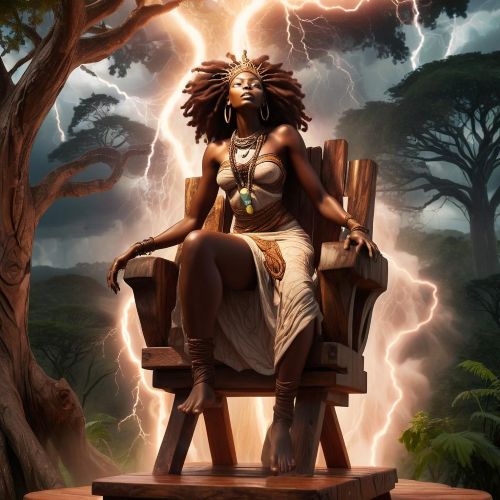
    Woyengi is the supreme creator goddess in the mythology of the Ijaw people of Nigeria, an ethnic group residing mainly in the Niger Delta region. Revered as both the creator of humanity and the goddess of destiny, Woyengi occupies a central place in Ijaw cosmology. According to myth, she descended from the heavens to the earth amid thunder and lightning, signifying divine authority and elemental power. Before her arrival, the world was inhabited by animals and plants but lacked human beings. Upon reaching earth, she molded the first humans from mud and breathed life into them, granting them consciousness and identity. She then offered them the power of choice—to select their gender, fortune, vocation, and even the manner of their death. These decisions defined each individual’s destiny, making Woyengi not only a creator but also a goddess of fate and free will. Her mythology expresses profound philosophical ideas about freedom, accountability, and the balance between divine law and human choice, themes that continue to shape Ijaw cultural and spiritual identity.

    Physical Traits

    Woyengi is rarely described in physical form, reflecting the Ijaw belief that divinity transcends human appearance. Instead, her presence is symbolized through natural phenomena—thunder, lightning, and the sacred iroko tree. Her descent to earth is marked by a flash of lightning and the sound of thunder, which announces her creative arrival. She is often depicted standing on a sacred creation stone before a large table and chair, molding the first human beings from earth’s mud. This imagery represents her dominion over the elements and her authority as the origin of all life. The use of natural symbols to describe her—earth, storm, and light—emphasizes her connection to creation and transformation. As a goddess associated with both nurturing and judgment, Woyengi embodies the dual forces of fertility and power that sustain the world. Her appearance in myth is less about form and more about presence—a manifestation of divine energy and creative intelligence guiding the birth of humanity.

    Family

    In Ijaw mythology, Woyengi stands as an autonomous, self-existing deity, often referred to as the “Great Mother.” Unlike deities in polytheistic pantheons that feature divine families or hierarchies, Woyengi’s origin is self-contained—she neither has parents nor a consort. She represents the primordial source of all creation and is considered the mother of humanity itself.

    However, her interactions with her creations introduce familial and moral dimensions into her myth. The most significant of these is her relationship with Ogboinba, a woman created by Woyengi who later defied her authority. Ogboinba’s story highlights Woyengi’s role not only as a creator but also as a moral guardian and enforcer of cosmic order. When Ogboinba sought to change her chosen destiny and challenged Woyengi’s decree, the goddess punished her by stripping away her powers. This narrative illustrates a maternal yet strict relationship between the divine and the human—a reflection of Woyengi’s role as both mother and judge. Through these myths, the Ijaw people perceive Woyengi as the ultimate maternal figure—compassionate in creation yet unwavering in maintaining the order she established.

    Other names

    The name Woyengi originates from the Ijaw words Wo (our) and Yengi (mother), translating to “Our Mother.” This title captures both her nurturing aspect and her communal importance as the universal mother of all living beings. Across different Ijaw dialects, variations such as Woyingi or Woyengi-Kuro appear, each reflecting local interpretations of her divine authority. The name Tamara, meaning “Creator,” is also occasionally used, emphasizing her supreme creative role in bringing life and order to the world.

    In addition to being known as the creator goddess, she is frequently described as the “Goddess of Destiny,” underlining her power to determine and oversee human fate. These various names and epithets demonstrate the depth of her divine identity—she is at once a life-giver, protector, and regulator of destiny. The reverence embedded in her titles shows how the Ijaw people perceive her not as a distant deity but as an intimate maternal presence who shapes every aspect of existence.

    Powers and Abilities

    Woyengi’s powers encompass creation, destiny, and the elemental forces of nature. As the origin of humanity, she is believed to have molded the first humans from the earth’s clay and infused them with life through her divine breath. Her creative act went beyond forming bodies—she granted humans autonomy, allowing them to define their own paths. Each person, upon creation, was given the freedom to choose their gender, blessings, and life’s direction. Once these choices were made, Woyengi sealed them, symbolizing the irrevocable nature of fate.

    Her dominion extends over both natural and spiritual realms. The thunder and lightning that accompany her descent mark her as a goddess of cosmic power and balance. She commands natural forces, directs the sun and moon, and influences fertility, healing, and death. As the goddess of destiny, she records and enforces the life paths chosen by her creations, ensuring harmony in the moral and spiritual order of the world. Her justice is absolute; she rewards devotion and integrity while punishing rebellion and arrogance, as seen in her conflict with Ogboinba.

    Woyengi’s powers also hold symbolic significance. The act of creation from mud connects her to the earth’s fertility, while her use of lightning and thunder represents divine transformation—the energy that brings form out of chaos. Through her control of creation and fate, Woyengi embodies both the nurturing and disciplinary aspects of divinity, uniting the roles of mother, lawgiver, and cosmic architect in a single, awe-inspiring figure.

    Modern Day Influence

    Woyengi’s legacy continues to resonate deeply within Ijaw culture, even as modern religious practices have evolved. Although many Ijaw people today identify as Christians, traditional reverence for Woyengi endures through oral storytelling, folklore, and ritual remembrance. Her mythology remains a vital element of Ijaw identity, teaching moral lessons about choice, consequence, and respect for divine order.

    In literature and the arts, Woyengi’s story has been retold and reinterpreted to preserve her cultural importance. The Nigerian playwright Obotunde Ijimere adapted her myth in the acclaimed play Woyengi, exploring themes of creation, destiny, and rebellion. Scholars of African religion and philosophy continue to study her as a rare example of a female creator deity in world mythology, often referencing her as a symbol of feminine power and divine authority.

    Beyond academic and artistic representation, Woyengi’s influence persists in local belief systems that emphasize balance between human choice and spiritual responsibility. The notion that individuals choose their own destiny before birth remains a central moral concept in Ijaw cosmology and is reflected in rituals surrounding birth, death, and community leadership. In contemporary discussions on gender and spirituality, Woyengi is celebrated as a powerful representation of the sacred feminine—an embodiment of creation, justice, and wisdom. Her myth endures as a guiding narrative that connects the Ijaw people to their ancestral heritage while continuing to inspire broader conversations about identity, autonomy, and destiny in African mythology.

    Related Images

    Source

    Lewis, T. M. (2016, November 1). Woyengi | West African Ijo Deity & Mythology. Encyclopaedia Britannica. https://www.britannica.com/topic/Woyengi

    TalkAfricana. (2022, May 14). Woyengi, the Creator Goddess of the Ijaw People of Nigeriahttps://talkafricana.com/woyengi-the-creator-goddess-of-the-ijaw-people-of-nigeria/

    Wikipedia contributors. (2024, March 11). Woyengi. Wikipedia. https://en.wikipedia.org/wiki/Woyengi

    Assain Esseru. (n.d.). About Woyingi. WordPress. https://woyingi.wordpress.com/about-woyingi/

    Scribd. (n.d.). Ijo Creation Myth: Woyengi [PDF]. https://www.scribd.com/presentation/498940889/Woyengi

    TV Tropes contributors. (n.d.). Myth / Ijaw Mythology. TV Tropes. https://tvtropes.org/pmwiki/pmwiki.php/Myth/IjawMythology

    Wikipedia contributors. (2004, April 21). Ijaw people. Wikipedia. https://en.wikipedia.org/wiki/Ijaw_people

    Britannica. (2016, November 2). Woyengi. Retrieved from https://www.britannica.com/topic/Woyengi

    Course Hero. (n.d.). Summary and Analysis of Obotunde Ijimere’s Woyengi. Retrieved from https://www.coursehero.com/file/236381699/SUMMARY-AND-ANALYSIS-OF-OBOTUNDE-IJIMERES-WOYENGIpdf/

    Horniman Museum and Gardens. (2019, March 21). Stories of Woyingi. Retrieved from https://www.horniman.ac.uk/story/stories-of-woyingi/

    Frequently Asked Questions

    [edgtf_accordion type=”default” style=”toggle”][edgtf_accordion_tab title=”What is lorem Ipsum?” title_tag=”p”]

    I am text block. Click edit button to change this text. Lorem ipsum dolor sit amet, consectetur adipiscing elit. Ut elit tellus, luctus nec ullamcorper mattis, pulvinar dapibus leo.

    [/edgtf_accordion_tab][/edgtf_accordion][edgtf_accordion type=”default” style=”toggle”][edgtf_accordion_tab title=”What is lorem Ipsum?” title_tag=”p”]

    I am text block. Click edit button to change this text. Lorem ipsum dolor sit amet, consectetur adipiscing elit. Ut elit tellus, luctus nec ullamcorper mattis, pulvinar dapibus leo.

    [/edgtf_accordion_tab][/edgtf_accordion][edgtf_accordion type=”default” style=”toggle”][edgtf_accordion_tab title=”What is lorem Ipsum?” title_tag=”p”]

    I am text block. Click edit button to change this text. Lorem ipsum dolor sit amet, consectetur adipiscing elit. Ut elit tellus, luctus nec ullamcorper mattis, pulvinar dapibus leo.

    [/edgtf_accordion_tab][/edgtf_accordion][edgtf_accordion type=”default” style=”toggle”][edgtf_accordion_tab title=”What is lorem Ipsum?” title_tag=”p”]

    I am text block. Click edit button to change this text. Lorem ipsum dolor sit amet, consectetur adipiscing elit. Ut elit tellus, luctus nec ullamcorper mattis, pulvinar dapibus leo.

    [/edgtf_accordion_tab][/edgtf_accordion][edgtf_accordion type=”default” style=”toggle”][edgtf_accordion_tab title=”What is lorem Ipsum?” title_tag=”p”]

    I am text block. Click edit button to change this text. Lorem ipsum dolor sit amet, consectetur adipiscing elit. Ut elit tellus, luctus nec ullamcorper mattis, pulvinar dapibus leo.

    [/edgtf_accordion_tab][/edgtf_accordion]

    Watch

  • Nyale : Goddess of Fire

    Nyale : Goddess of Fire

    Listen

    At a glance

    Description
    Origin Bambara Mythology
    Classification Gods
    Family Members N/A
    Region Mali
    Associated With Fire

    Nyale

    Introduction

    In Bambara mythology, Nyale is a striking and paradoxical figure, embodying both destruction and renewal. The Bambara people of Mali hold a rich cosmology in which the universe is sustained by a balance of opposing principles. Within this system, Nyale symbolizes chaotic energy, uncontrolled urges, and the primal forces of creation. Her presence stands in contrast to Faro, the deity of order, rationality, and water. Nyale is part of a divine quaternity alongside Pemba, Faro, and Ndomadyiri, all of whom represent core elements of existence. Together they form aspects of Bemba, the great creator. In this way, Nyale is more than just a goddess of chaos—she is a vital component of the Bambara worldview, representing transformation and the power of raw, untamed energy.

    Physical Traits

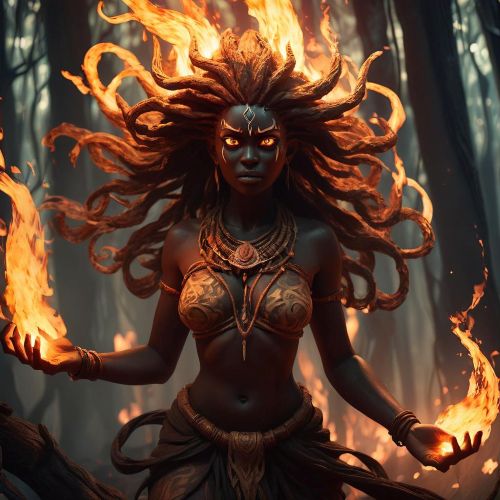
    Descriptions of Nyale’s physical form are rare, as Bambara mythology often emphasizes symbolic roles over literal depictions. In her earlier form as Musukoroni, however, she is portrayed as a fiery and unsettling entity born from the decay of Pemba’s cosmic tree. Emerging from mildew and spittle, she embodies impurity, chaos, and transformation. This origin story emphasizes her organic, almost elemental birth, suggesting she is less a being of flesh and more a manifestation of cosmic imbalance.

    Unlike Faro, who is often associated with clarity and order, Nyale is elusive, mysterious, and ever-shifting. Over time, she transitions into a goddess of fertility, where her form is linked with abundance, growth, and the earth’s capacity to renew itself. This duality—shifting between destructive fire and nurturing fertility—marks her as a deity who cannot be confined to a single appearance. Instead, she embodies cycles of change, reflecting the natural rhythm of death, decay, and rebirth.

    Family

    Nyale is deeply tied to the divine family that structures Bambara cosmology. She is one of the four manifestations of Bemba, the hermaphroditic creator, who embodies the totality of existence. Alongside Pemba, Faro, and Ndomadyiri, she represents one part of the universe’s foundational principles. Nyale is often paired with Pemba, described as her twin or consort, forming a dynamic sibling-spouse relationship that symbolizes the merging of male and female energies.

    Where Pemba represents the heavens, air, and initial creation, Nyale embodies fire, chaos, and later fertility. Their union is both cooperative and conflictual, reflecting the tension between order and disorder that drives the cosmos forward. This mythological relationship illustrates the Bambara belief in balance—where chaos cannot exist without order, and life cannot thrive without the risk of destruction.

    Other names

    Nyale is also known by alternative names, most notably Musukoroni or Mouso Koroni Koundyé, which highlight her more volatile and destructive aspect. Under this identity, she is remembered as a goddess of chaos, fire, and secrecy, one who acts as the primordial disruptor. In some traditions, she is also referred to as the First Sorcerer, credited with the earliest use of spiritual and magical power. This title links her to knowledge of hidden forces, transformation, and the esoteric practices that shape Bambara spirituality.

    Beyond Bambara mythology, the name “Nyale” takes on entirely different meanings in other cultures. In Lombok, Indonesia, Nyale refers to the sea worms that appear seasonally in great numbers, inspiring the annual Bau Nyale festival. The worms themselves are symbols of abundance and continuity, tied to local legend. Though unrelated to the Bambara goddess, this usage reflects how the term “Nyale” resonates across traditions as a symbol of fertility, transformation, and communal identity.

    Powers and Abilities

    Nyale’s powers are rooted in elemental force and spiritual duality. As Musukoroni, she embodies fire and chaos, representing destruction, transformation, and the unpredictable nature of existence. Her energy is disruptive, breaking down order and opening pathways for renewal. At the same time, Nyale is credited with creating all living beings on Earth, highlighting her role as a mother of creation.

    Her transformation from chaos-bringer to fertility goddess emphasizes her dual role in shaping life. She not only holds destructive power but also nurtures abundance, reproduction, and growth. In addition, her title as the First Sorcerer associates her with mystical knowledge, secrecy, and the hidden energies that connect humans with the divine. This blend of fertility, sorcery, and fire makes Nyale a liminal figure—one who stands between creation and destruction, embodying both ends of the cosmic spectrum.

    Modern Day Influence

    Nyale’s legacy, though tied to the traditional beliefs of the Bambara, continues to resonate in cultural and intellectual ways. In Mali, Bambara cosmology still influences rituals, oral storytelling, and symbolic art. Masks, textiles, and ceremonial objects often carry motifs that reflect the balance between chaos and order, with Nyale serving as an archetype of fiery, transformative power. Scholars of comparative mythology frequently connect Nyale to other goddesses of fire and chaos, such as Kali in India, Pele in Hawaii, and Sekhmet in Egypt, highlighting her place in a global pattern of deities who embody destruction as a precursor to renewal.

    In broader cultural studies, Nyale is interpreted as an archetype of the “dark feminine,” a figure that represents hidden desires, secrecy, and creative potential emerging from chaos. This interpretation has found resonance in feminist and psychoanalytic readings of mythology, where she embodies the power of suppressed energies and the necessity of disorder in the cycle of growth.

    Outside of Africa, the name Nyale carries significance in Lombok, Indonesia, where the Bau Nyale festival celebrates the seasonal appearance of sea worms. This event, tied to the legend of Princess Mandalika, is a major cultural and religious occasion that blends ecological awareness with mythological storytelling. The worms, called Nyale, symbolize fertility and abundance, and the festival itself has become an important part of Lombok’s tourism economy. While unrelated to Bambara beliefs, this living tradition highlights how the concept of Nyale continues to embody themes of renewal, sacrifice, and communal unity.

    Scientific research has also engaged with Nyale in its Indonesian context, studying the worms’ antibacterial properties, amino acid profiles, and potential for sustainable food practices. These investigations demonstrate how a name rooted in mythology can bridge into fields of ecology, medicine, and education. For instance, Nyale worms are used in authentic inquiry projects to teach critical thinking and creativity to science students, proving that the mythological resonance of Nyale extends even into modern scientific discourse.

    Related Images

    Source

    Camara, L. (1990). Camara Laye’s L’enfant noir and the Mythical Verb.

    Efoui, K. (2007). Contemporary Francophone drama: Between detours and deviations.

    Ndlovu-Gatsheni, S. J., & Zvobgo, R. J. (2022, January 1). Stereotyping, Exploitation, and Appropriation of African Traditional Religious Beliefs: The Case of Nyaminyami, Water Spirit, among the Batonga People of Northwestern Zimbabwe, 1860s–1960s.

    HandWiki. (n.d.). Religion: Bemba (mythology). Retrieved September 18, 2025, from https://handwiki.org/wiki/Religion:Bemba_(mythology)

    Wikipedia. (n.d.). Bemba (deity). Retrieved September 18, 2025, from https://en.wikipedia.org/wiki/Bemba_(deity)

    Mythosphere. (n.d.). Bambara Mythology. Retrieved September 18, 2025, from https://www.folklore.earth/culture/bambara/

    Frequently Asked Questions

    [edgtf_accordion type=”default” style=”toggle”][edgtf_accordion_tab title=”What is lorem Ipsum?” title_tag=”p”]

    I am text block. Click edit button to change this text. Lorem ipsum dolor sit amet, consectetur adipiscing elit. Ut elit tellus, luctus nec ullamcorper mattis, pulvinar dapibus leo.

    [/edgtf_accordion_tab][/edgtf_accordion][edgtf_accordion type=”default” style=”toggle”][edgtf_accordion_tab title=”What is lorem Ipsum?” title_tag=”p”]

    I am text block. Click edit button to change this text. Lorem ipsum dolor sit amet, consectetur adipiscing elit. Ut elit tellus, luctus nec ullamcorper mattis, pulvinar dapibus leo.

    [/edgtf_accordion_tab][/edgtf_accordion][edgtf_accordion type=”default” style=”toggle”][edgtf_accordion_tab title=”What is lorem Ipsum?” title_tag=”p”]

    I am text block. Click edit button to change this text. Lorem ipsum dolor sit amet, consectetur adipiscing elit. Ut elit tellus, luctus nec ullamcorper mattis, pulvinar dapibus leo.

    [/edgtf_accordion_tab][/edgtf_accordion][edgtf_accordion type=”default” style=”toggle”][edgtf_accordion_tab title=”What is lorem Ipsum?” title_tag=”p”]

    I am text block. Click edit button to change this text. Lorem ipsum dolor sit amet, consectetur adipiscing elit. Ut elit tellus, luctus nec ullamcorper mattis, pulvinar dapibus leo.

    [/edgtf_accordion_tab][/edgtf_accordion][edgtf_accordion type=”default” style=”toggle”][edgtf_accordion_tab title=”What is lorem Ipsum?” title_tag=”p”]

    I am text block. Click edit button to change this text. Lorem ipsum dolor sit amet, consectetur adipiscing elit. Ut elit tellus, luctus nec ullamcorper mattis, pulvinar dapibus leo.

    [/edgtf_accordion_tab][/edgtf_accordion]

    Watch

  • Okonore Yaa : The Earth Mother

    Okonore Yaa : The Earth Mother

    Listen

    At a glance

    Description
    Origin Akan Mythology
    Classification Gods
    Family Members Anansi (Husband), Ntikuma, Tikelenkelen, Nankonhwea, Afudohwedohwe, Anansewa (Children)
    Region Ghana
    Associated With Earth

    Okonore Yaa

    Introduction

    Okonore Yaa is a central figure in Akan mythology, remembered as the wife of the clever and mischievous trickster Anansi. While Anansi’s reputation as the cunning spider has spread far beyond Ghana and into the wider African diaspora, Okonore Yaa often remains in the background, embodying patience, resilience, and feminine strength. Her role is essential because she provides balance to Anansi’s unpredictable schemes, representing the grounded reality of family and community life.

    The Akan people of present-day Ghana and Ivory Coast have passed down countless folktales, known as anansesem, where Anansi and Okonore Yaa appear together. Her character, though less flamboyant than her husband’s, reflects Akan values tied to endurance, labor, fertility, and the power of women in holding families and traditions together. To fully appreciate Anansi’s stories, one must also recognize Okonore Yaa’s contribution to Akan folklore and the moral lessons she embodies.

    Physical Traits

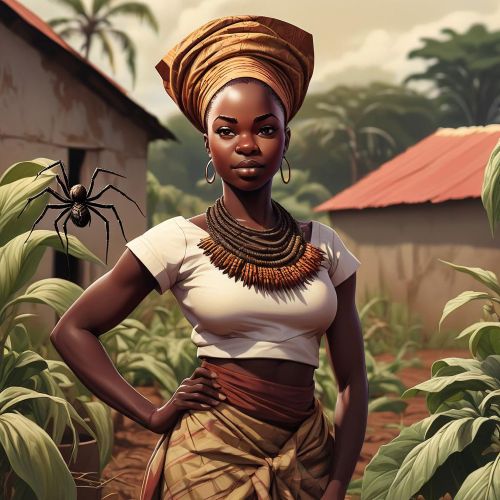
    Unlike Anansi, whose form shifts between spider, man, or a mixture of the two depending on the story, Okonore Yaa’s physical characteristics are rarely described in detail. This absence, however, is telling—it suggests that she is less a figure of spectacle and more a representation of the everyday Akan woman. In some modern illustrations and retellings, she is depicted as a hardworking farmer, wearing a headwrap and holding tools of cultivation, symbolizing her connection to the earth and to sustenance.

    Rather than being defined by beauty or supernatural form, Okonore Yaa is portrayed through her actions and endurance. She embodies practicality over ornamentation, strength over flamboyance. Just as the earth itself does not boast but quietly nurtures, Okonore Yaa is presented as solid, reliable, and indispensable.

    Family

    Okonore Yaa’s most enduring role in mythology is as the wife of Anansi. Their relationship is often presented as comical and challenging, with Anansi trying to outwit others and frequently shirking responsibility while Okonore Yaa manages the consequences. Their dynamic reflects a broader cultural balance between chaos and order, mischief and responsibility.

    Together, they have several children, each with exaggerated features or qualities that act as symbolic lessons. Ntikuma, the eldest son, is often wise beyond his years, standing in contrast to his father’s trickery. Tikelenkelen, with his oversized head, represents pride or arrogance. Nankonhwea, thin-necked and fragile, highlights weakness and awkwardness, while Afudohwedohwe, the pot-bellied son, embodies greed and indulgence. In some stories, they also have a daughter, Anansewa, whose beauty is central to later tales and even stage plays by Ghanaian playwright Efua Sutherland.

    Through this mythological family, the Akan people explored aspects of human character, social responsibility, and morality. Okonore Yaa’s presence as the mother grounds these narratives, embodying care and resilience while Anansi pursues mischief.

    Other names

    As with many figures from oral traditions, Okonore Yaa is known by different names depending on the region or cultural adaptation. Among the Ashanti, she is commonly called Aso, while the Fanti often use the name Okonore Yaa. In diasporic communities across the Caribbean, she sometimes appears as Crooky or Shi Maria, names that reveal how Akan folktales evolved through the transatlantic slave trade.

    She is also occasionally referred to as Konori or Konoro, variations that likely stem from local dialects and shifts in pronunciation over time. In theatrical or more contemporary versions of the stories, she has even been given names such as Ama Ananse or Sister Ama, which act as stage identities. These different versions of her name reflect the adaptability of folklore, where characters transform to fit new cultural contexts while still retaining their symbolic essence.

    Powers and Abilities

    Unlike Anansi, whose cleverness and trickster powers allow him to deceive gods, animals, and humans alike, Okonore Yaa’s strengths are quieter but no less significant. Her “powers” are tied to her endurance, wisdom, and symbolic role as a stabilizer.

    She is frequently associated with farming and fertility, connecting her to the earth’s capacity to provide for communities. As a Thursday-born woman—since “Yaa” traditionally denotes a female born on Thursday in Akan naming customs—she carries spiritual associations with the earth, endurance, and patience. In many stories, she acts as the voice of reason, grounding Anansi’s chaotic schemes with practicality.

    Okonore Yaa’s influence is not supernatural in a dramatic sense but moral and cultural. She represents the Akan ideal of womanhood—industrious, wise, and enduring in the face of hardship. In this way, her role as a counterbalance to Anansi becomes a form of power in itself.

    Modern Day Influence

    Okonore Yaa’s legacy has not been lost in the passage of time. Though her husband Anansi dominates the spotlight in global retellings, her character continues to appear in Ghanaian storytelling, Caribbean folktales, and adaptations of traditional anansesem. In Ghana, children still grow up listening to Anansi tales where Okonore Yaa plays a vital supporting role, reinforcing values of patience, family responsibility, and resilience.

    In literature, her presence resonates indirectly through works like Efua Sutherland’s The Marriage of Anansewa, which reimagines Anansi’s daughter but draws on the family’s mythological foundation. In Caribbean folklore, Okonore Yaa under different names remains the ever-patient partner of the trickster, embodying the endurance of women in the face of hardship.

    Modern scholarship and feminist reinterpretations have begun to reclaim Okonore Yaa as more than just a background figure. Some see her as a symbol of feminine resilience and the unsung labor of women who keep families and communities intact while men, like Anansi, seek adventure or chaos. Her symbolic role continues to resonate in discussions about gender, tradition, and cultural survival.

    Okonore Yaa also finds relevance in educational settings, where anansesem are used to teach moral lessons and Akan values. Even in pop culture, video games and digital media inspired by African folklore occasionally include her character, ensuring that she remains a part of cultural storytelling in the digital age.

    Related Images

    Source

    World History Edu. (2022, February 18). Anansi – the Trickster Spider-Man of West Africa. World History Edu. https://www.worldhistoryedu.com/anansi-the-trickster-spider-man-of-west-africa/

    Wikipedia contributors. (2025, August 27). Anansi. In Wikipedia. https://en.wikipedia.org/wiki/Anansi

    African Mythology Worldwide. (2025, February 9). The myths of the Akan: Legends from West Africa. African Mythology Worldwide. https://african.mythologyworldwide.com/the-myths-of-the-akan-legends-from-west-africa/

    Sutherland, E. (1965). The Marriage of Anansewa: A Storytelling Drama. Longman.

    Yankah, K. (1995). Speaking for the Chief: Okyeame and the Politics of Akan Royal Oratory. Indiana University Press.

    Opoku, K. A. (1978). West African Traditional Religion. FEP International Private Limited.

    Danquah, J. B. (1945). Religious Beliefs of the Akan.

    Pemberton, J. (1990). Oríkì, women and the proliferation and merging of òrìṣà.

    Frequently Asked Questions

    [edgtf_accordion type=”default” style=”toggle”][edgtf_accordion_tab title=”What is lorem Ipsum?” title_tag=”p”]

    I am text block. Click edit button to change this text. Lorem ipsum dolor sit amet, consectetur adipiscing elit. Ut elit tellus, luctus nec ullamcorper mattis, pulvinar dapibus leo.

    [/edgtf_accordion_tab][/edgtf_accordion][edgtf_accordion type=”default” style=”toggle”][edgtf_accordion_tab title=”What is lorem Ipsum?” title_tag=”p”]

    I am text block. Click edit button to change this text. Lorem ipsum dolor sit amet, consectetur adipiscing elit. Ut elit tellus, luctus nec ullamcorper mattis, pulvinar dapibus leo.

    [/edgtf_accordion_tab][/edgtf_accordion][edgtf_accordion type=”default” style=”toggle”][edgtf_accordion_tab title=”What is lorem Ipsum?” title_tag=”p”]

    I am text block. Click edit button to change this text. Lorem ipsum dolor sit amet, consectetur adipiscing elit. Ut elit tellus, luctus nec ullamcorper mattis, pulvinar dapibus leo.

    [/edgtf_accordion_tab][/edgtf_accordion][edgtf_accordion type=”default” style=”toggle”][edgtf_accordion_tab title=”What is lorem Ipsum?” title_tag=”p”]

    I am text block. Click edit button to change this text. Lorem ipsum dolor sit amet, consectetur adipiscing elit. Ut elit tellus, luctus nec ullamcorper mattis, pulvinar dapibus leo.

    [/edgtf_accordion_tab][/edgtf_accordion][edgtf_accordion type=”default” style=”toggle”][edgtf_accordion_tab title=”What is lorem Ipsum?” title_tag=”p”]

    I am text block. Click edit button to change this text. Lorem ipsum dolor sit amet, consectetur adipiscing elit. Ut elit tellus, luctus nec ullamcorper mattis, pulvinar dapibus leo.

    [/edgtf_accordion_tab][/edgtf_accordion]

    Watch

  • Iku : God of Death

    Iku : God of Death

    Listen

    At a glance

    Description
    Origin Yoruba Mythology
    Classification Gods
    Family Members Arun, Tau and Avuvo (Children)
    Region Nigeria
    Associated With Death, Evil Spirits

    Iku

    Introduction

    In Yoruba mythology, Iku represents more than just the end of life—Iku is the divine embodiment of death itself. Unlike the fearsome or villainous portrayals of death found in many Western traditions, Iku is seen as a necessary and impartial cosmic force. It is neither worshipped nor villainized but deeply respected for its critical role in maintaining the universal balance. Iku works on behalf of Olodumare, the Supreme Being, ensuring that the passage from the earthly world to the spiritual realm unfolds as ordained. As a core figure in Yoruba spiritual thought, Iku is ever-present, influencing traditional rituals and belief systems, and continuing to shape Afro-Caribbean religions like Santería and Candomblé today.

    Physical Traits

    Iku’s appearance is deeply symbolic. While commonly visualized as a skeletal figure cloaked in black—similar to the Western Grim Reaper—this is more metaphor than literal image. In Yoruba cosmology, Iku is a shape-shifter. It may arrive quietly through a crack in a wall or an open window, slipping through the smallest gap to fulfill its task. Iku does not require grand entrances; its presence is often only recognized by the absence it leaves behind. In some artistic traditions, it’s depicted as a tall, dark-clothed human with flowing hair, sometimes residing in a mystical underwater palace. These representations remind believers that death is both mysterious and inevitable. Tools like the “Staff of Death” (Opa Iku), carved from wood, are symbols of this silent yet powerful transition.

    Family

    Though not always described in direct familial terms, Iku is associated with forces that accompany and herald death. Yoruba stories tell of Iku’s fall from grace after a failed confrontation with Orunmila, the Orisha of wisdom. Once an Orisha, Iku was demoted and made leader of the Ajogún, a class of malevolent or chaotic spiritual forces. Among these are said to be Iku’s “children”—disease (Arun), fever (Avuvo), and headache or general malaise (Tau). These beings often precede Iku, softening the body before death’s arrival. This connection between illness and death illustrates how Yoruba cosmology sees health, life, and the afterlife as interconnected paths within a single spiritual journey.

    Other names

    In Yoruba, “Iku” simply means “death,” but the term carries far more than its literal meaning. It is used in proverbs, songs, and rituals to invoke reflection on mortality and moral responsibility. One of the most telling expressions is Iku ya j’esin, meaning “death is preferable to dishonor,” which reflects the cultural emphasis on dignity even in dying. In Afro-Caribbean communities, particularly within Santería, Iku is acknowledged by different names or metaphorical titles. Spanish-speaking practitioners may refer to it as La Muerte, blending African and local beliefs into a uniquely syncretic understanding. Regardless of the name, Iku is recognized as an unstoppable, non-negotiable force.

    Powers and Abilities

    Iku’s abilities transcend the physical. Its role is not to punish or reward, but to escort. Its main task is soul collection—guiding departed spirits from the earthly plane to the spiritual domain for judgment by Olodumare. Iku can appear at any time and place, unaffected by barriers of time or geography. This omnipresence emphasizes the belief that death cannot be escaped. Legends speak of Iku’s invisibility and ability to pass through walls or sealed doors. Some traditions even suggest it can appear in dreams as a warning or sign. In creative retellings—such as modern mythology series or fantasy literature—Iku has been reimagined with mystical enhancements like telepathy, illusion, and even the ability to control winds or command spiritual armies. But at its core, Iku’s power lies in its inevitability: all must answer its call, regardless of status, virtue, or strength.

    Modern Day Influence

    Iku’s reach continues in today’s cultural, spiritual, and artistic expressions. In the Yoruba diaspora, especially in Cuba and Brazil, Iku is acknowledged in rites involving ancestor worship (Egungun) and protective rituals. While not worshipped directly, Iku is given symbolic respect, and objects like the Orula necklace—worn by followers of Orunmila—are believed to delay Iku’s arrival until the right time.

    In modern literature and film, Iku features prominently as a symbol of transition. Wole Soyinka, the Nobel Prize-winning Nigerian playwright, draws from Yoruba cosmology in works like The Road and A Dance of the Forests, where Iku represents both personal reckoning and societal critique. His use of Iku illustrates deeper philosophical discussions around fate, identity, and the legacy of colonialism.

    Even contemporary films like Guantanamera by Tomás Gutiérrez Alea incorporate Iku as a cultural metaphor, using it to explore the Cuban experience, mortality, and ancestral identity. These examples show that Iku is not just a figure of folklore, but a vital symbol in post-colonial discourse, Afro-spiritual resurgence, and artistic reflection.

    The proverb Iku ya j’esin still resonates today, especially in communities that value honor and collective memory. In contrast to modern individualistic cultures that often avoid discussions of death, Yoruba traditions—through Iku—embrace it as a guide and teacher, not a curse. This philosophical acceptance has even inspired modern thinkers and spiritual leaders to reevaluate how death is understood, honored, and prepared for.

    Related Images

    Buy Me A Coffee

    Latest Blog

    Latest Urban Legends

    Meet the Experts

    PRINT PAGE
    [pmb_print_buttons]
    [pmb_print_buttons]
    Buy Me A Coffee

    Latest Character

    Your next travel destination

    [pmb_print_buttons]
    Buy Me A Coffee

    Latest Character

    Your next travel destination

    Source

    Ashe pa mi Cuba. (n.d.). Who is Iku? Yoruba death. Retrieved from https://www.ashepamicuba.com/en/quien-es-iku-la-muerte-yoruba/

    Ojo, E. O. (2017). Iku ya j’ẹsin: Invitation to Suicide in Yoruba Ontology. Journal of Research in Humanities and Social Science, 17(4). Retrieved from https://journalspress.com/LJRHSS_Volume17/306_Iku-ya-jesin-Invitation-to-Suicide-in-Yoruba-Ontology.pdf

    Lawuyi, O. B., & Olupona, J. K. (1988). Metaphoric Associations and the Conception of Death: Analysis of a Yoruba World View. Journal of Religion in Africa, 18(1), 3–15. Retrieved from https://www.jstor.org/stable/1580833

    The Ivoryverse Wiki. (n.d.). Iku. Retrieved from https://the-ivoryverse.fandom.com/wiki/Iku

    Wikipedia. (n.d.). List of Yoruba deities. Retrieved from https://en.wikipedia.org/wiki/List_of_Yoruba_deities

    OR Taye. (2013). Questionable but Unquestioned Beliefs: A Call for a Critical Examination of Yoruba Culture. In Thought and Practice. https://www.ajol.info/index.php/tp/article/view/104307

    Frequently Asked Questions

    [edgtf_accordion type=”default” style=”toggle”][edgtf_accordion_tab title=”What is lorem Ipsum?” title_tag=”p”]

    I am text block. Click edit button to change this text. Lorem ipsum dolor sit amet, consectetur adipiscing elit. Ut elit tellus, luctus nec ullamcorper mattis, pulvinar dapibus leo.

    [/edgtf_accordion_tab][/edgtf_accordion][edgtf_accordion type=”default” style=”toggle”][edgtf_accordion_tab title=”What is lorem Ipsum?” title_tag=”p”]

    I am text block. Click edit button to change this text. Lorem ipsum dolor sit amet, consectetur adipiscing elit. Ut elit tellus, luctus nec ullamcorper mattis, pulvinar dapibus leo.

    [/edgtf_accordion_tab][/edgtf_accordion][edgtf_accordion type=”default” style=”toggle”][edgtf_accordion_tab title=”What is lorem Ipsum?” title_tag=”p”]

    I am text block. Click edit button to change this text. Lorem ipsum dolor sit amet, consectetur adipiscing elit. Ut elit tellus, luctus nec ullamcorper mattis, pulvinar dapibus leo.

    [/edgtf_accordion_tab][/edgtf_accordion][edgtf_accordion type=”default” style=”toggle”][edgtf_accordion_tab title=”What is lorem Ipsum?” title_tag=”p”]

    I am text block. Click edit button to change this text. Lorem ipsum dolor sit amet, consectetur adipiscing elit. Ut elit tellus, luctus nec ullamcorper mattis, pulvinar dapibus leo.

    [/edgtf_accordion_tab][/edgtf_accordion][edgtf_accordion type=”default” style=”toggle”][edgtf_accordion_tab title=”What is lorem Ipsum?” title_tag=”p”]

    I am text block. Click edit button to change this text. Lorem ipsum dolor sit amet, consectetur adipiscing elit. Ut elit tellus, luctus nec ullamcorper mattis, pulvinar dapibus leo.

    [/edgtf_accordion_tab][/edgtf_accordion]

    Watch

  • Mawu : The Creator Goddess

    Mawu : The Creator Goddess

    Listen

    At a glance

    Description
    Origin Fon Mythology
    Classification Gods
    Family Members Nana Buluku (Mother), Lisa (Brother), Sakpata, Sogbo, Agbe, Age, Gu, Djo, Legba (Children)
    Region Benin, Ghana, Togo
    Associated With Creation, Moon, Fertility

    Mawu

    Introduction

    Mawu is a central figure in the spiritual traditions of West Africa, revered by the Fon people of Benin and the Ewe people of Ghana and Togo. She embodies the divine feminine and is closely linked with the moon, creation, fertility, and wisdom. Often paired with her male counterpart, Lisa, the two deities form the dual entity Mawu-Lisa, a balanced union representing the harmony of opposites—night and day, coolness and heat, female and male. As a creator goddess, Mawu holds a sacred place in cosmology and is credited with crafting the world and giving life to humanity. Her role has evolved through time, adapting to spiritual, cultural, and religious changes while maintaining her foundational presence in West African belief systems.

    Physical Traits

    Mawu is more symbolic than physically portrayed, embodying concepts like serenity, intuition, and life-giving force. She is often envisioned as an elderly woman, exuding grace and wisdom. The moon, coolness, and the west are all associated with her essence, reinforcing her role as a nurturing and restorative presence. Unlike Lisa, who represents the sun and vitality, Mawu’s traits lean toward reflection and preservation. In artistic interpretations and oral storytelling, she may be adorned in white or silver robes, echoing the tranquil light of the moon and the regenerative cycles she governs. Her symbolic nature makes her more a presence to be felt than an image to be seen.

    Family

    Mawu’s divine origins trace back to Nana Buluku, the primordial creator who birthed the universe and then withdrew, allowing Mawu and Lisa to shape and maintain the world. Mawu and Lisa together are not only twin deities but are often interpreted as two aspects of a single divine being. From their union emerged several offspring who each rule over specific elements of the cosmos.

    These children, born in pairs, are known in Fon cosmology as powerful spirits or Vodun. They include Sakpata (earth and illness), Sogbo (thunder), Agbe (the sea), Age (forests and farming), Gu (war and metalwork), Djo (the winds), and Legba (the divine communicator and trickster). This divine lineage establishes Mawu not just as a creator, but also as the progenitor of a complex spiritual ecosystem where each force in nature has its own deity and realm.

    Other names

    Mawu is recognized by many names and honorifics that reflect her multifaceted divinity and widespread influence across cultures and languages. Among the Fon and Ewe people, she is simply called Mawu, often representing the highest form of divinity, while in her dual form with Lisa, she is known as Mawu-Lisa, symbolizing the harmonious union of feminine and masculine principles. Other notable variations include Mawu Sogbolisa (the all-powerful one), Mawu Kitikata (the eternal, unchanging deity), Mawu Adanuwotor (the creator of all things), and Yeye Mowo, her Yoruba counterpart associated with Obatala. Additional titles like Mawuga, Mawulolo, and Mawu nusewokatatɔ emphasize her greatness, omnipotence, and universal authority. These diverse names underscore both the reverence held for Mawu and the adaptability of her worship, especially as indigenous beliefs interacted and evolved alongside newer religious traditions.

    Powers and Abilities

    Mawu’s powers are deeply tied to her role as a life-giver and cosmic balancer. She is credited with molding humans from clay and giving them breath—a sacred act that underscores her role as the source of life. Her governance extends to the elements of nature, including water, the moon, and the fertility of the land.

    Her influence over lunar cycles is especially significant. These cycles not only govern tides and agriculture but also symbolize the rhythms of life, death, and rebirth. Mawu is also responsible for setting the laws of nature and assigning roles to her divine children, ensuring that balance and order are preserved.

    According to myth, Mawu placed a great serpent, Aido Hwedo, beneath the Earth to support its weight, suggesting her concern for the Earth’s stability and structure. Her divine justice ensures harmony, correcting imbalances and nurturing what has been broken. She remains a guardian spirit, silently guiding the natural world and its inhabitants.

    Modern Day Influence

    Mawu’s spiritual legacy continues to shape religious, artistic, and cultural expressions in West Africa and beyond. In traditional Vodun practices of Benin and Togo, she is still invoked during rituals related to childbirth, agriculture, and spiritual purification. Aspects of her worship also appear in Haitian Vodou, where Mawu is syncretized with figures such as the Virgin Mary, representing purity and divine motherhood.

    The broader message of Mawu-Lisa—the need for balance between opposing forces—has found renewed significance in today’s social and ecological movements. Feminist spirituality often invokes Mawu as a divine feminine archetype, while environmental activists view her as a symbol of ecological equilibrium. Her teachings inspire a harmonious relationship with nature, emphasizing respect for all forms of life.

    In the world of art and literature, Mawu continues to be a powerful muse. From traditional drumming and storytelling to contemporary galleries like the Mawu Art Gallery, which showcases African creativity and identity, her presence is palpable. Writers, musicians, and digital creators alike draw on her mythology to explore themes of ancestry, womanhood, and environmental consciousness.

    Christianity’s spread has also led to an intertwining of beliefs. Mawu is sometimes equated with the Christian God in local interpretations, blending indigenous spirituality with imported religion. This syncretism helps retain traditional values while embracing new religious frameworks.

    Related Images

    Source

    “Mawu – Wikipedia”. (n.d.). Retrieved from https://en.wikipedia.org/wiki/Mawu

    “Fon creation myth – Wikipedia”. (2010, July 23). Retrieved from https://en.wikipedia.org/wiki/Fon_creation_myth

    “The Cosmic Harmony of Mawu-Lisa: Guardians of Balance in …”. (2023, September 16). Retrieved from https://medium.com/@kwabena.ankrah10/the-cosmic-harmony-of-mawu-lisa-guardians-of-balance-in-african-tradition-e0d9858ab429

    Ewe Mythology – Mythosphere. (2018, April 19). Retrieved from https://www.folklore.earth/culture/ewe/

    “Mawu – The Paganista”. (2025, June 19). Retrieved from https://www.thepaganista.com/blog/mawu

    “Ewe and Fon – Religion and Expressive Culture”. (2008, January 1). Retrieved from https://www.everyculture.com/Africa-Middle-East/Ewe-and-Fon-Religion-and-Expressive-Culture.html

    “Mawu | Meaning & Significance | Goddess Oracle Deck”. (2025, June 26). Retrieved from https://www.aboutmybrain.com/cards/goddesses-of-the-world-oracle-deck/mawu

    Frequently Asked Questions

    [edgtf_accordion type=”default” style=”toggle”][edgtf_accordion_tab title=”What is lorem Ipsum?” title_tag=”p”]

    I am text block. Click edit button to change this text. Lorem ipsum dolor sit amet, consectetur adipiscing elit. Ut elit tellus, luctus nec ullamcorper mattis, pulvinar dapibus leo.

    [/edgtf_accordion_tab][/edgtf_accordion][edgtf_accordion type=”default” style=”toggle”][edgtf_accordion_tab title=”What is lorem Ipsum?” title_tag=”p”]

    I am text block. Click edit button to change this text. Lorem ipsum dolor sit amet, consectetur adipiscing elit. Ut elit tellus, luctus nec ullamcorper mattis, pulvinar dapibus leo.

    [/edgtf_accordion_tab][/edgtf_accordion][edgtf_accordion type=”default” style=”toggle”][edgtf_accordion_tab title=”What is lorem Ipsum?” title_tag=”p”]

    I am text block. Click edit button to change this text. Lorem ipsum dolor sit amet, consectetur adipiscing elit. Ut elit tellus, luctus nec ullamcorper mattis, pulvinar dapibus leo.

    [/edgtf_accordion_tab][/edgtf_accordion][edgtf_accordion type=”default” style=”toggle”][edgtf_accordion_tab title=”What is lorem Ipsum?” title_tag=”p”]

    I am text block. Click edit button to change this text. Lorem ipsum dolor sit amet, consectetur adipiscing elit. Ut elit tellus, luctus nec ullamcorper mattis, pulvinar dapibus leo.

    [/edgtf_accordion_tab][/edgtf_accordion][edgtf_accordion type=”default” style=”toggle”][edgtf_accordion_tab title=”What is lorem Ipsum?” title_tag=”p”]

    I am text block. Click edit button to change this text. Lorem ipsum dolor sit amet, consectetur adipiscing elit. Ut elit tellus, luctus nec ullamcorper mattis, pulvinar dapibus leo.

    [/edgtf_accordion_tab][/edgtf_accordion]

    Watch

  • Oxossi : God of the Forests

    Oxossi : God of the Forests

    Listen

    At a glance

    Description
    Origin Yoruba Mythology
    Classification Gods
    Family Members Ogun, Elegua (Brothers)
    Region Nigeria
    Associated With Hunting, Forests, Justice

    Oxossi

    Introduction

    Oxossi, also spelled Ochosi or Oxóssi, is a revered Orisha in Yoruba mythology and a significant spiritual figure in Afro-Brazilian and Afro-Caribbean religions like Candomblé and Santería. He is known as the Orisha of the hunt, forests, and abundance—an embodiment of resourcefulness, independence, and spiritual clarity. Worshipped primarily on Thursdays, Oxossi is a provider who uses his skills and instincts to ensure survival and prosperity for his devotees. As one of the four warrior Orishas—alongside Eleggua, Ogun, and Osun—Oxossi’s role is to help followers achieve goals once paths are opened and cleared. His presence connects people to nature, justice, and the deeper truths of life, making him a vital figure in both traditional and contemporary spirituality.

    Physical Traits

    Oxossi is most commonly portrayed as a lithe, youthful hunter armed with a bow and arrow, ready to strike with precision. These tools are not only his weapons but powerful symbols of focus and intent. His physical representation often includes a feathered crown, echoing his connection to birds and the wild. Traditional costumes in his honor feature vibrant combinations of green, blue, or turquoise—colors representing forest life and spiritual insight. During ceremonial dances, his followers mimic tracking movements, galloping like horses or aiming invisible arrows, demonstrating his relentless pursuit of both prey and truth. Additional symbols like mirrors, stag antlers, and fishing hooks highlight his adaptability in harvesting nature’s gifts.

    Family

    Oxossi’s divine lineage intertwines with other key Orishas, reflecting a spiritual ecosystem of interconnected roles and energies. Often considered the son of Yemaya, the ocean goddess and maternal figure of the Orisha pantheon, Oxossi bridges the realms of sea and forest. In some traditions, he is closely tied to Ogun, the Orisha of iron and warfare, as either a brother or comrade. Their legendary rivalry-turned-alliance speaks to the balance between brute force and strategic finesse. Oxossi is also the father of Logunede, a deity who inherits both hunting skills and aquatic grace from Oxossi and Oxum, the goddess of beauty and rivers. This duality in Logunede’s nature reflects Oxossi’s own balance between survival instincts and spiritual wisdom.

    Other names

    Across different geographies and belief systems, Oxossi is known by various names that adapt to linguistic and cultural shifts while retaining his essence. In Brazil’s Candomblé, he is called Oxóssi, while in Cuba’s Santería, he appears as Ochosi or Ososi. The Spanish and Portuguese adaptations reflect the influence of colonization and the need to conceal African practices under Christian guises. Consequently, Oxossi was syncretized with saints like Saint Sebastian in Rio de Janeiro and Saint George in Bahia, serving as a protective disguise for worship. These aliases are more than just alternative spellings—they are evidence of his spiritual endurance and cross-cultural legacy.

    Powers and Abilities

    Oxossi’s abilities are grounded in his mastery of the hunt and the deep spiritual knowledge of the forest. As a skilled tracker and archer, he locates what is needed—be it game, truth, or hidden potential. His power lies not just in physical prowess but in insight, intuition, and timing. Unlike a warrior who charges ahead, Oxossi waits, watches, and acts with deliberate precision. He is a guardian of natural law, punishing those who disturb balance or act unjustly, which is why he’s often associated with justice and law enforcement. His knowledge of plants, animals, and natural remedies gives him shamanic authority, making him a healer and a seer as much as a hunter. Devotees turn to him when seeking direction, wisdom, or clarity, trusting in his ability to find the way through confusion or chaos.

    Modern Day Influence

    Oxossi’s legacy thrives in modern times through rituals, culture, and art—especially in Brazil, where Afro-Brazilian identity often centers on the orixás. In cities like Salvador and Rio de Janeiro, his feast days are marked with vibrant festivals, music, and dance. These events often include offerings of maize, beans, and fruits, reinforcing his role as a provider. His image appears in everything from street art to fine sculpture, serving as a cultural bridge between ancestral spirituality and contemporary expression.

    The African diaspora brought Oxossi into contact with Catholic saints, allowing enslaved Africans to continue their worship under the watchful eyes of colonial powers. This syncretism preserved traditions that now influence diverse spheres—from religious iconography to national folklore. Oxossi has also left his mark on music and literature. Artists like Gilberto Gil, Vinicius de Moraes, and Clara Nunes have referenced him in songs that celebrate Afro-Brazilian heritage, while writers and playwrights draw on his myths to explore themes of justice, resilience, and identity.

    Beyond the arts, Oxossi’s principles resonate with modern movements for ecological preservation and social equity. His guardianship over the forest aligns with environmental awareness, while his pursuit of fairness makes him a spiritual ally in struggles for justice. In more recent years, contemporary artists like Oxossi Ayofemi have invoked his name and essence in conceptual works dealing with African diasporic memory and future imaginaries. Through these reinterpretations, Oxossi continues to influence how people think about culture, community, and spirituality.

    Related Images

    Source

    Element Dance. (n.d.). Oxossi. https://www.elementdance.co.uk/Orixas/Oxossi.html

    Soul Brasil Magazine. (2020, October 12). ORIXÁS: THE DIVINE FORCE OF NATURE. https://soulbrasil.com/orixas-divinie-force-nature/

    TheCollector. (2024, June 3). Meet The Orishas: 10 Afrobrazilian Gods and Goddesses. https://www.thecollector.com/orishas-afrobrazilian-gods-goddesses/

    Church of Candomblé. (2016, July 1). The Orixa Oxossi. https://churchofcandomble.com/the-orixa-oxossi/

    The Contemporary Jewish Museum. (2018, July 26). Havruta in Contemporary Art—Oxossi Ayofemi and Risa Wechsler. https://www.thecjm.org/exhibitions/105

    Godchecker.com. (2019, May 19). OCHOSI – the Yoruba God of Hunting (Yoruba mythology). https://www.godchecker.com/yoruba-mythology/OCHOSI/

    Frequently Asked Questions

    [edgtf_accordion type=”default” style=”toggle”][edgtf_accordion_tab title=”What is lorem Ipsum?” title_tag=”p”]

    I am text block. Click edit button to change this text. Lorem ipsum dolor sit amet, consectetur adipiscing elit. Ut elit tellus, luctus nec ullamcorper mattis, pulvinar dapibus leo.

    [/edgtf_accordion_tab][/edgtf_accordion][edgtf_accordion type=”default” style=”toggle”][edgtf_accordion_tab title=”What is lorem Ipsum?” title_tag=”p”]

    I am text block. Click edit button to change this text. Lorem ipsum dolor sit amet, consectetur adipiscing elit. Ut elit tellus, luctus nec ullamcorper mattis, pulvinar dapibus leo.

    [/edgtf_accordion_tab][/edgtf_accordion][edgtf_accordion type=”default” style=”toggle”][edgtf_accordion_tab title=”What is lorem Ipsum?” title_tag=”p”]

    I am text block. Click edit button to change this text. Lorem ipsum dolor sit amet, consectetur adipiscing elit. Ut elit tellus, luctus nec ullamcorper mattis, pulvinar dapibus leo.

    [/edgtf_accordion_tab][/edgtf_accordion][edgtf_accordion type=”default” style=”toggle”][edgtf_accordion_tab title=”What is lorem Ipsum?” title_tag=”p”]

    I am text block. Click edit button to change this text. Lorem ipsum dolor sit amet, consectetur adipiscing elit. Ut elit tellus, luctus nec ullamcorper mattis, pulvinar dapibus leo.

    [/edgtf_accordion_tab][/edgtf_accordion][edgtf_accordion type=”default” style=”toggle”][edgtf_accordion_tab title=”What is lorem Ipsum?” title_tag=”p”]

    I am text block. Click edit button to change this text. Lorem ipsum dolor sit amet, consectetur adipiscing elit. Ut elit tellus, luctus nec ullamcorper mattis, pulvinar dapibus leo.

    [/edgtf_accordion_tab][/edgtf_accordion]

    Watch

  • Owuo : God of Death

    Owuo : God of Death

    Listen

    At a glance

    Description
    Origin Akan Mythology
    Classification Gods
    Family Members N/A
    Region Ghana and Côte d’Ivoire
    Associated With Death, Transformation

    Owou

    Introduction

    In the spiritual world of Akan mythology, Owou is the embodiment of death—a force not of cruelty but of cosmic balance. Unlike depictions in many Western traditions where death is synonymous with dread or finality, Owou is seen as an inevitable guide, ushering souls from the realm of the living to the domain of ancestors. He is both feared and respected, serving as a constant reminder of life’s impermanence. As the Akan people of Ghana and Côte d’Ivoire understand it, Owou is not just the end, but part of a larger cycle of life, death, and spiritual continuity.

    Physical Traits

    Owou’s image is one that lingers in the mind: unsettling, symbolic, and deeply spiritual. Oral traditions often describe him as a lean, bald, and dark-skinned man with one glowing eye—a glowing left eye from which death emerges, and a dark right eye that conveys his shadowy dominion. Every time he blinks or winks, a life is claimed, symbolizing the ceaseless presence of mortality. Sometimes, he is imagined towering over mortals, cloaked in an aura of darkness, accompanied by signs like whirlwinds, vultures, or the mournful tones of the color red. These features aren’t just about fear—they embody transformation and the passage from the visible to the invisible world.

    Family

    Owou doesn’t have a clearly defined family in the human sense, but his relationships with other deities are central to his mythological significance. He is believed to be the creation of Odomankoma, the creative aspect of the Supreme Being, who brought forth all things. In a profound myth, Owou slays Odomankoma, suggesting that even the creator is subject to death. Yet, Odomankoma revives through Nyame (also known as Onyankopon), showing that death, creation, and resurrection are inseparably linked.

    Owou also maintains a complex rivalry with Tano, the river deity. In a tale of cosmic competition, both beings race to be the first to reach a hunter’s home—an allegorical battle for influence over humankind. Tano’s victory leads to a compromise: Owou may claim lives, but only if he arrives before Tano. This myth encapsulates the idea that while death is inevitable, it operates within spiritual laws and boundaries.

    Other names

    The name Owou literally translates to “death” in the Akan language, and it powerfully defines his role. However, various names and titles further reflect his attributes and influence:

    • Odomankoma Owou (“Death of Creation”) alludes to his power over even the creator.

    • Owou Papa (“Death Fan”) evokes his role in blowing spirits into the ancestral world.

    • Owou Kwaaku, or “Death born on Wednesday,” follows Akan naming customs and speaks to his distinct spiritual personality.

    Beyond the African continent, Owou’s persona echoes in the Caribbean, particularly in Jamaican folklore. There, he sometimes appears as Bredda Death, a grim figure entwined with Ananse the spider-trickster, showing how African deities morphed across the Atlantic into new cultural expressions.

    Powers and Abilities

    Owou’s presence is inescapable, his powers rooted in the essence of existence. Most notably, he governs the end of life—not with malice, but with the authority of balance. His signature act—causing death with a blink—speaks volumes about his omnipresence and quiet dominance. He is not a destroyer for pleasure; he is the agent who ensures the world does not overflow with unchecked life.

    His powers extend to the spiritual world, where he commands both protective and destructive forces. Witches (Obayifo), ghosts, and ancestral spirits move at his direction, highlighting his influence beyond the visible. Despite this, he is incorruptible. As the Akan saying goes, “Owou mpɛ sika”—”Death doesn’t like money”—meaning no bribe, offering, or trick can delay his hand. He is feared, yes, but also honored as a force that keeps the balance of nature and divinity intact.

    The Adinkra symbol “Owou Atwedee”, or “Death’s Ladder,” often associated with him, represents the journey from birth to death. It’s a powerful visual reminder that life is not a static condition but a path with a destined conclusion.

    Modern Day Influence

    Despite originating in ancient spiritual systems, Owou’s legacy continues to influence modern culture, especially in regions where Akan heritage remains strong. His symbols and stories are embedded in funeral rites, where drumming, dancing, and ancestral invocation are believed to ease the soul’s transition. These rituals often symbolically invite Owou to carry the departed safely to the spiritual realm.

    His presence is equally strong in Akan proverbs and Ananse stories, which remain a vibrant part of Ghanaian storytelling and oral education. Through these tales, children and adults alike are taught to respect death—not to fear it blindly but to understand its place in the cycle of existence.

    In visual art, Owou is evoked through textile patterns, woodcarvings, and funerary architecture. The ladder motif—evoking Owou Atwedee—is a frequent symbol in Adinkra cloth designs worn during funerals, representing the community’s acceptance of life’s spiritual journey.

    In the African diaspora, especially in the Caribbean, Owou has taken on new forms while retaining his core traits. His stories merge with local folklore, creating characters who echo his mission and temperament. These reinterpretations, found in oral traditions and even modern literature, show that Owou’s role as the arbiter of life’s final passage still resonates across cultures and generations.

    Related Images

    Source

    Mystery in History. (2025, March 26). Owuo In Akan Beliefs: Symbolism Of Death And Mortality. https://mysteryinhistory.com/owuo/

    Mystery in History. (n.d.). Owuo In Akan Beliefs: Symbolism Of Death And Mortality. Facebook. https://m.facebook.com/mysteryinhistory82/posts/owuo-in-akan-beliefs-symbolism-of-death-and-mortality/122226448448235088/

    Oxford Reference. (n.d.). Owuo: When His Eye Shuts, A Man Dies. https://www.oxfordreference.com/display/10.1093/oi/authority.20110803100258908

    Riordan Wiki. (n.d.). Owuo. Fandom. https://riordan.fandom.com/wiki/Owuo

    TV Tropes. (n.d.). Myth / Akan Mythology. https://tvtropes.org/pmwiki/pmwiki.php/Myth/AkanMythology

    Wikipedia. (n.d.). Owuo. https://en.wikipedia.org/wiki/Owuo

    Frequently Asked Questions

    [edgtf_accordion type=”default” style=”toggle”][edgtf_accordion_tab title=”What is lorem Ipsum?” title_tag=”p”]

    I am text block. Click edit button to change this text. Lorem ipsum dolor sit amet, consectetur adipiscing elit. Ut elit tellus, luctus nec ullamcorper mattis, pulvinar dapibus leo.

    [/edgtf_accordion_tab][/edgtf_accordion][edgtf_accordion type=”default” style=”toggle”][edgtf_accordion_tab title=”What is lorem Ipsum?” title_tag=”p”]

    I am text block. Click edit button to change this text. Lorem ipsum dolor sit amet, consectetur adipiscing elit. Ut elit tellus, luctus nec ullamcorper mattis, pulvinar dapibus leo.

    [/edgtf_accordion_tab][/edgtf_accordion][edgtf_accordion type=”default” style=”toggle”][edgtf_accordion_tab title=”What is lorem Ipsum?” title_tag=”p”]

    I am text block. Click edit button to change this text. Lorem ipsum dolor sit amet, consectetur adipiscing elit. Ut elit tellus, luctus nec ullamcorper mattis, pulvinar dapibus leo.

    [/edgtf_accordion_tab][/edgtf_accordion][edgtf_accordion type=”default” style=”toggle”][edgtf_accordion_tab title=”What is lorem Ipsum?” title_tag=”p”]

    I am text block. Click edit button to change this text. Lorem ipsum dolor sit amet, consectetur adipiscing elit. Ut elit tellus, luctus nec ullamcorper mattis, pulvinar dapibus leo.

    [/edgtf_accordion_tab][/edgtf_accordion][edgtf_accordion type=”default” style=”toggle”][edgtf_accordion_tab title=”What is lorem Ipsum?” title_tag=”p”]

    I am text block. Click edit button to change this text. Lorem ipsum dolor sit amet, consectetur adipiscing elit. Ut elit tellus, luctus nec ullamcorper mattis, pulvinar dapibus leo.

    [/edgtf_accordion_tab][/edgtf_accordion]

    Watch

  • Oshun : Goddess of Love

    Oshun : Goddess of Love

    Listen

    At a glance

    Description
    Origin Yoruba Mythology
    Classification Gods
    Family Members Yemoja (Mother), Shango (Husband)
    Region Nigeria
    Associated With Love, Fertility, Rivers

    Oshun

    Introduction

    Oshun is one of the most cherished and powerful orishas in Yoruba mythology. Originating among the Yoruba people of southwestern Nigeria, Oshun’s presence has rippled through time and space, carried across oceans by the African diaspora. Revered as the orisha of fresh water, fertility, love, and sensuality, she holds a place of vital importance within the Yoruba religious tradition. More than just a deity of beauty and emotion, Oshun is a life-giver and protector, often portrayed as the essential feminine force without which creation itself could not flourish. In one of the most well-known Yoruba creation myths, Oshun is the only female orisha among a group sent to Earth to bring forth life. When the others failed, her intervention—through the healing power of water—restored the world, emphasizing that divine balance cannot exist without feminine energy.

    Physical Traits

    Oshun is visually celebrated for her elegance, grace, and radiant beauty. Artistic depictions often show her adorned in golden or yellow fabrics that reflect her joyful essence and her association with wealth and purity. Her golden skin and shimmering attire are matched by her love for ornate accessories—mirrors, brass bracelets, beads, and elaborate fans are some of the sacred objects linked to her image. Each item carries symbolic meaning: mirrors for self-reflection, honey for sweetness, and peacocks for transformation and pride.

    At times, Oshun is portrayed as a mermaid or as a figure with aquatic features, underscoring her dominion over rivers and streams. She’s also linked to animals like otters, butterflies, and bees, each representing qualities such as joy, fertility, change, and self-reliance. Her sacred colors—gold, yellow, and coral—speak to her connection with life’s sweetness and the abundance of nature.

    Family

    Within the Orisha pantheon, Oshun is considered to be one of the youngest deities, though her wisdom and influence are profound. She is often described as either the daughter or younger sister of Yemoja, the ocean goddess who represents motherhood. Together, the two form a symbolic duality—Yemoja governs the vast ocean, while Oshun reigns over the rivers, signifying a flowing relationship between motherhood and sensuality, depth and movement.

    Oshun’s romantic ties are also notable. She is widely recognized as one of the wives of Shango, the orisha of thunder and lightning. Their relationship represents a dynamic blend of power and passion, a union of elemental forces. Some traditions also mention her as a consort to other orishas, further emphasizing her emotional and diplomatic importance within the divine family structure. Through these connections, Oshun plays a crucial role in harmonizing the energies of creation, strength, and compassion.

    Other Names

    Oshun’s worship spread across the globe, particularly through the transatlantic slave trade, and her name evolved in different cultures and languages. In Cuba’s Santería, she is called Ochún; in Brazil’s Candomblé, she is Oxúm; and in Haitian Vodou, she is often syncretized with Erzulie, another spirit of love and beauty. Among Catholic traditions, Oshun is linked to Our Lady of Charity, a representation of divine care and maternal protection.

    She is also known by titles such as Yeye Oshun (Mother Oshun), Lady of Gold, and Oshun Yeye Kari (Mother of Sweetness). These titles reflect her multi-faceted nature: tender yet fierce, nurturing yet powerful. Her adaptability and resilience across cultures speak to her enduring spiritual influence.
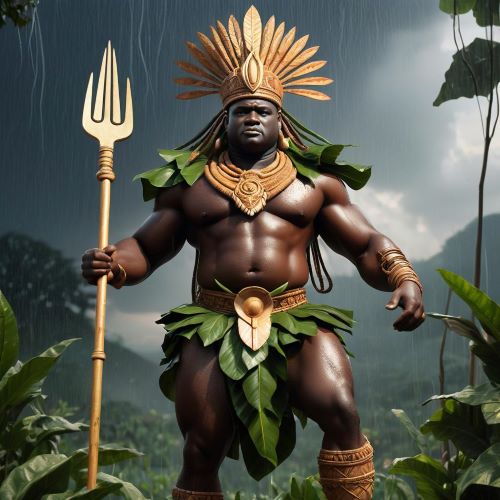
    Powers and Abilities

    Oshun’s powers are rooted in both the physical and spiritual realms. As the orisha of love and sensuality, she governs the domains of romance, desire, and emotional healing. Women call upon her for guidance in relationships, for fertility blessings, and for assistance in childbirth. She is also the patron of music, dance, and artistic expression—elements that uplift the soul and connect people to joy and beauty.

    Her dominion over rivers and fresh water makes her a life-sustainer. She nourishes the earth, feeds the crops, and brings balance to ecosystems. But Oshun’s waters are not only healing—they can also be destructive when disrespected. If angered or neglected, she can bring about floods or withhold her blessings, reminding us of nature’s duality.

    Oshun’s spiritual gifts also include divination and magic. She teaches the use of cowrie shells for spiritual insight and helps her devotees learn self-care, self-love, and emotional strength. Her wisdom is often sought in difficult times, especially when emotional or physical healing is needed.

    Modern Day Influences

    Today, Oshun’s legacy continues to thrive both in religious practices and popular culture. In Nigeria, the Osun-Osogbo Festival is a grand annual event held in her honor. Taking place in the sacred Osun-Osogbo Grove, a UNESCO World Heritage site, the festival draws thousands of pilgrims and tourists who come to pay homage and seek blessings. This lush forest sanctuary, filled with shrines and sculptures, is believed to be fiercely protected by Oshun herself, who granted humans permission to settle there in exchange for worship and reverence.

    Across the Americas, especially in Cuba and Brazil, Oshun is a key figure in Afro-Caribbean spiritual traditions. In Santería and Candomblé, devotees offer honey, oranges, cinnamon, and other sweet gifts to appease and honor her. Songs, dances, and drumming ceremonies call upon her loving energy, often invoking her as a maternal protector and life-giver.

    Her image has also found a place in modern art, music, and social commentary. Beyoncé’s homage to Oshun in the “Hold Up” music video—walking through water in a flowing yellow dress—sparked global conversations about Black femininity, ancestral power, and healing. Artists, writers, and activists continue to draw inspiration from Oshun’s qualities, using her symbolism to express themes of beauty, resilience, and divine feminine strength.

    In feminist circles, especially within Afrocentric movements, Oshun has become a powerful icon of womanhood. Her connection to both sensuality and emotional intelligence resonates with modern conversations about gender, identity, and empowerment. For many, invoking Oshun is an act of reclaiming cultural heritage and embracing inner power.

    Related Images

    Source

    Britannica. (n.d.). Oshun Yoruba Goddess of Love, Fertility & Abundance. Retrieved from https://www.britannica.com/topic/Oshun

    Jeffries, B. S. (n.d.). Oshun. In Encyclopaedia Britannica. Retrieved from https://www.britannica.com/topic/Oshun

    Botanica Online. (n.d.). A Comprehensive Guide to Oshun, the Goddess of Love and Beauty. Retrieved from https://botanicaonline.net/blogs/yoruba/oshun-the-goddess-of-love-and-beauty

    Wikipedia contributors. (n.d.). Oshun. In Wikipedia, The Free Encyclopedia. Retrieved from https://en.wikipedia.org/wiki/Oshun

    Frequently Asked Questions

    [edgtf_accordion type=”default” style=”toggle”][edgtf_accordion_tab title=”What is lorem Ipsum?” title_tag=”p”]

    I am text block. Click edit button to change this text. Lorem ipsum dolor sit amet, consectetur adipiscing elit. Ut elit tellus, luctus nec ullamcorper mattis, pulvinar dapibus leo.

    [/edgtf_accordion_tab][/edgtf_accordion][edgtf_accordion type=”default” style=”toggle”][edgtf_accordion_tab title=”What is lorem Ipsum?” title_tag=”p”]

    I am text block. Click edit button to change this text. Lorem ipsum dolor sit amet, consectetur adipiscing elit. Ut elit tellus, luctus nec ullamcorper mattis, pulvinar dapibus leo.

    [/edgtf_accordion_tab][/edgtf_accordion][edgtf_accordion type=”default” style=”toggle”][edgtf_accordion_tab title=”What is lorem Ipsum?” title_tag=”p”]

    I am text block. Click edit button to change this text. Lorem ipsum dolor sit amet, consectetur adipiscing elit. Ut elit tellus, luctus nec ullamcorper mattis, pulvinar dapibus leo.

    [/edgtf_accordion_tab][/edgtf_accordion][edgtf_accordion type=”default” style=”toggle”][edgtf_accordion_tab title=”What is lorem Ipsum?” title_tag=”p”]

    I am text block. Click edit button to change this text. Lorem ipsum dolor sit amet, consectetur adipiscing elit. Ut elit tellus, luctus nec ullamcorper mattis, pulvinar dapibus leo.

    [/edgtf_accordion_tab][/edgtf_accordion][edgtf_accordion type=”default” style=”toggle”][edgtf_accordion_tab title=”What is lorem Ipsum?” title_tag=”p”]

    I am text block. Click edit button to change this text. Lorem ipsum dolor sit amet, consectetur adipiscing elit. Ut elit tellus, luctus nec ullamcorper mattis, pulvinar dapibus leo.

    [/edgtf_accordion_tab][/edgtf_accordion]

    Watch

  • Yorugu : God of Chaos

    Yorugu : God of Chaos

    Listen

    At a glance

    Description
    Origin Dogon Mythology
    Classification Gods
    Family Members N/A
    Region Mali
    Associated With Cunning, Deception, Chaos, Trickery

    Yorugu

    Introduction

    Among the Dogon people of Mali, Yorugu—also known as the Pale Fox—is more than a mythological character; he is a vital symbol of cosmic imbalance, rebellion, and the loneliness that stems from disconnection. In Dogon cosmology, which weaves together astronomy, philosophy, and ancestral storytelling, Yorugu represents the consequence of disrupting universal harmony. His actions are said to have created disorder, imperfection, and mortality—forces that still echo through Dogon interpretations of existence. Rather than being simply a villain, Yorugu stands as a figure through whom the Dogon reflect on the necessity of balance and the dangers of self-centered action.

    Physical Traits

    Yorugu’s physical form is that of the pale or white fox—an animal rarely seen during the day, elusive and wild. This choice is deliberate. Among the Dogon, color holds immense symbolic weight, and the fox’s pale appearance stands in contrast to the rich reds and browns of the Malian landscape. It reflects incompleteness and spiritual impurity. Unlike other totemic animals that symbolize order or strength, Yorugu’s fox form embodies secrecy, night-time wandering, and spiritual exile. His aloofness mirrors his mythological role as an entity permanently out of sync with the rest of creation. His very movements across the sand are interpreted in divination, further cementing his mysterious, otherworldly presence.

    Family

    Yorugu’s origins trace back to a divine mistake—or rather, a cosmic disobedience. Created by Amma, the supreme being, Yorugu was meant to emerge as part of a perfect twin pair, reflecting the Dogon concept of duality and balance. However, he broke this harmony by emerging alone, before his time. In doing so, he severed the cosmic symmetry Amma had intended, leading to profound metaphysical consequences. His search for his missing female counterpart became a symbol of his spiritual incompleteness. His attempt to recreate that lost union through incest with the Earth is described not just as taboo, but as the moment when disorder, death, and impurity were born into the universe. His progeny—spirits of the wild—are regarded as carriers of that original imbalance.

    Other names

    Over time, Yorugu has taken on many names, each capturing a different facet of his mythos. He is initially known as Ogo, the disobedient being. Once he descended into rebellion and was transformed, he became Yorugu or Yurugu, both of which are used interchangeably in oral and academic sources. He is also called the Pale Fox, and in some accounts, The Jackal. Another lesser-known title is Yo Ogo, meaning “Thief Ogo,” referring to his act of stealing divine knowledge or speech—la parole—from both Amma and the Earth. These titles aren’t just identifiers; they express the evolving interpretation of Yorugu across time and storytelling, marking him as a creature of cunning, betrayal, and cosmic imbalance.

    Powers and Abilities

    While not traditionally powerful in a heroic or divine sense, Yorugu wields influence in subtler, more dangerous ways. His primary gift is foresight. Even after being punished—his tongue cut off by Amma—he retained the ability to communicate through signs, especially through the patterns his tracks leave in the sand. Dogon diviners continue to use these signs in spiritual consultations, believing that Yorugu, despite his flaws, holds valuable insight into hidden truths.

    Yorugu’s power lies in his relentless opposition to order. He is the embodiment of unfinished creation, of something that broke away before it was complete. His constant motion and inability to rest reflect his ongoing pursuit of what was lost—his twin, balance, and divine favor. In myth, his presence is often accompanied by dryness and sterility—conditions that reflect his alienation from life-giving forces. Yet his resistance also gives birth to movement, adaptation, and transformation—making him paradoxically essential to the world’s evolution.

    Modern Day Influence

    Yorugu’s myth did not remain confined to ancient Dogon storytelling. In the 20th century, his symbolism took on powerful political and cultural dimensions, most notably through the work of African-American anthropologist Marimba Ani. In her influential book Yurugu: An African-Centered Critique of European Cultural Thought and Behavior, she reimagined the Pale Fox as a metaphor for Western civilization’s deviation from spiritual and communal values. To Ani, “Yurugu” symbolized the split between rationalism and spiritual wholeness—a split she argues underpins the colonial mindset.

    Her interpretation casts Yorugu as a cautionary symbol for modern societies: a reminder of what happens when the pursuit of dominance overrides harmony and connection. The book’s impact has extended far beyond academia. It has influenced discourse in Pan-Africanism, decolonial thought, and even pop culture. Artists like Erykah Badu have referenced the figure in music and public statements, using him as a symbol of resistance to cultural erasure and domination.

    Despite increasing Islamic influence and modernization in Dogon regions, traditional rituals involving Yorugu persist. Diviners still interpret fox tracks in sandy grids, keeping alive the ancient belief that even from disorder comes truth. Through both spiritual practice and cultural critique, Yorugu remains a living symbol—one whose legacy is still shaping conversations about balance, identity, and the costs of rebellion.

    Related Images

    Source

    Allen, P. J., & Saunders, C. (2018). YURUGU (African mythology). Godchecker. Retrieved June 21, 2025, from https://www.godchecker.com/african-mythology/YURUGU/

    Griaule, M., & Dieterlen, G. (1986). The Pale Fox. Chino Valley: Continuum Foundation.

    Encyclopedia.com. (n.d.). Dogon Religion. Retrieved June 21, 2025, from https://www.encyclopedia.com/environment/encyclopedias-almanacs-transcripts-and-maps/dogon-religion

    Ani, M. (1994). Yurugu: An African-centered critique of European cultural thought and behavior. Africa World Press.

    Encyclopedia.com. (n.d.). Dogon Religion | Encyclopedia.com. Retrieved from https://www.encyclopedia.com/environment/encyclopedias-almanacs-transcripts-and-maps/dogon-religion

    Farrell, T. (2018, April 16). How The Universe Began ~ The Dogon View – Tish Farrell. Retrieved from https://tishfarrell.com/2018/04/16/how-the-universe-began-the-dogon-view/

    Study.com. (n.d.). Dogon People | History, Culture & Symbols – Study.com. Retrieved from https://study.com/academy/lesson/dogon-history-culture-religion-people.html

    LibGuides. (2024, September 9). Traditional African Religions: Dogon – LibGuides. Retrieved from https://research.auctr.edu/c.php?g=404402&p=2752857

    Goisbeault, N. (2015). The Dogon Myth of Creation. Taylor & Francis. Retrieved from https://www.taylorfrancis.com/chapters/edit/10.4324/9781315677095-35/dogon-myth-creation-nicole-goisbeault

    Frequently Asked Questions

    [edgtf_accordion type=”default” style=”toggle”][edgtf_accordion_tab title=”Who is Yurugu in Dogon mythology?” title_tag=”p”]

    Yurugu (also written “Yorugu”) is a deity of chaos and disorder in the mythology of the Dogon people of Mali. He is often depicted as the “Pale Fox” or “Jackal” and is the transformed form of the rebellious god Ogo, cast out and bound to the dry wastes as punishment for his disruptive acts.

    [/edgtf_accordion_tab][/edgtf_accordion][edgtf_accordion type=”default” style=”toggle”][edgtf_accordion_tab title=”What does Yurugu symbolize?” title_tag=”p”]

    Yurugu embodies chaos, imperfection, and the break from cosmic order. His mythic role reflects the consequences of transgression, the disruption of harmony, and the ongoing tension between structure and formlessness in Dogon cosmology.

    [/edgtf_accordion_tab][/edgtf_accordion][edgtf_accordion type=”default” style=”toggle”][edgtf_accordion_tab title=”What are the origins of Yurugu?” title_tag=”p”]

    According to Dogon myth, Yurugu was originally the god Ogo, a creation of the supreme deity Amma. Because of his rebellious behaviour — including an act that threatened creation itself — he was transformed into Yurugu, the Pale Fox, and banished.

    [/edgtf_accordion_tab][/edgtf_accordion][edgtf_accordion type=”default” style=”toggle”][edgtf_accordion_tab title=”What is Yurugu’s role in the cosmic order?” title_tag=”p”]

    Yurugu serves as the counter-force in the Dogon universe: while other gods maintain structure and fertility, he dwells in the arid wastelands and provokes chaos. His presence underscores that disorder is part of the cosmic fabric and acts as a reminder of the boundaries of creation.

    [/edgtf_accordion_tab][/edgtf_accordion][edgtf_accordion type=”default” style=”toggle”][edgtf_accordion_tab title=”How is Yurugu represented in modern culture and myth-study?” title_tag=”p”]

    Though rooted in Dogon tradition, Yurugu has drawn attention among mythologists as a figure of trickery and cosmic imbalance. He features in comparative mythology discussions of chaos gods, and inspires modern writing and artwork exploring themes of rebellion, dis-order and transformation.

    [/edgtf_accordion_tab][/edgtf_accordion]

    Watch

  • Hevioso : God of Thunder

    Hevioso : God of Thunder

    Listen

    At a glance

    Description
    Origin Fon Mythology
    Classification Gods
    Family Members Mawu-Lisa (Parent), Sakpata (Brother)
    Region Benin
    Associated With Thunder, Lightning, Rain, Fire

    Hevioso

    Introduction

    Hevioso, also called Sogbo in some regions, is a prominent deity in Fon mythology, revered as the god of thunder, lightning, rain, and fire. He commands the thunder pantheon and enforces cosmic order through divine justice. Believed to be the second-born of Mawu-Lisa—the creator deity embodying both masculine and feminine energies—Hevioso plays a crucial role in maintaining moral balance in the universe. His powers over natural forces and his position as a punisher of wrongdoers establish him as both a fearsome and respected figure among Vodun practitioners in Benin and the African diaspora.

    Physical Traits

    Hevioso is typically symbolized rather than given a consistent human-like form. His presence is marked by striking imagery—lightning bolts, thunderclaps, and red firestorms. These natural elements serve as his divine language. He is often represented through powerful symbols such as double axes, which signify strength, duality, and judgment. One of the more mystical representations of Hevioso is as a red ram—an animal associated with aggression and fiery force—highlighting his unstoppable nature. In certain traditions, he also embodies androgyny, blending masculine and feminine energies, reflecting his cosmic origin and spiritual balance.

    Family

    Hevioso belongs to a complex divine family headed by Mawu-Lisa, the god who encompasses both lunar and solar aspects. His siblings include significant deities such as Sakpata, the god of earth and disease, and Gun, the god of iron and war. The stories surrounding Hevioso and Sakpata are especially significant in Fon mythology. In one myth, a bitter dispute between the two leads Hevioso to withhold rain from Sakpata’s territory, resulting in a severe drought. These narratives highlight the delicate balance of natural forces and the impact of divine relationships on human well-being. Some accounts even describe Hevioso and Gun as twins, implying a spiritual and functional connection between thunder and warfare.

    Other names

    Hevioso is known by multiple names that reflect regional dialects and cultural adaptations. In Fon Vodun, variants like Xevioso, Hebioso, and Heviosso appear, while the name Sogbo emphasizes his kingly aspect within the thunder pantheon. In Yoruba tradition, his closest counterpart is Shango, the god of thunder and drumming, who shares many overlapping characteristics. As African religious practices spread through the diaspora due to the transatlantic slave trade, Hevioso’s identity evolved further. In Caribbean and Latin American spiritual systems, he is often syncretized with Catholic saints such as Saint Barbara or Saint Jerome. These name variants and cultural fusions underscore the enduring adaptability of Hevioso’s mythos.

    Powers and Abilities

    Hevioso possesses vast control over elemental and spiritual forces. His mastery of thunder and lightning allows him to wield destruction and transformation in equal measure. He is able to summon storms, bring rain to nourish the land, or unleash fire and lightning as retribution against evildoers. One of his most feared abilities is divine judgment—Hevioso is believed to strike down liars, thieves, and those who violate community ethics. His justice is swift and often final, making him a key enforcer of moral order within Vodun theology. Beyond punishment, Hevioso also plays a protective role, safeguarding the innocent and maintaining equilibrium in the cosmos. His erratic thunderous voice is often interpreted as a sign of divine communication or warning.

    Modern Day Influence

    Hevioso’s legacy continues to thrive in contemporary Vodun practices, particularly in Benin, Togo, and among African diaspora communities. Shrines and altars dedicated to him are visited regularly by devotees seeking rain, protection, or retribution. Ritual items, such as iron axes and red cloths, are used in ceremonies to invoke his energy. His presence is not confined to traditional religion; Hevioso also holds cultural significance in music, dance, and oral storytelling, especially during seasonal festivals when his myths are retold through drumming and performance.

    In the Americas, Hevioso—under the guise of Shango or Sogbo—plays a prominent role in Santería, Candomblé, and Haitian Vodou. These faiths integrate African spirituality with colonial-era Catholicism, allowing Hevioso to survive and flourish in new religious landscapes. Hevioso is also gaining attention in global discussions about indigenous spirituality, environmental justice, and African mythology. His attributes of power, balance, and righteous anger resonate with modern ideals of justice and ecological harmony.

    Related Images

    Source

    Mythopedia. (2023, September 25). Sogbo – Mythopedia. Retrieved from https://mythopedia.com/topics/sogbo

    eHRAF World Cultures. (2025, March 21). Fon – Summary – eHRAF World Cultures. Retrieved from https://ehrafworldcultures.yale.edu/cultures/fa18/summary

    TV Tropes. (2020, December 29). Myth / Gbe Mythology. Retrieved from https://tvtropes.org/pmwiki/pmwiki.php/Myth/GbeMythology

    AfricaVodun. (2022, September 28). Dance and Spirituality. Retrieved from https://cid-ds.org/africavodun/

    Oxford Reference. (2025, February 1). Mawu and the Earth That Became Unwieldy. Retrieved from https://www.oxfordreference.com/display/10.1093/oi/authority.20110803100141559

    Wikipedia contributors. (n.d.). Xevioso. Wikipedia. Retrieved from https://en.wikipedia.org/wiki/Xevioso

    Oxford Reference. (n.d.). Sogbo, with Lightning from His Mouth. Retrieved from https://www.oxfordreference.com/display/10.1093/oi/authority.20110803100516401

    Mami Wata Healers Society. (n.d.). Heviosso: The Thunder God. Retrieved from https://www.mamiwata.com/heviosso

    Frequently Asked Questions

    [edgtf_accordion type=”default” style=”toggle”][edgtf_accordion_tab title=”What is lorem Ipsum?” title_tag=”p”]

    I am text block. Click edit button to change this text. Lorem ipsum dolor sit amet, consectetur adipiscing elit. Ut elit tellus, luctus nec ullamcorper mattis, pulvinar dapibus leo.

    [/edgtf_accordion_tab][/edgtf_accordion][edgtf_accordion type=”default” style=”toggle”][edgtf_accordion_tab title=”What is lorem Ipsum?” title_tag=”p”]

    I am text block. Click edit button to change this text. Lorem ipsum dolor sit amet, consectetur adipiscing elit. Ut elit tellus, luctus nec ullamcorper mattis, pulvinar dapibus leo.

    [/edgtf_accordion_tab][/edgtf_accordion][edgtf_accordion type=”default” style=”toggle”][edgtf_accordion_tab title=”What is lorem Ipsum?” title_tag=”p”]

    I am text block. Click edit button to change this text. Lorem ipsum dolor sit amet, consectetur adipiscing elit. Ut elit tellus, luctus nec ullamcorper mattis, pulvinar dapibus leo.

    [/edgtf_accordion_tab][/edgtf_accordion][edgtf_accordion type=”default” style=”toggle”][edgtf_accordion_tab title=”What is lorem Ipsum?” title_tag=”p”]

    I am text block. Click edit button to change this text. Lorem ipsum dolor sit amet, consectetur adipiscing elit. Ut elit tellus, luctus nec ullamcorper mattis, pulvinar dapibus leo.

    [/edgtf_accordion_tab][/edgtf_accordion][edgtf_accordion type=”default” style=”toggle”][edgtf_accordion_tab title=”What is lorem Ipsum?” title_tag=”p”]

    I am text block. Click edit button to change this text. Lorem ipsum dolor sit amet, consectetur adipiscing elit. Ut elit tellus, luctus nec ullamcorper mattis, pulvinar dapibus leo.

    [/edgtf_accordion_tab][/edgtf_accordion]

    Watch

  • Ndomadyiri : God of Healing

    Ndomadyiri : God of Healing

    Listen

    At a glance

    Description
    Origin Bambara Mythology
    Classification Gods
    Family Members N/A
    Region Mali
    Associated With Earth, Healing, Fire

    Ndomadyiri

    Introduction

    In the rich spiritual tradition of the Bambara people of Mali, Ndomadyiri stands out as a revered deity symbolizing fire, healing, and stability. Unlike primordial deities who usher in creation, Ndomadyiri emerges later in the cosmic narrative as a sustaining force—an entity that nurtures life, brings spiritual order, and serves as a bridge between the divine and human worlds. As part of the divine quaternity known as Bemba, which includes Pemba, Faro, and Nyale, Ndomadyiri represents the grounding element of earth and the transformative power of fire. His presence reinforces the harmony established by earlier deities, and his domain extends across both physical craftsmanship and sacred ritual healing.

    Physical Traits

    Rather than a clearly defined bodily form, Ndomadyiri is more often envisioned as a spiritual force that channels the essence of fire and craftsmanship. In myth and ritual, he is portrayed as a blacksmith deity—his body imagined to glow with embers or ripple with flames, reflecting his command over heat and transformation. Fire doesn’t just symbolize destruction in his case—it signifies renewal, purification, and divine craftsmanship. The forge becomes his sacred altar, and the tools of a smith—anvil, hammer, and tongs—are seen as instruments of both physical creation and spiritual change.

    Family

    Unlike deities who belong to a genealogical family tree, Ndomadyiri functions as one of four aspects of a single supreme god, Bemba. This theological structure in Bambara mythology isn’t about parentage or succession but about elemental harmony. Each member of this divine quaternity—Pemba (air and seeds), Nyale (fire and chaos), Faro (water and fertility), and Ndomadyiri (earth and healing)—holds dominion over a distinct cosmic principle. Ndomadyiri’s relationship with Faro is especially significant, as it represents the essential balance between fire and water, healing and growth. Together, they ensure the continuity and equilibrium of creation, embodying a cosmic duality found in many West African spiritual systems.

    Other names

    Though most commonly known as Ndomadyiri within the Bambara belief system, his identity is occasionally blended into the broader spiritual identity of Bemba in oral traditions. Some interpretations across the Mande cultural zone may associate him with Ngala or simply identify him through his function as “the blacksmith healer.” While he doesn’t have a wide array of epithets or alternative names like some deities in larger pantheons, his essence is deeply resonant. Scholars often compare him to fire and forge deities from neighboring mythologies, such as Shango of the Yoruba or Gun of the Fon people, though Ndomadyiri retains a more healing-centered role unique to Bambara cosmology.

    Powers and Abilities

    Ndomadyiri wields a set of extraordinary abilities rooted in his mastery over fire and earth. Central to his power is the dual nature of fire—it can both destroy and purify. Through fire rituals, he is invoked to cleanse physical illness and spiritual corruption, casting out malevolent forces from individuals and communities. In some myths, he is credited with saving entire villages by banishing darkness through ceremonial flames or forging enchanted weapons to fend off chaos-spirits.

    His blacksmithing talents go beyond metallurgy; they are spiritual acts of transformation. When he strikes metal, it’s believed that he also shapes human destiny, fusing raw material into sacred tools imbued with protective or healing properties. Objects forged in his name often carry symbolic inscriptions or are used in rituals, indicating that he not only creates but consecrates.

    The priests and ritual specialists who work in his tradition often channel his energy through controlled fire—burning sacred herbs, chanting invocations, and sometimes walking on embers as acts of devotion and purification. These practices are not mere spectacle but intentional communions with the divine, aimed at restoring order in times of disease, drought, or social disruption.

    Modern Day Influence

    Despite the rise of Islam and Christianity across much of Mali and West Africa, the figure of Ndomadyiri has not vanished. Instead, his presence lingers in blended spiritual systems and folk traditions, particularly among those who still practice indigenous Bambara rites. Fire remains a central element in purification ceremonies, often performed to this day by traditional healers who trace their practices back to Ndomadyiri’s teachings. The firewalkers, herbalists, and smiths who serve rural communities are modern echoes of his enduring influence.

    In contemporary cultural expressions, Ndomadyiri’s role as a healer and artisan has gained symbolic value beyond religion. In literature and visual arts, he embodies resistance, transformation, and the importance of tradition in a rapidly changing world. His legacy resonates in ecological thought as well—fire as a force that both consumes and regenerates finds a parallel in how we approach environmental sustainability and cultural renewal.

    Moreover, his myth contributes to modern explorations of African identity, tradition, and innovation. As interest grows in decolonizing knowledge systems and celebrating indigenous wisdom, figures like Ndomadyiri offer an alternative narrative—one where healing, craftsmanship, and harmony with the elements are central to human survival and spiritual fulfillment.

    Related Images

    Source

    Wikipedia contributors. (2021, March 21). Bemba (deity). Wikipedia. https://en.wikipedia.org/wiki/Bemba_(deity)

    Encyclopedia.com. (2025, March 11). Bambara Religion. https://www.encyclopedia.com/environment/encyclopedias-almanacs-transcripts-and-maps/bambara-religion

    TV Tropes. (2019, November 26). Myth / Mande Mythology. https://tvtropes.org/pmwiki/pmwiki.php/Myth/MandeMythology

    Springer. (2006). Beliefs and practices concerning twins, hermaphrodites, and albinos among the Bamana and Maninka of Mali.

    MIT Press. (2008). Twins, hermaphrodites, and an androgynous albino deity: Twins and sculpted twin figures among the Bamana and Maninka of Mali.

    Mystery in History. (2025, April 12). Ndomadyiri: The Fire God and Healer in Bambara Mythology. https://mysteryinhistory.com/ndomadyiri/

    SpringerLink. (2022). Bambara – beliefs, economic and religious aspects.

    JSTOR. (1990). Camara Laye’s L’Enfant noir and the Mythical Verb.

    Frequently Asked Questions

    [edgtf_accordion type=”default” style=”toggle”][edgtf_accordion_tab title=”What is lorem Ipsum?” title_tag=”p”]

    I am text block. Click edit button to change this text. Lorem ipsum dolor sit amet, consectetur adipiscing elit. Ut elit tellus, luctus nec ullamcorper mattis, pulvinar dapibus leo.

    [/edgtf_accordion_tab][/edgtf_accordion][edgtf_accordion type=”default” style=”toggle”][edgtf_accordion_tab title=”What is lorem Ipsum?” title_tag=”p”]

    I am text block. Click edit button to change this text. Lorem ipsum dolor sit amet, consectetur adipiscing elit. Ut elit tellus, luctus nec ullamcorper mattis, pulvinar dapibus leo.

    [/edgtf_accordion_tab][/edgtf_accordion][edgtf_accordion type=”default” style=”toggle”][edgtf_accordion_tab title=”What is lorem Ipsum?” title_tag=”p”]

    I am text block. Click edit button to change this text. Lorem ipsum dolor sit amet, consectetur adipiscing elit. Ut elit tellus, luctus nec ullamcorper mattis, pulvinar dapibus leo.

    [/edgtf_accordion_tab][/edgtf_accordion][edgtf_accordion type=”default” style=”toggle”][edgtf_accordion_tab title=”What is lorem Ipsum?” title_tag=”p”]

    I am text block. Click edit button to change this text. Lorem ipsum dolor sit amet, consectetur adipiscing elit. Ut elit tellus, luctus nec ullamcorper mattis, pulvinar dapibus leo.

    [/edgtf_accordion_tab][/edgtf_accordion][edgtf_accordion type=”default” style=”toggle”][edgtf_accordion_tab title=”What is lorem Ipsum?” title_tag=”p”]

    I am text block. Click edit button to change this text. Lorem ipsum dolor sit amet, consectetur adipiscing elit. Ut elit tellus, luctus nec ullamcorper mattis, pulvinar dapibus leo.

    [/edgtf_accordion_tab][/edgtf_accordion]

    Watch

  • Ayida Weddo : The Rainbow Serpent

    Ayida Weddo : The Rainbow Serpent

    Listen

    At a glance

    Description
    Origin Vodun Mythology
    Classification Gods
    Family Members Damballa (Husband)
    Region Benin, Suriname, and Haiti
    Associated With Fertility, Harmony, Protection

    Ayida Weddo

    Introduction

    Ayida Weddo, often known as the Rainbow Serpent, holds a revered place in Vodun mythology as a symbol of unity, protection, and creation. As a loa of the Rada nation, she embodies harmony between elemental forces and spiritual dimensions. Originating in West Africa—particularly among the Fon people of Benin—her worship traveled across the Atlantic with enslaved Africans, taking root in Haitian Vodou and other diasporic traditions. She is frequently invoked for her role in fertility, balance, and the preservation of cosmic order. Alongside her divine counterpart Damballa, Ayida Weddo forms a foundational force in the Vodun cosmology, intertwining sky and earth in an eternal embrace.

    Physical Traits

    Ayida Weddo is most vividly represented as a shimmering, multicolored serpent—her body flowing like a rainbow across the sky. Her serpentine form speaks to transformation and renewal, much like a snake shedding its skin. Artists often depict her in the ouroboros form—biting her tail—to convey infinity and the cycles of creation. Her ceremonial appearance typically involves white fabric, the color of purity, and often includes a jeweled crown or headdress to signify divine royalty.

    Her sacred symbols extend beyond the visual. Rainbows, snakes, and thunderbolts are all associated with her energy. In Vodou ceremonies, she is evoked through fluid, undulating dance movements and is honored with offerings of white chickens, eggs, cotton, and milk—items that symbolize fertility, life, and cleansing. Rainbow-colored ribbons or fabrics are often used in her altars to reflect her spectrum of power.

    Family

    In Vodun mythology, Ayida Weddo is intimately tied to Damballa, the serpent spirit of wisdom and creation. Their relationship is more than marital—it is metaphysical. Together, they represent a divine duality: male and female, earth and sky, spiritual and physical. In some traditions, they are not merely partners but two aspects of a single spirit. This duality makes them essential to the creation of the universe, where Ayida spans the heavens while Damballa coils beneath the earth.

    The dynamic between them exemplifies the concept of cosmic balance. While Damballa brings the grounding force of wisdom and structure, Ayida introduces grace, fluidity, and celestial movement. In other branches of Vodou, this union is expanded through associations with other loa, such as Erzulie Freda, adding complexity to the interconnected family of spirits.

    Other names

    Ayida Weddo is revered under a variety of names depending on regional dialects, linguistic evolution, and cultural contexts. Variations include Aida Wedo, Aido Quedo, Aido Hwedo, and Dan Ayida Hwedo. Each name reflects a slightly different phonetic expression of the same core deity, influenced by the languages of the Fon, Ewe, and Yoruba peoples.

    In Haitian Vodou, she may also be referred to as Danbala Wedo when her identity is merged with or perceived as the feminine counterpart of Damballa. In some Caribbean and South American traditions, she mirrors the Yoruba orisha Oshumare, both being rainbow serpents connected to continuity and spiritual circulation. These name variations not only showcase the breadth of her veneration but also emphasize her adaptability across cultures and eras.

    Powers and Abilities

    Ayida Weddo’s influence extends across natural, spiritual, and cosmic realms. She governs the elements of wind, water, rain, fire, and thunder, orchestrating the forces that maintain ecological and metaphysical balance. As the Rainbow Serpent, she connects sky and earth, forming a bridge between divine energy and human experience.

    One of her most profound powers is fertility—not just in a biological sense, but in terms of creativity, prosperity, and spiritual fruitfulness. She blesses her devotees with love, emotional stability, and inner peace. In Vodou cosmology, she is believed to support the world itself, her serpentine body coiled beneath the earth and arched across the sky, holding both in equilibrium.

    Her transformative power also manifests in healing. Followers seek her guidance to overcome blockages, restore harmony in relationships, and navigate life’s transitions. Ayida Weddo’s essence invites flexibility, reminding worshippers of the need to flow with life’s changes rather than resist them.

    Modern Day Influence

    Despite the ancient origins of her worship, Ayida Weddo remains a vibrant presence in today’s spiritual and cultural landscapes. In Haiti, she is actively honored in Vodou ceremonies where priests and priestesses invoke her through dance, music, and ritual offerings. Her image frequently appears in drapo Vodou (ritual flags), which are elaborately beaded banners used in religious processions, often depicting intertwined rainbow-colored serpents.

    Outside of religious practice, Ayida Weddo’s symbolism resonates in modern conversations about gender balance, environmental harmony, and ancestral wisdom. She represents both strength and gentleness, making her an emblem for those seeking to embrace duality and unity in their lives. Her influence is also evident in art, literature, and music across the African diaspora, where her imagery bridges cultural identity and spiritual resilience.

    Her alignment with the rainbow makes her especially significant in today’s discussions about inclusivity and diversity. Some contemporary Vodou practitioners and artists interpret Ayida Weddo as a guardian of intersectionality—of all things that lie in between or across boundaries.

    Moreover, she has inspired ecological reflection, encouraging a renewed respect for nature’s rhythms and the interconnectedness of all life. As climate change and environmental degradation raise existential questions, her mythos reminds humanity of the need for balance, cooperation, and reverence for the planet’s forces.

    Related Images

    Source

    Coleman, W. (2000). Tribal Talk: Black Theology, Hermeneutics, and African/American Ways of “Telling the Story”. Pennsylvania State University Press.

    Desmangles, L. G. (1992). The Faces of the Gods: Vodou and Roman Catholicism in Haiti. University of North Carolina Press.

    Dorsey, L. (2005). Voodoo and Afro-Caribbean Paganism. Citadel Press.

    Hurbon, L. (2022). Haitian Vodou. Open Encyclopedia of Anthropology. Retrieved from https://www.anthroencyclopedia.com/entry/haitian-vodou

    Lawal, B. (2008). Èjìwàpò. African Arts, 41(1), 24-35.

    Monaghan, P. (2014). Encyclopedia of Goddesses and Heroines. New World Library.

    Owusu, H. (2002). Voodoo Rituals. Sterling.

    Patheos. (2013). Rainbow Goddess Aida Wedo: Voodoo Prism Of Possibility. Retrieved from https://www.patheos.com/blogs/voodoouniverse/2013/11/rainbow-goddess-aida-wedo-voodoo-prism-of-possibility/

    Wigington, P. (2024). The 8 Most Important Voodoo Gods. Learn Religions. Retrieved from https://www.learnreligions.com/voodoo-gods-4771674

    Wilson, C. (2024). Cultural Symbolism of Snakes in Voodoo. Retrieved from https://chriswilsonstudio.com/snakes-in-voodoo/

    Wikipedia contributors. (2024). Ayida-Weddo. Wikipedia. Retrieved from https://en.wikipedia.org/wiki/Ayida-Weddo

    Frequently Asked Questions

    [edgtf_accordion type=”default” style=”toggle”][edgtf_accordion_tab title=”What is lorem Ipsum?” title_tag=”p”]

    I am text block. Click edit button to change this text. Lorem ipsum dolor sit amet, consectetur adipiscing elit. Ut elit tellus, luctus nec ullamcorper mattis, pulvinar dapibus leo.

    [/edgtf_accordion_tab][/edgtf_accordion][edgtf_accordion type=”default” style=”toggle”][edgtf_accordion_tab title=”What is lorem Ipsum?” title_tag=”p”]

    I am text block. Click edit button to change this text. Lorem ipsum dolor sit amet, consectetur adipiscing elit. Ut elit tellus, luctus nec ullamcorper mattis, pulvinar dapibus leo.

    [/edgtf_accordion_tab][/edgtf_accordion][edgtf_accordion type=”default” style=”toggle”][edgtf_accordion_tab title=”What is lorem Ipsum?” title_tag=”p”]

    I am text block. Click edit button to change this text. Lorem ipsum dolor sit amet, consectetur adipiscing elit. Ut elit tellus, luctus nec ullamcorper mattis, pulvinar dapibus leo.

    [/edgtf_accordion_tab][/edgtf_accordion][edgtf_accordion type=”default” style=”toggle”][edgtf_accordion_tab title=”What is lorem Ipsum?” title_tag=”p”]

    I am text block. Click edit button to change this text. Lorem ipsum dolor sit amet, consectetur adipiscing elit. Ut elit tellus, luctus nec ullamcorper mattis, pulvinar dapibus leo.

    [/edgtf_accordion_tab][/edgtf_accordion][edgtf_accordion type=”default” style=”toggle”][edgtf_accordion_tab title=”What is lorem Ipsum?” title_tag=”p”]

    I am text block. Click edit button to change this text. Lorem ipsum dolor sit amet, consectetur adipiscing elit. Ut elit tellus, luctus nec ullamcorper mattis, pulvinar dapibus leo.

    [/edgtf_accordion_tab][/edgtf_accordion]

    Watch

  • Yasigi : Goddess of Alcohol

    Yasigi : Goddess of Alcohol

    Listen

    At a glance

    Description
    Origin Dogon Mythology
    Classification Gods
    Family Members Amma (Mother)
    Region Mali
    Associated With Beer, Alcohol, Celebration, Dancing

    Yasigi

    Introduction

    Yasigi, a revered goddess in Dogon mythology, is known for her connection to dancing, beer-making, and masks. As the daughter of Amma, she plays a vital role in Dogon rituals, particularly the Sigi ceremony, a grand event held every sixty years to honor ancestors and the creation of the Mask of the Dead. Often depicted dancing with a beer ladle, Yasigi embodies joy, creativity, and resilience, making her a central figure in Dogon cultural and spiritual traditions.

    Physical Traits

    Yasigi is portrayed as a dynamic and powerful female figure in Dogon mythology. Sculptures and carvings depict her with prominent features, such as large breasts, symbolizing fertility and abundance. Often shown holding a beer ladle, she embodies her role as the goddess of brewing and communal festivities. Her lively dancing posture reflects joy, vitality, and the celebratory spirit central to Dogon culture. Beyond her divine attributes, Yasigi’s imagery underscores the Dogon people’s deep respect for the feminine principle and its vital role in sustaining life and tradition.

    Family

    Yasigi, the daughter of Amma, the supreme creator deity in Dogon cosmology, shares a complex relationship with her twin brother, Yurugu, who symbolizes chaos and disorder. To shield her from his disruptive influence, the Nommo twins—divine beings tasked with maintaining balance—protected and guided her. This dynamic reflects key themes in Dogon mythology, emphasizing the struggle between order and chaos, the role of divine intervention, and the importance of balance in the cosmic order.

    Other names

    The Aigamuxa is sometimes called Aigamuchab, with the two names used interchangeably in different Khoikhoi traditions. In some accounts, they are also referred to as “Bushmen,” though this term more commonly applies to the San people. This association likely stems from their deep connection to the wild and their fearsome reputation. Another name, “Night Stalker,” highlights their nocturnal nature and the terror they bring to those wandering after dark. These varied names reflect regional differences in how the creature is perceived within Khoikhoi mythology.

    Powers and Abilities

    Yasigi is revered as the goddess of beer-making, dance, and festivities, embodying the spirit of communal gatherings in Dogon culture. Beer, central to both daily life and sacred rituals, is one of her divine gifts, symbolizing nourishment and social unity. Beyond brewing, she is closely linked to masks and dance, integral elements of Dogon ceremonies.

    Her influence is particularly evident in the Sigi ceremony, a grand ritual held every sixty years to honor ancestors and the creation of the Mask of the Dead. Through dance and mask-wearing, Yasigi serves as a bridge between the human and spiritual realms, ensuring cultural continuity and ancestral reverence. Additionally, her association with protection is reflected in her own story, as the Nommo twins shielded her from her unruly brother, Yurugu. Her presence in mythology highlights themes of creativity, ritual, and balance within Dogon cosmology.

    Modern Day Influence

    Yasigi’s influence endures in modern interpretations of Dogon mythology and African spirituality, inspiring discussions on gender, creativity, and cultural identity. Her association with beer-making and festivity symbolizes resilience, joy, and communal unity—values that transcend time and place.

    In the visual arts, Yasigi’s image appears in sculptures, paintings, and performances that celebrate African heritage. Scholars continue to study her role in the Sigi ceremony, exploring its deep connections to Dogon cosmology, ritual practices, and social structures. Beyond academia, Yasigi represents freedom and self-expression, encouraging individuals to embrace their unique energy and passions.

    Despite external influences like tourism and shifting social dynamics, the Dogon people maintain their cultural traditions. Rituals such as the dama funeral ceremony uphold their spiritual heritage, ensuring that ancestral connections remain strong. Younger generations continue to learn and share these customs, preserving Yasigi’s legacy and the broader Dogon cosmology for the future.

    Related Images

    Source

    World Mythos. “Yasigi.” Retrieved from World Mythos.

    AMUM Virtual Exhibitions. “The Powerful Woman A Satimbe Mask.” Retrieved from AMUM Virtual Exhibitions.

    OGO – the Dogon God of Chaos (African mythology) – Godchecker.” Godchecker, 2 Nov. 2018.

    “Living and Spirtual Worlds of Mali’s Dogon People.” Focus on Geography, 27 Apr. 2016.

    “[PDF] Masks and Mythology among the Dogon.pdf.”

    “Dogon religion – Wikipedia.” Wikipedia.

    Frequently Asked Questions

    [edgtf_accordion type=”default” style=”toggle”][edgtf_accordion_tab title=”What is lorem Ipsum?” title_tag=”p”]

    I am text block. Click edit button to change this text. Lorem ipsum dolor sit amet, consectetur adipiscing elit. Ut elit tellus, luctus nec ullamcorper mattis, pulvinar dapibus leo.

    [/edgtf_accordion_tab][/edgtf_accordion][edgtf_accordion type=”default” style=”toggle”][edgtf_accordion_tab title=”What is lorem Ipsum?” title_tag=”p”]

    I am text block. Click edit button to change this text. Lorem ipsum dolor sit amet, consectetur adipiscing elit. Ut elit tellus, luctus nec ullamcorper mattis, pulvinar dapibus leo.

    [/edgtf_accordion_tab][/edgtf_accordion][edgtf_accordion type=”default” style=”toggle”][edgtf_accordion_tab title=”What is lorem Ipsum?” title_tag=”p”]

    I am text block. Click edit button to change this text. Lorem ipsum dolor sit amet, consectetur adipiscing elit. Ut elit tellus, luctus nec ullamcorper mattis, pulvinar dapibus leo.

    [/edgtf_accordion_tab][/edgtf_accordion][edgtf_accordion type=”default” style=”toggle”][edgtf_accordion_tab title=”What is lorem Ipsum?” title_tag=”p”]

    I am text block. Click edit button to change this text. Lorem ipsum dolor sit amet, consectetur adipiscing elit. Ut elit tellus, luctus nec ullamcorper mattis, pulvinar dapibus leo.

    [/edgtf_accordion_tab][/edgtf_accordion][edgtf_accordion type=”default” style=”toggle”][edgtf_accordion_tab title=”What is lorem Ipsum?” title_tag=”p”]

    I am text block. Click edit button to change this text. Lorem ipsum dolor sit amet, consectetur adipiscing elit. Ut elit tellus, luctus nec ullamcorper mattis, pulvinar dapibus leo.

    [/edgtf_accordion_tab][/edgtf_accordion]

    Watch

  • Orunmila : God of Destiny

    Orunmila : God of Destiny

    Listen

    At a glance

    Description
    Origin Yoruba Mythology
    Classification Gods
    Family Members Olodumare (Father), Shango, Ogun (Siblings), Aje, Obatala (Wives)
    Region Nigeria
    Associated With Destiny

    Orunmila

    Introduction

    Orunmila, a pivotal figure in Yoruba mythology, is the Orisha of wisdom, knowledge, and divination. As the custodian of Ifa, the vast oral tradition of Yoruba knowledge, he serves as a divine guide, offering insights into fate, destiny, and the pursuit of balance. His influence extends beyond religion, shaping Yoruba culture, ethics, and social practices.

    Also known as Orunla or Ifa, Orunmila is regarded as the creator of Ifa and the Babalawo tradition, embodying the roles of sage, counselor, and teacher. His name, meaning “heaven knows our salvation,” reflects his deep understanding of destiny and his ability to help individuals fulfill their purpose. Having witnessed the creation of the universe, he is believed to know the fate of all beings, making him a central figure in Yoruba spirituality.

    Orunmila’s importance lies in his role as the guardian of Ifa, a responsibility granted by Olodumare, the Supreme God. As a divine messenger, he interprets fate and provides guidance on matters such as personal growth, relationships, and societal harmony. His teachings remain central to the Ifa religion, which continues to thrive in West Africa, Latin America, and beyond.

    Physical Traits

    Orunmila’s physical representations are rich in symbolism, reflecting his wisdom and spiritual authority. He is often depicted as an elderly sage, signifying his vast knowledge and deep understanding of destiny. His attire, typically green and yellow, symbolizes his connection to nature, divination, and enlightenment. Some portrayals emphasize his age with a long white beard, reinforcing his status as a custodian of ancient wisdom.

    Another common depiction presents Orunmila as “the little man with the big head,” a metaphor for his boundless intelligence and divine insight. This imagery highlights his extraordinary mental capacity, setting him apart as a being of superior wisdom.

    In Yoruba art, Orunmila is frequently shown holding an Opon Ifá (divination board) and Ikin (sacred palm nuts), tools essential to the Ifá divination system. These elements underscore his role as the master of fate and the intermediary between the divine and human realms. Regardless of artistic variations, his depictions consistently reinforce his identity as a revered guide and source of enlightenment.

    Family

    Orunmila’s family ties in Yoruba mythology are complex and deeply interwoven with the broader pantheon of Orishas. He is often regarded as a direct emanation of Olodumare, the Supreme God, and a sibling to powerful deities such as Ogun, the Orisha of iron and war, and Shango, the god of thunder and lightning. These connections emphasize his integral role in maintaining cosmic order and guiding humanity.

    His marital relationships further highlight his influence over different aspects of life. Orunmila is sometimes linked to Aje, the goddess of wealth, signifying his connection to prosperity, and Orishanla (Obatala), the deity of purity and creation, reinforcing his role in shaping destiny. His union with Osun, who is credited with teaching him divination, underscores the importance of feminine wisdom in his practice.

    Orunmila is also described as having eight children, whom he taught the sacred art of Ifá divination in a mythical land called Aido Inle. His familial bonds extend to Osanyin, the Orisha of herbal medicine, illustrating the link between wisdom and healing. Some traditions name his parents as Alayeru and Oroko, while others attribute his lineage to Jakuta, a stone mason, and Alajeru, a collector of sacrifices. These variations in ancestry reflect the diverse oral traditions within Yoruba spirituality. Regardless of the differing accounts, Orunmila’s relationships reinforce his profound impact on Yoruba cosmology, influencing divination, morality, and human destiny.

    Other names

    Orunmila is known by numerous names and titles, each representing different facets of his divine nature and influence. One of his prominent epithets is Ela, symbolizing purity and sanctity, reinforcing his role as a divine guide. In the Afro-Cuban Lukumí tradition, he is referred to as Orunla, reflecting his continued worship in Yoruba-derived religious practices across the diaspora.

    His association with divination is encapsulated in the name Ifá, often used interchangeably with his own, as he is the master of the Ifá divination system. He is also called Agbonniregun, meaning “one who brings honor and prosperity,” highlighting his role in guiding individuals toward wisdom and success. Another significant title, Eleri Ipin or “witness to fate,” underscores his knowledge of destiny and his ability to help people align with their preordained paths.

    In some traditions, Orunmila is honored as Igbákejì Olódùmarè, meaning “second in command to Olodumare,” emphasizing his elevated status among the Orishas. In Latin America, the name Orula is commonly used, reflecting his widespread veneration beyond West Africa. These names and titles illustrate the profound respect for Orunmila’s wisdom and the essential role he plays in guiding humanity across different cultures and traditions.

    Powers and Abilities

    Orunmila is known by numerous names and titles, each representing different facets of his divine nature and influence. One of his prominent epithets is Ela, symbolizing purity and sanctity, reinforcing his role as a divine guide. In the Afro-Cuban Lukumí tradition, he is referred to as Orunla, reflecting his continued worship in Yoruba-derived religious practices across the diaspora.

    His association with divination is encapsulated in the name Ifá, often used interchangeably with his own, as he is the master of the Ifá divination system. He is also called Agbonniregun, meaning “one who brings honor and prosperity,” highlighting his role in guiding individuals toward wisdom and success. Another significant title, Eleri Ipin or “witness to fate,” underscores his knowledge of destiny and his ability to help people align with their preordained paths.

    In some traditions, Orunmila is honored as Igbákejì Olódùmarè, meaning “second in command to Olodumare,” emphasizing his elevated status among the Orishas. In Latin America, the name Orula is commonly used, reflecting his widespread veneration beyond West Africa. These names and titles illustrate the profound respect for Orunmila’s wisdom and the essential role he plays in guiding humanity across different cultures and traditions.

    Modern Day Influence

    Orunmila’s influence extends well beyond ancient Yoruba society, shaping contemporary religious, cultural, and intellectual traditions. In Nigeria and across West Africa, he remains a central figure in spiritual life, with Babalawos (priests of Ifá) continuing to provide divination, guidance, and wisdom to individuals and communities. The Ifá system, with its 256 Odu Ifá, remains an essential aspect of Yoruba religious practice, offering insights into destiny, morality, and personal growth.

    Beyond Africa, Orunmila’s worship spread to the Americas and the Caribbean through the transatlantic slave trade. In Cuba, he is honored as Orunla within Santería (Lukumí), while in Brazil, he plays a significant role in Candomblé and Umbanda. His teachings have adapted to different cultural landscapes, merging with other traditions while preserving their core emphasis on wisdom and divination.

    His legacy is also reflected in modern literature, music, and art, where themes of destiny, self-discovery, and wisdom resonate with contemporary audiences. Figures such as Dr. Ajayi Crowther and Chief Obafemi Awolowo have drawn inspiration from his ideals, applying his insights to leadership and social progress. Orunmila continues to be a guiding force for those seeking clarity and stability, demonstrating the timeless relevance of his teachings in an ever-changing world.

    Related Images

    Source

    Abimbola, W. (1997). Ifá: An Exposition of Ifá Literary Corpus. Lagos: Athelia Henrietta Press.

    Drewal, H. J., Pemberton, J., & Abiodun, R. (1989). Yoruba: Nine Centuries of African Art and Thought. New York: Harry N. Abrams.

    Murphy, J. M., & Sanford, M. (2001). Osun Across the Waters: A Yoruba Goddess in Africa and the Americas. Bloomington: Indiana University Press.

    Olupona, J. K. (1991). Kingship, Religion, and Rituals in a Nigerian Community: A Phenomenological Study of Ondo Yoruba Festivals. Stockholm: Almqvist & Wiksell.

    Thompson, R. F. (1983). Flash of the Spirit: African & Afro-American Art & Philosophy. New York: Vintage Books.

    Bascom, W. R. (1969). Ifa Divination: Communication Between Gods and Men in West Africa. Bloomington: Indiana University Press.

    websites:

    (n.d.). Retrieved from

    (n.d.). Retrieved from

    Frequently Asked Questions

    [edgtf_accordion type=”default” style=”toggle”][edgtf_accordion_tab title=”What is lorem Ipsum?” title_tag=”p”]

    I am text block. Click edit button to change this text. Lorem ipsum dolor sit amet, consectetur adipiscing elit. Ut elit tellus, luctus nec ullamcorper mattis, pulvinar dapibus leo.

    [/edgtf_accordion_tab][/edgtf_accordion][edgtf_accordion type=”default” style=”toggle”][edgtf_accordion_tab title=”What is lorem Ipsum?” title_tag=”p”]

    I am text block. Click edit button to change this text. Lorem ipsum dolor sit amet, consectetur adipiscing elit. Ut elit tellus, luctus nec ullamcorper mattis, pulvinar dapibus leo.

    [/edgtf_accordion_tab][/edgtf_accordion][edgtf_accordion type=”default” style=”toggle”][edgtf_accordion_tab title=”What is lorem Ipsum?” title_tag=”p”]

    I am text block. Click edit button to change this text. Lorem ipsum dolor sit amet, consectetur adipiscing elit. Ut elit tellus, luctus nec ullamcorper mattis, pulvinar dapibus leo.

    [/edgtf_accordion_tab][/edgtf_accordion][edgtf_accordion type=”default” style=”toggle”][edgtf_accordion_tab title=”What is lorem Ipsum?” title_tag=”p”]

    I am text block. Click edit button to change this text. Lorem ipsum dolor sit amet, consectetur adipiscing elit. Ut elit tellus, luctus nec ullamcorper mattis, pulvinar dapibus leo.

    [/edgtf_accordion_tab][/edgtf_accordion][edgtf_accordion type=”default” style=”toggle”][edgtf_accordion_tab title=”What is lorem Ipsum?” title_tag=”p”]

    I am text block. Click edit button to change this text. Lorem ipsum dolor sit amet, consectetur adipiscing elit. Ut elit tellus, luctus nec ullamcorper mattis, pulvinar dapibus leo.

    [/edgtf_accordion_tab][/edgtf_accordion]

    Watch

  • Tano : The River God

    Tano : The River God

    Listen

    At a glance

    Description
    Origin West African Mythology
    Classification Gods
    Family Members Asase Yaa, Bia (Sisters), Nyame (Father)
    Region Ghana
    Associated With River Tano

    Tano

    Introduction

    Tano, also called Tano Kwesi, is a key figure in Akan and Ashanti mythology, known as the god of the Tano River, one of Ghana’s major waterways. As a powerful water spirit, Tano is deeply embedded in the spiritual and cultural practices of the Akan and Ashanti people, symbolizing the vital connection between humans and the natural world, particularly the life-giving force of water. In African mythology, Tano is not just a river but a sacred being with profound spiritual and cultural importance.

    The river is personified and worshipped, playing a central role in the Akan people’s understanding of nature and spirituality. Tano is closely linked to agriculture, fertility, and the sustenance of life, with people often seeking his blessings for prosperity and fertility. His influence is evident in rituals, stories, and cultural traditions, making him a vital presence in the spiritual life of the Akan.

    Physical Traits

    In Akan mythology, Tano is a revered river deity, closely tied to the waters of the Tano River in the Ashanti region. Rather than focusing on a fixed physical form, Tano is often symbolized by the qualities of water—nurturing and life-giving, but also capable of destruction when angered. His presence in the river reflects the spiritual power attributed to flowing water.

    The Tano River’s deep, clear waters are often symbolized by the color blue in ceremonies, representing purity and life, mirroring the essence of Tano. He is believed to have the ability to transform, which adds to his mystique and underscores his connection to the elemental force of water. Tano is also depicted as a figure of great majesty and power, sometimes imagined as a wise elder, embodying authority and wisdom. He is associated with aquatic life, such as fish and water lilies, emphasizing his rule over the river and its ecosystem. In artistic depictions, he may be shown wearing flowing robes and holding a staff, symbolizing his divine and kingly status.

    Family

    Tano is an important figure in Akan mythology and is often seen as part of a broader pantheon of deities. He is sometimes described as a son of Nyame, the supreme creator god who oversees the universe. Nyame’s influence is present in the reverence given to Tano, highlighting the interconnectedness of all divine forces in Akan cosmology. Tano is linked to other river and natural deities, forming a spiritual network that reflects the Akan people’s deep connection to nature.

    Tano is also considered a brother to other water spirits and is sometimes associated with ancestral spirits, which play key roles in maintaining the balance between the natural and spiritual worlds. This divine family of deities, which includes figures like Asase Yaa, the earth goddess, and Bia, another river god, represents the close relationship between natural elements and spiritual forces. This interconnectedness is a central theme in Akan spirituality, emphasizing the harmonious yet dynamic nature of the universe.

    Other names

    In Akan tradition, Tano is known by various names that emphasize his roles and characteristics. While “Tano” refers to the river itself, “Abosom” is a general term for deities. In certain contexts, he is called “Tano Nyame,” indicating a close connection to spiritual authority. Other names such as Tano Kwesi highlight his importance as a powerful deity, while Bosomtwe Tano emphasizes his association with Lake Bosomtwe, a sacred body of water in Ghana. The name Taa Kora reflects his multifaceted nature and regional variations, showcasing the diverse perceptions of Tano across different Akan-speaking communities.

    These alternative names illustrate the widespread veneration of Tano, each emphasizing different aspects of his identity and significance. Additionally, localized names may differ among various Akan groups, highlighting the rich diversity within Akan religions. This multiplicity underscores the flexibility of mythological narratives, allowing them to adapt to various historical and cultural contexts while preserving the core attributes associated with Tano. As a result, Tano remains a vital figure within the spiritual landscape of the Akan people, symbolizing their deep connection to nature and the divine.

    Powers and Abilities

    Tano holds a significant place in Akan spirituality, endowed with various powers that underscore his role as a provider of fertility and abundance. He is essential to agricultural practices, with rituals dedicated to him often aimed at securing blessings for crops and livestock, which are vital for the community’s survival. The deity is also associated with healing and protection, as water is widely recognized for its purifying qualities, and Tano embodies this essence. Ceremonies at the river typically involve offerings, emphasizing the reciprocal bond between humans and the divine, where libations, sacrifices, and prayers are made to invoke Tano’s favor and goodwill.

    Tano’s nature is complex; he is both nurturing and destructive. Local folklore recounts stories of his wrath, warning that neglect or disrespect toward the river can result in natural disasters or poor harvests, highlighting the importance of maintaining balance in the relationship between humans and nature. As the god of the Tano River, Tano wields significant authority over water and its life-giving properties, ensuring the land’s fertility and the prosperity of those who rely on the river. His powers extend into the spiritual realm, as he is often called upon during rituals for guidance and blessings in various life aspects. Tano is also viewed as a guardian of moral order, reinforcing justice and integrity within the community.

    Modern Day Influence

    In contemporary Ghana, Tano remains a significant figure in the cultural life of the Ashanti and other Akan communities. Traditional festivals dedicated to Tano celebrate the river’s vital role in agriculture and community well-being. These events not only showcase cultural heritage but also provide a platform for reconnecting with ancestral traditions and strengthening community ties. The reverence for Tano has become a focal point for cultural expression, bringing people together to honor their shared history and beliefs.

    Tano’s influence extends into modern environmental activism, where traditional knowledge emphasizes the need to protect natural water sources. This recognition of the Tano River’s spiritual and ecological importance has led to initiatives aimed at preserving its ecosystem. Additionally, Tano has inspired artistic expressions across literature, music, and visual arts, cementing his place in the cultural consciousness of both the Akan people and a wider audience interested in African mythology. Despite the growth of Christianity and other religions, the worship of Tano remains a vital aspect of modern Akan culture. Traditional rituals and ceremonies continue to be practiced, particularly among communities near the river, where offerings are made to seek blessings of prosperity and protection. This enduring connection with Tano highlights the importance of maintaining harmony with the natural world while celebrating cultural heritage.

    Related Images

    Frequently Asked Questions

    [edgtf_accordion type=”default” style=”toggle”][edgtf_accordion_tab title=”What is lorem Ipsum?” title_tag=”p”]

    I am text block. Click edit button to change this text. Lorem ipsum dolor sit amet, consectetur adipiscing elit. Ut elit tellus, luctus nec ullamcorper mattis, pulvinar dapibus leo.

    [/edgtf_accordion_tab][/edgtf_accordion][edgtf_accordion type=”default” style=”toggle”][edgtf_accordion_tab title=”What is lorem Ipsum?” title_tag=”p”]

    I am text block. Click edit button to change this text. Lorem ipsum dolor sit amet, consectetur adipiscing elit. Ut elit tellus, luctus nec ullamcorper mattis, pulvinar dapibus leo.

    [/edgtf_accordion_tab][/edgtf_accordion][edgtf_accordion type=”default” style=”toggle”][edgtf_accordion_tab title=”What is lorem Ipsum?” title_tag=”p”]

    I am text block. Click edit button to change this text. Lorem ipsum dolor sit amet, consectetur adipiscing elit. Ut elit tellus, luctus nec ullamcorper mattis, pulvinar dapibus leo.

    [/edgtf_accordion_tab][/edgtf_accordion][edgtf_accordion type=”default” style=”toggle”][edgtf_accordion_tab title=”What is lorem Ipsum?” title_tag=”p”]

    I am text block. Click edit button to change this text. Lorem ipsum dolor sit amet, consectetur adipiscing elit. Ut elit tellus, luctus nec ullamcorper mattis, pulvinar dapibus leo.

    [/edgtf_accordion_tab][/edgtf_accordion][edgtf_accordion type=”default” style=”toggle”][edgtf_accordion_tab title=”What is lorem Ipsum?” title_tag=”p”]

    I am text block. Click edit button to change this text. Lorem ipsum dolor sit amet, consectetur adipiscing elit. Ut elit tellus, luctus nec ullamcorper mattis, pulvinar dapibus leo.

    [/edgtf_accordion_tab][/edgtf_accordion]

    Watch

    Source

    Meyerowitz, Eva L. R. The Sacred State of the Akan. Faber and Faber, 1951.

    Rattray, R. Sutherland. Ashanti. Clarendon Press, 1923.

    Smith, W. Pietz. The Akan Doctrine of God: A Fragment of Gold Coast Ethics and Religion. Dawsons of Pall Mall, 1969.

    Boateng, Boatema. “The Role of Water Spirits in Akan Religion and Culture.” Journal of African Cultural Studies, vol. 12, no. 2, 2000, pp. 245-263.

    “Akan Religion and the Significance of the Tano River.” Ghanaian Myths and Legends, 2023. https://ghanamyths.org/akan-religion-tano

    “The Tano River: Sacred Waterways of the Akan.” African Folklore Review, 2022. https://africanfolklorereview.com/tano-river

    “Tano Kwesi: The God of the Tano River.” Encyclopedia of African Mythology, 2018. https://africanmythology.org/tano-kwesi

    Busia, A. W. (1994). “The Ashanti: A History of the Ashanti Empire.” Oxford University Press.

    McCarthy, S. (2018). “African Spirituality: Forms, Meanings, and Expressions.” African Books Collective.

    Osei, A. (2012). “Rituals of the Akan: A Cultural Heritage.” Ghana University Press.

    Tadjo, V. (2011). Of Saviors, Gods and Domination: The Rise and Fall of Laurent Gbagbo.” Africa World Press.


  • Bosomtwe : God of the Lake

    Bosomtwe : God of the Lake

    Listen

    At a glance

    Description
    Origin West African Mythology
    Classification Gods
    Family Members Nyame (Father)
    Region Ghana
    Associated With Bosomtwe Lake, Sky, Water

    Bosomtwe

    Introduction

    Bosomtwe, a central figure in Akan and Ashanti mythology, is deeply connected to the sky and heavens, as well as Lake Bosomtwe, a sacred natural landmark in Ghana. As a god associated with rain, storms, and celestial events, Bosomtwe’s presence highlights the spiritual bond between the Akan and Ashanti people and their natural surroundings. Lake Bosomtwe, located in a volcanic crater, is revered for its spiritual significance, symbolizing the connection between the divine and the earthly realms. Bosomtwe’s role as the deity of the lake links him to water, fertility, and life, making him vital to both the spiritual beliefs and agricultural practices of the communities around the lake. The reverence for this god underscores the Akan people’s deep respect for nature and the intertwined relationship between mythology, culture, and daily life.

    Physical Traits

    Bosomtwe is often portrayed with a blend of human and divine qualities, symbolizing his role as a powerful god connected to fertility and abundance. He is commonly described with a strong, commanding presence, reflecting vitality and his deep ties to agriculture. Imagined as a serene figure immersed in the waters of Lake Bosomtwe, he is surrounded by lush greenery and thriving wildlife, emphasizing his nurturing role over nature.

    While depictions of Bosomtwe can vary culturally, they often highlight his divine status. He is sometimes adorned in traditional Akan attire, symbolizing his royal stature among gods, with beads and intricate patterns further reinforcing his power. His connection to the natural world is illustrated through images of plants and animals, highlighting his role as a guardian of the environment. Despite being a formless deity in myth, artistic interpretations sometimes give him human traits to express his strength and authority over both the heavens and the earth, especially his life-giving association with water.

    Family

    In Akan and Ashanti cosmology, deities often exist within intricate familial relationships, and Bosomtwe is no exception. As the son of Nyame, the supreme god, Bosomtwe’s status as an important figure in the pantheon is solidified. His role as a mediator between the divine and earthly realms reflects his responsibility in maintaining spiritual balance for the Akan people.

    Bosomtwe’s connection with other water and fertility deities further deepens his significance. These associations illustrate the interwoven relationships between natural forces and the gods that represent them. He is linked to figures such as Asase Yaa, the Earth goddess, emphasizing the harmonious relationship between the sky, water, and land. This rich network of divine relationships highlights the interconnected nature of Akan spiritual beliefs, where each deity plays a vital role in maintaining cosmic order.

    Other names

    In Akan and Ashanti cultures, Bosomtwe is recognized by various names, each reflecting different facets of his character. One prominent name, “Bosom,” signifies his spiritual essence and connection to the divine, emphasizing his role as a protector and nurturer of his followers. Another title often used is “the god of the lake,” which highlights his authority over the waters and the life forms they support. These diverse names illustrate the rich and flexible nature of divine representation in Akan theology, showing how spiritual identities can adapt to different contexts and interpretations. Bosomtwe may also be called “Twia,” further underscoring his association with both the sky and water. These variations not only showcase the depth of his worship but also reaffirm his consistent influence as a powerful deity in the mythology of the Akan and Ashanti people.

    Powers and Abilities

    Bosomtwe wields a range of powers that underscore his importance in Akan mythology. Primarily, he governs water and fertility, which are vital for agriculture. The Akan people believe that honoring Bosomtwe can lead to abundant harvests and fertile land, essential for their survival and prosperity.

    In addition to his agricultural influence, Bosomtwe is seen as a protector of health and wellness. Many engage in rituals and make offerings to seek his blessings for their well-being and that of their families. He is believed to have the ability to cleanse both physical and spiritual impurities, helping his followers attain balance and harmony in their lives.

    Bosomtwe also serves as a guiding spirit, often communicating through visions or dreams to offer wisdom and advice. This connection illustrates the close relationship between the deity and his worshippers, highlighting the integral role of spirituality in daily life within Akan culture. His authority extends to controlling rain and storms, ensuring the land remains productive and protecting the community from natural disasters. This benevolent aspect of his nature reinforces the belief that he maintains harmony and balance in the natural world, emphasizing the interconnectedness of all living beings.

    Modern Day Influence

    Bosomtwe’s influence remains strong in contemporary society, manifesting in various ways that celebrate Ghanaian cultural identity. Lake Bosomtwe has become a symbol of this heritage, drawing both tourists and locals who visit not only for its natural beauty but also to engage with the rich cultural narratives associated with the deity. Traditional worship practices have evolved, blending with modern community events, and educational programs ensure that younger generations stay connected to their Akan roots.

    The arts also play a significant role in keeping Bosomtwe’s mythology alive. Musicians, writers, and visual artists draw inspiration from his stories, incorporating elements of his character into their work. This artistic expression preserves the richness of Akan and Ashanti heritage while adapting to contemporary contexts. Additionally, as discussions around environmental conservation grow, the sacred status of Lake Bosomtwe has become a focal point for advocating the protection of natural resources, reflecting the timeless lessons of respect for the earth that are central to Bosomtwe’s worship.

    Ultimately, Bosomtwe represents a powerful and enduring figure in Akan and Ashanti mythology. His themes of harmony, balance, and environmental stewardship resonate with modern values, reminding people of the importance of nurturing the earth. As the stories of Bosomtwe are passed down through generations, they continue to connect individuals to their cultural heritage, illustrating the lasting power of storytelling and its ability to foster a deeper appreciation for shared human experiences.

    Related Images

    Frequently Asked Questions

    [edgtf_accordion type=”default” style=”toggle”][edgtf_accordion_tab title=”What is lorem Ipsum?” title_tag=”p”]

    I am text block. Click edit button to change this text. Lorem ipsum dolor sit amet, consectetur adipiscing elit. Ut elit tellus, luctus nec ullamcorper mattis, pulvinar dapibus leo.

    [/edgtf_accordion_tab][/edgtf_accordion][edgtf_accordion type=”default” style=”toggle”][edgtf_accordion_tab title=”What is lorem Ipsum?” title_tag=”p”]

    I am text block. Click edit button to change this text. Lorem ipsum dolor sit amet, consectetur adipiscing elit. Ut elit tellus, luctus nec ullamcorper mattis, pulvinar dapibus leo.

    [/edgtf_accordion_tab][/edgtf_accordion][edgtf_accordion type=”default” style=”toggle”][edgtf_accordion_tab title=”What is lorem Ipsum?” title_tag=”p”]

    I am text block. Click edit button to change this text. Lorem ipsum dolor sit amet, consectetur adipiscing elit. Ut elit tellus, luctus nec ullamcorper mattis, pulvinar dapibus leo.

    [/edgtf_accordion_tab][/edgtf_accordion][edgtf_accordion type=”default” style=”toggle”][edgtf_accordion_tab title=”What is lorem Ipsum?” title_tag=”p”]

    I am text block. Click edit button to change this text. Lorem ipsum dolor sit amet, consectetur adipiscing elit. Ut elit tellus, luctus nec ullamcorper mattis, pulvinar dapibus leo.

    [/edgtf_accordion_tab][/edgtf_accordion][edgtf_accordion type=”default” style=”toggle”][edgtf_accordion_tab title=”What is lorem Ipsum?” title_tag=”p”]

    I am text block. Click edit button to change this text. Lorem ipsum dolor sit amet, consectetur adipiscing elit. Ut elit tellus, luctus nec ullamcorper mattis, pulvinar dapibus leo.

    [/edgtf_accordion_tab][/edgtf_accordion]

    Watch

  • Tiurakh : God of Wealth

    Tiurakh : God of Wealth

    Listen

    At a glance

    Description
    Origin Serer Mythology
    Classification Gods
    Family Members N/A
    Region Senegal, The Gambia, and Mauritania
    Associated With Wealth, Prosperity, Fortune

    Tiurakh

    Introduction

    Tiurakh is a vital deity in Serer mythology, celebrated as the god of wealth, prosperity, and fortune. The Serer people, primarily residing in Senegal, The Gambia, and Mauritania, have a rich cultural heritage that includes a pantheon of gods, spirits, and ancestral figures, all of which significantly influence their daily lives and spiritual practices.

    As a central figure, Tiurakh embodies the values and beliefs of the Serer community, particularly concerning leadership and bravery. His narratives reflect the aspirations and ideals of the people, highlighting the importance of heroism within their historical tales. The reverence for Tiurakh is evident in various cultural practices, oral traditions, and the foundational beliefs that contribute to the Serer identity.

    Physical Traits

    In Serer mythology, Tiurakh is portrayed with distinctive physical characteristics that reflect his divine essence and leadership qualities. While descriptions may vary across oral traditions, he is commonly depicted as strong and muscular, embodying both power and vitality. His imposing features establish him as a formidable presence within the Serer mythos.

    Tiurakh’s attire often connects him to nature, with traditional garments crafted from animal hides or adorned with symbols representing the earth and sky. This connection emphasizes his role in the natural order and life forces. As a majestic figure, Tiurakh embodies wealth and abundance, often seen wearing elaborate jewelry and garments that signify his status as the god of prosperity. His wise, all-seeing eyes convey the ability to understand individuals’ true intentions. Overall, Tiurakh’s portrayal radiates authority, opulence, and benevolence.

    Family

    Understanding Tiurakh’s character within Serer mythology requires examining his family dynamics. He is frequently linked to various deities and ancestral figures in Serer cosmology, highlighting a lineage that is deeply intertwined with the divine.

    Although specific familial connections can vary among different stories, Tiurakh is typically seen as a descendant of important mythological figures within the Serer belief system. This revered heritage bolsters his role as a leader and protector of the Serer community. His family ties symbolize the cultural values of kinship and resilience, which are pivotal themes in Serer narratives.

    Other names

    Tiurakh’s family is essential for grasping his character and the intricacies of Serer mythology. He is closely linked to numerous deities and ancestral figures, illustrating a lineage that connects him to the divine realm.

    While different stories may depict varying familial ties, Tiurakh is generally seen as a descendant of prominent mythological figures in the Serer pantheon. This esteemed heritage elevates his role as a leader and guardian of the Serer community. His family connections embody the cultural principles of kinship and resilience, which are central to many Serer tales.

    Powers and Abilities

    Tiurakh holds a significant position in Serer mythology, endowed with a diverse array of powers that define his role as a deity and protector. He is celebrated for his healing abilities, which create a direct link between the divine and the well-being of his followers. This power not only emphasizes his role as a guardian but also highlights his importance in the daily lives of the Serer people. Tiurakh is also recognized for his protective nature, using his divine authority to shield his followers from both natural disasters and human-made adversities, thus reinforcing his status as a formidable figure in the Serer spiritual landscape.

    Another essential aspect of Tiurakh’s character is his wisdom, which positions him as a source of guidance for leaders and the community. His insights help shape the moral and ethical foundations of Serer society, ensuring that the values of honesty and hard work are upheld. Moreover, Tiurakh’s control over nature signifies his deep connection with the environment. He is believed to influence weather patterns and agricultural productivity, reflecting the vital relationship between the Serer people and their land, as well as his role as a deity of life and sustenance.

    As the god of wealth, Tiurakh possesses the unique ability to bestow prosperity upon individuals and communities, ensuring they have the resources necessary to thrive. His moral insight allows him to discern people’s true intentions, rewarding those who demonstrate integrity while punishing the greedy and deceitful. During times of crisis, followers invoke Tiurakh’s protective presence, seeking his guidance to overcome challenges and preserve their wealth. This multifaceted nature underscores Tiurakh’s importance within Serer mythology, illustrating how his powers influence the cultural values and daily lives of the people he protects.
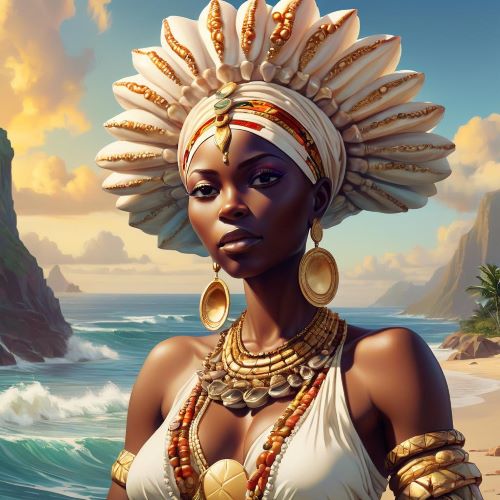
    Modern Day Influence

    The legacy of Tiurakh remains vibrant in contemporary Serer culture, despite the passage of time and the impact of modern religions. His stories are cherished and transmitted through generations, ensuring that his wisdom continues to shape the Serer identity. In rural communities, traditional rituals frequently call upon Tiurakh’s spirit, seeking his blessings for prosperity and protection. Festivals serve as lively expressions of Serer mythology, with Tiurakh taking a prominent role in the celebrations that honor their rich cultural heritage.

    Tiurakh’s influence extends into modern art and literature, where writers and artists find inspiration in his mythology. Elements of his legends are woven into various creative works, helping to preserve and celebrate the Serer people’s heritage. Themes associated with Tiurakh, such as prosperity, morality, and protection, resonate strongly with contemporary values. His stories remind individuals of the importance of ethical conduct and hard work in achieving success and well-being. By engaging with Tiurakh’s narratives, people can cultivate a deeper appreciation for their cultural background and the timeless principles it represents.

    In public ceremonies and community rituals, the name of Tiurakh is often invoked to seek blessings and guidance. His story is integral to discussions about Serer identity and the need to preserve traditions in a rapidly changing world. Community leaders and cultural organizations actively work to revitalize the teachings of Tiurakh, ensuring that younger generations remain connected to their roots. Through this ongoing engagement, Tiurakh emerges as a symbol of resilience and cultural pride, embodying the spirit of a community that values its history and beliefs. His enduring presence serves as a powerful reminder of the strength found within traditions and the importance of passing down these narratives for future generations.

    Related Images

    Frequently Asked Questions

    [edgtf_accordion type=”default” style=”toggle”][edgtf_accordion_tab title=”What is lorem Ipsum?” title_tag=”p”]

    I am text block. Click edit button to change this text. Lorem ipsum dolor sit amet, consectetur adipiscing elit. Ut elit tellus, luctus nec ullamcorper mattis, pulvinar dapibus leo.

    [/edgtf_accordion_tab][/edgtf_accordion][edgtf_accordion type=”default” style=”toggle”][edgtf_accordion_tab title=”What is lorem Ipsum?” title_tag=”p”]

    I am text block. Click edit button to change this text. Lorem ipsum dolor sit amet, consectetur adipiscing elit. Ut elit tellus, luctus nec ullamcorper mattis, pulvinar dapibus leo.

    [/edgtf_accordion_tab][/edgtf_accordion][edgtf_accordion type=”default” style=”toggle”][edgtf_accordion_tab title=”What is lorem Ipsum?” title_tag=”p”]

    I am text block. Click edit button to change this text. Lorem ipsum dolor sit amet, consectetur adipiscing elit. Ut elit tellus, luctus nec ullamcorper mattis, pulvinar dapibus leo.

    [/edgtf_accordion_tab][/edgtf_accordion][edgtf_accordion type=”default” style=”toggle”][edgtf_accordion_tab title=”What is lorem Ipsum?” title_tag=”p”]

    I am text block. Click edit button to change this text. Lorem ipsum dolor sit amet, consectetur adipiscing elit. Ut elit tellus, luctus nec ullamcorper mattis, pulvinar dapibus leo.

    [/edgtf_accordion_tab][/edgtf_accordion][edgtf_accordion type=”default” style=”toggle”][edgtf_accordion_tab title=”What is lorem Ipsum?” title_tag=”p”]

    I am text block. Click edit button to change this text. Lorem ipsum dolor sit amet, consectetur adipiscing elit. Ut elit tellus, luctus nec ullamcorper mattis, pulvinar dapibus leo.

    [/edgtf_accordion_tab][/edgtf_accordion]

    Watch

  • Ewa : Goddess of Beauty

    Ewa : Goddess of Beauty

    Listen

    At a glance

    Description
    Origin Yoruba Mythology
    Classification Gods
    Family Members Obatala (Father)
    Region Nigeria
    Associated With Beauty, Fertility

    Ewa

    Introduction

    Ewa is a revered deity in Yoruba mythology, known as the goddess of beauty and grace. The Yoruba people, who mainly live in Nigeria, Benin, and Togo, have a deeply rooted cultural tradition that features numerous gods and goddesses, each representing different aspects of life and nature. Ewa, with her divine charm and qualities, holds an important place in the spiritual beliefs and rituals of the Yoruba community.

    Physical Traits

    Ewa, the Yoruba goddess of beauty, is often portrayed as the embodiment of elegance and grace. Her flawless, radiant skin is said to glow like the moon or polished ivory, setting her apart as a divine being. Her long, flowing hair, often styled in intricate patterns or adorned with beautiful ornaments, further emphasizes her elevated status among deities and mortals alike.

    Her mesmerizing eyes are believed to draw people in, reflecting her charm and allure, while her vibrant, elegant attire highlights her femininity and grace. Each color and design she wears symbolizes different aspects of her personality and her place in the divine realm. Ewa’s beauty goes beyond her physical appearance, representing purity of spirit and intention, making her a symbol not only of aesthetic beauty but of inner grace as well.
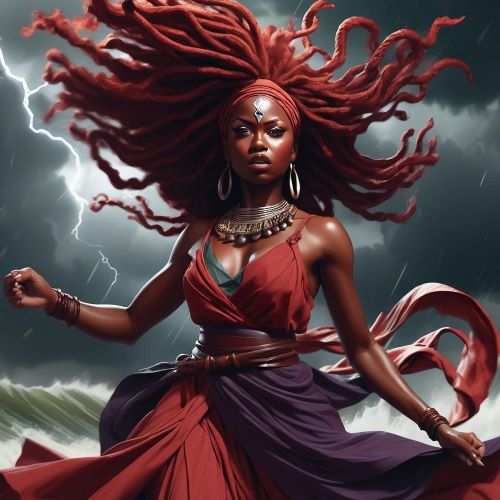
    Family

    Ewa’s place in Yoruba mythology is deeply influenced by her familial connections. She is often associated with Obatala, one of the most prominent Orishas, who in some accounts is portrayed as her father or protector. This highlights the strong family ties that shape the dynamics of the Yoruba pantheon, where relationships between deities are central to their roles and influence.
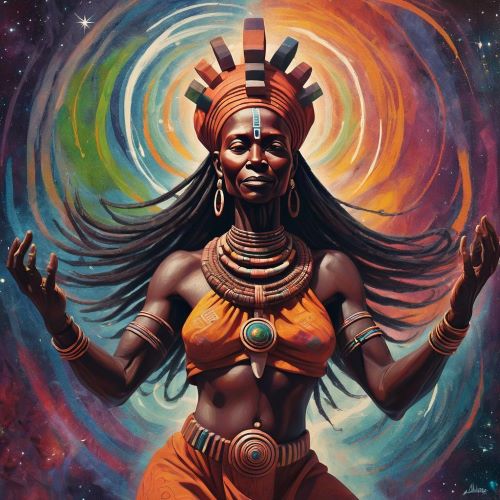
    In some stories, Ewa is also linked to Orunmila, the Orisha of wisdom and divination, suggesting that her beauty is complemented by deep insight and knowledge. These connections emphasize her importance, not only as a symbol of physical beauty but also as a figure of wisdom and foresight.

    Ewa’s influence extends to her interactions with mortals, particularly women, whom she guides in matters of beauty, self-care, and self-awareness. Through these teachings, she passes down wisdom to generations, reinforcing her role as both a maternal and spiritual figure. Her connections to deities like Oshun, the goddess of love and fertility, further underline her significance, intertwining themes of beauty, wisdom, and nurturing in her stories.

    Other names

    Ewa is widely recognized by this name among the Yoruba people, though she may be known by different titles in various regions or dialects. These variations often highlight her role as the goddess of beauty or her connections to specific elements of nature. The name “Ewa” itself signifies beauty and grace, solidifying her identity as the personification of these traits.

    Within Yoruba culture, Ewa is associated with several other names that reflect her diverse character and symbolism. For instance, **Ewa Oba**, which means “beauty of the king,” emphasizes her royal connections and elevated status among the deities and the community. Another title, **Ewa Iya**, translates to “the mother of beauty,” highlighting her nurturing role in guiding women towards self-love and appreciation for their unique qualities. Lastly, **Olorun Iwa**, meaning “the essence of beauty,” signifies her divine representation of beauty that transcends mere physical appearance, embodying virtues like kindness, compassion, and integrity.

    Powers and Abilities

    Ewa, the goddess of beauty in Yoruba mythology, embodies a range of divine powers that reflect her unique status. Her primary ability is to enhance beauty and grace in individuals, uplifting both their physical appearance and inner qualities. Ewa’s influence extends to various aspects of life, including personal relationships and artistic endeavors. She inspires creativity and encourages people to appreciate and cultivate beauty in their surroundings, making her a significant figure in matters of attraction and aesthetic appreciation.

    In addition to her powers related to beauty, Ewa is known for her capacity to bring harmony and balance. She has the ability to ease conflicts and foster understanding among individuals, promoting peace and unity within communities. Ewa’s presence is often sought in rituals associated with love, marriage, and personal well-being, as her blessings are believed to lead to a harmonious and fulfilling life. This aspect of her power reinforces her role as a nurturing and protective figure in the lives of her followers.

    Ewa is also associated with healing, particularly concerning emotional well-being and self-image. Her divine energy can restore vitality and cleanse individuals of negativity, making her an important figure in the quest for confidence and self-acceptance. Furthermore, as a symbol of femininity, Ewa empowers women within Yoruba culture, encouraging them to express their beauty and identity freely. Through her diverse abilities, Ewa serves as a guide and protector, helping individuals embrace beauty in all its forms.

    Modern Day Influence

    Ewa’s presence in contemporary culture is evident across various artistic expressions, including literature, music, art, and fashion. Her imagery and teachings are often incorporated into creative works, celebrating the significance of beauty in both personal and collective narratives. Many artists draw on Ewa’s essence to explore themes of empowerment and identity, highlighting the importance of recognizing cultural roots while acknowledging the enduring influence of traditional Nigerian beliefs in today’s society.

    Ewa’s legacy also plays a vital role in conversations about self-image and cultural heritage, particularly within the Yoruba diaspora. As individuals navigate complex issues of identity and beauty standards shaped by local and global perspectives, Ewa’s teachings resonate deeply, promoting self-acceptance and pride in one’s heritage. Educational settings often utilize her narratives to impart values of self-worth among the youth, fostering a connection to their cultural background.

    Furthermore, Ewa’s influence thrives in rural practices, where traditional rituals invoke her spirit for blessings related to beauty, harmony, and prosperity. Festivals like the Osun-Osogbo Festival celebrate Yoruba mythology, with Ewa prominently featured, emphasizing the community’s rich cultural heritage. In modern art and literature, creators draw inspiration from Ewa’s stories, ensuring her teachings about beauty and harmony remain relevant in a rapidly changing world. Through these diverse representations, Ewa stands as a powerful symbol of empowerment, illustrating how the appreciation of beauty can foster deeper connections to culture and identity.

    Related Images

    Frequently Asked Questions

    [edgtf_accordion type=”default” style=”toggle”][edgtf_accordion_tab title=”What is lorem Ipsum?” title_tag=”p”]

    I am text block. Click edit button to change this text. Lorem ipsum dolor sit amet, consectetur adipiscing elit. Ut elit tellus, luctus nec ullamcorper mattis, pulvinar dapibus leo.

    [/edgtf_accordion_tab][/edgtf_accordion][edgtf_accordion type=”default” style=”toggle”][edgtf_accordion_tab title=”What is lorem Ipsum?” title_tag=”p”]

    I am text block. Click edit button to change this text. Lorem ipsum dolor sit amet, consectetur adipiscing elit. Ut elit tellus, luctus nec ullamcorper mattis, pulvinar dapibus leo.

    [/edgtf_accordion_tab][/edgtf_accordion][edgtf_accordion type=”default” style=”toggle”][edgtf_accordion_tab title=”What is lorem Ipsum?” title_tag=”p”]

    I am text block. Click edit button to change this text. Lorem ipsum dolor sit amet, consectetur adipiscing elit. Ut elit tellus, luctus nec ullamcorper mattis, pulvinar dapibus leo.

    [/edgtf_accordion_tab][/edgtf_accordion][edgtf_accordion type=”default” style=”toggle”][edgtf_accordion_tab title=”What is lorem Ipsum?” title_tag=”p”]

    I am text block. Click edit button to change this text. Lorem ipsum dolor sit amet, consectetur adipiscing elit. Ut elit tellus, luctus nec ullamcorper mattis, pulvinar dapibus leo.

    [/edgtf_accordion_tab][/edgtf_accordion][edgtf_accordion type=”default” style=”toggle”][edgtf_accordion_tab title=”What is lorem Ipsum?” title_tag=”p”]

    I am text block. Click edit button to change this text. Lorem ipsum dolor sit amet, consectetur adipiscing elit. Ut elit tellus, luctus nec ullamcorper mattis, pulvinar dapibus leo.

    [/edgtf_accordion_tab][/edgtf_accordion]

    Watch

  • Njoxonaar : The Protector God

    Njoxonaar : The Protector God

    Listen

    At a glance

    Description
    Origin Wolof Mythology
    Classification Gods
    Family Members N/A
    Region Senegal, The Gambia, and Mauritania
    Associated With Protection

    Njoxonaar

    Introduction

    Njoxonaar is a central figure in Wolof mythology, symbolizing the link between the physical world and the spiritual realm. Known as a protector and guide, he plays a key role in safeguarding the Wolof people and their connection to their land and ancestors. His significance extends to rituals and ceremonies, where he is called upon for blessings, wisdom, and guidance.

    Passed down through generations, Njoxonaar’s stories are rich with moral lessons and cultural values, emphasizing the importance of the Wolof’s relationship with nature, spirituality, and community. He is not just a deity but represents the collective identity of the Wolof, blending the sacred with the everyday. His presence in mythology reflects the deep-rooted beliefs of the Wolof people in Senegal, The Gambia, and Mauritania, where his influence touches many aspects of life, from folklore to traditional practices.

    Often described as a powerful and benevolent spirit, Njoxonaar is believed to have descended from the heavens to protect the Wolof. His immense strength and wisdom have shaped the spiritual and cultural landscape, making him a revered figure whose legacy continues to influence the Wolof people today.

    Physical Traits

    Njoxonaar is often depicted as a towering, commanding figure with both human and supernatural traits. His presence is awe-inspiring, with a regal air that immediately conveys authority and wisdom. One of his most distinct features is his luminous skin, which radiates an ethereal glow, giving him an otherworldly appearance. His piercing eyes are said to see beyond the physical, into both the spiritual and earthly realms.

    Dressed in traditional Wolof attire, Njoxonaar is adorned with intricately patterned fabrics and jewelry that symbolize his divine status. His hair, often described as long and flowing, is sometimes depicted as white as snow or intertwined with natural elements like leaves or flowers, reflecting his deep connection to nature and the spirit world. His appearance, with its vibrant colors and symbolic accessories, embodies his role as a powerful protector and wise guide for the Wolof people.

    Family

    In Wolof mythology, family and relationships play a vital role in shaping the influence and duties of deities. Njoxonaar is often linked to a network of other gods and spirits, with different accounts portraying him in various familial roles. Sometimes, he is considered the son of a prominent deity, which elevates his status and reinforces his authority among the supernatural beings. This connection also places him in a position of leadership and responsibility, symbolizing respect and duty.

    Though Njoxonaar is frequently depicted as a solitary figure, he is occasionally associated with other deities, including being a close ally of Khuram, the supreme deity. His relationships reflect both alliances and rivalries, underscoring the balance between cooperation and conflict in the spiritual realm. These connections highlight the Wolof belief in the interconnectedness of all life, emphasizing Njoxonaar’s role in maintaining harmony between the natural and spiritual worlds. His divine relationships mirror the cultural values of balance, respect, and moral guidance that are central to Wolof society.

    Other names

    In Wolof mythology, Njoxonaar is known by several names that highlight different facets of his character. Each name reflects specific roles or qualities he embodies, often varying by region and local customs within Wolof communities. One name, “Ndiaye,” signifies his connection to destiny and the human experience, often invoked in discussions about fate and divine influence. Another common title is “Khadim,” meaning protector, emphasizing his role as a guardian of both people and land. These names enrich his portrayal, revealing the complexities of his character and the cultural significance he holds among the Wolof.

    Variations of Njoxonaar’s name, such as Njoksonaar, Njoxunaar, and Njoxuna, illustrate the linguistic diversity within Wolof culture. Despite slight differences in pronunciation and spelling, these names refer to the same mythical figure, emphasizing the continuity of his narrative. This variety underscores the rich oral tradition of the Wolof people, where stories adapt and evolve, reflecting the dynamic nature of their cultural heritage.

    Powers and Abilities

    In Wolof mythology, Njoxonaar is highly revered for his diverse powers that allow him to shape both the natural world and the lives of his followers. Among his primary abilities is the gift of bestowing blessings related to fertility, health, and prosperity, which are crucial for the well-being of the community. Njoxonaar is believed to have a unique connection to the natural elements, enabling him to influence weather patterns, agricultural cycles, and plant growth. This control is particularly vital for the predominantly agrarian Wolof communities that depend on favorable conditions for their crops.

    He is also recognized for his healing abilities and protective nature. Many traditional ceremonies are held to invoke his assistance, especially during times of illness or hardship, reflecting his role as a guardian. Furthermore, Njoxonaar serves as a spiritual guide, helping individuals navigate life choices. His presence is especially significant during rites of passage, such as births, marriages, and funerals, highlighting his integral role in both everyday life and sacred events. Njoxonaar’s supernatural powers extend to the spiritual realm, where he acts as a mediator between the physical and spiritual worlds. He can communicate with ancestral spirits and divine beings, seeking their guidance for the benefit of his people.

    Additionally, Njoxonaar possesses the ability of transformation, allowing him to shape-shift into various forms, including animals and elements of nature. This adaptability symbolizes resilience, a trait highly valued in Wolof culture. He is also known for his immense strength and wisdom, enabling him to confront challenges and discern the truth in difficult situations. Ultimately, Njoxonaar is a protector, often called upon to ward off evil spirits, prevent disasters, and promote peace and prosperity within the community.

    Modern Day Influence

    Njoxonaar’s influence is deeply woven into the fabric of modern Wolof culture, shaping identities and practices throughout Senegal and West Africa. His lore manifests in various art forms, literature, and communal rituals, serving as a means for people to reconnect with their roots and shared history. Events celebrating Njoxonaar often feature music, dance, and storytelling, where his tales are passed down to educate younger generations about their heritage and cultural values.

    In contemporary spiritual practices, the invocation of Njoxonaar remains vital. Traditional healers and spiritual leaders call upon him during rituals to seek blessings for individuals and communities, highlighting the ongoing relevance of ancient beliefs in modern life. Njoxonaar’s legacy emphasizes the importance of cultural heritage, demonstrating how traditional values can adapt and thrive in today’s society while continuing to influence communal identity and practices.

    Njoxonaar’s teachings on harmony, balance, and respect for nature resonate with current environmental movements, aligning with modern efforts to promote sustainability. His presence in artistic expressions, such as textiles and jewelry, showcases the deep connection between spirituality and creativity in Wolof culture. By drawing inspiration from his stories, individuals and communities foster a greater appreciation for the natural world, emphasizing the timeless relevance of Wolof mythology and its impact on personal and communal life.

    Related Images

    Frequently Asked Questions

    [edgtf_accordion type=”default” style=”toggle”][edgtf_accordion_tab title=”What is lorem Ipsum?” title_tag=”p”]

    I am text block. Click edit button to change this text. Lorem ipsum dolor sit amet, consectetur adipiscing elit. Ut elit tellus, luctus nec ullamcorper mattis, pulvinar dapibus leo.

    [/edgtf_accordion_tab][/edgtf_accordion][edgtf_accordion type=”default” style=”toggle”][edgtf_accordion_tab title=”What is lorem Ipsum?” title_tag=”p”]

    I am text block. Click edit button to change this text. Lorem ipsum dolor sit amet, consectetur adipiscing elit. Ut elit tellus, luctus nec ullamcorper mattis, pulvinar dapibus leo.

    [/edgtf_accordion_tab][/edgtf_accordion][edgtf_accordion type=”default” style=”toggle”][edgtf_accordion_tab title=”What is lorem Ipsum?” title_tag=”p”]

    I am text block. Click edit button to change this text. Lorem ipsum dolor sit amet, consectetur adipiscing elit. Ut elit tellus, luctus nec ullamcorper mattis, pulvinar dapibus leo.

    [/edgtf_accordion_tab][/edgtf_accordion][edgtf_accordion type=”default” style=”toggle”][edgtf_accordion_tab title=”What is lorem Ipsum?” title_tag=”p”]

    I am text block. Click edit button to change this text. Lorem ipsum dolor sit amet, consectetur adipiscing elit. Ut elit tellus, luctus nec ullamcorper mattis, pulvinar dapibus leo.

    [/edgtf_accordion_tab][/edgtf_accordion][edgtf_accordion type=”default” style=”toggle”][edgtf_accordion_tab title=”What is lorem Ipsum?” title_tag=”p”]

    I am text block. Click edit button to change this text. Lorem ipsum dolor sit amet, consectetur adipiscing elit. Ut elit tellus, luctus nec ullamcorper mattis, pulvinar dapibus leo.

    [/edgtf_accordion_tab][/edgtf_accordion]

    Watch

  • Kolotyolo : The Creator God

    Kolotyolo : The Creator God

    Listen

    At a glance

    Description
    Origin West African Mythology
    Classification Gods
    Family Members N/A
    Region Ivory Coast, Mali, and Burkina Faso
    Associated With Creation

    Kolotyolo

    Introduction

    Kolotyolo is a central figure in Senufo mythology, symbolizing the masculine principle and the creative force behind the cosmos. For the Senufo people, primarily from northern Ivory Coast, Mali, and Burkina Faso, he holds a vital place in their spiritual and cultural traditions. Kolotyolo is closely linked to the creation of the world, humanity, and the natural environment, embodying the Senufo’s values and beliefs about the universe.

    The rich mythology surrounding Kolotyolo has been preserved through generations of stories and oral traditions, highlighting the balance between male and female forces in creation. In these tales, Kolotyolo often interacts with goddesses and female deities, reflecting the Senufo’s emphasis on harmony. His influence is celebrated through various rituals, ceremonies, and artistic expressions, such as masks and sculptures, which honor his place in their culture.

    As a revered symbol of wisdom, protection, and spirituality, Kolotyolo’s presence is deeply woven into the fabric of Senufo life, illustrating their connection to the cosmos and the spiritual world around them. His stories reveal the Senufo’s profound understanding of their environment and their respect for the forces that govern it.

    Physical Traits

    Kolotyolo’s appearance in Senufo mythology is portrayed in various ways, reflecting the range of interpretations within the culture. He is often depicted as a strong and commanding figure, symbolizing the ideal qualities of masculinity that are admired in Senufo society. As a creator and protector, his physical form is meant to evoke power, resilience, and authority.

    In artistic depictions, Kolotyolo is sometimes shown in vibrant, traditional attire adorned with Senufo ornaments, signifying his divine status. These visual elements highlight his significance as a spiritual and cultural figure. His connection to nature is also emphasized, with representations often featuring animals or natural elements like trees and plants. This not only underscores his role as a force of creation but also reflects the Senufo people’s deep respect for the natural world and the importance of maintaining harmony within it.

    Family

    Kolotyolo’s familial connections are central to his role in Senufo mythology. He is often linked to other deities, particularly female counterparts like the goddess Akwaba, who represents the feminine principle. Together, they embody the balance between masculine and feminine forces, symbolizing the dual nature of creation. Their dynamic reflects the Senufo belief in the necessity of harmony and balance in the universe.

    The partnership between Kolotyolo and Akwaba emphasizes collaboration in the creative process, with Kolotyolo representing strength and authority, while Akwaba embodies fertility and nurturing. Their union serves as a model for cooperation and mutual support, not just within the mythological realm but also within the Senufo community, where gender cooperation is vital in both family life and society.

    Beyond his connection with Akwaba, Kolotyolo is also tied to other spirits and ancestors. These relationships extend to the Senufo people, as he is often invoked for protection, guidance, and support in matters related to family, agriculture, and overall well-being. His role in family rituals underscores his significance as a guardian figure, reinforcing the deep importance of family bonds in Senufo culture. As part of a broader divine family that governs aspects of nature such as rain and fertility, Kolotyolo’s connections remind the Senufo people of the interconnectedness of all life and the importance of maintaining balance in the natural world.

    Other names

    Kolotyolo is recognized by a variety of names and titles, each illuminating different facets of his character and significance within Senufo mythology. These names often stem from regional dialects and variations in the Senufo language, showcasing the rich cultural diversity found among Senufo communities.

    One widely used name for Kolotyolo is “Bolo,” which means “father” or “male.” This title underscores his paternal role in creation and positions him as a guiding figure in the lives of the Senufo people. Another title occasionally linked to him is “Yoruba,” which places Kolotyolo within the broader context of West African spirituality. This connection highlights the interplay between cultural traditions, demonstrating how his influence reaches beyond just the Senufo.

    These different names not only reflect the various ways Kolotyolo is venerated but also emphasize the interconnectedness of belief systems among diverse ethnic groups in West Africa. As a significant figure, Kolotyolo transcends individual communities, embodying a symbol of unity within the broader landscape of African mythology. The array of titles used for Kolotyolo further showcases the adaptability of Senufo beliefs and the distinct ways in which various communities celebrate his multifaceted nature, whether by focusing on his protective qualities, wisdom, or spiritual authority.

    Powers and Abilities

    Kolotyolo embodies a range of powers integral to his identity as both a creator and protector in Senufo mythology. As the architect of the universe, he is credited with shaping the land, vegetation, and all living beings. This role resonates deeply with the Senufo people, reflecting their relationship with the environment and their reliance on it for sustenance. His creative force establishes a vital connection between the Senufo and the natural world, reinforcing their understanding of existence and the importance of nurturing their surroundings.

    In addition to his creative abilities, Kolotyolo is revered for his protective nature, often invoked during rituals that seek guidance and blessings. He plays a crucial role in matters related to agriculture, health, and family well-being. The Senufo people believe that calling upon Kolotyolo can bring prosperity and good fortune, highlighting his significance as a benevolent deity. His influence extends to the forces of nature, as many narratives attribute to him the power to control weather patterns and agricultural cycles. This connection to agriculture makes him an essential figure for communities that rely on farming for their livelihoods.

    Kolotyolo also serves as a mediator between the physical and spiritual realms, allowing him to offer guidance and protection to the Senufo people. He is believed to summon rain to nourish crops, maintain fertile soil, and safeguard the land from disasters. Additionally, Kolotyolo’s protective instincts encompass the animal kingdom, where he is seen as a guardian of wildlife and the balance between humans and nature. His abilities also include healing and rejuvenation, drawing on his knowledge of medicinal plants to cure ailments and promote both physical and spiritual renewal. Through these diverse powers, Kolotyolo remains a central figure in Senufo mythology, reflecting the community’s values and beliefs.

    Modern Day Influence

    Kolotyolo’s influence endures in contemporary Senufo society, despite the shifts brought about by urbanization and globalization. Traditional beliefs continue to hold significant value, as evidenced by the ongoing reverence for Kolotyolo. In modern rituals and celebrations, he remains a central figure, featured prominently in artistic expressions like performances, dances, and ceremonies. These events not only preserve cultural heritage but also strengthen community bonds and facilitate the transmission of ancestral knowledge. Artistic representations of Kolotyolo, particularly in masks and sculptures, highlight the seamless blend of tradition and contemporary creativity.

    The legacy of Kolotyolo also inspires discussions about gender roles and societal balance. As the Senufo people confront modern challenges, Kolotyolo’s narrative offers valuable insights into fostering harmony between male and female influences. This mythology encourages conversations about equality and collaboration, underscoring its relevance in today’s context. Moreover, the growing interest in African mythologies has elevated Kolotyolo’s significance in global narratives. Scholars and artists are increasingly recognizing the richness of Senufo mythology, leading to collaborations that showcase Kolotyolo’s enduring impact across various artistic and academic realms.

    Overall, Kolotyolo is a multifaceted figure whose presence is woven deeply into the fabric of Senufo identity. His teachings on balance, harmony, and respect for nature resonate with contemporary environmental movements, aligning with modern efforts to promote sustainability and ecological stewardship. By drawing from Kolotyolo’s wisdom, individuals and communities can cultivate a greater appreciation for the natural world and recognize the interconnectedness of all life. As the Senufo people navigate contemporary life, Kolotyolo remains a guiding force, encouraging future generations to uphold the values and traditions that define their cultural heritage.

    Related Images

    Frequently Asked Questions

    [edgtf_accordion type=”default” style=”toggle”][edgtf_accordion_tab title=”What is lorem Ipsum?” title_tag=”p”]

    I am text block. Click edit button to change this text. Lorem ipsum dolor sit amet, consectetur adipiscing elit. Ut elit tellus, luctus nec ullamcorper mattis, pulvinar dapibus leo.

    [/edgtf_accordion_tab][/edgtf_accordion][edgtf_accordion type=”default” style=”toggle”][edgtf_accordion_tab title=”What is lorem Ipsum?” title_tag=”p”]

    I am text block. Click edit button to change this text. Lorem ipsum dolor sit amet, consectetur adipiscing elit. Ut elit tellus, luctus nec ullamcorper mattis, pulvinar dapibus leo.

    [/edgtf_accordion_tab][/edgtf_accordion][edgtf_accordion type=”default” style=”toggle”][edgtf_accordion_tab title=”What is lorem Ipsum?” title_tag=”p”]

    I am text block. Click edit button to change this text. Lorem ipsum dolor sit amet, consectetur adipiscing elit. Ut elit tellus, luctus nec ullamcorper mattis, pulvinar dapibus leo.

    [/edgtf_accordion_tab][/edgtf_accordion][edgtf_accordion type=”default” style=”toggle”][edgtf_accordion_tab title=”What is lorem Ipsum?” title_tag=”p”]

    I am text block. Click edit button to change this text. Lorem ipsum dolor sit amet, consectetur adipiscing elit. Ut elit tellus, luctus nec ullamcorper mattis, pulvinar dapibus leo.

    [/edgtf_accordion_tab][/edgtf_accordion][edgtf_accordion type=”default” style=”toggle”][edgtf_accordion_tab title=”What is lorem Ipsum?” title_tag=”p”]

    I am text block. Click edit button to change this text. Lorem ipsum dolor sit amet, consectetur adipiscing elit. Ut elit tellus, luctus nec ullamcorper mattis, pulvinar dapibus leo.

    [/edgtf_accordion_tab][/edgtf_accordion]

    Watch

  • Naba Zid Wende : The Supreme God

    Naba Zid Wende : The Supreme God

    Listen

    At a glance

    Description
    Origin Mossi Mythology
    Classification Gods
    Family Members N/A
    Region Burkina Faso
    Associated With Creation, Supreme Powers

    Naba Zid-Wende

    Introduction

    Naba Zid-Wendé, or simply Wende, holds a central place in Mossi mythology from Burkina Faso. As the supreme deity of the Mossi people, who make up one of the largest ethnic groups in the country, Naba Zid-Wendé is regarded as the creator of the universe and the source of life itself. His influence extends deeply into Mossi culture, where he is revered not only as a divine creator but also as the protector and ultimate authority. Through oral traditions and spiritual practices, Naba Zid-Wendé’s significance has persisted, symbolizing the Mossi people’s connection to the divine and guiding their communal and cultural life. His worship, though it has evolved, continues to reflect the centrality of spirituality in Mossi society, where he is invoked for protection, wisdom, and blessings in all aspects of life.

    Physical Traits

    Naba Zid-Wendé is often portrayed as a symbol of strength and vitality, with his image connected to the fertile earth, reflecting his role as creator and sustainer of life. Traditional depictions may include rich adornments that highlight his divine status, reinforcing his importance in cultural narratives. In some traditions, he is envisioned as a dignified, powerful figure residing in the heavens, watching over the world with authority. However, in many interpretations, Naba Zid-Wendé transcends physical form entirely. As a formless, omnipresent being, he embodies the essence of creation, existing in all of nature and life. This portrayal emphasizes his omnipotence and transcendence, making him an all-encompassing force rather than a personified deity.

    Family

    Naba Zid-Wendé’s role in Mossi mythology is deeply intertwined with a broader spiritual hierarchy, highlighting his connection to other deities and forces of nature. Though he is considered the supreme being and creator, he is often linked to powerful female deities that embody fertility and nurturing, essential for maintaining balance in the natural world. These relationships reflect the importance of dual energies—male and female—working together for creation and sustenance. Additionally, Naba Zid-Wendé is regarded as a protector of the royal lineage, further reinforcing his influence over both the spiritual and earthly realms. His divine family includes figures like Wendé, often seen as the mother of all creation, who plays a vital role in fertility and child protection. Other deities, such as Yam, the god of agriculture, and Tenga, the earth deities responsible for the land’s fertility, further illustrate his connection to the cycles of life. Ancestor spirits, known as Keemse, also play a significant role, influencing the living as part of a complex spiritual structure with Naba Zid-Wendé at the top.

    Other names

    Naba Zid-Wendé is recognized by a variety of names that highlight his diverse roles within Mossi culture. One of these is “Naba Wende,” which underscores his connection to prosperity, while “Wende” emphasizes his relationship with life cycles and the natural order. His titles, including “Naba” and “Zid-Wende,” serve as shortened forms of his full name, showcasing his significance in various Mossi communities. Additionally, he is referred to as the “King of the Heavens” and the “Great Creator,” reflecting his supreme status. Other names, such as Wennam, further illustrate different facets of his character. For instance, the title “Lord of the Earth” emphasizes his vital role as the creator and sustainer of the world. These various designations reinforce Naba Zid-Wendé’s central place in Mossi spiritual beliefs and practices, enriching the understanding of his importance.

    Powers and Abilities

    As the supreme deity of the Mossi, Naba Zid-Wendé wields extraordinary powers that are essential for the creation and ongoing maintenance of the universe. Among his notable abilities is the act of creation, where he is credited with forming the Earth, the sun, the moon, and all living beings. According to Mossi mythology, he made the Earth habitable by commanding the Fire to move beneath its surface.

    Naba Zid-Wendé also exercises control over natural forces, enabling him to command the wind, manage temperatures, and create vital water sources, plants, and trees that sustain life. Additionally, he is the source of human souls, granting them purpose and consciousness, which underscores his role in bestowing life’s significance.

    Moreover, he provides guidance and protection to the Mossi people through intermediary spirits like Tenga and Keemse, who ensure the community’s well-being. Naba Zid-Wendé is believed to influence weather, seasons, and land fertility, and he is often invoked for healing, protection, and prosperity. His presence is a source of hope and inspiration, as the Mossi frequently seek his blessings for health, bountiful harvests, and overall well-being, illustrating his profound impact on both spiritual and daily life.

    Modern Day Influence

    Naba Zid-Wendé remains a significant source of inspiration for the Mossi community today, particularly in their cultural practices and commitment to environmental stewardship. His legacy is celebrated through various festivals, rituals, and communal activities that emphasize a deep respect for the Earth and sustainable living. As the Mossi face modern challenges like environmental changes and social shifts, the teachings associated with Naba Zid-Wendé offer valuable guidance, helping them navigate these issues while honoring their rich cultural heritage.

    In contemporary society, Naba Zid-Wendé’s influence is evident in traditional ceremonies and various forms of art and architecture. Although the worship of this supreme deity has evolved, he continues to hold a central place in Mossi spirituality. His teachings have adapted to coexist with the influences of Islam and Christianity in Burkina Faso, as many Mossi blend traditional beliefs with their Abrahamic faiths.

    Additionally, Naba Zid-Wendé’s stories and teachings have permeated literature, art, and educational initiatives. Efforts to preserve Mossi mythology have led to its incorporation into cultural festivals and academic studies. By keeping the essence of Naba Zid-Wendé alive, the Mossi people celebrate their heritage and strengthen their connection to their ancestral roots. Offerings and sacrifices are still made to seek his blessings for fertility, health, and prosperity, illustrating the enduring relevance of this deity in the lives of the Mossi.

    Related Images

    Frequently Asked Questions

    [edgtf_accordion type=”default” style=”toggle”][edgtf_accordion_tab title=”What is lorem Ipsum?” title_tag=”p”]

    I am text block. Click edit button to change this text. Lorem ipsum dolor sit amet, consectetur adipiscing elit. Ut elit tellus, luctus nec ullamcorper mattis, pulvinar dapibus leo.

    [/edgtf_accordion_tab][/edgtf_accordion][edgtf_accordion type=”default” style=”toggle”][edgtf_accordion_tab title=”What is lorem Ipsum?” title_tag=”p”]

    I am text block. Click edit button to change this text. Lorem ipsum dolor sit amet, consectetur adipiscing elit. Ut elit tellus, luctus nec ullamcorper mattis, pulvinar dapibus leo.

    [/edgtf_accordion_tab][/edgtf_accordion][edgtf_accordion type=”default” style=”toggle”][edgtf_accordion_tab title=”What is lorem Ipsum?” title_tag=”p”]

    I am text block. Click edit button to change this text. Lorem ipsum dolor sit amet, consectetur adipiscing elit. Ut elit tellus, luctus nec ullamcorper mattis, pulvinar dapibus leo.

    [/edgtf_accordion_tab][/edgtf_accordion][edgtf_accordion type=”default” style=”toggle”][edgtf_accordion_tab title=”What is lorem Ipsum?” title_tag=”p”]

    I am text block. Click edit button to change this text. Lorem ipsum dolor sit amet, consectetur adipiscing elit. Ut elit tellus, luctus nec ullamcorper mattis, pulvinar dapibus leo.

    [/edgtf_accordion_tab][/edgtf_accordion][edgtf_accordion type=”default” style=”toggle”][edgtf_accordion_tab title=”What is lorem Ipsum?” title_tag=”p”]

    I am text block. Click edit button to change this text. Lorem ipsum dolor sit amet, consectetur adipiscing elit. Ut elit tellus, luctus nec ullamcorper mattis, pulvinar dapibus leo.

    [/edgtf_accordion_tab][/edgtf_accordion]

    Watch

  • Ngewo : The Creator God

    Ngewo : The Creator God

    Listen

    At a glance

    Description
    Origin Mende Mythology
    Classification Gods
    Family Members Lewe (Wife)
    Region Sierra Leone and Liberia.
    Associated With Creation, Supreme Powers

    Ngewo

    Introduction

    Ngewo holds a central place in Mende mythology as the Supreme Being, revered by the Mende people of Sierra Leone and Liberia. He symbolizes the highest divine power, embodying principles of life, creation, and moral order that shape the Mende worldview. As the creator god, Ngewo is credited with bringing the universe and all living beings—humans, animals, and plants—into existence.

    Despite his immense power and benevolence, Ngewo is often seen as a distant figure, having stepped back from the everyday lives of his followers. This unique relationship highlights both his significance and the separation between the divine and the mundane in Mende spirituality. Through Ngewo, the Mende people understand their place in the cosmos, grounding their cultural values and beliefs in his overarching influence.

    Physical Traits

    In Mende mythology, Ngewo is characterized by abstract qualities that highlight his divine essence rather than physical traits. He is viewed as an eternal and omnipresent entity, embodying attributes like omniscience and omnipotence. The absence of specific descriptions reinforces his transcendent nature, suggesting that he surpasses human limitations. Instead of being confined to a physical form, Ngewo represents the vastness of the sky and the universe, symbolizing an all-encompassing force that governs creation and life. This focus on his abstract characteristics underscores his significance as the ultimate creator and spiritual presence in Mende culture.

    Family

    Understanding Ngewo’s family structure is crucial to grasping his significance in Mende cosmology. He is regarded as the father of humanity, establishing a divine lineage that connects all people to him, suggesting a deep sense of guardianship and responsibility over creation. Ngewo’s relationships with other spiritual beings also reveal a hierarchical framework within Mende beliefs, where he holds authority over lesser gods and spirits.

    His partnership with the goddess Leve, often seen as his consort, adds another layer to this dynamic. Leve, who predates Ngewo as a creator deity, is worshipped alongside him, symbolizing a harmonious balance between male and female divine forces. Together, they embody a unified power that is essential for both the creation and sustenance of the world, emphasizing the importance of interconnected relationships within Mende spirituality.

    Other names

    Although Ngewo is the main name for the Supreme Being in Mende culture, he is also known by various titles that emphasize different aspects of his divine role. One of the most prominent epithets is “the Eternal,” highlighting his timeless existence and status as the source of all life. These alternative names reflect the depth of reverence the Mende people have for Ngewo, underscoring his connection to creation and the moral order. Historically, Ngewo has also been associated with other deities, like Leve, which reveals how Mende beliefs have evolved over time. This blending of names and roles reflects the integration of spiritual concepts, forming a unified understanding of the Supreme Being within their cosmology.

    Powers and Abilities

    Ngewo’s powers in Mende mythology go far beyond creation; he is both the architect of the universe and the moral compass for humanity. As the creator, Ngewo shaped the Earth, brought forth life in humans, animals, and plants, and established the laws that govern existence. His role as a moral guide positions him as a judge who rewards virtue and punishes wrongdoing, reflecting the balance between creation and justice in his divine role.

    While Ngewo is often viewed as a distant deity, he remains a benevolent presence. He watches over his creation and, when necessary, intervenes in human affairs. Mende prayers and rituals frequently call upon him for protection, guidance, and blessings. His influence extends to controlling natural forces like rain, which is seen as a gift from him, essential to the Earth’s sustenance.

    Despite his distance, Ngewo’s presence is still felt through the ancestral spirits, known as dyinyinga, who act as intermediaries between him and the Mende people. His reach into human life is also illustrated in the myth of the origin of death. In this tale, Ngewo sent a dog and a toad to deliver messages to humanity—one offering eternal life, the other announcing the inevitability of death. The toad, arriving first, sealed humanity’s fate, showing how even in myth, Ngewo’s influence touches on the most profound aspects of existence.

    Modern Day Influence

    Ngewo’s influence extends beyond ancient rituals, continuing to shape modern Mende society in meaningful ways. As Mende communities navigate contemporary challenges, Ngewo serves as a symbol of cultural identity and resilience. His teachings on moral values, community cohesion, and respect for the natural world remain embedded in Mende traditions, including spiritual practices, education, and communal life. In the face of globalization, Ngewo’s mythology offers a foundation for unity and a reaffirmation of cultural heritage.

    Though direct worship of Ngewo may have waned, his presence is still felt in the veneration of ancestral spirits and the reverence for natural elements, which remain integral to Mende spirituality. His role as a distant but omnipresent force reflects the Mende people’s enduring connection to the natural world and the belief that the divine is woven into their environment.

    Ngewo’s mythological narratives also contribute to the broader landscape of African spiritual traditions. His stories of creation, life, and death resonate not just within Mende culture but also in the wider context of global spiritual themes, emphasizing the interconnectedness of life and the universal human search for meaning.

    Related Images

    Frequently Asked Questions

    [edgtf_accordion type=”default” style=”toggle”][edgtf_accordion_tab title=”What is lorem Ipsum?” title_tag=”p”]

    I am text block. Click edit button to change this text. Lorem ipsum dolor sit amet, consectetur adipiscing elit. Ut elit tellus, luctus nec ullamcorper mattis, pulvinar dapibus leo.

    [/edgtf_accordion_tab][/edgtf_accordion][edgtf_accordion type=”default” style=”toggle”][edgtf_accordion_tab title=”What is lorem Ipsum?” title_tag=”p”]

    I am text block. Click edit button to change this text. Lorem ipsum dolor sit amet, consectetur adipiscing elit. Ut elit tellus, luctus nec ullamcorper mattis, pulvinar dapibus leo.

    [/edgtf_accordion_tab][/edgtf_accordion][edgtf_accordion type=”default” style=”toggle”][edgtf_accordion_tab title=”What is lorem Ipsum?” title_tag=”p”]

    I am text block. Click edit button to change this text. Lorem ipsum dolor sit amet, consectetur adipiscing elit. Ut elit tellus, luctus nec ullamcorper mattis, pulvinar dapibus leo.

    [/edgtf_accordion_tab][/edgtf_accordion][edgtf_accordion type=”default” style=”toggle”][edgtf_accordion_tab title=”What is lorem Ipsum?” title_tag=”p”]

    I am text block. Click edit button to change this text. Lorem ipsum dolor sit amet, consectetur adipiscing elit. Ut elit tellus, luctus nec ullamcorper mattis, pulvinar dapibus leo.

    [/edgtf_accordion_tab][/edgtf_accordion][edgtf_accordion type=”default” style=”toggle”][edgtf_accordion_tab title=”What is lorem Ipsum?” title_tag=”p”]

    I am text block. Click edit button to change this text. Lorem ipsum dolor sit amet, consectetur adipiscing elit. Ut elit tellus, luctus nec ullamcorper mattis, pulvinar dapibus leo.

    [/edgtf_accordion_tab][/edgtf_accordion]

    Watch

  • Thangba Yu : The Creator God

    Thangba Yu : The Creator God

    Listen

    At a glance

    Description
    Origin Lobi Mythology
    Classification Gods
    Family Members N/A
    Region Burkina Faso, Ghana, and Ivory Coast
    Associated With Creation

    Thangba Yu

    Introduction

    In Lobi mythology, Thangba Yu stands as the revered creator god, central to the rich tapestry of stories that detail the origins of the universe and the divine relationship with humanity. Thangba Yu is seen as the ultimate force behind creation, shaping the world’s physical and spiritual dimensions. Although he remains somewhat detached from the day-to-day affairs of human life, his role as the originator is crucial for sustaining the cycle of existence.

    The narratives surrounding Thangba Yu are deeply embedded in the cultural and spiritual identity of the Lobi people, linking them to their ancestral beliefs and traditions. These stories reflect the Lobi’s values and worldviews, reinforcing their cultural heritage. Thangba Yu’s influence permeates their understanding of life and order, even though he does not intervene directly in every aspect of creation.

    Primarily residing in Burkina Faso, Ghana, and Ivory Coast, the Lobi people are known for their intricate spiritual practices and decentralized social structure. Instead of a centralized political system, they rely on a network of spirits and diviners to navigate their spiritual landscape. Within this framework, Thangba Yu holds a pivotal position, symbolizing the foundational source of life and cosmic order that shapes their belief system.

    Physical Traits

    Thangba Yu, as the creator god in Lobi mythology, is often envisioned with striking and awe-inspiring attributes that emphasize his divine status. Descriptions typically portray him as an imposing figure, radiating strength and authority. His appearance might include a glowing or golden complexion, symbolizing the purity and divine essence of creation. This majestic aura underscores his transcendent role as the origin of all existence in the Lobi cosmology.

    While Thangba Yu is frequently associated with celestial elements in various Lobi narratives, he is not usually depicted in a physical form. His presence is represented more abstractly, reflecting the Lobi belief in spirits and deities that operate beyond the visible realm. Instead of concrete imagery, Thangba Yu is understood as an invisible force, aligning with the animistic traditions where interactions with the divine occur through intermediaries, such as the thila, who act as lesser spirits. The ambiguity surrounding his physical depiction reinforces his role as a fundamental, yet intangible, aspect of Lobi spirituality.

    Family

    In Lobi mythology, Thangba Yu’s role as the creator god is deeply intertwined with his connections to other divine figures, though his familial structure differs from traditional mythological families. He may have a divine consort or allies who aid in the process of creation, underscoring the collaborative nature of divine action in establishing life and order. This interconnectedness among spiritual entities emphasizes the importance of their collective effort in shaping the cosmos.

    Unlike many mythological figures who belong to a structured family, Thangba Yu stands alone as the supreme deity, transcending other spirits and gods. The thila, acting as intermediaries between Thangba Yu and humanity, function as his representatives or extensions. These spirits play a crucial role in upholding cosmic order and conveying Thangba Yu’s intentions through diviners known as buor, bridging the gap between the divine and the mortal realms.

    Other names

    Thangba Yu is recognized by several titles that highlight different dimensions of his divine role in Lobi mythology. These names often underscore various aspects of his character, such as his status as a central figure in creation. For example, he might be called “the Great Father” or “the Eternal One,” reflecting his supreme position in the cosmic order. Although he is chiefly known by the name Thangba Yu, he is occasionally referred to as the Creator God. The Lobi language, Lobiri, tends to use a limited set of names for this deity, which underscores Thangba Yu’s singular and paramount role in their spiritual framework.

    Powers and Abilities

    Thangba Yu, as the creator god, wields immense power that shapes the universe and supports life. His abilities encompass bringing order to chaos, crafting elements, sculpting landscapes, and infusing life into all beings. His wisdom, surpassing human understanding, allows him to guide and influence the spiritual well-being of the Lobi people.

    Although Thangba Yu’s influence is profound, he has chosen to remain distant from direct interaction with the human realm. Instead, he relies on the thila, intermediary spirits, to execute his will. These spirits handle various aspects of life, from offering protection and blessings to administering consequences for moral transgressions. This delegation of divine duties reflects the Lobi belief in the necessity of intermediaries and the more indirect form of divine intervention in their spiritual practices.

    Modern Day Influence

    In modern times, Thangba Yu’s legacy remains integral to Lobi culture and identity, continuing to inspire and guide the community. His stories, often shared during gatherings, play a key role in teaching younger generations about resilience and strength in the face of adversity. These narratives help preserve cultural values and connect the Lobi people to their ancestral heritage.

    Thangba Yu’s influence is also evident in Lobi artistic expressions, where his image and legends are depicted through music, dance, and visual arts. Themes of courage, spirituality, and identity are often explored, keeping his presence alive in creative forms. As interest in indigenous cultures expands globally, figures like Thangba Yu are gaining recognition beyond local communities, contributing to the wider understanding of African mythology.

    Efforts to document and revitalize Lobi traditions are being led by cultural and academic institutions, ensuring that the stories of Thangba Yu are preserved for future generations. His ongoing relevance is also seen in the spiritual practices surrounding the creation of bateba, wooden figures representing the thila, which are central to rituals seeking protection and guidance. The Lobi’s continued veneration of Thangba Yu, despite external influences and modernization, serves as a testament to their dedication to maintaining their unique spiritual identity.

    Related Images

    Frequently Asked Questions

    [edgtf_accordion type=”default” style=”toggle”][edgtf_accordion_tab title=”What is lorem Ipsum?” title_tag=”p”]

    I am text block. Click edit button to change this text. Lorem ipsum dolor sit amet, consectetur adipiscing elit. Ut elit tellus, luctus nec ullamcorper mattis, pulvinar dapibus leo.

    [/edgtf_accordion_tab][/edgtf_accordion][edgtf_accordion type=”default” style=”toggle”][edgtf_accordion_tab title=”What is lorem Ipsum?” title_tag=”p”]

    I am text block. Click edit button to change this text. Lorem ipsum dolor sit amet, consectetur adipiscing elit. Ut elit tellus, luctus nec ullamcorper mattis, pulvinar dapibus leo.

    [/edgtf_accordion_tab][/edgtf_accordion][edgtf_accordion type=”default” style=”toggle”][edgtf_accordion_tab title=”What is lorem Ipsum?” title_tag=”p”]

    I am text block. Click edit button to change this text. Lorem ipsum dolor sit amet, consectetur adipiscing elit. Ut elit tellus, luctus nec ullamcorper mattis, pulvinar dapibus leo.

    [/edgtf_accordion_tab][/edgtf_accordion][edgtf_accordion type=”default” style=”toggle”][edgtf_accordion_tab title=”What is lorem Ipsum?” title_tag=”p”]

    I am text block. Click edit button to change this text. Lorem ipsum dolor sit amet, consectetur adipiscing elit. Ut elit tellus, luctus nec ullamcorper mattis, pulvinar dapibus leo.

    [/edgtf_accordion_tab][/edgtf_accordion][edgtf_accordion type=”default” style=”toggle”][edgtf_accordion_tab title=”What is lorem Ipsum?” title_tag=”p”]

    I am text block. Click edit button to change this text. Lorem ipsum dolor sit amet, consectetur adipiscing elit. Ut elit tellus, luctus nec ullamcorper mattis, pulvinar dapibus leo.

    [/edgtf_accordion_tab][/edgtf_accordion]

    Watch

  • Sno-Nysoa : The Creator God

    Sno-Nysoa : The Creator God

    Listen

    At a glance

    Description
    Origin Kru Mythology
    Classification Gods
    Family Members N/A
    Region Liberia
    Associated With Creation

    Sno-Nysoa

    Introduction

    Sno-Nysoa holds a central place in Kru mythology as the revered Creator God of the Kru people of Liberia. Known for his deep bond with his four sons, Sno-Nysoa’s story is filled with themes of creation and the strong familial ties that connect gods and humans. His presence is not just about divine power but about nurturing relationships, embodying the values cherished by the Kru people. Though ancient, the legacy of Sno-Nysoa still echoes through their cultural identity, reminding them of the enduring importance of family, creation, and their connection to the divine.

    Physical Traits

    Details about Sno-Nysoa’s physical appearance are not explicitly outlined in the myths. Rather than focusing on specific traits, his essence is conveyed through his roles and actions. As a celestial figure, he is envisioned more as a symbol of divine presence and authority. Like many deities, Sno-Nysoa’s true significance lies in his spiritual and symbolic qualities, with his appearance taking a backseat to the deeper meanings he embodies in the mythology.

    Family

    In the heart of Sno-Nysoa’s mythology lies a deep sense of family. As a devoted father, he cherishes his four sons, each of whom receives a special gift from him—a necklace of leopard teeth, symbolizing their strength and vitality. This gesture highlights his role as a nurturing and loving figure. The story takes a poignant turn when his sons, sent to Earth on a mission, choose to remain there instead of returning to their heavenly father. This choice sets off a powerful narrative about the bonds of family and the struggle between duty and desire. Sno-Nysoa’s quest to reunite with his sons reveals the depth of his paternal love and the complex emotions of separation, showing that familial connections are significant not only in human lives but also in the divine realm.

    Other names

    Sno-Nysoa is often interchangeably referred to by other names in Kru mythology. The variants include Nysoa and Nyensoa. These names, particularly with and without the prefix “Sno,” reflect the various facets of his identity. With “Sno,” it specifically denotes him as “God the Creator,” emphasizing his role as a powerful, singular deity responsible for the creation and maintenance of the universe. The names function as identifiers that contribute to understanding both his character and the attributes associated with him. In this regard, the names of Sno-Nysoa collectively enrich the mythology and embody the universality of the concept of a singular divine creator.

    Powers and Abilities

    Sno-Nysoa’s extraordinary powers underscore his role as a supreme deity. He wields control over life and death with profound impact, such as when he uses his divine abilities to bring his sons back from Earth, demonstrating his authority over their destinies and his ability to command their return to the heavens.

    Additionally, Sno-Nysoa can remove individuals from the world permanently, reflecting a deep and complex relationship with mortality. This aspect of his power emphasizes his dominion over life, death, and the afterlife. Through these actions, Sno-Nysoa embodies traditional themes found in many mythologies, where deities influence human fate and the divine order, establishing him as a powerful and influential figure within the Kru belief system.

    Modern Day Influence

    The influence of Sno-Nysoa in contemporary culture has not been explicitly documented in the retrieved materials. However, his significance as a foundational mythological figure suggests that his stories and attributes may still permeate aspects of Kru identity and culture. Myths like those of Sno-Nysoa often serve as cultural touchstones, informing present-day beliefs, artistic expressions, storytelling traditions, and social values among the Kru people.

    In a broader sense, the reverence for deities like Sno-Nysoa can influence how contemporary communities in Liberia view leadership, familial bonds, and morals. Although specific modern-day representations of Sno-Nysoa are not outlined in the provided documents, it is feasible that his stories continue to impart lessons and values that shape cultural narratives among the Kru, bridging time from ancient traditions to modern life.

    Related Images

    Frequently Asked Questions

    [edgtf_accordion type=”default” style=”toggle”][edgtf_accordion_tab title=”What is lorem Ipsum?” title_tag=”p”]

    I am text block. Click edit button to change this text. Lorem ipsum dolor sit amet, consectetur adipiscing elit. Ut elit tellus, luctus nec ullamcorper mattis, pulvinar dapibus leo.

    [/edgtf_accordion_tab][/edgtf_accordion][edgtf_accordion type=”default” style=”toggle”][edgtf_accordion_tab title=”What is lorem Ipsum?” title_tag=”p”]

    I am text block. Click edit button to change this text. Lorem ipsum dolor sit amet, consectetur adipiscing elit. Ut elit tellus, luctus nec ullamcorper mattis, pulvinar dapibus leo.

    [/edgtf_accordion_tab][/edgtf_accordion][edgtf_accordion type=”default” style=”toggle”][edgtf_accordion_tab title=”What is lorem Ipsum?” title_tag=”p”]

    I am text block. Click edit button to change this text. Lorem ipsum dolor sit amet, consectetur adipiscing elit. Ut elit tellus, luctus nec ullamcorper mattis, pulvinar dapibus leo.

    [/edgtf_accordion_tab][/edgtf_accordion][edgtf_accordion type=”default” style=”toggle”][edgtf_accordion_tab title=”What is lorem Ipsum?” title_tag=”p”]

    I am text block. Click edit button to change this text. Lorem ipsum dolor sit amet, consectetur adipiscing elit. Ut elit tellus, luctus nec ullamcorper mattis, pulvinar dapibus leo.

    [/edgtf_accordion_tab][/edgtf_accordion][edgtf_accordion type=”default” style=”toggle”][edgtf_accordion_tab title=”What is lorem Ipsum?” title_tag=”p”]

    I am text block. Click edit button to change this text. Lorem ipsum dolor sit amet, consectetur adipiscing elit. Ut elit tellus, luctus nec ullamcorper mattis, pulvinar dapibus leo.

    [/edgtf_accordion_tab][/edgtf_accordion]

    Watch

  • Gu : God of War

    Gu : God of War

    Listen

    At a glance

    Description
    Origin Ewe Mythology, Fon Mythology
    Classification Gods
    Family Members Mawu (Father), Lisa (Mother)
    Region Benin, Togo, Ghana
    Associated With War, Blacksmithing

    Gu

    Introduction

    Gu is a notable deity in the Ewe and Fon mythologies of West Africa, particularly among the peoples of Togo, Ghana, and Benin. This god is revered for embodying knowledge, intelligence, and creativity, reflecting the cultural values of these communities, where wisdom and divine guidance are essential for prosperity and development. Gu’s role extends beyond mythology into daily life, symbolizing strength, protection, and craftsmanship, especially in blacksmithing and war. His influence is evident in traditional beliefs, rituals, and modern folklore, making him a powerful and enigmatic figure in these cultures. This article will delve into Gu’s physical traits, family connections, alternative names, powers, abilities, and his impact on contemporary society.

    Physical Traits

    In Ewe and Fon mythology, Gu is depicted with distinct physical traits that underscore his divine status. He is often envisioned as a tall, imposing figure, exuding both strength and agility, with a slender yet muscular build that commands respect. His skin, while humanoid in texture, is said to emit a celestial glow, highlighting his divine origins. Interpretations of Gu’s appearance vary, with some narratives describing him as a gaunt, skeletal figure with piercing eyes, while others present him as more humanoid, though sometimes with a deformed or monstrous aspect. He is frequently linked to darkness and shadows, often portrayed as a being of the night.

    As a god of war and blacksmithing, Gu is typically shown as a fierce warrior, wielding an iron sword that symbolizes his control over metal and martial skill. His robust physique emphasizes his mastery of blacksmithing, and his facial features, including high cheekbones and a long nose, lend him a regal appearance. Artistic representations often adorn him with intricate ornaments and spiritual markings, such as beads and patterns, that reflect his elevated status and the wisdom he embodies.

    Family

    Gu’s familial ties are central to his significance in Ewe and Fon mythology. He is often depicted as the offspring of Mawu and Lisa, the supreme deities representing the moon and sun, embodying femininity and masculinity, respectively. This dual lineage positions Gu as a mediator between opposing forces, symbolizing balance and harmony within the universe. His connection to both parents highlights his role as a unifying figure, integrating the nurturing aspects of Mawu with the powerful, illuminating qualities of Lisa.

    In some narratives, Gu has several siblings, each governing various aspects of existence and the cosmos. These familial relationships are woven into myths that emphasize collaboration, rivalry, and the collective sharing of knowledge, reflecting the communal values of Ewe and Fon societies. Gu’s interactions with his divine siblings often serve as allegories for human relationships, underscoring the importance of unity and mutual respect.

    Alternatively, some stories portray Gu as a more solitary figure, disconnected from a clear family lineage or direct ties to other deities. In these accounts, his association with the spirit world or the underworld suggests a different type of connection to supernatural entities, emphasizing his role as a bridge between the mortal and divine realms. Regardless of the version, Gu’s family connections underscore his critical position in the pantheon, highlighting his balanced nature and integral role in the cosmology of the Ewe and Fon peoples.

    Other names

    Gu is known by several names across the Ewe and Fon communities, each highlighting different facets of his nature and responsibilities. One of his prominent names is “Gu-Dzo,” meaning “the god of knowledge,” which underscores his role as a beacon of wisdom and enlightenment, guiding people towards understanding and intellectual growth. Another name, “Gu-Agbo,” translates to “the god of creativity,” emphasizing his influence as a creative force that inspires innovation and new ideas. These names reflect the varied aspects of Gu’s character, showcasing his importance as a protector, wise guide, and creative spirit.

    In broader West African traditions, Gu’s influence extends beyond the Ewe and Fon cultures. For instance, in the Yoruba religion, he is known as Ogún, the god of iron and war. This title reflects the interconnected cultural heritage of the region and highlights his significance in different spiritual practices. The array of names attributed to Gu across these cultures illustrates his multifaceted nature and the diverse ways in which he is revered and worshipped.

    Powers and Abilities

    Gu is revered for his exceptional powers and abilities, which embody the core values of the Ewe and Fon peoples. One of his most prominent abilities is to impart knowledge and wisdom, often invoked in prayers and rituals by those seeking clarity and guidance during challenging times. His insights are believed to surpass human comprehension, leading to harmonious living and prosperity.

    Gu is also celebrated for his creative prowess, inspiring arts, crafts, and innovation within his communities. He is closely linked to cultural expressions like storytelling and music, and many artists and musicians seek his inspiration before beginning their work, trusting in his divine influence to enhance their creativity and skills.

    Beyond his role as a source of wisdom and creativity, Gu is also regarded as a protector and guide. He is believed to have the power to ward off evil spirits and misfortune, safeguarding his followers from harm. This protective aspect underscores the importance of divine intervention in ensuring the well-being of communities.

    In some traditions, Gu is associated with darker, more fearsome powers. He is believed to have control over misfortune, capable of bringing bad luck, illness, or disaster to those who offend him. Gu is also said to wield control over the weather, with the ability to summon storms or cause droughts. Some narratives suggest he can possess individuals, influencing their behavior in harmful ways, or communicate with the dead, acting as a bridge between the living and the deceased.

    Gu’s powers are further amplified by his mastery of blacksmithing and craftsmanship. His unparalleled skill in working with metal and fire allows him to forge weapons and tools of extraordinary quality, symbolizing both creation and destruction. As a god of war, he is a formidable warrior, embodying immense strength and combat prowess. His association with the sun enhances his divine status, representing his role as a guardian and illuminator of the universe.

    Modern Day Influence

    In contemporary society, Gu maintains a significant presence among the Ewe and Fon peoples, influencing various aspects of daily life and cultural practices. His teachings and symbolic meanings are integrated into rituals and ceremonies, especially during festivals where storytelling traditions celebrate Gu’s wisdom, creativity, and respect. This integration helps preserve the cultural heritage and values associated with Gu, reinforcing his role in guiding and inspiring the community.

    Gu’s influence extends into the arts, literature, and performance, where he inspires a range of creative expressions. Artists often draw on his stories to create works that both celebrate and educate about their cultural heritage. Additionally, Gu’s narratives are studied in academic discourse, highlighting their historical and sociological importance and contributing to a broader understanding of West African mythology.

    Recent years have seen a revival of traditional beliefs among younger generations, driven by a desire to reconnect with cultural roots. This resurgence includes educational programs and workshops that focus on mythologies like Gu’s, ensuring that his teachings continue to be relevant. Gu’s legacy also persists in modern cultural practices and artistic expressions, reflecting his enduring influence and the ongoing relevance of his symbolic power in today’s world.

    Related Images

    Frequently Asked Questions

    [edgtf_accordion type=”default” style=”toggle”][edgtf_accordion_tab title=”What is lorem Ipsum?” title_tag=”p”]

    I am text block. Click edit button to change this text. Lorem ipsum dolor sit amet, consectetur adipiscing elit. Ut elit tellus, luctus nec ullamcorper mattis, pulvinar dapibus leo.

    [/edgtf_accordion_tab][/edgtf_accordion][edgtf_accordion type=”default” style=”toggle”][edgtf_accordion_tab title=”What is lorem Ipsum?” title_tag=”p”]

    I am text block. Click edit button to change this text. Lorem ipsum dolor sit amet, consectetur adipiscing elit. Ut elit tellus, luctus nec ullamcorper mattis, pulvinar dapibus leo.

    [/edgtf_accordion_tab][/edgtf_accordion][edgtf_accordion type=”default” style=”toggle”][edgtf_accordion_tab title=”What is lorem Ipsum?” title_tag=”p”]

    I am text block. Click edit button to change this text. Lorem ipsum dolor sit amet, consectetur adipiscing elit. Ut elit tellus, luctus nec ullamcorper mattis, pulvinar dapibus leo.

    [/edgtf_accordion_tab][/edgtf_accordion][edgtf_accordion type=”default” style=”toggle”][edgtf_accordion_tab title=”What is lorem Ipsum?” title_tag=”p”]

    I am text block. Click edit button to change this text. Lorem ipsum dolor sit amet, consectetur adipiscing elit. Ut elit tellus, luctus nec ullamcorper mattis, pulvinar dapibus leo.

    [/edgtf_accordion_tab][/edgtf_accordion][edgtf_accordion type=”default” style=”toggle”][edgtf_accordion_tab title=”What is lorem Ipsum?” title_tag=”p”]

    I am text block. Click edit button to change this text. Lorem ipsum dolor sit amet, consectetur adipiscing elit. Ut elit tellus, luctus nec ullamcorper mattis, pulvinar dapibus leo.

    [/edgtf_accordion_tab][/edgtf_accordion]

    Watch

  • Doondari : The Creator God

    Doondari : The Creator God

    Listen

    At a glance

    Description
    Origin Fulani Mythology
    Classification Gods
    Family Members N/A
    Region Nigeria, Mali, Guinea, Senegal, and Niger
    Associated With Creation

    Doondari

    Introduction

    In African mythologies, Doondari emerges as a central figure in the Fulani creation story. Revered as the supreme being, she is the architect of the universe and the progenitor of humanity. Doondari holds a prominent position within Fulani mythology, a cultural system abundant with symbols and deities that reflect the Fulani people’s deep connection to nature and spirituality. The Fulani, who primarily reside in West and Central Africa, have a deeply rooted tradition of oral storytelling and cultural practices that include reverence for various deities. Doondari embodies themes of nature, fertility, and divine protection. Also known as “the fearless one,” she is credited with creating and shaping the world, with her story encompassing themes of creation, transformation, and overcoming challenges.

    Physical Traits

    Descriptions of Doondari’s physical form are scarce in traditional Fulani oral narratives, where the focus is often on the deity’s immense power and creative abilities rather than appearance. Some interpretations portray Doondari as a being of immense stature with celestial qualities, as her physical form is often considered beyond human comprehension. Symbols like the sky, sun, and moon are more frequently used to represent her divine essence.

    While depictions of Doondari’s appearance vary, she is often seen as a wise and imposing figure, with some accounts describing her as having radiant eyes that hold both knowledge and mystery. Her presence commands respect and awe. Unlike many deities depicted with human or anthropomorphic forms, Doondari’s traits are often described through symbolic and abstract representations rather than specific physical characteristics.

    Traditional Fulani art and sculpture may portray Doondari in ways that emphasize her connection to natural elements, such as representations involving animals, natural symbols, or abstract patterns that signify her influence over the natural world. This connection is symbolized through various natural elements rather than a specific physical form. The deity’s influence on agriculture and the environment often leads to depictions involving the fertility of the land or the cycles of nature, reflecting the importance of these aspects in Fulani life.

    Family

    The family structure of Doondari in Fulani mythology is not extensively documented compared to deities in other mythological systems. Instead, she is integrated into a broader network of spiritual entities and ancestors that form the Fulani spiritual cosmology. In Fulani belief, the divine realm is interconnected with the natural and ancestral worlds. Doondari is often linked with other nature deities or spirits that govern various aspects of the environment and human existence, such as fertility and agriculture. These connections underscore a shared responsibility among deities and spirits to maintain balance and harmony in the world.

    The concept of family structure is not explicitly attributed to Doondari in traditional Fulani mythology. As the ultimate creator, Doondari stands alone as the source of all existence. However, later interpretations and syncretism with other belief systems introduced the notion of divine companions or consorts. These figures, often associated with fertility and nature, are seen as supporting her creative endeavors. It’s essential to note that these later additions do not negate the original concept of Doondari as a solitary, omnipotent creator.

    Doondari’s lineage is shrouded in myth and legend. She is considered a primordial deity, existing before the world took its current form. Her origins are intertwined with the very fabric of creation, making her both a creator and a part of creation itself.

    Other names

    Like many deities in oral traditions, Doondari might be referred to by different names across various Fulani communities and over time. While the core essence remains the same, variations in nomenclature can arise due to linguistic differences, regional customs, or the influence of other belief systems. Specific information regarding alternate names for Doondari is limited in available scholarly resources. However, she is also referred to as “Gueno,” which translates to “the eternal one,” emphasizing her timeless nature and omnipotence.

    The name “Doondari” is used across different Fulani-speaking regions, but variations in names and titles can reflect regional dialects and specific local traditions. In some communities, she might be known by names that highlight particular aspects of her role or characteristics, such as associations with rain, fertility, or agricultural prosperity. These names are integral to understanding the full scope of Doondari’s influence and role in Fulani spirituality, reflecting the complexity of Fulani cosmology.

    Powers and Abilities

    Doondari is credited with creating the universe, demonstrating immense cosmic power. As the supreme being, she has unparalleled abilities to shape reality, control natural forces, and bestow life. The creation story emphasizes her skill in transforming simple elements into complex beings and structures, as well as instilling consciousness and intelligence in humans, underscoring her divine authority.

    Primarily associated with nature and agriculture, Doondari influences rainfall, fertility, and crop growth—key aspects of the Fulani pastoral and agricultural lifestyle. In Fulani tradition, she is invoked for blessings related to agricultural success and environmental balance, as her powers are essential for maintaining the natural cycles necessary for farming and herding. Additionally, Doondari is believed to protect the community from natural disasters and environmental hardships.

    Modern Day Influence

    In contemporary Fulani society, Doondari’s influence endures through various cultural practices and celebrations. Despite modern influences and lifestyle changes, reverence for Doondari persists in rituals and festivals that honor natural cycles and agricultural milestones. Traditional ceremonies still seek blessings for good harvests and environmental stability, involving offerings and prayers that underscore the importance of a harmonious relationship with nature.

    Doondari’s legacy is evident in how traditional stories and cultural values are passed down through oral traditions, art, and community practices. As the Fulani people adapt to contemporary challenges, the spiritual teachings associated with Doondari provide a foundation for cultural identity and environmental stewardship. Although traditional Fulani religion has diminished with the spread of Islam, elements of Doondari’s mythology continue to influence Islamic practices, with the concept of a supreme creator resonating with Islamic monotheism.

    Certain Fulani cultural practices, such as naming ceremonies or life-cycle rituals, still reflect traditional beliefs associated with Doondari. Additionally, Doondari’s role as a creator and shaper of human destiny has inspired contemporary Fulani artists and thinkers, enriching literature, music, and visual arts. This exploration of creation, power, and morality contributes to the preservation of Fulani cultural heritage. Despite the evolution of Fulani mythology, Doondari’s legacy remains a source of inspiration, reminding the community of their connection with the cosmos and reinforcing values of resilience and respect for the natural world.

    Related Images

    Frequently Asked Questions

    [edgtf_accordion type=”default” style=”toggle”][edgtf_accordion_tab title=”What is lorem Ipsum?” title_tag=”p”]

    I am text block. Click edit button to change this text. Lorem ipsum dolor sit amet, consectetur adipiscing elit. Ut elit tellus, luctus nec ullamcorper mattis, pulvinar dapibus leo.

    [/edgtf_accordion_tab][/edgtf_accordion][edgtf_accordion type=”default” style=”toggle”][edgtf_accordion_tab title=”What is lorem Ipsum?” title_tag=”p”]

    I am text block. Click edit button to change this text. Lorem ipsum dolor sit amet, consectetur adipiscing elit. Ut elit tellus, luctus nec ullamcorper mattis, pulvinar dapibus leo.

    [/edgtf_accordion_tab][/edgtf_accordion][edgtf_accordion type=”default” style=”toggle”][edgtf_accordion_tab title=”What is lorem Ipsum?” title_tag=”p”]

    I am text block. Click edit button to change this text. Lorem ipsum dolor sit amet, consectetur adipiscing elit. Ut elit tellus, luctus nec ullamcorper mattis, pulvinar dapibus leo.

    [/edgtf_accordion_tab][/edgtf_accordion][edgtf_accordion type=”default” style=”toggle”][edgtf_accordion_tab title=”What is lorem Ipsum?” title_tag=”p”]

    I am text block. Click edit button to change this text. Lorem ipsum dolor sit amet, consectetur adipiscing elit. Ut elit tellus, luctus nec ullamcorper mattis, pulvinar dapibus leo.

    [/edgtf_accordion_tab][/edgtf_accordion][edgtf_accordion type=”default” style=”toggle”][edgtf_accordion_tab title=”What is lorem Ipsum?” title_tag=”p”]

    I am text block. Click edit button to change this text. Lorem ipsum dolor sit amet, consectetur adipiscing elit. Ut elit tellus, luctus nec ullamcorper mattis, pulvinar dapibus leo.

    [/edgtf_accordion_tab][/edgtf_accordion]

    Watch

  • Nyankopon : The Supreme God

    Nyankopon : The Supreme God

    Listen

    At a glance

    Description
    Origin Ashanti Mythology
    Classification Gods
    Family Members Asase Yaa (Wife), Bia, Tabo (Children)
    Region Ghana
    Associated With Life Giving, Creation, Supreme Powers

    Nyankopon

    Introduction

    Nyankopon, also known as Nyame, is the paramount god in Ashanti mythology and is revered as the creator of the universe. The Ashanti people, primarily residing in modern-day Ghana, regard Nyankopon as the source of all life and the ultimate authority over the natural world. His influence permeates every aspect of Ashanti society, from religious practices to social customs. The Ashanti have a rich oral tradition, and stories about Nyankopon have been passed down through generations, often emphasizing his omnipotence, wisdom, and benevolence.

    Known as Onyankopon or Odomankoma, Nyankopon embodies the essence of divine power and creation. He is seen as a god who maintains balance and harmony in the world, ensuring the prosperity and well-being of his people. Often translated as “the one living in the sky,” Nyankopon plays a vital role in the spiritual and cultural life of the Ashanti, representing the supreme being and sustainer of the universe. Let’s explore the various facets of this celestial deity.

    Physical Traits

    Nyankopon, unlike many deities in various mythologies, does not possess a fixed physical form. As a supreme being, he transcends human limitations and is often described as an invisible force that permeates the universe, highlighting his omnipresence and omnipotence. In some artistic representations and oral narratives, Nyankopon is depicted as a majestic figure, radiating light and power, often associated with the sky, reinforcing his role as the creator and overseer of the cosmos.

    Interestingly, while Nyankopon is the supreme being, the Ashanti do not typically ascribe physical attributes to him. Unlike other pantheons where gods and goddesses have distinct forms, Nyankopon’s essence transcends physicality, emphasizing the concept of an omnipotent and omnipresent force beyond human comprehension. This lack of physical description highlights the deity’s spiritual nature and inaccessibility to human senses, underscoring his divine mystery.

    Family

    In the Ashanti belief system, Nyankopon is part of a broader pantheon of deities. Although he is the highest deity, he is not alone in the divine hierarchy. He is often paired with Asase Yaa, the earth goddess, who is seen as his counterpart or spouse. Asase Yaa oversees fertility, agriculture, and the sustenance of life, complementing Nyankopon’s role as the creator. This divine partnership symbolizes the balance between the sky and the earth, reflecting the interconnectedness of the spiritual and physical realms.

    Nyankopon is also connected to lesser deities and spirits known as Abosom, who act as intermediaries between him and humanity. These deities are associated with natural elements like rivers, forests, and mountains and play crucial roles in maintaining cosmic balance. While Asase Yaa is an important figure, she is not considered equal to Nyankopon in power and status. Together, they embody the harmonious relationship between heaven and earth, highlighting the significance of balance in Ashanti cosmology.

    Other names

    Nyankopon is a central deity in Ashanti mythology, known by several names that reflect his multifaceted nature and profound significance. One of the most common alternative names is Nyame, derived from the Akan word “nyansa,” meaning wisdom. This name highlights Nyankopon’s attributes of knowledge and understanding. Another prominent name is Onyame Kwame, which signifies his eternal and unchanging nature. This name combines “O” (the) with “Kwame” (Saturday-born), underscoring Nyankopon’s transcendence beyond time and space.

    In addition to Nyame and Onyame Kwame, Nyankopon is also called Odomankoma, meaning “the great creator,” emphasizing his role in the creation of the universe. Another significant name is Mebewura, translating to “king of kings,” reflecting his supreme authority and sovereignty. The name Ampa, meaning “father,” further highlights Nyankopon’s paternal role towards humanity. These various names illustrate the profound reverence the Ashanti people hold for him and capture different aspects of his divine essence.

    Nyankopon’s other epithets include Borebore, meaning “The Architect,” which signifies his role in designing existence, and Ananse Kokuroko, “The Great Designer” or “Spider,” linking him to the spider deity Ananse. Each name and title offers insight into the deity’s attributes and his integral role in Ashanti cosmology. Together, these names enrich the understanding of Nyankopon’s divine nature and his complex relationship with the Ashanti people.

    Powers and Abilities

    Nyankopon, the supreme deity in Ashanti mythology, embodies infinite power and knowledge. He is credited with the creation of the world, including humans, animals, plants, and celestial bodies. As the ultimate source of life, death, and destiny, Nyankopon’s influence extends across all aspects of existence. His role encompasses not only the genesis of the universe but also the maintenance of cosmic order and balance, ensuring that natural and spiritual cycles remain uninterrupted.

    While Nyankopon holds the highest position in the pantheon, the Ashanti belief system also includes lesser deities known as Abosom. These spirits oversee specific aspects of life and nature but are subordinate to Nyankopon and derive their power from him. This hierarchical structure reflects the deity’s supreme authority and his role in regulating the universe.

    In addition to his creative and regulatory roles, Nyankopon is revered for his wisdom and knowledge. He is considered the source of all understanding, guiding his followers in their spiritual and moral practices. Nyankopon’s association with the sun symbolizes vitality and illumination, further emphasizing his role as the life-giving force and cosmic regulator. His omniscience and omnipotence ensure that he shapes reality and imparts life to all living beings.

    Modern Day Influence

    Nyankopon’s influence on contemporary Ashanti society is both significant and diverse. The belief in this supreme creator provides a foundational framework for understanding life’s mysteries and challenges, deeply impacting the worldview of many Ashanti people. Traditional rituals and ceremonies, such as the Akwasidae festival, play a vital role in honoring Nyankopon and seeking his blessings. Modern Ashanti intellectuals and religious leaders have also engaged with Nyankopon’s concept, often integrating traditional beliefs with contemporary perspectives, including interpretations within monotheistic frameworks.

    Despite the growing presence of Christianity and Islam in Ghana, traditional practices centered on Nyankopon remain central to Ashanti culture. Rituals and festivals, such as the Adae Kese and Akwasidae, continue to celebrate Nyankopon’s legacy, reinforcing cultural identity and unity within the community. These events highlight the enduring relevance of Nyankopon in everyday life and cultural heritage.

    Nyankopon’s impact extends beyond the Ashanti region, influencing broader African spirituality and the African diaspora. His role as a supreme creator god resonates with similar figures in other African mythologies, reflecting a shared spiritual heritage across the continent. Nyankopon’s enduring presence underscores the connection between traditional beliefs and modern spiritual practices, bridging ancient traditions with contemporary cultural expressions.

    Related Images

    Buy Me A Coffee

    Latest Blog

    Latest Urban Legends

    Meet the Experts

    PRINT PAGE
    [pmb_print_buttons]
    [pmb_print_buttons]
    Buy Me A Coffee

    Latest Character

    Your next travel destination

    [pmb_print_buttons]
    Buy Me A Coffee

    Latest Character

    Your next travel destination

    Frequently Asked Questions

    [edgtf_accordion type=”default” style=”toggle”][edgtf_accordion_tab title=”What is lorem Ipsum?” title_tag=”p”]

    I am text block. Click edit button to change this text. Lorem ipsum dolor sit amet, consectetur adipiscing elit. Ut elit tellus, luctus nec ullamcorper mattis, pulvinar dapibus leo.

    [/edgtf_accordion_tab][/edgtf_accordion][edgtf_accordion type=”default” style=”toggle”][edgtf_accordion_tab title=”What is lorem Ipsum?” title_tag=”p”]

    I am text block. Click edit button to change this text. Lorem ipsum dolor sit amet, consectetur adipiscing elit. Ut elit tellus, luctus nec ullamcorper mattis, pulvinar dapibus leo.

    [/edgtf_accordion_tab][/edgtf_accordion][edgtf_accordion type=”default” style=”toggle”][edgtf_accordion_tab title=”What is lorem Ipsum?” title_tag=”p”]

    I am text block. Click edit button to change this text. Lorem ipsum dolor sit amet, consectetur adipiscing elit. Ut elit tellus, luctus nec ullamcorper mattis, pulvinar dapibus leo.

    [/edgtf_accordion_tab][/edgtf_accordion][edgtf_accordion type=”default” style=”toggle”][edgtf_accordion_tab title=”What is lorem Ipsum?” title_tag=”p”]

    I am text block. Click edit button to change this text. Lorem ipsum dolor sit amet, consectetur adipiscing elit. Ut elit tellus, luctus nec ullamcorper mattis, pulvinar dapibus leo.

    [/edgtf_accordion_tab][/edgtf_accordion][edgtf_accordion type=”default” style=”toggle”][edgtf_accordion_tab title=”What is lorem Ipsum?” title_tag=”p”]

    I am text block. Click edit button to change this text. Lorem ipsum dolor sit amet, consectetur adipiscing elit. Ut elit tellus, luctus nec ullamcorper mattis, pulvinar dapibus leo.

    [/edgtf_accordion_tab][/edgtf_accordion]

    Watch

  • Bemba : The Supreme God

    Bemba : The Supreme God

    Listen

    At a glance

    Description
    Origin Bambara Mythology
    Classification Gods
    Family Members N/A
    Region Mali
    Associated With Creation, Supreme Powers

    Bemba

    Introduction

    Bemba is a central deity in Bambara mythology, playing a pivotal role in the spiritual life of the Bambara people of Mali. As a member of the broader Mande ethnic group, the Bambara’s mythology features a diverse pantheon that reflects various elements of nature and human experience. Bemba is especially significant, embodying the supreme creator and architect of the universe in this mythological framework.

    Though not directly worshipped, Bemba’s influence is subtly integrated into daily rituals and prayers. Known also as Ngala, Bemba is represented as a quaternity—an entity formed by the union of four distinct beings: Pemba, Nyale, Faro, and Ndomadyiri. Bemba’s nature is hermaphroditic, with male aspects represented by Pemba and Ndomadyiri, and female aspects by Nyale and Faro. This multifaceted representation highlights Bemba’s encompassing presence in the Bambara’s cosmological beliefs and cultural practices.

    Physical Traits

    In Bambara mythology, Bemba represents a divine force associated with fertility, agriculture, and the natural cycles of the earth. His physical depictions emphasize a robust and majestic presence, often featuring regal elements such as flowing beards or elaborate headdresses made from natural materials like leaves or animal horns. This imagery reflects his deep connection to the environment and his role as a mediator between the earthly and divine realms. Bemba’s form is fluid, symbolizing the ever-changing forces of nature he governs, and he is visualized in various abstract ways, such as radiant light, expansive sky, or formless energy.

    Despite his central role in Bambara cosmology, Bemba is not directly worshipped. After creating the universe, he withdrew to the heavens, remaining omnipresent but removed from the physical world. Bemba’s essence is divided among four entities: Pemba, the god of skies and air; Nyale, the goddess of fire and chaos; Faro, associated with water; and Ndomadyiri, who plays a mysterious role in the divine composition. Each entity contributes to the overall essence of Bemba, highlighting the deity’s complex and multifaceted nature.

    Family

    In Bambara mythology, Bemba, as the sole creator, transcends traditional familial structures. Instead of having a biological family, Bemba is linked to the creation of the first beings, who, while not his offspring, are considered spiritual progenitors within his cosmic family. This association establishes a divine lineage that underscores his significant role in the spiritual and cosmological order of the Bambara people.

    Bemba is integral to a divine triad or broader pantheon, where he interacts with other deities representing various elements of nature and human experience. His connections to these deities—Mousso Koroni Koundyé (Nyale), Faro, and Ndomadyiri—highlight themes of harmony and balance, reflecting the interconnectedness of life and nature. These divine relationships play a crucial role in rituals and ceremonies, reinforcing cosmic order and ensuring the community’s prosperity through the interplay of elemental forces.

    Other names

    In Bambara mythology, Bemba is known by several names, including Ngala and Pemba, each reflecting different aspects of the deity’s nature. The name “Ngala” underscores the collective attributes of this supreme being, while “Pemba” specifically denotes one of its aspects. These variations illustrate the rich oral traditions and the multifaceted nature of Bemba, as different names highlight different facets of his divine role.

    Additionally, Bemba may be called “Bembaya” or “Bembala” in various contexts, each name carrying unique connotations based on local traditions and practices. These names are more than mere synonyms; they embody specific meanings and attributes that emphasize different elements of Bemba’s character and influence. The range of names reflects the diverse perceptions and honorings of Bemba across different regions and communities within the Bambara culture.

    Powers and Abilities

    As the supreme creator, Bemba is credited with shaping the cosmos from a primordial void, establishing the earth, sky, and all living beings. His role extends beyond creation to include the ongoing sustenance and regulation of the universe. Bemba is associated with vital natural phenomena such as rain, sunlight, and fertility, which underscore his influence over essential aspects of life and agriculture in Bambara culture.

    Bemba’s power is not exercised randomly; rather, it maintains a balance between order and chaos. This balance is exemplified in the concept of nyama, a force embodying disorder and unpredictability. While Bemba represents ultimate order, the interplay with nyama influences the world’s dynamics and human experiences. His divine authority encompasses the fertility of the land and control over natural forces like rain and growth, which are crucial for the Bambara’s agricultural prosperity. Rituals and ceremonies performed to seek his favor emphasize his role in ensuring the well-being of the community and protection from natural calamities.

    Modern Day Influence

    In contemporary Bambara life, Bemba’s influence extends beyond traditional religious practices into various modern realms. While traditional rituals and festivals honoring Bemba remain vital to cultural and spiritual practices, there is a notable integration of these traditions with modern elements. Cultural festivals often merge traditional rites with contemporary expressions of faith and identity, demonstrating how ancient beliefs adapt to the present day.

    Bemba’s presence is also evident in art, literature, and popular culture, where his stories and attributes are portrayed through paintings, sculptures, and performances. These artistic representations preserve and celebrate Bambara heritage while introducing Bemba to wider audiences. Additionally, Bemba’s association with fertility and nature resonates with current environmental sustainability efforts. His teachings are being reinterpreted to address modern ecological concerns and promote a balanced relationship with the environment. Despite the introduction of new religious perspectives like Islam and Christianity, which have influenced contemporary beliefs, Bemba’s legacy endures. The concept of a supreme creator remains central to Bambara spirituality, illustrating a resilient syncretism that integrates traditional beliefs with new faiths.

    Related Images

    Frequently Asked Questions

    [edgtf_accordion type=”default” style=”toggle”][edgtf_accordion_tab title=”What is lorem Ipsum?” title_tag=”p”]

    I am text block. Click edit button to change this text. Lorem ipsum dolor sit amet, consectetur adipiscing elit. Ut elit tellus, luctus nec ullamcorper mattis, pulvinar dapibus leo.

    [/edgtf_accordion_tab][/edgtf_accordion][edgtf_accordion type=”default” style=”toggle”][edgtf_accordion_tab title=”What is lorem Ipsum?” title_tag=”p”]

    I am text block. Click edit button to change this text. Lorem ipsum dolor sit amet, consectetur adipiscing elit. Ut elit tellus, luctus nec ullamcorper mattis, pulvinar dapibus leo.

    [/edgtf_accordion_tab][/edgtf_accordion][edgtf_accordion type=”default” style=”toggle”][edgtf_accordion_tab title=”What is lorem Ipsum?” title_tag=”p”]

    I am text block. Click edit button to change this text. Lorem ipsum dolor sit amet, consectetur adipiscing elit. Ut elit tellus, luctus nec ullamcorper mattis, pulvinar dapibus leo.

    [/edgtf_accordion_tab][/edgtf_accordion][edgtf_accordion type=”default” style=”toggle”][edgtf_accordion_tab title=”What is lorem Ipsum?” title_tag=”p”]

    I am text block. Click edit button to change this text. Lorem ipsum dolor sit amet, consectetur adipiscing elit. Ut elit tellus, luctus nec ullamcorper mattis, pulvinar dapibus leo.

    [/edgtf_accordion_tab][/edgtf_accordion][edgtf_accordion type=”default” style=”toggle”][edgtf_accordion_tab title=”What is lorem Ipsum?” title_tag=”p”]

    I am text block. Click edit button to change this text. Lorem ipsum dolor sit amet, consectetur adipiscing elit. Ut elit tellus, luctus nec ullamcorper mattis, pulvinar dapibus leo.

    [/edgtf_accordion_tab][/edgtf_accordion]

    Watch

  • Aje : The Yoruba Goddess of Wealth and Abundance

    Aje : The Yoruba Goddess of Wealth and Abundance

    Listen

    At a glance

    Description
    Origin Yoruba Mythology
    Classification Gods
    Family Members Yemoja (Sister)
    Region Nigeria
    Associated With Wealth

    Aje

    Introduction

    In Yoruba mythology, Aje is the revered goddess of wealth and abundance, holding a significant place as she embodies not only financial prosperity but also material affluence, spiritual well-being, and emotional fulfillment. Emerging from the primordial waters alongside her twin sister, Yemoja, the Orisa of the ocean, Aje governs economic prosperity and financial success. Among the Yoruba people, predominantly found in Nigeria, she is highly esteemed for her perceived power to influence wealth and success.

    Aje’s significance extends beyond material wealth, symbolizing self-reliance, entrepreneurial spirit, and the collective well-being of a community. She represents a principle governing the flow of resources and is a force felt in marketplaces, fields, and the hearts of those seeking financial independence. While often depicted as a solitary figure, Aje is intricately connected to the pantheon of Yoruba deities, especially those associated with fertility and creativity, making her an integral part of the Yoruba religious and cultural landscape.

    Physical Traits

    Unlike many deities in various mythologies, Aje lacks a fixed physical representation and is often symbolized through cowrie shells, which are traditional symbols of wealth and currency in many African cultures. These shells are not just ornamental but are used in divination and rituals to invoke Aje’s blessings. In artistic depictions, Aje may appear as a regal, beautiful woman adorned with jewels and cowrie shells, highlighting her connection to wealth and prosperity. Her image embodies abundance, with flowing garments and rich colors signifying her benevolent nature. Descriptions of Aje’s appearance vary across different Yoruba traditions; some portray her as a mature woman adorned with gold and precious stones, while others envision her as a powerful spirit with a fluid and ever-changing form.

    Common attributes associated with Aje include opulence, wisdom, and mystery. Her appearance often reflects an air of luxury and abundance, symbolizing her role as a goddess of wealth. As a deity of commerce, Aje is considered exceptionally intelligent and knowledgeable about market trends. Her true form often remains veiled, adding to her mystique and power. While Yoruba mythology does not provide specific physical descriptions of Aje, her essence lies in her divine power rather than her appearance. She is often depicted as a benevolent provider, capable of fulfilling all human needs, reflecting her integral role in the Yoruba religious and cultural landscape.

    Family

    Aje’s connections within the Yoruba pantheon are intricate and significant, though she is not typically linked to a specific divine family. Her relationships with other deities highlight her role in wealth and prosperity. Oshun, the goddess of rivers, love, and beauty, aligns with Aje through her domain of water, which symbolizes life and abundance. Orunmila, the oracle deity known for guiding matters of wealth and business, is frequently invoked alongside Aje in rituals aimed at achieving financial success. Shango, the god of thunder and lightning, is also associated with Aje, as his energy is sometimes called upon to protect wealth and support business ventures.

    Aje’s connection to her twin sister, Yemoja, who shares her origin from the primordial waters, underscores her role in creation and abundance. Although Aje does not have a direct family lineage within the Yoruba pantheon, she is deeply intertwined with the Orishas, a group of deities and spirits who mediate between humans and the supreme being, Olodumare. Her presence complements other deities such as Ogun, the god of iron and war, and Osun, the goddess of love and fertility, contributing to a balanced interplay of forces essential for a prosperous and fulfilling life.

    Other names

    Aje is recognized by several names and titles that highlight her diverse attributes and roles. For instance, “Aje Olokun” or “Aje Olokun Seniade” signifies her association with Olokun, the deity of the sea, aligning her with the flowing and boundless nature of wealth. The title “Aje Oba,” meaning ruler of wealth, emphasizes her supreme authority over financial prosperity.

    Additionally, Aje is known by other titles depending on regional and traditional variations. “Iyami Aje” refers to a collective of influential female spirits connected to wealth and creativity. “Aje Shongo” links her with Shango, illustrating the relationship between wealth and power. “Aje Omo Olokun” ties her to Olokun, suggesting her dominion over extensive resources. The term “Aje” itself translates to “wealth” or “money” in Yoruba, underscoring her pivotal role in granting prosperity to her devotees. These various names reflect different aspects of her influence and power.

    Powers and Abilities

    Aje’s influence goes far beyond the mere accumulation of wealth. She is revered for her ability to attract prosperity, granting her followers financial success and abundance. Her wisdom is invaluable, offering insights into market trends and business strategies. Aje also serves as a protector of wealth, shielding her devotees from financial loss and ensuring their economic stability. Additionally, she inspires creativity and innovation, fostering entrepreneurship and new ideas. As a symbol of female empowerment, Aje is a potent force for economic independence and power.

    Aje’s role transcends material wealth, encompassing broader aspects of prosperity, such as health, happiness, and social standing. Her presence signifies the eternal flow of resources and the cyclical nature of abundance. Worshippers invoke Aje through rituals and offerings, using items like cowrie shells and kola nuts to seek her favor. By aligning themselves with Aje’s positive energies, devotees aim to ensure success and fulfillment in both their personal and professional lives.

    Modern Day Influence

    In contemporary Yoruba society and the broader African diaspora, Aje maintains significant cultural and spiritual relevance, extending beyond traditional religious practices to impact modern economic and social dynamics. Her principles of hard work, generosity, and financial wisdom are incorporated into personal and community development efforts, reflecting her influence on contemporary life. The resurgence of African spirituality and indigenous beliefs has highlighted Aje’s role, with many turning to her as a source of inspiration for achieving financial independence and empowerment, thus showcasing a renewed interest in traditional wisdom.

    Aje’s presence is also prominent in modern arts and literature, where her image and stories are featured in various forms of artistic expression, from visual arts to music and literature. These contemporary interpretations often explore themes of wealth, abundance, and the balance between material and spiritual prosperity, resonating with a global audience. Aje’s influence extends to entrepreneurship, women’s empowerment, financial literacy, and community development, shaping aspirations and initiatives aimed at improving economic conditions. Her teachings on wealth management and abundance continue to inspire and resonate, reinforcing her global recognition and relevance.

    Related Images

    Sources

    Abimbola, W. (1976). Ifa: An exposition of Ifa literary corpus. Oxford University Press.

    Bascom, W. (1980). Sixteen cowries: Yoruba divination from Africa to the New World. Indiana University Press.

    Drewal, H. J., & Drewal, M. T. (1990). Gẹlẹdẹ: Art and female power among the Yoruba. Indiana University Press.

    Olasope, O. (2018). Aje in Yoruba cosmology and gendered power dynamics. Yoruba Studies Review, 3(1), 85–102.

    British Museum. (n.d.). Cowrie shells and their significance in West Africa. British Museum.
    https://www.britishmuseum.org/collection/term/BIOG10732

    Ifa Foundation International. (n.d.). Aje: Goddess of wealth and prosperity in Ifa tradition.
    https://ifafoundation.org/ifa-orisa/aje

    Smithsonian National Museum of African Art. (n.d.). Cowrie symbolism in African spirituality. Smithsonian Institution.
    https://africa.si.edu/exhibitions/current-exhibitions/cowries-symbols-of-wealth/

    UNESCO. (n.d.). Osun-Osogbo Sacred Grove – Yoruba spiritual heritage. UNESCO Intangible Cultural Heritage.
    https://ich.unesco.org/en/RL/osun-osogbo-sacred-grove-1118

    Frequently Asked Questions

    [edgtf_accordion type=”default” style=”toggle”][edgtf_accordion_tab title=”Who is Aje in Yoruba mythology?” title_tag=”p”]

    Aje is the goddess of wealth, economic prosperity, and trade, honored for ensuring financial success and community wellbeing.

    [/edgtf_accordion_tab][/edgtf_accordion][edgtf_accordion type=”default” style=”toggle”][edgtf_accordion_tab title=”What does Aje symbolize?” title_tag=”p”]

    She represents abundance, market success, fair business, and wealth that supports families and communities.

    [/edgtf_accordion_tab][/edgtf_accordion][edgtf_accordion type=”default” style=”toggle”][edgtf_accordion_tab title=”How is Aje worshipped?” title_tag=”p”]

    Offerings, prayers, and rituals by traders and business owners are performed to seek her blessings for success and protection.

    [/edgtf_accordion_tab][/edgtf_accordion][edgtf_accordion type=”default” style=”toggle”][edgtf_accordion_tab title=”Is Aje associated with modern entrepreneurship?” title_tag=”p”]

    Yes. Many believe her energy inspires financial growth, especially for women and small business owners.

    [/edgtf_accordion_tab][/edgtf_accordion][edgtf_accordion type=”default” style=”toggle”][edgtf_accordion_tab title=”Does Aje only represent money?” title_tag=”p”]

    No. She symbolizes economic balance, ethical trade, security, and prosperity that strengthens society overall.

    [/edgtf_accordion_tab][/edgtf_accordion]

    Watch

  • Oya : The Storm Goddess

    Oya : The Storm Goddess

    Listen

    At a glance

    Description
    Origin Yoruba Mythology
    Classification Gods
    Family Members Shango (Brother)
    Region Nigeria
    Associated With Weather, Storms, Winds, Rain

    Oya

    Introduction

    Oya is a powerful goddess in Yoruba mythology, celebrated for her dynamic control over the elements and her deep connection to transformation. She is often depicted as a fierce warrior queen, wielding the forces of wind, storms, and lightning. Beyond her elemental powers, Oya represents profound change, rebirth, and the cyclical nature of existence. As a central deity in the Yoruba pantheon, Oya’s influence extends across Africa and into the Americas, where she is a key figure in Afro-Caribbean religions such as Santería and Candomblé. Associated with the Niger River, or Odo-Oya, she is honored as both a protector and a catalyst for change.

    Physical Traits

    Oya is frequently depicted as a commanding figure, embodying her role as the goddess of storms and transformation. She is commonly shown with a machete or sword, symbolizing her warrior spirit and her capacity to overcome obstacles. Her attire, often in vibrant shades of burgundy, purple, and red, reflects her fiery and intense nature. In artistic portrayals, Oya is surrounded by elements such as winds, lightning, and storms, emphasizing her mastery over these forces.

    Her visual representations often feature wild, unruly hair that mirrors the chaotic energy she controls. Adorned with beads and cowrie shells, which symbolize fertility and wealth, her clothing reflects her regal status. Oya’s piercing eyes convey her sharp insight and determination, while her skin tone is usually depicted as a rich, earthy color, connecting her to the land. She is often seen in her favorite color, wine red, and is surrounded by nine swirling whirlwinds, honoring her sacred number. Some traditions also depict her with a turban styled to resemble buffalo horns, a nod to her mythological marriage to the god Ogun in buffalo form.

    Family

    In Yoruba mythology, Oya is intricately linked with several key deities. She is the wife of Shango, the Orisha of thunder and lightning, representing a powerful union that balances opposing forces of nature. This relationship illustrates the interplay between creation and destruction. Oya’s warrior spirit is also connected to Ogun, the Orisha of iron and warfare, highlighting her role in battle and protection.

    Oya is recognized as the mother of nine children, often seen as the spirits of the Niger River, which underscores her nurturing and protective qualities. She and Shango are the children of Yemaja, the goddess of the ocean, linking her to water’s transformative essence. Despite earlier beliefs that she was barren, Oya is said to have given birth to her children after making a sacred offering of a rainbow-colored cloth. This miracle earned her the title “Mother of Nine,” reflecting her significant familial and mythological role.

    Other names

    Oya is recognized by multiple names and titles that highlight her diverse attributes and widespread influence. In Yoruba, she is known as “Oya-Iyansan” or “Oya-Yansan,” meaning “Mother of Nine” or “Mother of the Nine River Children,” reflecting her role as a nurturing figure. In Afro-Caribbean religions, she is called “Yansa” in Santería and “Iansã” in Candomblé, names that underscore her maternal and powerful nature.

    Additionally, she is known as “Aja” in some traditions, signifying her connection to the wilderness and forest spirits. Other titles include “Oya-ajere” (Carrier of the Container of Fire), “Ayabu Nikua” (Queen of Death), and “Ayi Lo Da” (She Who Turns and Changes), each revealing different facets of her complex character. These names illustrate Oya’s adaptability and the varied ways her essence has been interpreted across cultures.

    Powers and Abilities

    Oya’s powers are both vast and multifaceted, integrating destructive and transformative elements. As the Orisha of winds and storms, she commands the weather, capable of invoking fierce winds, thunderstorms, and hurricanes to effect change and upheaval. This control over the elements symbolizes her role in clearing away the old to pave the way for new beginnings.

    In her role as the guardian of the cemetery gates, Oya bridges the worlds of the living and the dead, guiding spirits to the afterlife and serving as a protector of the deceased. Her mastery of fire and lightning highlights her dynamic nature, emphasizing both her purifying force and her capacity for swift, intense change.

    Beyond the natural realm, Oya’s influence extends to the spiritual. She is sought for protection, guidance, and the removal of obstacles, and she plays a significant role in divination, assisting practitioners in gaining insight and clarity. Her warrior spirit and strategic intelligence make her a formidable combatant, and her connection to the underworld establishes her as a powerful intermediary between life and death.

    Oya is also revered as a symbol of female strength and independence, often invoked for protection, healing, and personal growth. Her dominion over weather phenomena, her role in death and rebirth, and her warrior spirit underscore her importance as a force for transformation and empowerment.

    Modern Day Influence

    Oya’s influence remains vibrant in contemporary culture, particularly within Yoruba-based religions and among African diaspora communities. In Santería and Candomblé, she is honored through elaborate ceremonies, dances, and offerings, affirming her role as a revered and powerful deity. Modern spiritual practices also embrace her symbolism, invoking her for strength, protection, and transformation.

    Her image has permeated various artistic domains, including music, dance, and visual arts, celebrating her enduring legacy. Oya’s representation in popular culture underscores her relevance, appearing in literature, films, and television that explore themes of power, resilience, and change. Her warrior spirit and protective role resonate with current social movements advocating for justice and equality.

    In environmental discussions, Oya’s connection to natural forces and transformation serves as a metaphor for addressing climate change and environmental protection. Her ongoing presence in these diverse contexts highlights her significance as a symbol of strength, change, and resilience in today’s world.

    Related Images

    Frequently Asked Questions

    [edgtf_accordion type=”default” style=”toggle”][edgtf_accordion_tab title=”What is lorem Ipsum?” title_tag=”p”]

    I am text block. Click edit button to change this text. Lorem ipsum dolor sit amet, consectetur adipiscing elit. Ut elit tellus, luctus nec ullamcorper mattis, pulvinar dapibus leo.

    [/edgtf_accordion_tab][/edgtf_accordion][edgtf_accordion type=”default” style=”toggle”][edgtf_accordion_tab title=”What is lorem Ipsum?” title_tag=”p”]

    I am text block. Click edit button to change this text. Lorem ipsum dolor sit amet, consectetur adipiscing elit. Ut elit tellus, luctus nec ullamcorper mattis, pulvinar dapibus leo.

    [/edgtf_accordion_tab][/edgtf_accordion][edgtf_accordion type=”default” style=”toggle”][edgtf_accordion_tab title=”What is lorem Ipsum?” title_tag=”p”]

    I am text block. Click edit button to change this text. Lorem ipsum dolor sit amet, consectetur adipiscing elit. Ut elit tellus, luctus nec ullamcorper mattis, pulvinar dapibus leo.

    [/edgtf_accordion_tab][/edgtf_accordion][edgtf_accordion type=”default” style=”toggle”][edgtf_accordion_tab title=”What is lorem Ipsum?” title_tag=”p”]

    I am text block. Click edit button to change this text. Lorem ipsum dolor sit amet, consectetur adipiscing elit. Ut elit tellus, luctus nec ullamcorper mattis, pulvinar dapibus leo.

    [/edgtf_accordion_tab][/edgtf_accordion][edgtf_accordion type=”default” style=”toggle”][edgtf_accordion_tab title=”What is lorem Ipsum?” title_tag=”p”]

    I am text block. Click edit button to change this text. Lorem ipsum dolor sit amet, consectetur adipiscing elit. Ut elit tellus, luctus nec ullamcorper mattis, pulvinar dapibus leo.

    [/edgtf_accordion_tab][/edgtf_accordion]

    Watch

  • Amma : The Creator God

    Amma : The Creator God

    Listen

    At a glance

    Description
    Origin Dogon Mythology
    Classification Gods
    Family Members N/A
    Region Mali
    Associated With Creation

    Amma

    Introduction

    Amma, also known as Amen, holds a central place in the religious beliefs of the Dogon people of West Africa. This creator god resonates across various West African and North African traditions. Originating from the central plateau region of Mali, the Dogon people possess a complex mythology where Amma serves as the supreme deity responsible for creation, order, and the natural balance of the universe. Revered for embodying cosmic principles, Amma stands as the architect who birthed existence from primordial chaos in Dogon cosmology.

    Physical Traits

    Amma, often referred to with masculine pronouns, transcends gender in Dogon mythology, embodying both male and female principles as a transcendent being beyond human categorization. Representing the entirety of the cosmos, Amma is depicted as both immense and infinitesimally small, reflecting the interconnected nature of reality as perceived by the Dogon. This duality underscores Amma’s complex nature and its symbolic representation, often depicted as a serpent symbolizing fertility and renewal, embodying creative energy. In Dogon cosmology, Amma is abstractly described, symbolizing the cosmic egg from which all creation springs forth—a potent symbol of unity and interconnectedness, containing the seeds of life, matter, and time. Amma’s association with the axis mundi, the cosmic pillar linking heaven and earth, symbolizes its role in maintaining cosmic harmony and balance. Thus, Amma’s essence transcends physical form, manifested through diverse symbols and elements within Dogon culture.

    Family

    Amma, as the creator of the universe, initiates all life according to Dogon mythology. Initially attempting creation through intercourse, this first effort did not achieve the desired outcome. In Dogon belief, Amma’s familial structure is pivotal. Amma is often paired with Nomo, the Earth goddess, embodying the balance of creation’s male and female aspects. Together, they birthed the Nommo, primordial beings pivotal in shaping both the world and its inhabitants. These figures, often depicted as amphibious creatures akin to fish or serpents, serve as humanity’s progenitors and emissaries of Amma, entrusted with imparting divine teachings to the Dogon people. Their arrival on Earth symbolizes the transmission of cosmic knowledge and order. In Dogon cosmology, Amma’s familial role is fluid, diverging from conventional family structures to embody a broader cosmic parent-child relationship with various entities and forces.

    Other names

    Amma, known by various names and titles, reflects a multifaceted nature within Dogon cosmology. While “Amma” is the most common designation, alternative names may emphasize different divine roles such as creator, sustainer, and ultimate authority of the universe. Some interpretations associate Amma with the Great Mother, highlighting nurturing and life-giving attributes. This dual identity underscores the balance between creation and destruction, order and chaos in Dogon mythology. Amma is occasionally referred to as Amen, and the term “Amazigb” collectively refers to pre-dynastic hunter cultural groups in ancient Egypt, suggesting shared cosmological concepts. Outside of “Amma,” there are no widely accepted alternative names for this supreme deity among the Dogon. The reverence for mythological figures like Amma underscores their profound spiritual significance within Dogon belief, making alternative naming disrespectful to their core beliefs.

    Powers and Abilities

    Amma’s powers are vast, encompassing all aspects of creation and existence within Dogon belief. As the supreme deity, Amma is credited with creating the universe, the Earth, and all living beings through deliberate and harmonious processes guided by divine will and knowledge. One of Amma’s notable abilities is the control and manipulation of cosmic forces, regulating time, space, and matter to ensure the universe’s stability. Amma also governs natural elements like water, fire, and air, essential for life and growth. Beyond creation, Amma maintains and restores balance, possessing the power to heal, renew, or bring about destruction to preserve cosmic order. This dual role as creator and destroyer reflects the cyclical nature of existence, where life and death are interconnected and in constant motion. Amma’s creative potential is symbolized by the “Amma’s Egg,” an unformed universe filled with unrealized potentiality, prefiguring the future cardinal points of the cosmos.

    Modern Day Influence

    Amma holds a timeless significance in Dogon culture and spirituality, enduring despite the passage of time and modern influences. The teachings and traditions surrounding Amma are meticulously preserved and passed down through generations, safeguarding the intricate heritage of Dogon mythology. Beyond the Dogon community, Amma’s profound cosmology and symbolism have captivated scholars, anthropologists, and spiritual seekers worldwide, offering insights into African spiritual traditions and cosmological beliefs. This enduring influence extends into contemporary expressions of art, literature, and cultural discourse, where interpretations of Amma’s stories and symbols illuminate universal themes of creation, balance, and interconnectedness.

    Amma’s central role in Dogon mythology not only shapes their worldview, rituals, and artistic expressions but also sparks scholarly inquiry into comparative mythology and scientific exploration. The concept of a genderless creator and the Dogon’s intricate understanding of cosmic order resonate deeply, inspiring philosophical contemplation and ecological studies rooted in their reverence for nature and celestial phenomena. As Amma continues to evoke fascination and reverence, both within and beyond the Dogon culture, the deity’s legacy underscores the delicate balance between creation, duality, and the enduring mysteries of existence in African spiritual traditions.

    Related Images

    Frequently Asked Questions

    [edgtf_accordion type=”default” style=”toggle”][edgtf_accordion_tab title=”What is lorem Ipsum?” title_tag=”p”]

    I am text block. Click edit button to change this text. Lorem ipsum dolor sit amet, consectetur adipiscing elit. Ut elit tellus, luctus nec ullamcorper mattis, pulvinar dapibus leo.

    [/edgtf_accordion_tab][/edgtf_accordion][edgtf_accordion type=”default” style=”toggle”][edgtf_accordion_tab title=”What is lorem Ipsum?” title_tag=”p”]

    I am text block. Click edit button to change this text. Lorem ipsum dolor sit amet, consectetur adipiscing elit. Ut elit tellus, luctus nec ullamcorper mattis, pulvinar dapibus leo.

    [/edgtf_accordion_tab][/edgtf_accordion][edgtf_accordion type=”default” style=”toggle”][edgtf_accordion_tab title=”What is lorem Ipsum?” title_tag=”p”]

    I am text block. Click edit button to change this text. Lorem ipsum dolor sit amet, consectetur adipiscing elit. Ut elit tellus, luctus nec ullamcorper mattis, pulvinar dapibus leo.

    [/edgtf_accordion_tab][/edgtf_accordion][edgtf_accordion type=”default” style=”toggle”][edgtf_accordion_tab title=”What is lorem Ipsum?” title_tag=”p”]

    I am text block. Click edit button to change this text. Lorem ipsum dolor sit amet, consectetur adipiscing elit. Ut elit tellus, luctus nec ullamcorper mattis, pulvinar dapibus leo.

    [/edgtf_accordion_tab][/edgtf_accordion][edgtf_accordion type=”default” style=”toggle”][edgtf_accordion_tab title=”What is lorem Ipsum?” title_tag=”p”]

    I am text block. Click edit button to change this text. Lorem ipsum dolor sit amet, consectetur adipiscing elit. Ut elit tellus, luctus nec ullamcorper mattis, pulvinar dapibus leo.

    [/edgtf_accordion_tab][/edgtf_accordion]

    Watch

  • Da :The Primordial Snake

    Da :The Primordial Snake

    Listen

    At a glance

    Description
    Origin Fon Mythology
    Classification Gods
    Family Members N/A
    Region Benin, Togo
    Associated With Strength, Size

    Da

    Introduction

    In Fon mythology, the serpent deity Da holds profound significance. The Fon people of Benin, West Africa, have cultivated a vibrant and intricate pantheon, where Da is revered as a central figure. Depicted as a serpent or a rainbow serpent, Da embodies the cosmic principles of creation, fertility, and continuity. This deity’s influence extends deeply into the spiritual, cultural, and everyday life of the Fon people.

    Da’s unique position within Fon mythology reflects the essence of duality and creation, transcending gender boundaries as an androgynous serpent. This powerful symbol of balance is seen as the primordial force behind the universe. Often invoked during rituals for protection and guidance, Da plays a significant role in the creation of the world and is a key figure in the Fon people’s spiritual practices.

    Physical Traits

    Da is predominantly portrayed as a massive serpent, an image capturing both its majestic and terrifying aspects. This serpent’s immense length often symbolizes its encompassing presence in all aspects of existence. Da’s iridescent scales reflect the colors of the rainbow, representing its divine and omnipresent nature. This imagery of Da signifies life’s cyclical nature—an endless loop of birth, death, and rebirth.

    Some accounts describe Da as possessing two heads, one representing the male principle and the other the female, highlighting the importance of balance in the Fon worldview. The serpent symbolizes eternity, rebirth, and the transformative power of nature. Da’s presence is often associated with rainbows, manifesting the union between opposing forces. This deity is believed to have helped create the world by coiling around the earth and holding it together, supporting the universe.

    Family

    Da’s origins are shrouded in mystery, with some accounts describing Da as the offspring of the creator deity Mawu-Lisa. Mawu, embodying the moon, night, and fertility, and Lisa, representing the sun, day, and strength, together form the fundamental union from which Da arises, symbolizing the bridge between opposing forces that give rise to creation.

    In the Fon belief system, Da is closely linked with Mawu, the supreme deity, often depicted as a compassionate and nurturing mother figure. Together, they form a celestial union that governs cosmic balance. Alternatively, other narratives suggest Da may predate Mawu-Lisa, existing as the primordial force from which the creator deity emerged, underscoring Da’s role as the ultimate source of creation.

    In the familial hierarchy of the Fon pantheon, Da is often considered the progenitor of many other deities and spiritual entities. This deity serves as the cosmic bridge between the heavens and the earth, facilitating communication and balance between the divine and mortal realms. This connection highlights Da’s role in maintaining cosmic harmony and ensuring the continuity of life and order in the universe.

    Other names

    Da is known by various titles depending on the context or region within Fon culture. Danh-gbe, meaning “the great serpent,” emphasizes Da’s power and size, while Xevioso, roughly translating to “rainbow,” connects Da to its visual representation. In some areas, Da is simply referred to as Vodun, encompassing the entire pantheon of Fon deities and highlighting its foundational role within the spiritual realm. Additionally, Da is known as “Da Zodji.”

    This deity is also recognized as Dan or Danh in various regions, highlighting its fluid identity within different cultural narratives. The name Ayida-Weddo specifically emphasizes Da’s rainbow serpent aspect and its role in linking the earth with the divine. Each name carries distinct connotations, honoring different attributes of this complex deity and showcasing its diverse impact on Fon spirituality and culture.

    Powers and Abilities

    Da’s powers and abilities are vast, reflecting the dual nature of the universe. As a creator deity, Da is credited with shaping the world and bringing forth life. Its serpentine form symbolizes the life force and fertility, with its movements believed to stir the earth and promote growth. Da’s ability to traverse between the heavens and the earth signifies its role as a mediator of cosmic balance. Associated with rain and water, Da nurtures and protects life.

    Conversely, Da’s destructive potential is significant, embodying the unpredictable forces of nature. This aspect serves as a reminder of the delicate balance between creation and destruction, emphasizing respect for the natural world. The duality of Da’s powers underscores the interconnectedness of all life forces.

    As the embodiment of creation, Da possesses a vast array of powers. It shapes the world and governs the cycle of life and death, symbolized by the shedding of its skin. Associated with the rainbow, Da mediates between the spirit world and the physical realm. Supplicants seek blessings of fertility, health, and protection from malevolent forces. Da’s serpentine form grants it immense physical power, believed to support the Earth. It is invoked during rituals for protection and guidance, demonstrating its perceived ability to safeguard and guide the Fon people.

    Modern Day Influence

    In contemporary times, Da’s influence remains palpable within and beyond the Fon community, notably through the continued practice of Vodun, a religious tradition deeply rooted in Fon spirituality. Through rituals and artistic expressions, Vodun maintains a profound reverence for Da, acknowledging its pivotal role in the cosmic order and preserving connections to ancestral wisdom and traditions. Despite misconceptions in popular culture, Vodun persists as a testament to the enduring significance of Da, serving as a vibrant conduit for spiritual expression and cultural identity.

    Beyond religious practices, Da’s symbolism permeates modern cultural and artistic landscapes, particularly evident in various art forms, literature, and music across Benin and the broader African diaspora. The imagery of the rainbow serpent and themes of creation and balance continue to inspire contemporary artists and audiences, highlighting Da’s adaptability and enduring relevance. This ongoing presence underscores Da’s capacity to transcend temporal boundaries, resonating with individuals across diverse backgrounds and contexts.

    Moreover, Da’s significance extends into the realm of environmental consciousness, mirroring principles of harmony and reverence for nature. In the face of ecological challenges, Da’s association with natural elements and balance serves as a guiding principle for promoting sustainability and respect for the environment. As humanity grapples with pressing environmental issues, Da’s enduring legacy offers valuable insights and inspiration for fostering a more harmonious relationship with the natural world, ensuring its preservation for future generations.

    Related Images

    Frequently Asked Questions

    [edgtf_accordion type=”default” style=”toggle”][edgtf_accordion_tab title=”What is lorem Ipsum?” title_tag=”p”]

    I am text block. Click edit button to change this text. Lorem ipsum dolor sit amet, consectetur adipiscing elit. Ut elit tellus, luctus nec ullamcorper mattis, pulvinar dapibus leo.

    [/edgtf_accordion_tab][/edgtf_accordion][edgtf_accordion type=”default” style=”toggle”][edgtf_accordion_tab title=”What is lorem Ipsum?” title_tag=”p”]

    I am text block. Click edit button to change this text. Lorem ipsum dolor sit amet, consectetur adipiscing elit. Ut elit tellus, luctus nec ullamcorper mattis, pulvinar dapibus leo.

    [/edgtf_accordion_tab][/edgtf_accordion][edgtf_accordion type=”default” style=”toggle”][edgtf_accordion_tab title=”What is lorem Ipsum?” title_tag=”p”]

    I am text block. Click edit button to change this text. Lorem ipsum dolor sit amet, consectetur adipiscing elit. Ut elit tellus, luctus nec ullamcorper mattis, pulvinar dapibus leo.

    [/edgtf_accordion_tab][/edgtf_accordion][edgtf_accordion type=”default” style=”toggle”][edgtf_accordion_tab title=”What is lorem Ipsum?” title_tag=”p”]

    I am text block. Click edit button to change this text. Lorem ipsum dolor sit amet, consectetur adipiscing elit. Ut elit tellus, luctus nec ullamcorper mattis, pulvinar dapibus leo.

    [/edgtf_accordion_tab][/edgtf_accordion][edgtf_accordion type=”default” style=”toggle”][edgtf_accordion_tab title=”What is lorem Ipsum?” title_tag=”p”]

    I am text block. Click edit button to change this text. Lorem ipsum dolor sit amet, consectetur adipiscing elit. Ut elit tellus, luctus nec ullamcorper mattis, pulvinar dapibus leo.

    [/edgtf_accordion_tab][/edgtf_accordion]

    Watch

  • Eshu : The Trickster God

    Eshu : The Trickster God

    Listen

    At a glance

    Description
    Origin Yoruba Mythology
    Classification Gods
    Family Members N/A
    Region Nigeria, Benin
    Associated With Trickery

    Eshu

    Introduction

    Eshu, a revered Orisha (deity) in Yoruba mythology, embodies the dynamism of chaos and communication. Worshipped by the Yoruba people of West Africa, he stands as a central figure, not just for his trickster nature, but also for his role as the guardian of crossroads and the mediator between the divine and human worlds. Eshu’s complexity lies in his ability to weave both mischief and creation into the fabric of human experience, influencing fate, fortune, and everyday decisions. Understanding Eshu unlocks a deeper appreciation for the intricate interplay of forces that shape the Yoruba worldview.

    Physical Traits

    Eshu’s artistic portrayal in Yoruba tradition reflects his multifaceted nature. Unlike some deities with fixed appearances, Eshu’s form is deliberately fluid. Sculptors often depict him as a wooden figure, but details vary widely. He might be youthful and handsome, or older and imposing. A consistent theme is his color scheme – red and black – symbolizing his connection to both creation and destruction. Emblems of power like pipes or staffs are common attributes. Some portrayals even depict Eshu with a phallic head, alluding to his association with fertility. This diversity underscores Eshu’s role as a shapeshifter, a being who transcends ordinary limitations.

    Family

    Eshu’s place within the Yoruba pantheon is both fascinating and complex. While some myths claim him as the son of Oduduwa, the first Yoruba king, others suggest a more primordial origin, emerging alongside the other Orishas from the creation itself. Regardless of his birth, Eshu occupies a unique space – neither fully divine nor entirely human. He acts as a bridge between these realms, a role reflected in his relationship with other Orishas.

    On one hand, Eshu finds kinship with Orunmila, the Orisha of wisdom and divination. Their partnership exemplifies the balance between chaos and order. Eshu, the trickster, disrupts the status quo, while Orunmila provides foresight and guidance. However, Eshu’s relationship with other deities can be more contentious. He is often seen as the playful foil to Obatala, the Orisha of creation and purity, who becomes the target of Eshu’s mischievous pranks.

    Eshu’s familial connections extend beyond close companions. He is sometimes considered the son of Yemoja, the powerful goddess of the sea and motherhood, placing him within a lineage of influential Orishas. His siblings include Ogun, the god of iron and war, and Shango, the god of thunder and lightning. These relationships position Eshu at the heart of the Yoruba divine family, where his actions and interventions can have a ripple effect on the domains of his siblings. This interconnectedness highlights the collaborative, yet sometimes competitive, nature of the Yoruba pantheon.

    Other names

    Eshu’s identity transcends a singular name. Across regions and cultures, he adopts various titles that illuminate his multifaceted nature. Referred to as Elegba or Legba in the African diaspora, particularly within Santería, these names emphasize his role as a guardian at life’s crossroads, where pivotal decisions and transformations unfold. In Brazil’s Candomblé and Umbanda traditions, he is known as Exu. This diversity extends to the Yoruba religion itself, where Eshu possesses a rich tapestry of epithets – Ẹlẹ́jẹ̀lú, Olúlànà, Ọbasìn – each highlighting a distinct aspect of his character. From the playful trickster to the protective guide, these names showcase Eshu’s adaptability and enduring significance across various African diasporic religions.

    Powers and Abilities

    Eshu embodies the very essence of duality. He thrives in the messy crossroads of life, a realm of disorder and confusion, yet he also acts as a bridge between the human and divine, ensuring offerings reach the Orishas. This master linguist, fluent in all earthly tongues, is both the “onile-orita” – the builder of houses at road junctions – and the guardian of those very crossroads. He presides over a seemingly contradictory domain: “sin and punishment, fate and accident, certainty and confusion, and life and death.”

    Eshu’s influence extends beyond mere observation. He is a manipulator without peer, stirring discord and chaos with a thought. As the gatekeeper of crossroads, he holds sway over the paths we choose. His unparalleled communication skills make him the ideal ambassador between humans and the divine, yet he can also disrupt these messages, weaving confusion and conflict.

    Modern Day Influence

    Eshu’s legacy transcends the boundaries of the Yoruba culture. His stories and wisdom continue to resonate, offering guidance and moral lessons even today. In popular imagination, Eshu is often portrayed as a trickster, a reminder of life’s unpredictable nature and the need for adaptability. Artists, writers, and musicians all find inspiration in his complex character and captivating tales.

    The worship of Eshu continues to be practiced in Africa, the Caribbean, and the Americas, wherever the Yoruba diaspora has carried their traditions. Within contemporary Yoruba communities, offerings are still made to Eshu, and he is consulted for guidance. His symbolic presence is woven into the fabric of their artistic expression, from music and literature to visual art.

    Eshu’s reach extends beyond Yoruba traditions, captivating a wider audience. He appears in works of fiction, inspiring characters known for their wit and ability to disrupt the status quo. His image resonates with those who find beauty in life’s unpredictable twists and turns, and who recognize the potential for positive change within chaos.

    Related Images

    Frequently Asked Questions

    [edgtf_accordion type=”default” style=”toggle”][edgtf_accordion_tab title=”What is lorem Ipsum?” title_tag=”p”]

    I am text block. Click edit button to change this text. Lorem ipsum dolor sit amet, consectetur adipiscing elit. Ut elit tellus, luctus nec ullamcorper mattis, pulvinar dapibus leo.

    [/edgtf_accordion_tab][/edgtf_accordion][edgtf_accordion type=”default” style=”toggle”][edgtf_accordion_tab title=”What is lorem Ipsum?” title_tag=”p”]

    I am text block. Click edit button to change this text. Lorem ipsum dolor sit amet, consectetur adipiscing elit. Ut elit tellus, luctus nec ullamcorper mattis, pulvinar dapibus leo.

    [/edgtf_accordion_tab][/edgtf_accordion][edgtf_accordion type=”default” style=”toggle”][edgtf_accordion_tab title=”What is lorem Ipsum?” title_tag=”p”]

    I am text block. Click edit button to change this text. Lorem ipsum dolor sit amet, consectetur adipiscing elit. Ut elit tellus, luctus nec ullamcorper mattis, pulvinar dapibus leo.

    [/edgtf_accordion_tab][/edgtf_accordion][edgtf_accordion type=”default” style=”toggle”][edgtf_accordion_tab title=”What is lorem Ipsum?” title_tag=”p”]

    I am text block. Click edit button to change this text. Lorem ipsum dolor sit amet, consectetur adipiscing elit. Ut elit tellus, luctus nec ullamcorper mattis, pulvinar dapibus leo.

    [/edgtf_accordion_tab][/edgtf_accordion][edgtf_accordion type=”default” style=”toggle”][edgtf_accordion_tab title=”What is lorem Ipsum?” title_tag=”p”]

    I am text block. Click edit button to change this text. Lorem ipsum dolor sit amet, consectetur adipiscing elit. Ut elit tellus, luctus nec ullamcorper mattis, pulvinar dapibus leo.

    [/edgtf_accordion_tab][/edgtf_accordion]

    Watch

  • Lebou : The Creator God

    Lebou : The Creator God

    Listen

    At a glance

    Description
    Origin Wolof Mythology
    Classification Gods
    Family Members N/A
    Region Senegal, Gambia
    Associated With Creation

    Lebou

    Introduction

    The Wolof people, originating from the West African regions of Senegal and The Gambia, have cultivated a profound mythology steeped in reverence for the divine energies that govern the natural world. Central to this pantheon of deities is Lebou, a supreme figure responsible for shaping the landscape, infusing life into all living beings, and establishing cosmic order. Lebou stands as the pinnacle of Wolof spirituality, embodying the essence of creation and the harmonious balance within the universe.

    Physical Traits

    Lebou’s portrayal in Wolof oral traditions differs markedly from other mythologies, where specific physical descriptions of deities are common. This absence of physical details underscores Lebou’s omnipresence and limitless essence, transcending the confines of corporeal form. Instead of a tangible figure, Lebou is envisioned as an encompassing force imbued throughout the cosmos.

    Interpretations of Lebou vary: some view him as inhabiting the expansive sky, symbolizing vastness and mystery, while others connect him with elemental forces like thunder, representing authority and power. The fluidity in Lebou’s depiction allows for a more personalized and intimate connection with worshippers, who envision him in ways that resonate with their spiritual understanding.

    In African beliefs, including Wolof mythology, Lebou is often depicted as a luminous, pearly-white figure, yet his physical attributes remain secondary to his spiritual significance. The emphasis in Wolof mythology lies in understanding Lebou’s role and moral influence rather than focusing on his appearance. This approach highlights the deeper spiritual and ethical dimensions inherent in Wolof beliefs.

    Family

    The family connections of Lebou remain elusive in available Wolof sources. Unlike many African mythologies characterized by intricate familial relationships among gods and deities, Lebou’s familial details are largely unexplored within Wolof tradition. The absence of explicit references to a spouse or offspring underscores Lebou’s role as a solitary creator—an originator from which all existence emanates.

    Some scholars propose a conceptual link between Lebou and “Roog” (Heaven) and “Bumi” (Earth). Together, these entities embody the duality of the universe, often referred to as “Roog ci Bumi” (Heaven and Earth), symbolizing the harmonious balance established by Lebou. While not portrayed as direct family members of Lebou, Roog and Bumi are viewed as manifestations of his creative energy—the fundamental elements from which the cosmos was forged. This interpretation highlights Lebou’s central role in shaping and sustaining the cosmic order within Wolof mythology.

    Other names

    Lebou, a prominent figure in Wolof mythology, is also known as Yumboe in the Wolof language, which additionally refers to “the good people.” Beyond Lebou, the Wolof language features a wealth of synonyms and honorific titles for this supreme deity. Roog, translating to “Heaven,” signifies the celestial realm associated with divine power, recognizing Lebou’s heavenly abode and status as the ultimate source of authority. Waa Xaaj, meaning “the All-Knowing One,” emphasizes Lebou’s omniscience and profound understanding of all things. Yalla, a more generic term for “God” or “deity,” encompasses Lebou alongside other potent spirits in Wolof tradition. These varied names provide worshippers with diverse ways to connect with Lebou, each highlighting specific aspects of his divine nature and importance within Wolof cosmology.

    Powers and Abilities

    Lebou, revered as the supreme god and creator in Wolof mythology, wields immense power and influence over all aspects of existence. He is credited with shaping the physical world, from the sprawling plains to the expansive oceans, and infusing life into all living beings, establishing the interconnected web of life. Lebou orchestrated the cosmic order, setting in motion the cycles of day and night, the changing seasons, and the natural laws that govern all things. Possessing complete knowledge and absolute power, Lebou sees and comprehends all, dictating the course of events with unwavering authority. While not directly intervening in human affairs, Lebou is regarded as a benevolent deity whose act of creation embodies generosity, providing a world where life can flourish. These remarkable abilities affirm Lebou’s status as the ultimate authority—the driving force behind existence and the master architect of the universe within Wolof cosmology.

    Modern Day Influence

    Lebou’s influence remains a vibrant thread woven into the fabric of contemporary Wolof culture through various manifestations. In daily life, Wolof people often incorporate prayers and invocations that invoke Lebou or his alternative names when seeking guidance, blessings, or expressing gratitude. This spiritual connection underscores Lebou’s enduring presence in the lives of believers, offering solace and inspiration rooted in ancient traditions.

    Furthermore, the wisdom of Wolof proverbs and sayings subtly acknowledges Lebou’s role as a divine architect shaping their world and guiding their paths. These linguistic expressions serve as reminders of Lebou’s influence on morality, ethics, and societal values passed down through generations. The Wolof people’s profound respect for the natural world is also deeply intertwined with their belief that Lebou is the creator of nature. This reverence fosters a sense of responsibility and harmony with the environment, reflecting a spiritual stewardship that transcends mere existence.

    In addition to its impact on everyday practices, Lebou’s legacy extends to modern literature and cultural expressions. Notably, in popular culture, such as the Harry Potter series and contemporary novels like “Skin of the Sea” by Natasha Bowen, Lebou is referenced through alternative names like Yumboe. These creative interpretations highlight how Wolof mythology continues to inspire and inform artistic narratives, showcasing Lebou’s timeless significance as a source of inspiration and cultural heritage that resonates beyond traditional folklore.

    Related Images

    Frequently Asked Questions

    [edgtf_accordion type=”default” style=”toggle”][edgtf_accordion_tab title=”What is lorem Ipsum?” title_tag=”p”]

    I am text block. Click edit button to change this text. Lorem ipsum dolor sit amet, consectetur adipiscing elit. Ut elit tellus, luctus nec ullamcorper mattis, pulvinar dapibus leo.

    [/edgtf_accordion_tab][/edgtf_accordion][edgtf_accordion type=”default” style=”toggle”][edgtf_accordion_tab title=”What is lorem Ipsum?” title_tag=”p”]

    I am text block. Click edit button to change this text. Lorem ipsum dolor sit amet, consectetur adipiscing elit. Ut elit tellus, luctus nec ullamcorper mattis, pulvinar dapibus leo.

    [/edgtf_accordion_tab][/edgtf_accordion][edgtf_accordion type=”default” style=”toggle”][edgtf_accordion_tab title=”What is lorem Ipsum?” title_tag=”p”]

    I am text block. Click edit button to change this text. Lorem ipsum dolor sit amet, consectetur adipiscing elit. Ut elit tellus, luctus nec ullamcorper mattis, pulvinar dapibus leo.

    [/edgtf_accordion_tab][/edgtf_accordion][edgtf_accordion type=”default” style=”toggle”][edgtf_accordion_tab title=”What is lorem Ipsum?” title_tag=”p”]

    I am text block. Click edit button to change this text. Lorem ipsum dolor sit amet, consectetur adipiscing elit. Ut elit tellus, luctus nec ullamcorper mattis, pulvinar dapibus leo.

    [/edgtf_accordion_tab][/edgtf_accordion][edgtf_accordion type=”default” style=”toggle”][edgtf_accordion_tab title=”What is lorem Ipsum?” title_tag=”p”]

    I am text block. Click edit button to change this text. Lorem ipsum dolor sit amet, consectetur adipiscing elit. Ut elit tellus, luctus nec ullamcorper mattis, pulvinar dapibus leo.

    [/edgtf_accordion_tab][/edgtf_accordion]

    Watch

  • Sakpata : God of the Earth

    Sakpata : God of the Earth

    Listen

    At a glance

    Description
    Origin Fon Mythology
    Classification Gods
    Family Members Mawu Lisa (Mother)
    Region Benin, Togo
    Associated With Small Pox, Earth

    Sakpata

    Introduction

    Sakpata, also referred to as Sagbata, holds a significant place within the Fon religion of West Africa, where he is revered as both the god of the earth and smallpox. In Fon mythology, the name “Sakpata” not only represents the deity himself but also encompasses the entire pantheon of earth gods. The Fon people, residing primarily in Benin and Togo, boast a diverse array of divine beings, each with its own narrative and importance. However, Sakpata stands out among them, recognized for his dominion over illness and healing, as well as his role as a guardian of society.

    Physical Traits

    Sakpata’s appearance is often portrayed with ambiguity, depicting an aged, hobbled figure associated with the infliction of smallpox and madness. While specific physical traits are not extensively documented, various representations symbolize his dominion over disease and ailments. Many depictions illustrate Sakpata adorned with sores and lesions, evoking a portrayal of resilience despite affliction. Additionally, he is sometimes depicted wielding a staff or wand, symbolizing his authority over life and death.

    Though visual depictions of Sakpata are rare, some accounts describe him as an elderly figure cloaked in red and white beads, colors symbolizing the earth and smallpox respectively, emphasizing the dual nature inherent in his being. Other interpretations present Sakpata as androgynous, reflecting the earth’s nurturing essence encompassing both masculine and feminine energies.

    Family

    Sakpata’s lineage varies across different Fon traditions, reflecting the complexity of his divine origins. According to one widely accepted account, he is believed to be the firstborn son of Mawu-Lisa, the supreme creator god. In this narrative, when Mawu-Lisa partitioned the realms of the world, Sakpata inherited dominion over the earth.

    Alternatively, another tradition presents a different lineage for Sakpata. Here, he is depicted as the eldest son of Da Zodji and Nyohwè Ananu, twin deities who themselves were the firstborn offspring of Mawu-Lisa. According to this version, Sakpata is part of a larger earth pantheon, with his siblings embodying various aspects of the earth’s power. Together, these siblings, known collectively as the “Sakpata gods,” highlight the diverse and multifaceted nature of the earth deity’s lineage.

    Within the pantheon of Fon deities, Sakpata’s familial associations extend to other significant figures such as Mawu-Lisa, the divine creator, and Gbadu, the earth goddess. These connections underscore Sakpata’s integral role in maintaining cosmic order, bridging the realms of the heavens and the earth. Through his interactions with other gods and goddesses, Sakpata’s influence shapes the destiny of both mortals and immortals within Fon mythology.

    Other names

    Across the diverse regions where Fon culture flourishes, Sakpata is recognized by various names, showcasing the interconnectedness of African spiritual beliefs and the adaptability of divine identities across different cultural contexts. In neighboring Yoruba mythology, he is venerated as Babalu-Aye, sharing striking similarities in attributes and significance with his Fon counterpart. Moreover, Sakpata is known by several other names in different religious traditions. In the Yoruba religion, he is referred to as Ṣọ̀pọ̀na or Shapona, while in the Afro-Brazilian tradition of Candomblé, he is identified as Sakpata or Sakpata-Omolu. Notably, the name “Sapona” is regarded as taboo, underscoring the deity’s potency as the Lord of Infectious Disease. As a result, various alternative names and titles, such as Omolu, have been utilized to invoke the deity since ancient times.

    The name “Sakpata” itself carries profound significance, embodying a dual meaning. Literally translating to “earth” in the Fon language, it solidifies his connection to the nurturing and life-sustaining soil. However, “Sakpata” also serves as a broader term encompassing the entire pantheon of earth gods, blurring the distinction between the individual deity and the overarching concept he represents.

    Additional names associated with Sakpata often emphasize his connection to smallpox. Terms like “Nan” or “Da Nan,” meaning “the eater” or “the devourer,” directly allude to the relentless nature of the disease. Similarly, titles such as “Kpavi” (meaning “red”) reference the characteristic rashes associated with smallpox. These alternative names underscore the reverence and trepidation with which people regard this potent and potentially lethal deity.

    Powers and Abilities

    Sakpata’s divine authority spans two realms: the earth and the affliction of smallpox. Revered as the steward of fertility, he ensures the fecundity of the land, blessing it with abundant harvests and sustaining life. Yet, alongside this benevolent aspect, Sakpata wields the power to unleash devastating epidemics, notably smallpox, which has historically ravaged West Africa.

    This duality extends to his role as a healer. While capable of inflicting sickness, Sakpata is also venerated as a protector against it. Communities revered him as the arbiter who could both initiate and mitigate outbreaks of smallpox. In times of epidemic distress, fervent prayers and offerings were directed to him, beseeching his intervention to ward off illness or find solace amidst calamity.

    Legend intertwines Sakpata’s dominion over smallpox with his control over the earth itself. In a mythical tale, Sakpata and his brother Sogbo clashed over the earth’s sovereignty. Moving to stake his claim, Sakpata found himself unable to command the rains, resulting in a devastating drought. Through the intervention of the messenger god Legba and the bird Wututu, reconciliation was achieved, with Sogbo now aiding his brother in safeguarding the earth from drought.

    The worship of Sakpata centers on appeasing his divine will and securing his benevolence. Elaborate rituals are enacted to placate him, often involving specific offerings such as red and white beaded garments, reflective of his symbolic colors, as well as designated foods and animal sacrifices. Central to these ceremonies are songs and prayers, serving as heartfelt appeals for protection from smallpox and expressions of gratitude for health and agricultural abundance. Throughout Fon communities, dedicated shrines to Sakpata stand as focal points for worship and supplication, embodying the enduring reverence for this enigmatic deity.

    Modern Day Influence

    The worship of Sakpata endures in a transformed guise, shaped by modern advancements. With the eradication of smallpox through vaccines, the focal point of his reverence has shifted. No longer solely centered on pacifying his wrath and averting smallpox, worship now celebrates his identity as an earth deity synonymous with fertility and abundance.

    Nevertheless, the specter of smallpox and its profound impact lingers in collective memory. Sakpata remains a poignant emblem of the delicate equilibrium between life and death, health and affliction. His enduring legacy lies in his embodiment of the earth’s dual nature, both nurturing and destructive.

    Moreover, Sakpata’s influence transcends the realm of traditional worship, permeating broader religious practices in West Africa. His association with healing and safeguarding continues to inspire contemporary religious leaders and indigenous healers alike. The concept of a deity embodying both benevolent and malevolent forces echoes throughout diverse West African belief systems.

    In modern times, Sakpata’s influence persists, particularly evident in the indigenous African religion of Vodún and its resonance among black communities across the Americas. Among the Fon people of Benin and Togo, Sakpata remains one of the most venerated deities. In Dahomean religion, he embodies the essence of the earth, wellness, and smallpox, wielding the power to bestow both sanity and affliction upon humanity. Additionally, his impact manifests in traditional dance forms in Togo.

    Rooted in ancient mythology, the legacy of Sakpata continues to reverberate across geographical and cultural boundaries. Rituals and ceremonies dedicated to Sakpata persist in communities throughout Africa and the diaspora, offering solace and supplication to those in need. Furthermore, Sakpata’s symbolism permeates contemporary art, literature, and music, serving as a wellspring of inspiration for creative expression and cultural resurgence.

    Related Images

    Frequently Asked Questions

    [edgtf_accordion type=”default” style=”toggle”][edgtf_accordion_tab title=”What is lorem Ipsum?” title_tag=”p”]

    I am text block. Click edit button to change this text. Lorem ipsum dolor sit amet, consectetur adipiscing elit. Ut elit tellus, luctus nec ullamcorper mattis, pulvinar dapibus leo.

    [/edgtf_accordion_tab][/edgtf_accordion][edgtf_accordion type=”default” style=”toggle”][edgtf_accordion_tab title=”What is lorem Ipsum?” title_tag=”p”]

    I am text block. Click edit button to change this text. Lorem ipsum dolor sit amet, consectetur adipiscing elit. Ut elit tellus, luctus nec ullamcorper mattis, pulvinar dapibus leo.

    [/edgtf_accordion_tab][/edgtf_accordion][edgtf_accordion type=”default” style=”toggle”][edgtf_accordion_tab title=”What is lorem Ipsum?” title_tag=”p”]

    I am text block. Click edit button to change this text. Lorem ipsum dolor sit amet, consectetur adipiscing elit. Ut elit tellus, luctus nec ullamcorper mattis, pulvinar dapibus leo.

    [/edgtf_accordion_tab][/edgtf_accordion][edgtf_accordion type=”default” style=”toggle”][edgtf_accordion_tab title=”What is lorem Ipsum?” title_tag=”p”]

    I am text block. Click edit button to change this text. Lorem ipsum dolor sit amet, consectetur adipiscing elit. Ut elit tellus, luctus nec ullamcorper mattis, pulvinar dapibus leo.

    [/edgtf_accordion_tab][/edgtf_accordion][edgtf_accordion type=”default” style=”toggle”][edgtf_accordion_tab title=”What is lorem Ipsum?” title_tag=”p”]

    I am text block. Click edit button to change this text. Lorem ipsum dolor sit amet, consectetur adipiscing elit. Ut elit tellus, luctus nec ullamcorper mattis, pulvinar dapibus leo.

    [/edgtf_accordion_tab][/edgtf_accordion]

    Watch

  • Oba : The River Goddess

    Oba : The River Goddess

    Listen

    At a glance

    Description
    Origin Yoruba Mythology
    Classification Gods
    Family Members Yemoja (Mother), Shango (Husband)
    Region Nigeria
    Associated With Rivers, Love, Lightning

    Oba

    Introduction

    Ọba, the revered Orisha of Yoruba mythology, commands admiration for her strength, wisdom, and steadfast devotion. She is closely associated with the River Oba, believed to have originated near Igbon, where her worship began. However, due to the tumultuous events of the 19th century, her centers of worship shifted to the more secure town of Ogbomosho. Known alternatively as Obbá, she embodies the essence of flowing water, symbolizing unwavering determination and feminine power. As a principal Orisha, her narrative is deeply interwoven with Yoruba culture, offering profound insights into resilience and the human experience.

    Physical Traits

    Oba, exuding regal grace and majesty, is often depicted as a striking woman adorned in resplendent attire suitable for her divine status as a queen. Her legendary beauty captivates and inspires awe in Yoruba mythology. Complemented by a dignified demeanor, her elegance symbolizes authority and wisdom. Artistic representations commonly feature her wearing a crown or adorned with intricate jewelry, signifying her royal lineage and spiritual sovereignty. Oba’s physical presence emanates power and grace, captivating the imagination of those encountering her mythological essence.

    Symbolically represented by elements such as lightning, the sword, the flywhisk, and the water buffalo, she is revered in Ogbomosho as “Oba, who owns parrot tail feathers and fights on the left”. While depictions of Oba vary, she is generally portrayed as a beautiful woman adorned with royal regalia, often incorporating blue and white beads to signify her connection to the river. Symbolic representations may include her holding a knife or sword, symbolizing her warrior spirit, while covering one ear, alluding to a pivotal story in Yoruba mythology.

    Family

    Oba’s familial lineage intertwines her with the esteemed pantheon of Yoruba Orisha. Born of Yemaya, the formidable Orisha of the ocean and mother to all, Oba’s heritage is deeply rooted in divine power. While some narratives depict her as a solitary figure, others position her as the esteemed wife of Shango, the fiery god of thunder and lightning, and the third king of the Oyo Empire. Shango’s association with thunder and lightning underscores his formidable presence in Yoruba mythology. Oba’s role as Shango’s senior wife signifies her prominence within their union, symbolizing a harmonious balance of power and wisdom. Despite the challenges inherent in their relationship, Oba’s steadfast loyalty to Sango underscores the enduring strength of their bond amidst adversity. Additionally, Oba’s familial connections extend to other Orishas, further enriching her narrative and significance within the intricate web of relationships that define Yoruba cosmology.

    Oba’s tale is primarily centered around her tumultuous relationship with Shango and the tragic incident involving the loss of her ear. While various versions of this myth exist, the core narrative remains consistent. In one rendition, Oshun, another wife of Shango, deceives Oba into believing that sacrificing her ear will garner her husband’s favor. Misled by this manipulation, Oba severs her ear and incorporates it into a meal for Shango. Discovering the gruesome truth, Shango is appalled and subsequently banishes Oba from his presence. Alternatively, some versions portray Oba’s sacrifice as an act of desperate love, where she endeavors to nourish a starving Shango. Despite the differing specifics, the story underscores themes of betrayal, manipulation, and enduring pain.

    Interpretations of this myth vary, with some adopting a less literal perspective. For instance, some regard the “ear” as symbolic of self-respect or personal boundaries, which Oba relinquishes in a misguided attempt to please Shango. This metaphorical reading offers insight into broader themes of sacrifice and the complexities of relationships.

    Other names

    Oba’s name carries profound symbolism in Yoruba mythology. “Oba,” translating to “king” in Yoruba, reflects her regal nature and leadership attributes. Additionally, she is sometimes known as “Oba Gbaraye,” meaning “Oba who cuts off her ear,” a reference to a significant myth in her lore. In Latin America, she is recognized as Obá, while also being revered as the Orisha of the River Oba. Within Yoruba cosmology, divine beings often bear multiple names and epithets, each shedding light on different facets of their character and significance.

    Among Oba’s alternative names is Obá-Olókun, highlighting her association with the ocean deity and its profound depths, emphasizing her role as a guardian of its mysteries. Furthermore, she is known as Oba Awo, underscoring her esteemed status as a venerable priestess and custodian of ancient wisdom. These alternative names enrich the tapestry of Oba’s mythology, providing deeper insights into her multifaceted essence and divine significance.

    Powers and Abilities

    As an Orisha, Oba embodies divine powers intrinsic to her role. Revered as the goddess of rivers, she epitomizes the strength inherent in water and feminine energy. Renowned for her unwavering determination and adept warrior skills, she is often invoked for her protective attributes. Oba’s association with the river encompasses various symbolic interpretations. Mirroring the perpetual flux of a river’s flow, Oba facilitates transitions and empowers individuals to surmount obstacles in life’s ever-evolving journey.

    Like the purifying waters she governs, Oba possesses the ability to heal emotional and physical wounds, offering solace and renewal to those in need. The relentless current of a river symbolizes Oba’s resolute spirit, providing steadfast support to those confronting adversity. Reflecting the life-sustaining essence of rivers, Oba is synonymous with fertility and prosperity, invoked by women seeking blessings of abundance and the gift of children. Flowing waters serve as conduits for communication, and Oba facilitates clear intuition and enhanced communication channels, guiding seekers toward enlightenment and clarity. As a formidable deity within Yoruba mythology, Oba possesses a diverse array of powers and abilities that underscore her profound wisdom and strength.

    Central to her divine essence is her dominion over rivers, lakes, and water bodies, symbolizing her sovereignty over the natural realm. Oba’s connection with water extends beyond its physical manifestations, encompassing its spiritual depths and transformative properties. Additionally, she is revered for her expertise in divination and herbal medicine, offering sage guidance and healing remedies to those in need. Oba’s legendary wisdom serves as a guiding light for seekers of truth and knowledge, instilling hope and resilience in times of turmoil and uncertainty.

    Modern Day Influence

    Ọba’s influence transcends the boundaries of the Yoruba people and her native land of Nigeria. Her worship has expanded to various regions in Latin America where religions like Santeria, Umbanda, and Candomble are practiced. In these traditions, Ọba is syncretized with Saint Catherine of Siena. Her narrative persists, serving as a testament to the strength and resilience of women across generations.

    Across time and cultures, Oba’s impact remains profound. Her mythology serves as a wellspring of inspiration and guidance for individuals navigating life’s complexities with grace and fortitude. In contemporary society, Oba’s legacy thrives through diverse cultural expressions such as art, music, literature, and religious observances. Festivals and rituals celebrating Yoruba spirituality honor Oba’s story, fostering a sense of unity among believers. Furthermore, Oba’s archetype inspires artists, writers, and scholars to explore themes of power, identity, and transformation.

    As a guardian of ancient wisdom and nature, Oba’s presence underscores humanity’s interconnectedness with the divine and the enduring strength found in faith and devotion. She remains a significant figure not only within Yoruba culture but also in its diaspora, particularly in nations deeply influenced by the Yoruba religion like Brazil and Cuba. Devotees seek her blessings for strength, healing, and personal transformation, often adorning themselves with blue and white beads as symbols of her favor.

    Shrines dedicated to Oba often incorporate elements representing flowing water, such as blue cloths or symbolic river depictions. Offerings to Oba typically include blue or white foods and beverages, honoring her connection to water. Animals like ducks and pigeons may also be presented as offerings, reflecting her domain over rivers and lakes.

    Oba’s story resonates with modern audiences grappling with themes of self-worth, resilience, and adaptability. Her association with flowing water serves as a poignant reminder of life’s constant changes and the necessity of facing them with grace and strength. While acknowledging the tragedies within her narrative, Oba is ultimately revered as a potent symbol of empowerment and solace for her devotees.

    Related Images

    Frequently Asked Questions

    [edgtf_accordion type=”default” style=”toggle”][edgtf_accordion_tab title=”What is lorem Ipsum?” title_tag=”p”]

    I am text block. Click edit button to change this text. Lorem ipsum dolor sit amet, consectetur adipiscing elit. Ut elit tellus, luctus nec ullamcorper mattis, pulvinar dapibus leo.

    [/edgtf_accordion_tab][/edgtf_accordion][edgtf_accordion type=”default” style=”toggle”][edgtf_accordion_tab title=”What is lorem Ipsum?” title_tag=”p”]

    I am text block. Click edit button to change this text. Lorem ipsum dolor sit amet, consectetur adipiscing elit. Ut elit tellus, luctus nec ullamcorper mattis, pulvinar dapibus leo.

    [/edgtf_accordion_tab][/edgtf_accordion][edgtf_accordion type=”default” style=”toggle”][edgtf_accordion_tab title=”What is lorem Ipsum?” title_tag=”p”]

    I am text block. Click edit button to change this text. Lorem ipsum dolor sit amet, consectetur adipiscing elit. Ut elit tellus, luctus nec ullamcorper mattis, pulvinar dapibus leo.

    [/edgtf_accordion_tab][/edgtf_accordion][edgtf_accordion type=”default” style=”toggle”][edgtf_accordion_tab title=”What is lorem Ipsum?” title_tag=”p”]

    I am text block. Click edit button to change this text. Lorem ipsum dolor sit amet, consectetur adipiscing elit. Ut elit tellus, luctus nec ullamcorper mattis, pulvinar dapibus leo.

    [/edgtf_accordion_tab][/edgtf_accordion][edgtf_accordion type=”default” style=”toggle”][edgtf_accordion_tab title=”What is lorem Ipsum?” title_tag=”p”]

    I am text block. Click edit button to change this text. Lorem ipsum dolor sit amet, consectetur adipiscing elit. Ut elit tellus, luctus nec ullamcorper mattis, pulvinar dapibus leo.

    [/edgtf_accordion_tab][/edgtf_accordion]

    Watch

  • Roog : The Supreme God

    Roog : The Supreme God

    Listen

    At a glance

    Description
    Origin Wolof Mythology
    Classification Gods
    Family Members N/A
    Region Senegal, Gambia
    Associated With Supreme Power

    Roog

    Introduction

    Roog, also referred to as Rog or Koox in the Cangin languages, stands as the Supreme God and creator within the Serer religion of the Senegambia region. This belief system, deeply interwoven into the cultural and spiritual tapestry of the area, finds its focal point in Roog. Revered as the ultimate deity in Wolof cosmology, Roog’s influence permeates every aspect of life, from beliefs and rituals to daily practices. Unlike many deities characterized by distinct physical forms and personalities, Roog transcends such limitations, embodying the very essence of existence, the origin of life, and the ultimate destination for all things.

    Physical Traits

    Roog, unlike deities in certain mythologies, lacks a physical form, and in Serer religion, it’s deemed sacrilegious to fashion any depiction of it. This resonates with Roog’s depiction as an all-encompassing force, transcending physical limitations. Embodying both male and female aspects, Roog signifies the duality inherent in existence, emphasizing the Serer worldview’s focus on equilibrium and concordance.

    As an incorporeal entity, Roog defies physicality, existing omnipresently yet unbound by tangible form. This notion of Roog’s omnipresence underscores its omnipotence, symbolizing its pervasive influence throughout the universe. Though often portrayed anthropomorphically, Roog exudes an aura of profound wisdom and boundless energy, adorned with symbols denoting cosmic authority. Varied in descriptions, Roog’s essence typically radiates divine light, serving as a beacon of enlightenment and guidance for believers.

    Family

    In Wolof mythology, Roog assumes the role of the primordial progenitor, the ultimate ancestor from whom all life emanates. While often depicted as a solitary figure, Roog shares associations with other divine entities, each fulfilling distinct roles within the cosmic framework. Spirits, ancestral beings, and elemental forces all contribute to the equilibrium and unity of the universe. These connections underscore the interwoven nature of existence in Wolof cosmology, emphasizing the significance of familial bonds and reverence for the divine.

    Despite Roog’s omnipotence, it transcends the conventional notion of a familial structure, encompassing all life within its being as the creator and sustainer of existence. Meanwhile, within Serer religion, lesser spirits and ancestral figures known as Pangool serve as intermediaries between the living and Roog. Individuals seek guidance and blessings through these entities, highlighting their importance in religious practices. While he remains singular and devoid of a traditional family, the presence of Pangool enriches the spiritual landscape, offering avenues for connection and communion with the divine in Serer belief.

    Other names

    Roog, encompassing various titles and epithets, holds a diverse array of significances within Serer and Wolof mythology. In Serer, the term “roog” signifies the sky or heavens, reflecting its celestial essence. Additionally, it is known as “Roog Sene,” denoting the Immensity of Roog or, by extension, the merciful god. Other titles include “Roog Dangandeer Seen” (the omnipresent Roog), “Roog o Caaci’in Seen” (our ancestor Roog), “Roog o maak Seen” (the great Roog), “Roog a yaal’in Seen” (our Lord Roog), and “Roog o Ndimaan Seen” (Roog, the giver of fruit or life). The name “Roog” itself may have evolved from the deity “Koox” venerated by the Serer people before the 11th century, signifying a shift in Serer beliefs over time.

    Moreover, “Roog Sene” emphasizes Roog’s omnipresence and dominion over the entire world, highlighting its all-encompassing nature. In Wolof mythology, Roog is also known by various other names such as Njorru, Nyalitcha, and Mbokomu, each representing distinct aspects of Roog’s divine essence and influence. These alternate names serve to underscore the multifaceted nature of Roog, encapsulating different attributes and roles attributed to the supreme being within Wolof tradition.

    Powers and Abilities

    Roog, the Supreme God of the Serer religion, embodies the essence of life itself, serving as both the origin and ultimate destination of all existence. Within Serer belief, everything emanates from him and eventually returns to it, marking the departure and culmination of all things. Despite its exalted status, practitioners of the Serer faith opt not to offer direct prayers to Roog; instead, they channel their supplications through the pangool, ancestral spirits revered as intermediaries.

    In Wolof mythology, Roog is ascribed a myriad of powers and capabilities governing the cosmos. These include the authority to create and dismantle, the capacity for metamorphosis and interdimensional traversal, and the sagacity to advise and shepherd mortal beings. Roog’s abilities are not solely manifestations of divine supremacy but also serve as conduits for cosmic equilibrium and order. Through these powers, Roog upholds the harmony of the universe, ensuring the cyclical rejuvenation of life and the perpetuation of divine law. As the pinnacle of existence, Roog wields absolute authority, being the very source of life and the architect of the universe and its constituents.

    According to Serer tradition, Roog is credited with the genesis of humanity. Some oral narratives suggest that Roog introduced mortality into the world in response to excessive human grief. Despite its omnipotence, Roog is not portrayed as directly intervening in the daily affairs of humanity. Rather, it is perceived as a vigilant presence, silently observing and subtly guiding the trajectory of existence.

    Modern Day Influence

    In modern times, Roog’s influence persists primarily through the continued practice of the Serer religion among the Senegambia population. Serer teachings and beliefs revolving around him serve as guiding principles in the spiritual lives of the Serer community. This reverence emphasizes the importance of respecting and conserving the natural world, a principle increasingly relevant in today’s context of environmental conservation and sustainability. Traditional Serer ceremonies and offerings are still dedicated to Roog, often performed at the base of revered trees such as the Baobab.

    The concept of Roog as the ultimate source of life and destination for all beings deeply resonates within the Serer community, forming the bedrock of their understanding of the universe and their place within it. Beyond the confines of Serer religion, Roog’s depiction as an all-encompassing force holds significance for scholars of mythology and comparative religion. It provides a distinct perspective on the notion of a supreme being, one transcending anthropomorphic forms and traits.

    Despite the growing influence of Abrahamic religions in Senegal and Gambia, the concept endures. In some instances, the name “Roog” is used interchangeably with Allah or Jesus, indicating the absorption of traditional beliefs into newer religious frameworks. Nevertheless, Roog’s legacy persists in Wolof culture and society, serving as a central figure in religious practices, rituals, and ceremonies. The teachings and narratives surrounding the god continue to shape Wolof identity and worldview, fostering a profound connection to the divine and the natural world. References to Roog abound in contemporary Wolof literature, music, and art, reflecting a lasting reverence for this supreme being and the enduring legacy of Wolof mythology.

    Related Images

    Frequently Asked Questions

    [edgtf_accordion type=”default” style=”toggle”][edgtf_accordion_tab title=”What is lorem Ipsum?” title_tag=”p”]

    I am text block. Click edit button to change this text. Lorem ipsum dolor sit amet, consectetur adipiscing elit. Ut elit tellus, luctus nec ullamcorper mattis, pulvinar dapibus leo.

    [/edgtf_accordion_tab][/edgtf_accordion][edgtf_accordion type=”default” style=”toggle”][edgtf_accordion_tab title=”What is lorem Ipsum?” title_tag=”p”]

    I am text block. Click edit button to change this text. Lorem ipsum dolor sit amet, consectetur adipiscing elit. Ut elit tellus, luctus nec ullamcorper mattis, pulvinar dapibus leo.

    [/edgtf_accordion_tab][/edgtf_accordion][edgtf_accordion type=”default” style=”toggle”][edgtf_accordion_tab title=”What is lorem Ipsum?” title_tag=”p”]

    I am text block. Click edit button to change this text. Lorem ipsum dolor sit amet, consectetur adipiscing elit. Ut elit tellus, luctus nec ullamcorper mattis, pulvinar dapibus leo.

    [/edgtf_accordion_tab][/edgtf_accordion][edgtf_accordion type=”default” style=”toggle”][edgtf_accordion_tab title=”What is lorem Ipsum?” title_tag=”p”]

    I am text block. Click edit button to change this text. Lorem ipsum dolor sit amet, consectetur adipiscing elit. Ut elit tellus, luctus nec ullamcorper mattis, pulvinar dapibus leo.

    [/edgtf_accordion_tab][/edgtf_accordion][edgtf_accordion type=”default” style=”toggle”][edgtf_accordion_tab title=”What is lorem Ipsum?” title_tag=”p”]

    I am text block. Click edit button to change this text. Lorem ipsum dolor sit amet, consectetur adipiscing elit. Ut elit tellus, luctus nec ullamcorper mattis, pulvinar dapibus leo.

    [/edgtf_accordion_tab][/edgtf_accordion]

    Watch

  • Kuri : The Mischief Maker

    Kuri : The Mischief Maker

    Listen

    At a glance

    Description
    Origin Hausa Mythology
    Classification Gods
    Family Members Magaji (Father), Maguzhi (Brother), Gizo (Son),
    Region Niger, Nigeria
    Associated With Shapeshifting, Mischief

    Kuri

    Introduction

    Kuri’s origins reside in the mists of Hausa creation myths. He is often described as the firstborn son of Magaji, the supreme sky god, and sometimes associated with Janaaru, the earth goddess. Though considered a god, Kuri exists within the earthly realm, interacting directly with humans, unlike his more distant celestial father. His tales, passed down through generations of Hausa griots (oral historians), form a rich repertoire of folktales, songs, and proverbs, offering both amusement and moral lessons.

    Within Hausa mythology, Kuri is identified as a male spirit. The Hausa people, a predominant ethnic group located mainly in northern Nigeria, stand as one of the largest ethnic communities in West Africa. The richness of their culture is evident in the profound integration of mythology, beliefs, and rituals into their daily lives. This integration paints a vibrant and diverse cultural landscape, steeped in spiritual significance. Revered across the northern regions of Nigeria and extending into parts of Niger, Kuri serves as a symbolic representation of the inherent duality within human nature, gracefully navigating between benevolence and deceit, laughter and chaos.

    Physical Traits

    Kuri showcases unparalleled mastery as a shapeshifter, seamlessly transitioning between human and animal forms. His favored appearance manifests as a strikingly handsome young man, adorned in intricate clothing and jewelry. Yet, his transformative abilities extend beyond the humanoid; Kuri effortlessly assumes the guise of diverse creatures, ranging from a dog or hyena to a bird, or even embodying natural forces like wind or fire. This remarkable fluidity serves as a testament to his capricious nature, allowing him to traverse the borders that separate different realms seamlessly.

    In artistic representations, Kuri is often portrayed with the distinctive traits of a canine, emitting barks reminiscent of a dog’s vocalizations while draped in a goat-skin garment. This portrayal might draw influence from the baboon, known for its barking calls, or possibly find inspiration in Kure, a male hyena, adding layers of symbolism and mystery to Kuri’s enigmatic character.

    Family

    Kuri’s familial connections form an intricate tapestry of alliances and conflicts. As the offspring of Magaji, he enjoys a privileged position within the celestial hierarchy. However, Kuri’s penchant for mischief frequently places him at odds with his divine relatives. Among his noteworthy siblings, Maguzhi, the god of agriculture and fertility, stands out for his responsible demeanor, creating a noticeable contrast with Kuri’s playful and chaotic nature.

    Expanding his familial lineage, Kuri is the progenitor of numerous offspring, each inheriting a fragment of his mischievous essence. Notable among his children are Gizo, personifying the embodiment of lightning, and Bakana, who assumes the role of the lord of the hunt. The diverse attributes and responsibilities of Kuri’s progeny reflect the multifaceted influence of the trickster spirit within the celestial and natural realms.

    Other names

    In addition to being recognized as Kuri, this spirit is also acknowledged by the name Rago. The term “Rago” likely serves as an alternate representation of the same entity, existing in diverse regions or contextual interpretations within Hausa culture. The various names associated with Kuri underscore the complexity of his character. Referred to as Rago, translating to “playful” or “deceitful,” these epithets illuminate his trickster persona. Other aliases include Gurum-Gurum, signifying the “rumbler” in connection to his association with earthquakes, and Dan Yarab, denoting the “son of the earth” to underscore his earthly ties. Each appellation contributes a unique layer to the intricate identity woven into the fabric of Kuri’s being.

    Powers and Abilities

    Although the precise powers and abilities of Kuri remain somewhat ambiguous in the available sources, the spirit is linked to specific animalistic characteristics, notably the ability to emit dog-like barks. Kuri’s range of powers is as diverse as his adeptness in shapeshifting. Demonstrating immense magical prowess, he commands control over the elements, crafts illusions, and manipulates the threads of fate. His astute intellect enables the formulation of intricate pranks and schemes, often surpassing the cleverness of even the most formidable figures.

    Despite Kuri’s inclination towards mischief, there exists a dual aspect to his character. In moments of benevolence, he harnesses his formidable powers for virtuous endeavors, shielding mortals from harm and reinstating equilibrium to the world. This nuanced interplay of Kuri’s abilities underscores the multifaceted nature of this enigmatic spirit within the realm of Hausa mythology.

    Modern Day Influence

    The lasting influence of Kuri and various facets of Hausa mythology remains embedded in the ongoing cultural traditions of the Hausa people. Despite the widespread adoption of Islam, a predominant monotheistic faith, certain pre-Islamic beliefs, such as the reverence for spirits like Kuri, persist, serving as a poignant testament to the enduring historical legacy of the Hausa community. The narrative surrounding Kuri endures through the passage of generations, acting as a guardian of the vibrant, diverse, and spiritually enriched culture intrinsic to the Hausa people. These tales, handed down through time, serve as a preservative force, emphasizing the significance of laughter, resourcefulness, and the interconnectedness of all aspects of existence.

    Beyond oral traditions, the image of Kuri transcends into contemporary expressions of Hausa culture, finding a place in art, music, and literature. This integration highlights the enduring cultural significance of Kuri, reinforcing his presence as a symbol of cultural continuity and resilience. In a rapidly evolving world, Kuri’s depiction in various forms of artistic expression serves as a poignant reminder of the Hausa people’s rich heritage and their ability to seamlessly blend the old with the new, fostering a cultural landscape that is both dynamic and deeply rooted in tradition.

    Frequently Asked Questions

    [edgtf_accordion type=”default” style=”toggle”][edgtf_accordion_tab title=”What is lorem Ipsum?” title_tag=”p”]

    I am text block. Click edit button to change this text. Lorem ipsum dolor sit amet, consectetur adipiscing elit. Ut elit tellus, luctus nec ullamcorper mattis, pulvinar dapibus leo.

    [/edgtf_accordion_tab][/edgtf_accordion][edgtf_accordion type=”default” style=”toggle”][edgtf_accordion_tab title=”What is lorem Ipsum?” title_tag=”p”]

    I am text block. Click edit button to change this text. Lorem ipsum dolor sit amet, consectetur adipiscing elit. Ut elit tellus, luctus nec ullamcorper mattis, pulvinar dapibus leo.

    [/edgtf_accordion_tab][/edgtf_accordion][edgtf_accordion type=”default” style=”toggle”][edgtf_accordion_tab title=”What is lorem Ipsum?” title_tag=”p”]

    I am text block. Click edit button to change this text. Lorem ipsum dolor sit amet, consectetur adipiscing elit. Ut elit tellus, luctus nec ullamcorper mattis, pulvinar dapibus leo.

    [/edgtf_accordion_tab][/edgtf_accordion][edgtf_accordion type=”default” style=”toggle”][edgtf_accordion_tab title=”What is lorem Ipsum?” title_tag=”p”]

    I am text block. Click edit button to change this text. Lorem ipsum dolor sit amet, consectetur adipiscing elit. Ut elit tellus, luctus nec ullamcorper mattis, pulvinar dapibus leo.

    [/edgtf_accordion_tab][/edgtf_accordion][edgtf_accordion type=”default” style=”toggle”][edgtf_accordion_tab title=”What is lorem Ipsum?” title_tag=”p”]

    I am text block. Click edit button to change this text. Lorem ipsum dolor sit amet, consectetur adipiscing elit. Ut elit tellus, luctus nec ullamcorper mattis, pulvinar dapibus leo.

    [/edgtf_accordion_tab][/edgtf_accordion]

    Watch

  • Legba : The Trickster God

    Legba : The Trickster God

    Listen

    At a glance

    Description
    Origin Fon Mythology
    Classification Gods
    Family Members Mawu (Father), Lisa (Mother), Gu (Brother), Ayaba (Wife)
    Region Benin, Togo, Nigeria
    Associated With Trickery, Messenger

    Legba

    Introduction

    Legba holds a prominent place in Fon mythology, esteemed as the guardian bridging the mortal and divine domains. Portrayed often as a trickster, embodying both the chaotic and orderly aspects of existence, he assumes a pivotal role in facilitating communication with the divine. Originating from the Fon people, an ethnic group hailing from Benin and Nigeria, Legba’s character is woven into a captivating narrative, adorned with various traits, family ties, and mystical powers.

    Beyond being a deity, to the Fon people of Benin, Legba transcends mere divinity; he is the conduit, the interpreter, and the playful conductor orchestrating the intricate interplay between the tangible and the spiritual realms. Positioned as the custodian of crossroads, Legba not only safeguards these junctures but also swings open doors to opportunity, deftly navigating the intricate paths of destiny with unparalleled skill and a touch of whimsy.

    Physical Traits

    Legba’s portrayal often captures the essence of an elderly figure, bent over a walking stick that serves as a symbol of wisdom and experience. His association with crossroads, gates, and doors emphasizes his integral role as a mediator and messenger between realms. Despite being depicted with a stature on the shorter side, Legba’s dynamic energy transcends any limitations imposed by size. His visage paints a canvas of mischievous grins and knowing smiles, a reflection of both the wisdom accumulated over ages and the perpetual spark of youth.

    Adorned in vibrant attire, Legba’s ensemble tells stories of his extensive journeys and diverse alliances through a mosaic of colorful beads, feathers, and animal skins. The walking stick he carries not only symbolizes his authority but also represents the path he paves between worlds and the erect phallus that he is often depicted with. However, Legba is more than a mere embodiment of flesh and bone; he transcends physical constraints as a shapeshifter. At will, he morphs into various forms—whether animals, objects, or abstract concepts—adding another layer of complexity to the multifaceted nature of this revered deity.

    Family

    In the intricate tapestry of Fon mythology, Legba finds his place within the intricate family structure of deities collectively known as Vodun. The dynamics among these divine beings are diverse, and while the connections between them can vary, Legba, however, does not confine himself to a singular lineage within the expansive Fon pantheon. Instead, he emerges as a weaver of worlds, intricately connected to a multitude of deities and spirits.

    Various traditions present Legba’s familial ties in distinct ways. In some interpretations, he is recognized as the offspring of Mawu, the supreme creator, and Lisa, the divine embodiment of the earth. On the other hand, alternative perspectives depict Legba as the brother of Gu, the blacksmith deity, and the life partner of Ayaba, the revered mother of gods. This diversity in his familial associations showcases the fluidity and adaptability of Legba’s character within the rich narrative tapestry of Fon mythology.

    Other names

    Legba, revered across diverse cultures, adopts various names as Fon mythology spreads its influence. In Haitian Vodou circles, he takes on the endearing title of Papa Legba, while in the context of New Orleans Voodoo, he is often addressed as Elegba. Affectionately referred to as “Gua,” Legba earns recognition for his pivotal role as the opener of pathways. His mastery of crossroads and divination earns him the revered title of “Atibonou.” The name “Eshu” delves into his trickster aspect, portraying him as the playful disruptor challenging norms and unveiling hidden truths.

    Powers and Abilities

    In his role as the gatekeeper and messenger, Legba wields a unique ability to traverse seamlessly between the mortal and divine realms. Commencing rituals with his invocation becomes a sacred act, as Legba is entrusted with the task of unlocking the gates to the spirit world. His innate trickster nature adds an element of unpredictability to his influence over outcomes. Legba stands as the consummate linguist, effortlessly navigating the languages spoken by both gods and men. Endowed with the gift of divination, he adeptly reads the patterns manifested in shells, sand, and the very fabric of fate itself.

    Legba’s walking stick serves as a conduit for potent magic, wielding the power to open doors to the spirit world and shape the courses of destiny. However, it is his wit that emerges as his most potent weapon. Through playful tricks and sly riddles, Legba’s intention extends beyond mere amusement; it is a deliberate effort to unveil concealed truths and challenge the stagnancy of complacency.

    Modern Day Influence

    Legba’s cultural influence transcends the confines of traditional Fon mythology, leaving an indelible mark on contemporary society. He occupies a central role in Vodou practices, holding sway in both Haiti and Louisiana. Beyond religious contexts, Legba’s archetype as a trickster and mediator has permeated literature and film, shaping character development in various creative works.

    The tendrils of Legba’s influence stretch far beyond the borders of Benin, as he embarked on a transatlantic journey carried by enslaved Fon people who resiliently preserved their traditions in the face of unimaginable brutality. In Brazil, Legba manifests as Exu, the potent trickster deity in Candomblé. Meanwhile, in Haiti, he assumes the revered persona of Papa Legba, the gateway spirit in Vodou. His presence is felt in the adorned doorways and the whispered invocations preceding every ritual.

    Even in the realm of popular culture, Legba’s echoes reverberate. His essence is discernible in the blues musician who purportedly sold his soul at the crossroads and in the mischievous Loki of Norse mythology. As Legba traverses geographical, cultural, and artistic boundaries, his enduring influence continues to shape narratives and inspire creative expressions worldwide.

    Related Images

    Frequently Asked Questions

    [edgtf_accordion type=”default” style=”toggle”][edgtf_accordion_tab title=”What is lorem Ipsum?” title_tag=”p”]

    I am text block. Click edit button to change this text. Lorem ipsum dolor sit amet, consectetur adipiscing elit. Ut elit tellus, luctus nec ullamcorper mattis, pulvinar dapibus leo.

    [/edgtf_accordion_tab][/edgtf_accordion][edgtf_accordion type=”default” style=”toggle”][edgtf_accordion_tab title=”What is lorem Ipsum?” title_tag=”p”]

    I am text block. Click edit button to change this text. Lorem ipsum dolor sit amet, consectetur adipiscing elit. Ut elit tellus, luctus nec ullamcorper mattis, pulvinar dapibus leo.

    [/edgtf_accordion_tab][/edgtf_accordion][edgtf_accordion type=”default” style=”toggle”][edgtf_accordion_tab title=”What is lorem Ipsum?” title_tag=”p”]

    I am text block. Click edit button to change this text. Lorem ipsum dolor sit amet, consectetur adipiscing elit. Ut elit tellus, luctus nec ullamcorper mattis, pulvinar dapibus leo.

    [/edgtf_accordion_tab][/edgtf_accordion][edgtf_accordion type=”default” style=”toggle”][edgtf_accordion_tab title=”What is lorem Ipsum?” title_tag=”p”]

    I am text block. Click edit button to change this text. Lorem ipsum dolor sit amet, consectetur adipiscing elit. Ut elit tellus, luctus nec ullamcorper mattis, pulvinar dapibus leo.

    [/edgtf_accordion_tab][/edgtf_accordion][edgtf_accordion type=”default” style=”toggle”][edgtf_accordion_tab title=”What is lorem Ipsum?” title_tag=”p”]

    I am text block. Click edit button to change this text. Lorem ipsum dolor sit amet, consectetur adipiscing elit. Ut elit tellus, luctus nec ullamcorper mattis, pulvinar dapibus leo.

    [/edgtf_accordion_tab][/edgtf_accordion]

    Watch

  • Asase Yaa : The Earth Goddess

    Asase Yaa : The Earth Goddess

    Listen

    At a glance

    Description
    Origin Ashanti Mythology, Akan Mythology
    Classification Gods
    Family Members Nyame (Father), Nyankapon (Husband), Bea, Tano, Anansi (Children)
    Region Ghana, Ivory Coast
    Associated With Earth, Truth, Peace, Fertility, Harvest

    Asase Yaa

    Introduction

    Asase Yaa, also known as Asase Afua, stands as a revered figure in Ashanti mythology, originating from the vibrant culture of Ghana. Recognized as the earth goddess, she holds a prominent place as the primordial mother of humanity. As a symbol of fertility, sustenance, and the intricate interconnectedness of all living beings, Asase Yaa is esteemed as the giver of life and the cradle of souls. Serving as the gateway to the ancestral realm, she encapsulates the very essence of Earth’s abundance and its enduring ties to humanity. Beyond a conventional deity, Asase Yaa emerges as the Earth Goddess, a potent and benevolent force that has profoundly influenced the worldview of the Ashanti people across generations.

    Physical Traits

    In one depiction, Asase Yaa is characterized as an elderly woman, aligning with the alternate meaning of her name, “Old Mother Earth.” In this manifestation, she is revered as the Goddess presiding over barren terrains. Conversely, Asase Afua, another facet of Asase Yaa, is portrayed as a youthful and exceptionally beautiful woman. This rendition designates her as the Goddess overseeing fertile landscapes. The contrasting depictions of age and beauty symbolize the dual nature of Asase Yaa, representing both the wisdom of ancient Earth and the vibrancy of its life-giving forces.

    When depicted as an elderly woman, Asase Yaa’s visage reflects the ancient wisdom of the Earth. Wrinkles on her face tell the tales of seasons passed and generations gone by. Her skin mirrors the hue of fertile soil, embodying the life force coursing through her veins. Deep and knowing, her eyes hold the universe’s secrets, mirroring the starry night sky and the ocean’s shimmering depths. A crown of twisted roots and verdant leaves adorns her hair, symbolizing her profound connection to the plant world. Garments woven from rivers’ shimmering currents and golden sunlight drape her, showcasing her dominion over the Earth’s diverse elements. Asase Yaa’s portrayal encapsulates the intricate tapestry of the natural world and her multifaceted role within it.

    Family

    Within the Akan Ashanti Pantheon, known as the Abosom, Asase Yaa holds a distinguished position as the daughter of the Supreme God, Nyame. Her union with Nyankapon, the male sky deity, resulted in the birth of two children, Bea (also known as Bia) and Tano. Notably, in certain folklore, Asase Yaa is depicted as the mother of Anansi, the trickster, and is revered as the divine stepmother of the sacred high chiefs.

    As a central figure in the Ashanti pantheon, Asase Yaa’s significance is second only to Nyame, the Supreme Sky God. According to mythology, Nyame created Asase Yaa as the Earth, nurturing her with celestial power. Together, they lay the groundwork for the Ashanti universe, embodying the harmonious interplay of celestial and terrestrial forces. As the mother of all living things, including ancestors, Asase Yaa cradles them in her womb before their worldly entry and welcomes them back into her embrace upon their departure. This pivotal role as a bridge between the physical and spiritual realms is encapsulated in her title, “Aberewaa,” meaning “Old Woman.” In this intricate cosmology, Asase Yaa’s story unfolds as an essential narrative connecting the divine and the mortal within the Ashanti belief system.

    Other names

    The appellation ‘Asase’ finds its roots in the Twi language, signifying ‘Land.’ Adding to its nuanced significance, ‘Ya’ translates to ‘one born on Thursday,’ suggesting that Asase Yaa was created on this particular day. Conversely, the name ‘Afua’ conveys ‘one born on Friday,’ implying a creation day of Friday for Asase.

    This linguistic distinction results in the Asante and many other Akans referring to her as ‘Asase Ya,’ meaning ‘Earth born on Thursday.’ On the other hand, the Fante and some other Akans designate her as ‘Asase Efua (Afua),’ denoting ‘Earth born on Friday.’ The Asante community also recognizes Asase Yaa as Aberewaa, signifying ‘old woman.’ Another epithet, ‘Asase bo ne nsie,’ translates to ‘Earth, creator of the underworld,’ further enriching the layers of her identity.

    Asase Yaa’s name, thus, carries profound connotations. ‘Asase’ directly translates to ‘Earth,’ and ‘Yaa’ specifically denotes a female born on Thursday, the day believed by many Akan people to be the day of Nyame’s creation of the Earth. However, among the Fante people, who attribute the Earth’s creation to Friday, Asase Yaa is alternatively acknowledged as ‘Asase Efua,’ meaning ‘female born on Friday.’ These linguistic intricacies underscore the diverse cultural interpretations surrounding Asase Yaa and the dynamic narrative that defines her legend.

    Powers and Abilities

    As the goddess of Earth’s barren landscapes, Asase Yaa holds a pivotal role in ensuring the fertility of the land and the well-being of its people. Particularly invoked during planting and harvesting seasons, she is deeply entwined with the agricultural cycles that sustain communities. Beyond her agricultural influence, Asase Yaa also assumes the mantle of the Goddess of Truth and Peace, often consulted in matters of community through divination.

    Her significance extends to the spiritual realm as the Goddess of Truth and the Mother of the dead, presiding over the gateway to Asamando, the Akan Ancestral Realm. In death, Asase Yaa reclaims her mortal children, symbolizing humanity’s cyclical connection to the Earth. Endowed with immense power and a diverse range of abilities, she governs Earth’s resources, nurturing crop growth, shaping landscapes, and overseeing the flow of rivers and minerals. Her authority over fertility ensures the continuity of life and the prosperity of communities.

    As a font of wisdom, Asase Yaa provides guidance and protection to those who seek her favor. In matters of justice, she holds sway as the mediator of disputes, ensuring karmic balance within the community. Acting as the guardian of the ancestral realm, she welcomes the departed into her embrace and facilitates communication between the living and the dead. Asase Yaa, with her multifaceted powers and benevolent influence, emerges as a central figure embodying the interconnectedness of life, justice, and the spiritual dimensions in Ashanti mythology.

    Modern Day Influence

    Asase Yaa maintains paramount significance among the Akan people, serving as a conduit for ancestral connections through libation and dance. She is revered in the agricultural landscapes of the Asante and other Akans, where worship takes the form of sacrificial offerings to garner favor and blessings. Notably, the Bono people are regarded as Asase Yaa’s favored community.

    As the symbol of Planet Earth, Asase Yaa’s influence extends far beyond traditional boundaries. Within the Ashanti community and beyond, her presence is acknowledged and celebrated through traditional ceremonies and rituals. These ceremonies seek her blessings for abundant harvests, successful endeavors, and harmonious relationships. Offerings of food, drink, and libations are poured onto the Earth, expressing gratitude and profound respect.

    The Akan day-naming system, which assigns names based on the day of the week, underscores the enduring importance of Asase Yaa in their cosmology. This naming tradition reflects the intertwined relationship between the people and the Earth Goddess. Moreover, Asase Yaa’s timeless message promoting respect for the environment and a profound connection to the Earth aligns with contemporary concerns about sustainability and environmentalism. Her influence persists, bridging cultural traditions with modern-day aspirations for a harmonious and sustainable world.

    Related Images

    Frequently Asked Questions

    [edgtf_accordion type=”default” style=”toggle”][edgtf_accordion_tab title=”What is lorem Ipsum?” title_tag=”p”]

    I am text block. Click edit button to change this text. Lorem ipsum dolor sit amet, consectetur adipiscing elit. Ut elit tellus, luctus nec ullamcorper mattis, pulvinar dapibus leo.

    [/edgtf_accordion_tab][/edgtf_accordion][edgtf_accordion type=”default” style=”toggle”][edgtf_accordion_tab title=”What is lorem Ipsum?” title_tag=”p”]

    I am text block. Click edit button to change this text. Lorem ipsum dolor sit amet, consectetur adipiscing elit. Ut elit tellus, luctus nec ullamcorper mattis, pulvinar dapibus leo.

    [/edgtf_accordion_tab][/edgtf_accordion][edgtf_accordion type=”default” style=”toggle”][edgtf_accordion_tab title=”What is lorem Ipsum?” title_tag=”p”]

    I am text block. Click edit button to change this text. Lorem ipsum dolor sit amet, consectetur adipiscing elit. Ut elit tellus, luctus nec ullamcorper mattis, pulvinar dapibus leo.

    [/edgtf_accordion_tab][/edgtf_accordion][edgtf_accordion type=”default” style=”toggle”][edgtf_accordion_tab title=”What is lorem Ipsum?” title_tag=”p”]

    I am text block. Click edit button to change this text. Lorem ipsum dolor sit amet, consectetur adipiscing elit. Ut elit tellus, luctus nec ullamcorper mattis, pulvinar dapibus leo.

    [/edgtf_accordion_tab][/edgtf_accordion][edgtf_accordion type=”default” style=”toggle”][edgtf_accordion_tab title=”What is lorem Ipsum?” title_tag=”p”]

    I am text block. Click edit button to change this text. Lorem ipsum dolor sit amet, consectetur adipiscing elit. Ut elit tellus, luctus nec ullamcorper mattis, pulvinar dapibus leo.

    [/edgtf_accordion_tab][/edgtf_accordion]

    Watch

  • Sango : The Rain God

    Sango : The Rain God

    Listen

    At a glance

    Description
    Origin Yoruba Mythology
    Classification Gods
    Family Members Oya, Oshun, and Oba (Wife)
    Region Nigeria, Benin, Togo
    Associated With Rain, Thunder, Lightning, Earthquakes

    Sango

    Introduction

    Sango, alternatively known as Jakuta, holds a prominent position within Yoruba mythology, revered as the deity presiding over thunder, lightning, and justice. His significance lies in embodying the formidable power and capricious nature inherent in these natural phenomena. The narrative of Sango is intricately interwoven into the cultural tapestry of the Yoruba people, originating from the regions of present-day Nigeria, Benin, and Togo. This multifaceted deity is not only associated with thunder and lightning but also holds sway over fire, justice, masculinity, and dance.

    Beyond his divine attributes, Sango is recognized as a powerful historical figure, having served as a distinguished king of the Oyo Empire. Posthumously, he ascended to a deified status, a testament to his exceptional rule and his deep connection with the elemental forces he represents. Sango’s visual representation often includes a portrayal with a double-headed axe and a fiery crown, reflecting the complexity of his divine character and ensuring that his tales endure, captivating and inspiring generations.

    Physical Traits

    Sango is commonly represented as a formidable and imposing figure exuding a commanding presence. His dark red skin serves as a visual homage to the African roots deeply embedded in Yoruba mythology. Central to his portrayal is the presence of a double-headed axe, a potent symbol of his dominion over the forces of thunder and lightning. Beyond being a mere weapon, this iconic axe embodies the essence of justice, a tool wielded by Sango to enforce divine law and maintain cosmic order.

    Depicted as tall, handsome, and imposing, Sango’s visual imagery is consistent in conveying his authoritative demeanor. His fiery red complexion and piercing eyes vividly mirror the intensity of the power he commands. The double-headed axe, intricately linked to Sango’s symbolism, not only signifies his authority but also represents the embodiment of justice in the divine realm. This consistent depiction ensures that Sango’s visual identity resonates with the profound attributes of power and justice he represents in Yoruba mythology.

    Family

    Within the realm of Yoruba mythology, Sango is recounted to have entered into matrimony with three distinct wives: Oya, Oshun, and Oba. Each of these unions serves as a symbolic representation of different facets of Sango’s character and dominion. Oya, the goddess presiding over the Niger River, is affiliated with the elements of wind, storms, and transformation. Oshun, the goddess synonymous with love, beauty, and fertility, is intimately connected with fresh water, pleasure, and artistic expression. As the inaugural spouse, Oba assumes the role of the goddess governing marriage and domestic life.

    Sango’s familial associations extend beyond the mortal realm, entwining him in relationships with other Yoruba deities. Notably, he is acknowledged as a sibling to Ogun, the god synonymous with iron, and Oya, the goddess wielding influence over the winds and storms. These celestial family ties further accentuate Sango’s significance within the pantheon, solidifying his place among the revered and powerful entities in Yoruba mythology.

    Other names

    Sango bears various names, each shedding light on distinct aspects of his divine essence. Identified as Jakuta, he earns the title “Stone Thrower,” an allusion to the thunderbolts he hurls with the force of stones. Embracing the persona of Alafin Orin, he becomes the “King of Drummers,” a recognition of his legendary prowess in the art of drumming. Additionally, he answers to Olukoso, signifying “One Who Carries Shango,” and Oba Koso, denoting the belief that the “King Does Not Hang,” a reference to his mythical narrative of death and subsequent resurrection.

    Powers and Abilities

    As the deity holding sway over thunder and lightning, Sango commands formidable power. His abilities extend to summoning storms, hurling lightning bolts, and eliciting thunderous roars that resonate through the earth. In addition to his mastery of the natural elements, Sango is a virtuoso drummer, capable of crafting rhythms that evoke deep emotions and awaken spiritual energies. The intensity of his dance movements is rumored to possess such force that it can even induce earthquakes.

    The tales of Sango’s legendary exploits are woven into myths that showcase not only his immense power but also the intricacies of his multifaceted personality. A particularly renowned narrative centers around the “dance of Sango,” where his rhythmic and dynamic movements are said to trigger thunderstorms. Sango’s renown is further heightened by his fiery temper, capable of unleashing thunderstorms and lightning strikes when provoked.

    His duality as both a warrior and a king is a central theme in the myths, manifested in his strategic acumen and martial prowess. This amalgamation of attributes elevates Sango to a revered status, captivating the admiration of both mortal and divine entities within the mythological landscape.

    Modern Day Influence

    In contemporary times, the impact of Sango extends across various facets of modern culture. The symbolic colors associated with him, red and white, frequently find expression in Yoruba-inspired art and fashion. His legendary drumming skills have left an indelible mark on music, particularly influencing genres like Afrobeat and Juju. Within religious practices, Sango remains a subject of veneration in Santeria, Candomble, and other Afro-American religions. His narrative serves as a poignant reminder of the potent forces of nature, the imperative of justice, and the enduring resilience of cultural traditions.

    Sango’s worship transcends geographical boundaries, with practitioners of Yoruba-based religions, such as Santeria and Candomblé, continuing to revere him worldwide. Beyond the realms of religious devotion, Sango occupies a significant place in art, literature, and music. His influence goes beyond the spiritual, positioning him as a symbol of strength, courage, and justice. Those seeking protection from injustice or championing a cause often invoke Sango, viewing him as a patron of resilience.

    Moreover, Sango is occasionally perceived as a symbol of social justice and a force against oppression. His association with lightning and thunder is metaphorically interpreted as representative of the people’s power to rise against injustice. This dual role, both in the spiritual and symbolic realms, underscores the enduring relevance of Sango’s archetype as a source of inspiration for those advocating for justice and resisting oppression.

    Related Images

    Frequently Asked Questions

    [edgtf_accordion type=”default” style=”toggle”][edgtf_accordion_tab title=”What is lorem Ipsum?” title_tag=”p”]

    I am text block. Click edit button to change this text. Lorem ipsum dolor sit amet, consectetur adipiscing elit. Ut elit tellus, luctus nec ullamcorper mattis, pulvinar dapibus leo.

    [/edgtf_accordion_tab][/edgtf_accordion][edgtf_accordion type=”default” style=”toggle”][edgtf_accordion_tab title=”What is lorem Ipsum?” title_tag=”p”]

    I am text block. Click edit button to change this text. Lorem ipsum dolor sit amet, consectetur adipiscing elit. Ut elit tellus, luctus nec ullamcorper mattis, pulvinar dapibus leo.

    [/edgtf_accordion_tab][/edgtf_accordion][edgtf_accordion type=”default” style=”toggle”][edgtf_accordion_tab title=”What is lorem Ipsum?” title_tag=”p”]

    I am text block. Click edit button to change this text. Lorem ipsum dolor sit amet, consectetur adipiscing elit. Ut elit tellus, luctus nec ullamcorper mattis, pulvinar dapibus leo.

    [/edgtf_accordion_tab][/edgtf_accordion][edgtf_accordion type=”default” style=”toggle”][edgtf_accordion_tab title=”What is lorem Ipsum?” title_tag=”p”]

    I am text block. Click edit button to change this text. Lorem ipsum dolor sit amet, consectetur adipiscing elit. Ut elit tellus, luctus nec ullamcorper mattis, pulvinar dapibus leo.

    [/edgtf_accordion_tab][/edgtf_accordion][edgtf_accordion type=”default” style=”toggle”][edgtf_accordion_tab title=”What is lorem Ipsum?” title_tag=”p”]

    I am text block. Click edit button to change this text. Lorem ipsum dolor sit amet, consectetur adipiscing elit. Ut elit tellus, luctus nec ullamcorper mattis, pulvinar dapibus leo.

    [/edgtf_accordion_tab][/edgtf_accordion]

    Watch

  • Olokun : The Sea God

    Olokun : The Sea God

    Listen

    At a glance

    Description
    Origin Yoruba Mythology
    Classification Spirits
    Family Members Aje (Son), Orunmila (Husband)
    Region Nigeria
    Associated With Sea, Water

    Olokun

    Introduction

    In Yoruba mythology, Olokun holds a significant position as an Orisha, revered as the supreme ruler of all earthly bodies of water. This deity is closely linked with the ocean’s depths, where light fails to penetrate, serving as a symbol of the expansive and profound unknown. Olokun is regarded as the parent of Aje, the Orisha associated with great wealth, and is specifically connected to the depths of the ocean. The vastness of the sea symbolizes Olokun, encapsulating both the serenity of its surface and the enigmatic depths concealing countless secrets.

    Physical Traits

    While Yoruba mythology doesn’t explicitly detail Olokun’s physical traits, envisioning the deity as one connected to the ocean’s depths suggests characteristics reflecting the sea’s profound, mysterious, and potent nature. In artistic representations, Olokun is often portrayed as a dignified figure adorned with intricate coral beads and draped in opulent, flowing garments, mirroring the hues of the ocean’s depths. Symbolically, Olokun is represented by the vastness of the sea, encapsulating both the calmness of its surface and the enigmatic depths concealing countless secrets. The recurring motif of coral in depictions of Olokun further emphasizes the deity’s association with wealth and prosperity, as coral is a precious substance abundant in the ocean.

    Family

    Within Yoruba mythology, Olokun is often recognized as the parent of Aje, the Orisha associated with great wealth. In certain traditions, Olokun is acknowledged as the spouse of Orunmila, the god of divination. This connection serves to highlight the intricacies of relationships within the Yoruba pantheon, emphasizing the collaborative dynamics among deities responsible for various aspects of human existence. Olokun’s affiliation with Orunmila further emphasizes the significance of balance in Yoruba cosmology. The sea, personified by Olokun, harmonizes with the land, symbolized by Orunmila, elucidating the Yoruba belief in the seamless coexistence of diverse forces in the universe.

    Other names

    Olokun is recognized by alternate names, including Olocún and Olókun. Interestingly, the name “Olokun” is occasionally employed as an epithet for Yemọja, the mother goddess and the origin of all water. The deity is also identified by diverse names such as Olokum, Olocum, and Olokunmare, each contributing a distinct layer of nuance to its identity.

    Powers and Abilities

    Olokun receives high praise for the capacity to bestow great wealth, health, and prosperity upon its devotees. As the sovereign ruler of all bodies of water and the authority over other water deities, Olokun wields vast and influential powers. Additionally, Olokun is linked with fertility, believed to grant children to those struggling with barrenness. The sea, with its unpredictable currents and expansive horizons, serves as a metaphor for life’s capricious nature. Olokun is thought to possess the ability to sway the tides of fortune, both in material wealth and spiritual well-being.

    As a deity associated with affluence and prosperity, Olokun is frequently invoked for blessings in business, trade, and financial pursuits. The belief in Olokun’s adeptness at navigating the metaphorical waters of economic challenges has persisted through generations, establishing the deity as a patron for those aspiring to attain success and abundance. However, Olokun’s influence extends beyond material wealth. The deity is also affiliated with healing, especially concerning ailments that affect watery realms. Devotees turn to Olokun for solace and rejuvenation, invoking the benevolent aspect of the deity to bring about healing and renewal.

    Modern Day Influence

    Presently, Olokun continues to be venerated in communities across both West Africa and the African diaspora. The deity’s impact transcends traditional boundaries, influencing contemporary cultural practices and religious ceremonies. Notably, the Eyo Festival in Lagos, Nigeria, showcases Eyo Olokun masquerades, exemplifying the sustained reverence for this formidable Orisha.

    In conclusion, Olokun, the Orisha presiding over the ocean’s depths, occupies a significant role in Yoruba mythology. Whether regarded as a bestower of wealth and prosperity, a representation of the profound unknown, or a revered figure in modern practices, Olokun’s influence mirrors the depth and enduring nature of the ocean it governs. The deity’s presence is discernible in various expressions of Yoruba art, literature, and rituals. Festivals dedicated to Olokun are vibrant celebrations that acknowledge the deity’s vital role in sustaining life and providing abundance.

    Furthermore, Olokun’s relevance extends beyond conventional practices. In diasporic communities where Yoruba culture has proliferated, Olokun’s influence permeates Afro-Caribbean and Afro-Brazilian religions, often syncretized with other divine entities. This dynamic adaptation underscores the deity’s enduring impact on spiritual and cultural landscapes beyond its original roots.

    Related Images

    Frequently Asked Questions

    [edgtf_accordion type=”default” style=”toggle”][edgtf_accordion_tab title=”What is lorem Ipsum?” title_tag=”p”]

    I am text block. Click edit button to change this text. Lorem ipsum dolor sit amet, consectetur adipiscing elit. Ut elit tellus, luctus nec ullamcorper mattis, pulvinar dapibus leo.

    [/edgtf_accordion_tab][/edgtf_accordion][edgtf_accordion type=”default” style=”toggle”][edgtf_accordion_tab title=”What is lorem Ipsum?” title_tag=”p”]

    I am text block. Click edit button to change this text. Lorem ipsum dolor sit amet, consectetur adipiscing elit. Ut elit tellus, luctus nec ullamcorper mattis, pulvinar dapibus leo.

    [/edgtf_accordion_tab][/edgtf_accordion][edgtf_accordion type=”default” style=”toggle”][edgtf_accordion_tab title=”What is lorem Ipsum?” title_tag=”p”]

    I am text block. Click edit button to change this text. Lorem ipsum dolor sit amet, consectetur adipiscing elit. Ut elit tellus, luctus nec ullamcorper mattis, pulvinar dapibus leo.

    [/edgtf_accordion_tab][/edgtf_accordion][edgtf_accordion type=”default” style=”toggle”][edgtf_accordion_tab title=”What is lorem Ipsum?” title_tag=”p”]

    I am text block. Click edit button to change this text. Lorem ipsum dolor sit amet, consectetur adipiscing elit. Ut elit tellus, luctus nec ullamcorper mattis, pulvinar dapibus leo.

    [/edgtf_accordion_tab][/edgtf_accordion][edgtf_accordion type=”default” style=”toggle”][edgtf_accordion_tab title=”What is lorem Ipsum?” title_tag=”p”]

    I am text block. Click edit button to change this text. Lorem ipsum dolor sit amet, consectetur adipiscing elit. Ut elit tellus, luctus nec ullamcorper mattis, pulvinar dapibus leo.

    [/edgtf_accordion_tab][/edgtf_accordion]

    Watch

  • Ọbatala : The Creator God

    Ọbatala : The Creator God

    Listen

    At a glance

    Description
    Origin Yoruba Mythology
    Classification Gods
    Family Members Yemowo (Wife), Olujo, Olufon, Akalako (Children)
    Region Nigeria
    Associated With Creation, Childbirth

    Obatala

    Introduction

    Ọbatala, alternatively referred to as Orisa-nla, holds a significant position within Yoruba mythology, serving as a pivotal deity associated with creation, purity, and creativity. Designated by the Supreme Being, Olorun (also known as Olodumare), Ọbatala was chosen to undertake the divine task of crafting the earth and shaping the first human beings. As one of the eldest and most revered oriṣas in the Yoruba pantheon, Ọbatala is renowned for his wisdom, impartiality, and composed demeanor, playing a fundamental role in the intricate narrative of creation and the ongoing maintenance of the world as per Yoruba cosmology.

    Physical Traits

    Depictions of Ọbatala commonly portray him as an aged figure with white hair, aligning with his association with the color white that symbolizes both his purity and creative prowess. Additionally, he is linked to the element of water, and practitioners often invoke him for rituals centered on purification and healing. In artistic representations, Ọbatala is frequently shown carrying a staff, a potent symbol reflecting his authority and wisdom. His composed expression and purposeful gestures convey a palpable sense of tranquility and equilibrium.

    Family

    Ọbatala holds the esteemed position of being regarded as the progenitor of all the Orishas, the divine deities, within the Yoruba pantheon. In the city of Ile-Ife, situated in modern-day Nigeria, his spouse is recognized as Yemowo, while in the Americas, he is associated with Yemaya. The lineage of Ọbatala extends to numerous offspring, including but not limited to Oloja of Iranje-Idita, Olufon, Obalesun, Obalale, Ogiyan (of Ejigbo), and Akalako or Apetumodu (of Ipetumodu).

    Within the intricate framework of Yoruba cosmology, Ọbatala assumes the role of one of the oldest Orishas, often acknowledged as the patriarch of many others. His close ties with Oduduwa, the revered progenitor of the Yoruba people, are integral to the mythos surrounding Ọbatala. It is believed that Ọbatala played a pivotal role in the creation of humanity, shaping the first humans from clay and bestowing upon them the gift of life. This myth establishes a direct and profound connection between Ọbatala, the Orisha, and the very origins of humanity.

    The familial associations of Ọbatala extend beyond his immediate kin, linking him with other significant Orishas in the Yoruba pantheon. Notable among these connections are Orunmila, the Orisha revered for wisdom and divination, and Shango, the powerful Orisha associated with thunder and lightning. These intricate relationships emphasize Ọbatala’s role as a unifying force, underscoring the interconnectedness of the Orishas and highlighting their collective influence on the cosmic order. In essence, Ọbatala’s prominence in Yoruba mythology extends beyond his role as a progenitor, encompassing a broader narrative that weaves together the diverse tapestry of the Orishas’ impact on the world.

    Other names

    Ọbatala is recognized by various appellations, including Obatala or Obatalá; Ochala or Oxalá; and Orichalá or Orixalá. These diverse names capture the multifaceted aspects and roles he embodies within the expansive realm of the Yoruba pantheon. Among these titles, “Orisa Nla” stands out as a common designation, translating to “Great Orisha,” underscoring his profound significance in the fabric of Yoruba religious tradition.

    Another epithet associated with Ọbatala is “Alabalase,” denoting “the king who owns the white cloth.” This title reinforces his deep connection with purity and order, attributes integral to his divine character. In specific Yoruba communities, he is referred to as “Orisa-nla-igbo,” a name that signifies his link to sacred groves and natural spaces where dedicated rituals in his honor often take place. These names collectively contribute to a nuanced understanding of Ọbatala, encapsulating the diverse dimensions of his spiritual essence and the reverence accorded to him across various Yoruba cultural contexts.

    Powers and Abilities

    Ọbatala wields the formidable power of creation, particularly in the crafting of human beings and overseeing the formation of children in the womb. Beyond his role as a creator, he stands as the guardian of individuals with disabilities, embodying a protective presence in their lives. Functioning as the god of wisdom, morality, strategy, intelligence, and silver, Ọbatala equips his devotees with essential tools for not only survival but also thriving. His revered attributes include wisdom, fairness, and remarkable problem-solving abilities, establishing him as an esteemed figure in the Yoruba pantheon.

    As the Orisha dedicated to purity and order, Ọbatala becomes a beacon for guidance in matters of justice and ethical conduct. His influence extends to the very fabric of human destinies, allowing him to shape the course of events. Additionally, Ọbatala’s association with healing, particularly in the realms of mental and emotional well-being, positions him as a pivotal figure in rituals geared toward restoring balance and harmony.

    In the expansive scope of Yoruba cosmology, Ọbatala finds his connection to the sky, assuming the role of a fatherly figure overseeing the well-being of the Earth. His serene presence is believed to bring order to tumultuous situations, while his judicious nature ensures the fair resolution of conflicts. In essence, Ọbatala’s multifaceted attributes, ranging from creation and protection to wisdom and healing, solidify his central role in the intricate tapestry of Yoruba mythology and cosmological beliefs.

    Modern Day Influence

    Ọbatala’s veneration and worship remain widespread across Yorubaland, where he is held in high esteem for his reputed ability to bless women with children who face challenges conceiving. His enduring influence transcends the ancient narratives, persisting into the modern era, where he stands as a symbol of purity, creativity, and protective guidance.

    In the Americas, especially in regions marked by a substantial Yoruba diaspora such as Brazil and Cuba, Ọbatala undergoes a unique cultural adaptation. Syncretizing with Catholic saints, a tradition born during the era of slavery, he becomes intertwined with the fabric of local religious practices. This syncretic fusion, termed “Santería” in Cuba and “Candomblé” in Brazil, serves as a testament to the resilience of Ọbatala’s worship, allowing it not only to endure but also to evolve within diverse cultural contexts.

    Related Images

    Frequently Asked Questions

    [edgtf_accordion type=”default” style=”toggle”][edgtf_accordion_tab title=”What is lorem Ipsum?” title_tag=”p”]

    I am text block. Click edit button to change this text. Lorem ipsum dolor sit amet, consectetur adipiscing elit. Ut elit tellus, luctus nec ullamcorper mattis, pulvinar dapibus leo.

    [/edgtf_accordion_tab][/edgtf_accordion][edgtf_accordion type=”default” style=”toggle”][edgtf_accordion_tab title=”What is lorem Ipsum?” title_tag=”p”]

    I am text block. Click edit button to change this text. Lorem ipsum dolor sit amet, consectetur adipiscing elit. Ut elit tellus, luctus nec ullamcorper mattis, pulvinar dapibus leo.

    [/edgtf_accordion_tab][/edgtf_accordion][edgtf_accordion type=”default” style=”toggle”][edgtf_accordion_tab title=”What is lorem Ipsum?” title_tag=”p”]

    I am text block. Click edit button to change this text. Lorem ipsum dolor sit amet, consectetur adipiscing elit. Ut elit tellus, luctus nec ullamcorper mattis, pulvinar dapibus leo.

    [/edgtf_accordion_tab][/edgtf_accordion][edgtf_accordion type=”default” style=”toggle”][edgtf_accordion_tab title=”What is lorem Ipsum?” title_tag=”p”]

    I am text block. Click edit button to change this text. Lorem ipsum dolor sit amet, consectetur adipiscing elit. Ut elit tellus, luctus nec ullamcorper mattis, pulvinar dapibus leo.

    [/edgtf_accordion_tab][/edgtf_accordion][edgtf_accordion type=”default” style=”toggle”][edgtf_accordion_tab title=”What is lorem Ipsum?” title_tag=”p”]

    I am text block. Click edit button to change this text. Lorem ipsum dolor sit amet, consectetur adipiscing elit. Ut elit tellus, luctus nec ullamcorper mattis, pulvinar dapibus leo.

    [/edgtf_accordion_tab][/edgtf_accordion]

    Watch

  • Nyame : The Sky God

    Nyame : The Sky God

    Listen

    At a glance

    Description
    Origin West African Mythology
    Classification Gods
    Family Members N/A
    Region Ghana
    Associated With Sky, Creation

    Nyame

    Introduction

    Nyame, alternatively known as Onyame, Nyankopon, or Odomankoma, holds the esteemed position of being the supreme god among the Akan people of Ghana. The term “Nyame” translates to “The one who knows and sees everything” in the Akan language, encapsulating the deity’s essence as an omniscient and omnipotent sky entity. Within Akanland, situated in South Ghana, Nyame is acknowledged as the Sky deity and the leader of the Abosom, the spirits and minor gods in Akan belief.

    As a pivotal figure, Nyame is venerated as the Supreme Sky God not only among the Akan people but also within the belief systems of diverse West African ethnic groups. Beyond being a subject of mythological tales, Nyame’s influence transcends into cultural practices and societal norms, leaving an indelible mark on the spiritual and communal landscapes of the region.

    Physical Traits

    Nyame is commonly represented as the embodiment of the sky, symbolizing the entirety of the natural universe. In mythology, this celestial deity is known to manifest in both male and female forms. The visual depictions of Nyame vary among different cultures, yet prevailing portrayals consistently highlight a sense of divine grandeur.

    The symbolism surrounding Nyame often intertwines with the sun, underscoring the deity’s all-encompassing awareness. The sun, in particular, is emblematic of Nyame’s watchful gaze, overseeing the affairs of the earthly realm from the celestial abode. This radiant celestial body is interpreted as an extension of Nyame’s vigilant presence, casting light upon the world.

    Descriptions of Nyame’s physical form accentuate attributes of authority and wisdom. This regal figure, adorned with divine elegance, reflects the quintessence of a ruler of the heavens. Nyame’s appearance commands both respect and reverence from mortal beings, reinforcing the god’s position as a figure of significant influence and power.

    Family

    Nyame forms a triune deity, also known as a triad, alongside Nyankopon and Odomankoma. In this divine trio, Nyame represents the natural universe, Nyankopon embodies its kra, or life-giving power, and Odomankoma symbolizes the creative force that brought the visible world into existence. This triadic representation encapsulates the interconnected aspects of creation within the Akan belief system.

    In certain myths, Nyame takes on the role of a progenitor, giving birth to other gods and goddesses responsible for governing various facets of the universe. Notably, Nyame is occasionally associated with Anansi, the clever and mischievous spider deity renowned in folklore. This familial linkages adds layers to Nyame’s character, unveiling the intricate relationships woven into the fabric of the West African pantheon.

    Within certain narratives, Nyame emerges as a parental figure to the celestial bodies, reinforcing the god’s stature as the Supreme Sky God. The sun, moon, and stars are regarded as Nyame’s celestial offspring, each contributing to the cosmic equilibrium orchestrated by this benevolent deity. These familial connections serve as a poignant reminder of the profound interconnectedness inherent in the West African mythological cosmos, underscoring the divine order that governs both the celestial heavens and the earthly realm.

    Other names

    Nyame is recognized by a variety of names, including Onyame, Nyankopon, and Odomankoma. Additionally, the deity is sometimes referred to as Kwame (or Kwa-Amen-a). Through philology and etymology, it becomes apparent that other names of African origin, such as Nyambi or Nzambi from East Africa, share similarities with Nzame/Nyame.

    In the Akan tradition, Nyame is synonymous with the supreme being, embodying the pinnacle of divine power. Among the Ashanti people, the god is commonly addressed as “Onyankopon,” underscoring Nyame’s omnipotence and transcendence within the cultural and spiritual context of the Ashanti tradition.

    Powers and Abilities

    Nyame serves as the singular deity that bridges the Akan religious belief system with monotheism. Possessing qualities such as all-seeing, all-knowing, all-powerful, and all-satisfying, Nyame is characterized by majestic brilliance and other unique attributes. Despite being singular, Nyame is perceived as both one and many, spiritually omnipresent. In essence, Nyame is everything, encapsulating the entirety of existence, and simultaneously, Nyame is all things in one, embodying unity within diversity.

    In the role of the Supreme Sky God, Nyame exerts influence over natural elements and forces, shaping weather patterns, fertility, and maintaining the cosmic equilibrium. The sun, often seen as a direct expression of Nyame’s power, emits life-giving energy onto the earth, symbolizing the god’s benevolence and providence.

    Beyond the cosmic realm, Nyame is a guiding force in matters of justice and morality. The deity is believed to actively supervise human affairs, meting out rewards for virtue and punishments for wrongdoing. Rituals and ceremonies devoted to Nyame are conducted as a means to seek divine guidance, protection, and blessings, underscoring the god’s pivotal role in shaping the moral foundations of West African societies.

    Modern Day Influence

    Gye Nyame stands as one of the numerous Adinkra symbols originating from West Africa, particularly Ghana, and holds significance among the Akan people who integrate it into various forms of decoration, clothing, and artwork. However, the symbol has evolved in today’s Akan culture, adopting a different meaning influenced by Christianity.

    Contemporary cultural practices, such as naming ceremonies and rites of passage, often involve invoking Nyame to seek divine favor and protection. The enduring symbolism of Nyame as the Supreme Sky God continues to serve as a wellspring of inspiration for artistic expressions, spanning from traditional sculptures to modern visual arts.

    Furthermore, the ethical principles associated with Nyame persist as integral components of the moral consciousness within numerous West African communities. The emphasis on justice, virtue, and the interconnectedness of the cosmic order functions as a guiding framework for ethical decision-making and community cohesion.

    Related Images

    Frequently Asked Questions

    [edgtf_accordion type=”default” style=”toggle”][edgtf_accordion_tab title=”What is lorem Ipsum?” title_tag=”p”]

    I am text block. Click edit button to change this text. Lorem ipsum dolor sit amet, consectetur adipiscing elit. Ut elit tellus, luctus nec ullamcorper mattis, pulvinar dapibus leo.

    [/edgtf_accordion_tab][/edgtf_accordion][edgtf_accordion type=”default” style=”toggle”][edgtf_accordion_tab title=”What is lorem Ipsum?” title_tag=”p”]

    I am text block. Click edit button to change this text. Lorem ipsum dolor sit amet, consectetur adipiscing elit. Ut elit tellus, luctus nec ullamcorper mattis, pulvinar dapibus leo.

    [/edgtf_accordion_tab][/edgtf_accordion][edgtf_accordion type=”default” style=”toggle”][edgtf_accordion_tab title=”What is lorem Ipsum?” title_tag=”p”]

    I am text block. Click edit button to change this text. Lorem ipsum dolor sit amet, consectetur adipiscing elit. Ut elit tellus, luctus nec ullamcorper mattis, pulvinar dapibus leo.

    [/edgtf_accordion_tab][/edgtf_accordion][edgtf_accordion type=”default” style=”toggle”][edgtf_accordion_tab title=”What is lorem Ipsum?” title_tag=”p”]

    I am text block. Click edit button to change this text. Lorem ipsum dolor sit amet, consectetur adipiscing elit. Ut elit tellus, luctus nec ullamcorper mattis, pulvinar dapibus leo.

    [/edgtf_accordion_tab][/edgtf_accordion][edgtf_accordion type=”default” style=”toggle”][edgtf_accordion_tab title=”What is lorem Ipsum?” title_tag=”p”]

    I am text block. Click edit button to change this text. Lorem ipsum dolor sit amet, consectetur adipiscing elit. Ut elit tellus, luctus nec ullamcorper mattis, pulvinar dapibus leo.

    [/edgtf_accordion_tab][/edgtf_accordion]

    Watch

  • Yemoja : The Sea Goddess

    Yemoja : The Sea Goddess

    Listen

    At a glance

    Description
    Origin Yoruba Mythology
    Classification Gods
    Family Members Obatala (Husband)
    Region Nigeria, Togo, Benin, Brazil, Cuba
    Associated With Sea, Rivers, Moon, Motherhood

    Yemoja

    Introduction

    Yemoja, an ancient deity in Yoruba mythology, is revered as the bestower of life and the metaphysical mother of all orishas within the Yoruba spiritual pantheon. Her domain encompasses birth, fertility, and the safeguarding of women and children, particularly in proximity to water sources such as the ocean. Yemoja is commonly portrayed as a tender and nurturing mother, yet her demeanor can swiftly shift to one of temperance and fierceness when confronted.

    This multifaceted deity stands as a captivating force, embodying the core principles of motherhood, fertility, and the boundless expanses of the ocean. As a pivotal figure in the Yoruba pantheon, Yemoja’s influence transcends the confines of ancient tales and rituals, echoing in the hearts of those who persist in commemorating her enduring legacy.

    Physical Traits

    Yemoja is frequently represented as a mermaid, symbolically linked to the moon, water, and feminine mysteries. Her distinctive feature includes elongated breasts, a result of nurturing numerous children. The tales consistently highlight her sensitivity and discomfort regarding these elongated breasts, recounting instances where she transforms herself into a river in response to insults from other orishas. In artistic depictions, Yemoja emerges as a majestic and stunning figure, draped in flowing blue and white robes that echo the hues of the ocean.

    Her profound connection to water is unmistakable, and her physical manifestation captures the tranquility and potency associated with the sea. Some portrayals showcase her with luxuriant, cascading hair framing her shoulders, reminiscent of the rhythmic waves under her dominion. The crescent moon, an enduring motif, graces her forehead, symbolizing the perpetual cycles of life and the rhythms of fertility.

    Family

    Yemoja is commonly depicted as the spouse of several male personified orishas, including Obatala, Okere, Orisha Oko, and Erinle. Additionally, she is recognized as the mother of a pantheon of deities, including but not limited to Ogun, Sango, Oya, Osun, Oba, Orisha Oko, Babaluaiye, and Osoosi. While some narratives suggest she has never given birth, numerous itans emphasize her role as a nurturing mother who raised many children, notably Sango, Dada, and the Ibeji (twins).

    Acknowledged as the mother of all Orishas, divine entities governing various facets of the natural and supernatural realms, Yemoja’s familial connections extend beyond the ordinary. Olokun, the god of the sea, is consistently portrayed as Yemoja’s consort, underscoring her authority over the expansive waters. Beyond her immediate family, Yemoja’s maternal influence transcends to embrace all living beings. She is revered as the ultimate protector, offering her benevolent embrace to those seeking guidance and nurturing.

    Other names

    Yemoja is recognized by a myriad of names, varying across diverse cultures and languages. Among these appellations are Yemaya, Yemaja, Iemanja, Yemoyá, Yemayá, and Yemallá. In the phonetic spellings of Portuguese in Brazil, she assumes names like Yemanjá, Iemanjá, Janaína, and Mãe da Água. Similarly, in Spanish phonetic spelling prevalent in Cuba, Puerto Rico, and other Spanish-speaking regions, she answers to Yemojá, Yemayá, and Yemallá.

    The richness of Yemoja’s nomenclature is a testament to the diverse cultural interpretations and linguistic nuances that have embraced her presence. In alignment with Yoruba mythology’s tradition, where deities often embody multiple names reflecting distinct facets of their character or diverse roles in the cosmological order, Yemoja stands as no exception. Her various names resonate harmoniously across the expansive Yoruba-speaking world.

    Powers and Abilities

    Yemoja stands as the predominant water spirit in the Yoruba religion, revered as the mother of all Orishas and humanity alike. As an orisha, she assumes the role of the patron spirit of rivers, particularly overseeing the Ogun River in Nigeria, and holds significance in the Cuban and Brazilian orisa religions concerning oceans. Renowned for her motherly and fiercely protective nature, Yemoja is deeply invested in the well-being of all her children, offering solace, comfort, and cleansing from sorrow. She is attributed with the ability to address infertility in women, with cowrie shells symbolizing her wealth.

    While generally known for her serene demeanor, Yemoja has the potential for formidable displays of anger, manifesting as the destructive force of floodwaters in tumultuous rivers. In times of crisis, Yemoja is venerated for her profound healing capabilities. Devotees believe in her capacity to cure ailments and provide comfort to those in pain. Her influence extends beyond the physical realm, embracing emotional and spiritual healing. Yemoja’s presence is thought to bring solace to troubled hearts, offering a comforting embrace to those navigating life’s challenges.

    Modern Day Influence

    Yemoja’s impact reaches far beyond the confines of traditional Yoruba culture and spirituality. Her worship has taken on diverse forms in the Afro-Cuban diaspora, where she is revered through various manifestations or associated with Virgin Mary figures within the Catholic Church. This syncretic practice emerged during the Trans-Atlantic slave trade era, showcasing the adaptability and resilience of Yemoja’s influence.

    A significant testament to her reverence is found in the Ibara quarter of Abeokuta, the capital of Ogun state, where her principal shrine stands. Yemoja’s influence is palpable in the annual festival dedicated to her, celebrating the goddess of the river with a vibrant commencement featuring music, dance, and prayers. The Yoruba diaspora, especially in the Americas, has played a pivotal role in upholding and transforming the worship of Yemoja. In Afro-Caribbean religions like Santería and Candomblé, she often merges with Catholic figures such as the Virgin Mary, underlining her enduring relevance in contemporary spiritual practices.

    Moving beyond religious spheres, Yemoja’s symbolic resonance extends into various art forms, literature, and popular culture. Artists draw inspiration from her portrayal that balances serenity with power, while writers infuse her mythical essence into narratives exploring themes of motherhood, strength, and resilience. Yemoja’s legacy transcends the pages of ancient texts; it persists, evolving, and finding manifestation in the hearts and minds of those who discover inspiration in her timeless presence.

    Related Images

    Frequently Asked Questions

    [edgtf_accordion type=”default” style=”toggle”][edgtf_accordion_tab title=”What is lorem Ipsum?” title_tag=”p”]

    I am text block. Click edit button to change this text. Lorem ipsum dolor sit amet, consectetur adipiscing elit. Ut elit tellus, luctus nec ullamcorper mattis, pulvinar dapibus leo.

    [/edgtf_accordion_tab][/edgtf_accordion][edgtf_accordion type=”default” style=”toggle”][edgtf_accordion_tab title=”What is lorem Ipsum?” title_tag=”p”]

    I am text block. Click edit button to change this text. Lorem ipsum dolor sit amet, consectetur adipiscing elit. Ut elit tellus, luctus nec ullamcorper mattis, pulvinar dapibus leo.

    [/edgtf_accordion_tab][/edgtf_accordion][edgtf_accordion type=”default” style=”toggle”][edgtf_accordion_tab title=”What is lorem Ipsum?” title_tag=”p”]

    I am text block. Click edit button to change this text. Lorem ipsum dolor sit amet, consectetur adipiscing elit. Ut elit tellus, luctus nec ullamcorper mattis, pulvinar dapibus leo.

    [/edgtf_accordion_tab][/edgtf_accordion][edgtf_accordion type=”default” style=”toggle”][edgtf_accordion_tab title=”What is lorem Ipsum?” title_tag=”p”]

    I am text block. Click edit button to change this text. Lorem ipsum dolor sit amet, consectetur adipiscing elit. Ut elit tellus, luctus nec ullamcorper mattis, pulvinar dapibus leo.

    [/edgtf_accordion_tab][/edgtf_accordion][edgtf_accordion type=”default” style=”toggle”][edgtf_accordion_tab title=”What is lorem Ipsum?” title_tag=”p”]

    I am text block. Click edit button to change this text. Lorem ipsum dolor sit amet, consectetur adipiscing elit. Ut elit tellus, luctus nec ullamcorper mattis, pulvinar dapibus leo.

    [/edgtf_accordion_tab][/edgtf_accordion]

    Watch

  • Ogoun : The Blacksmith God

    Ogoun : The Blacksmith God

    Listen

    At a glance

    Description
    Origin African Mythology
    Classification Gods
    Family Members Oduduwa (Father), Shango (Brother), Orunmila (Sister)
    Region West Africa
    Associated With Metalworking, Blacksmiths, Weapons

    Ogun

    Introduction

    Ogun, alternatively recognized as Ogoun or Ogum, holds a significant position in Yoruba mythology. He is esteemed as the deity of metalworking, artisans, and warfare. Ogun is characterized by his fierce and protective disposition, and his volatile temper can unleash chaos when provoked. He is a revered figure in Yoruba culture, embodying the domains of iron, warfare, and labor. His profound influence extends across diverse facets of Yoruba heritage, spanning metallurgy to martial traditions, and his enduring legend continues to mold beliefs and customs in contemporary Nigeria and beyond.

    Physical Traits

    Ogun’s physical attributes find representation in a variety of symbolic elements. Iron, the dog, and the palm frond stand out as the primary symbols associated with Ogun, each conveying distinct aspects of his character. Iron, in particular, serves as the foremost emblem of Ogun, signifying his profound expertise in metalwork and transformation. Typically portrayed as a robust and muscular figure, Ogun is frequently depicted wielding a machete in one hand and grasping a hammer or an anvil in the other. This distinctive portrayal serves as a visual testament to his mastery over the realm of iron and the forge. Donning traditional Yoruba attire, Ogun exudes an unmistakable aura of strength and authority, underscoring his role as both a formidable warrior and protector.

    Family

    In the realm of Yoruba mythology, Ogun once sought to claim the throne following the passing of Obatala, who ruled twice, both prior to and after Oduduwa. However, his ambitions were thwarted by Obamakin (Obalufon Ogbogbodirin). Within the extensive pantheon of Yoruba deities, Ogun holds a prominent position as the offspring of Oduduwa, the esteemed forebearer of the Yoruba populace. Furthermore, he is recognized as a sibling to other significant deities, including Shango, the god presiding over thunder and lightning, and Orunmila, the divine figure associated with wisdom and divination. This intricate web of familial connections deeply intertwines the destinies of these formidable deities, thereby shaping the collective consciousness of the Yoruba people.

    Other names

    Ogun’s name is subject to variation across different cultures and regions, reflecting the diversity of African religions where he is venerated. In various traditions such as Yoruba religion, Edo religion, Dahomey mythology, Vodun, Santería, Umbanda, Candomblé, Quimbanda, Haitian Vodou, Louisiana Voodoo, and Folk Catholicism, Ogun is recognized by names like Oggun, Ogou, Ògún, Gou, and Ogúm. In Yoruba mythology, the multitude of names assigned to Ogun underscore the diverse facets of his character and influence.

    Among them, he is known as “Ogun Onire” – the proprietor of the town of Ire, “Ogun Alagbede” – the leader of the blacksmiths, and “Ogun Alara” – the deity responsible for path-clearing, among others. These various names serve to emphasize his multifaceted nature and underline his roles as a craftsman, warrior, and the patron deity of numerous professions.

    Powers and Abilities

    Ogun is held in high esteem for his formidable array of powers and abilities. As the god of iron, he is credited with bestowing upon humans the invaluable gift of iron, along with the knowledge of forging and metalwork. He is also venerated as the deity overseeing warfare, warriors, and truth. In certain traditions, it is believed that Ogun played a pivotal role in paving the way for the other orisha to descend to Earth, utilizing a metal axe, and assisted by a faithful dog.

    Ogun’s mastery of iron and metalwork takes center stage in his mythology. He is lauded as the patron deity of blacksmiths, artisans, and all who engage in the manipulation of metals. It is widely believed that Ogun possesses unparalleled expertise in the intricate art of forging, enabling him to shape even the most resilient materials with unparalleled precision and finesse. This extraordinary skill is mirrored in his status as a formidable warrior, brandishing his machete with unmatched prowess on the battlefield.

    Furthermore, Ogun’s reverence extends to his role as a deity associated with the removal of obstacles and the clearing of paths. This facet of his persona holds particular significance in the agricultural sphere, emphasizing his pivotal role in facilitating the growth and prosperity of crops.

    Modern Day Influence

    In the present day, Ogun’s influence transcends the realm of mythology and finds a tangible presence in everyday life. He holds the esteemed status of the traditional deity among warriors, hunters, blacksmiths, technologists, and drivers within the Yoruba region. Devotees of the traditional Yoruba religion demonstrate their commitment to honesty in court by invoking Ogun’s name while “kissing a piece of iron”. Moreover, drivers carry an amulet of Ogun as a protective charm, believed to ward off the specter of traffic accidents.

    Ogun’s legacy is also manifest in various cultural customs and festive traditions. His veneration is notably observed in Ogun, Ekiti, Oyo, and Ondo States. Among his followers, there is a belief that Ogun has “wo ile sun,” signifying his disappearance beneath the earth’s surface rather than conventional mortality. This belief forms the foundational core of the Olojo Festival.

    In conclusion, Ogun’s influence in Yoruba mythology transcends its ancient origins and extends into the fabric of contemporary life, shaping not only religious beliefs and practices but also societal norms and behaviors. His legacy continues to thrive in the modern era, emphasizing the enduring significance of these age-old deities.

    Related Images

    Frequently Asked Questions

    [edgtf_accordion type=”default” style=”toggle”][edgtf_accordion_tab title=”What is lorem Ipsum?” title_tag=”p”]

    I am text block. Click edit button to change this text. Lorem ipsum dolor sit amet, consectetur adipiscing elit. Ut elit tellus, luctus nec ullamcorper mattis, pulvinar dapibus leo.

    [/edgtf_accordion_tab][/edgtf_accordion][edgtf_accordion type=”default” style=”toggle”][edgtf_accordion_tab title=”What is lorem Ipsum?” title_tag=”p”]

    I am text block. Click edit button to change this text. Lorem ipsum dolor sit amet, consectetur adipiscing elit. Ut elit tellus, luctus nec ullamcorper mattis, pulvinar dapibus leo.

    [/edgtf_accordion_tab][/edgtf_accordion][edgtf_accordion type=”default” style=”toggle”][edgtf_accordion_tab title=”What is lorem Ipsum?” title_tag=”p”]

    I am text block. Click edit button to change this text. Lorem ipsum dolor sit amet, consectetur adipiscing elit. Ut elit tellus, luctus nec ullamcorper mattis, pulvinar dapibus leo.

    [/edgtf_accordion_tab][/edgtf_accordion][edgtf_accordion type=”default” style=”toggle”][edgtf_accordion_tab title=”What is lorem Ipsum?” title_tag=”p”]

    I am text block. Click edit button to change this text. Lorem ipsum dolor sit amet, consectetur adipiscing elit. Ut elit tellus, luctus nec ullamcorper mattis, pulvinar dapibus leo.

    [/edgtf_accordion_tab][/edgtf_accordion][edgtf_accordion type=”default” style=”toggle”][edgtf_accordion_tab title=”What is lorem Ipsum?” title_tag=”p”]

    I am text block. Click edit button to change this text. Lorem ipsum dolor sit amet, consectetur adipiscing elit. Ut elit tellus, luctus nec ullamcorper mattis, pulvinar dapibus leo.

    [/edgtf_accordion_tab][/edgtf_accordion]

    Watch

  • Nana Buluku : The Creator God

    Nana Buluku : The Creator God

    Listen

    At a glance

    Description
    Origin African Mythology
    Classification Gods
    Family Members Mawu, Lisa (Children)
    Region Benin, Togo
    Associated With Creation

    Nana Buluku

    Introduction

    The Fon religion’s Nana Buluku was originally regarded as a deity. He is one of the elders of the group, who come from the southern part of the country. In the mythology of the Fon people, he is regarded as the mother of the sun and moon, and he is often referred to as the primal-dual deity of the two.

    Although she is widely considered to be the creator of the world, Nana Buluku did not take part in the creation process. Instead, after she gave birth to her kids, she retired from the sky. She was also linked to motherhood, and some believe that she is a hermophrodite divinity.

    Physical Traits

    Although she is widely considered to be the creator of the world, Nana Buluku did not take part in the creation process. Instead, after she gave birth to her kids, she retired from the sky. She was also linked to motherhood, and some believe that she is a hermophrodite divinity.

    In Brazilian Candobolé, the depiction of Nana Buluku is similar to that found in the Yoruba religion. The only notable difference is that her dress is made of white with blue-colored motifs. It is believed that the goddess could transform into a large, yellow snake called a maj, which originated from the boas. She would protect other creatures from harm with her appearance as a snake.

    Family

    The Dahomey religion’s mythology places Nana Buluku as the primary creator of the universe, moon, and sun. After she gave birth to these entities, she retired and left everything to the moon’s spirit, known as Mawu-Lisa. The theology based on her creation is referred to as Vodoun, Voodoo, or Vodun.

    The Dahomey religion’s mythology places Nana Buluku as the primary creator of the universe, moon, and sun. After she gave birth to these entities, she retired and left everything to the moon’s spirit, known as Mawu-Lisa. The theology based on her creation is referred to as Vodoun, Voodoo, or Vodun.

    The Fon religion’s Vodoun tradition has four elements: public and private gods, as well as ancestral spirits, magic, and charms. In West Africa, the creation of the universe began with the birth of Lisa and the moon, which was done by Nana Buluku.

    The couple gave birth to multiple imperfect deities. After Nana Buluku retired, the moon-sun’s spirit, Mawu-Lisa, took over and created various inert universes, deities, and spirits. According to the Fon religion’s mythology, the feminine deity was required to work with Legba and the serpent Aido Hwedo in order to create living beings that were good and bad.

    Other names

    Nana Buluku is also known as Nana Buruku, Nana Buku or Nanan-bouclou.

    Powers and Abilities

    As the grandmother of all orishas, Nana Buluku has been regarded as the head of the Yoruba pantheon. Although she is a widely-worshipped deity in West Africa’s various cultures, it’s believed that the ancestors of the Fon people were influenced by the Yoruba religion. In addition to being regarded as a goddess, the Yoruba version of her is also believed to depict her as a mother.

    The reimagination of Nana Bukulu’s deity made her background story more interesting. Since she left the sky and lived on the earth, she interacted with other deities more frequently. In Yoruba, she is regarded as one of Obatala‘s wives and the grandmother of the ishas. In addition, she is seen as the ancestral memory of the Yoruba people.

    In Yoruba, the goddess is regarded as the mother of deceased people following the goddess’ return to the earth. It is believed that during their journey to the afterlife, the deceased are accompanied by Nana Buluku, who helps prepare them for the rebirth of their souls. The idea of reincarnation is a fundamental part of the Yoruba religion. As the mother of the dead, it is believed that Nana Buluku is connected to mud because it is similar to the womb in various aspects. In the past, the Yoruba would typically bury their dead in muddy areas.

    Modern Day Influence

    In Tomi Adeyemi’s Children of Blood and Bone, the goddess of death and life, Nana Buruku, is featured as one of the ten deities who provide magic to maji, individuals with supernatural abilities. Her children are referred to as reapers. In Black Dynamite, a character named Nana Buluku appears as a large woman who resides in Africa. She feeds on white people in an episode titled “The Hunger Pains.” The voice of the character is Erykah Badue. In Smite, a video game in the U.S., Nana Buluku is referred to as the grandmother of the Yoruba ruler, Olorun, and creator of Orun, their realm of gods.

    Related Images

    Frequently Asked Questions

    [edgtf_accordion type=”default” style=”toggle”][edgtf_accordion_tab title=”What is lorem Ipsum?” title_tag=”p”]

    I am text block. Click edit button to change this text. Lorem ipsum dolor sit amet, consectetur adipiscing elit. Ut elit tellus, luctus nec ullamcorper mattis, pulvinar dapibus leo.

    [/edgtf_accordion_tab][/edgtf_accordion][edgtf_accordion type=”default” style=”toggle”][edgtf_accordion_tab title=”What is lorem Ipsum?” title_tag=”p”]

    I am text block. Click edit button to change this text. Lorem ipsum dolor sit amet, consectetur adipiscing elit. Ut elit tellus, luctus nec ullamcorper mattis, pulvinar dapibus leo.

    [/edgtf_accordion_tab][/edgtf_accordion][edgtf_accordion type=”default” style=”toggle”][edgtf_accordion_tab title=”What is lorem Ipsum?” title_tag=”p”]

    I am text block. Click edit button to change this text. Lorem ipsum dolor sit amet, consectetur adipiscing elit. Ut elit tellus, luctus nec ullamcorper mattis, pulvinar dapibus leo.

    [/edgtf_accordion_tab][/edgtf_accordion][edgtf_accordion type=”default” style=”toggle”][edgtf_accordion_tab title=”What is lorem Ipsum?” title_tag=”p”]

    I am text block. Click edit button to change this text. Lorem ipsum dolor sit amet, consectetur adipiscing elit. Ut elit tellus, luctus nec ullamcorper mattis, pulvinar dapibus leo.

    [/edgtf_accordion_tab][/edgtf_accordion][edgtf_accordion type=”default” style=”toggle”][edgtf_accordion_tab title=”What is lorem Ipsum?” title_tag=”p”]

    I am text block. Click edit button to change this text. Lorem ipsum dolor sit amet, consectetur adipiscing elit. Ut elit tellus, luctus nec ullamcorper mattis, pulvinar dapibus leo.

    [/edgtf_accordion_tab][/edgtf_accordion]

    Watch

  • Damballa : The Cosmic Serpent

    Damballa : The Cosmic Serpent

    Listen

    At a glance

    Description
    Origin African Mythology
    Classification Gods
    Family Members Ayida-Weddo (Wife), Erzulie Freda (Wife)
    Region Benin
    Associated With Creation

    Damballa

    Introduction

    The powerful Voodoo deity Damballah is depicted as a rainbow in the sky with his wife Ayida. He is also represented by an interconnected air of serpents, which signifies sexual unity. On Earth, the lesser Damballah, Simbi, is a creature that is known to nourish springs and rains.

    Dan Petro is also known as the stern serpent who lives up the tree. This is a legacy of the slave revolt that led to Haiti’s emergence as a free colony in 1804. Despite their names, the cosmic serpents of Damballah, Petro, and Simbi are not different deities. The Damballah Wedo deity is associated with St. Patrick, who sent serpents to the sea.

    Physical Traits

    Traditionally, Damballa is depicted as a great white serpent, which originated from the city of Wedo in modern-day Ouidah in the state of Benin. He is believed to be the first thing Gran Met created.

    Family

    In some Voodoo societies, Ayida-Wedo is Damballa’ wife. In others, he has a different relationship with Erzulie Frederica. Although they have been lovers before, she may once again be considered his wife.

    Other names

    Damballa, also spelled Damballah, Dambala, Dambalah, among other variations.

    Powers and Abilities

    According to some Voodoo societies, Damballa is regarded as the Sky Father, or the first creator of all life. He is said to have used 7,000 coils to create the stars and planets in the universe. He also created Earth by shaping its hills and valleys. 

    The shedding of the serpent’s skin allowed Damballa to create all of the Earth’s waters. As a serpent, Damballa moves between the land and the water, which creates life and brings the world together. He is often associated with Moses or Saint Patrick.

    Although Damballa is seen as kind, wise, and patient, he is also detached from the daily struggles and tribulations of humans. Due to his extreme age, he can’t speak, but he can make a soft, hissing sound as he is a serpent. He represents a continuum that is at once ancient and the future.

    Modern Day Influence

    Damballa’s name was used in the Child’s Play franchise as the main antagonist Chucky uses his voodoo incantations to transfer his soul to the Good Guy Doll’s host. In Sierra, the titular character Gabriel Knight teams up with the former to solve a series of murders. John Edgar Wideman’s short story collection Damballah was released in 1981.

    The High Priest Sadinar places Damballa under the serpent god Set in an episode of Conan: The Adventurer. In the book “Pays Sans Chapeau”, Dany Laferriere talks about the character. In Shadow of the Panther, a Haitian stage illusionist named Damballa performs under this alias.

    Related Images

    Frequently Asked Questions

    [edgtf_accordion type=”default” style=”toggle”][edgtf_accordion_tab title=”What is Damballa the god of?” title_tag=”p”]

    Damballa is said to be the Sky Father and the primordial creator of all life, or the first thing created by Gran Met

    [/edgtf_accordion_tab][/edgtf_accordion][edgtf_accordion type=”default” style=”toggle”][edgtf_accordion_tab title=”Who is Damballa in Chucky?” title_tag=”p”]

    In the “Child’s Play” franchise, including the “Chucky” TV show, Damballa is a powerful voodoo god. The iconic killer Chucky doll, voiced by Brad Dourif, is the assumed form of a serial killer named Charles Lee Ray. Just prior to his death, Ray conducts a ritual that begins with the chant, “Ade due Damballa. Give me the power, I beg of you.”

    [/edgtf_accordion_tab][/edgtf_accordion][edgtf_accordion type=”default” style=”toggle”][edgtf_accordion_tab title=”Who does Chucky pray to?” title_tag=”p”]

    In the “Child’s Play” franchise, Chucky, the killer doll, prays to Damballa, a powerful voodoo god. He uses a chant that includes the name Damballa to transfer his soul and gain superhuman strength. However, it’s important to note that Damballa, in traditional Voodoo belief, is not associated with evil.

    [/edgtf_accordion_tab][/edgtf_accordion][edgtf_accordion type=”default” style=”toggle”][edgtf_accordion_tab title=”What is the origin of Voodoo?” title_tag=”p”]

    Voodoo, also known as Vodou, is a traditional Afro-Haitian religion that represents a syncretism of the West African Vodun religion and Roman Catholicism. The word Vodou means “spirit” or “deity” in the Fon language of the African kingdom of Dahomey (now Benin).

    [/edgtf_accordion_tab][/edgtf_accordion]

    Watch

Try out our intense and sometimes mind numbing quizzes on mythology.

If you score 100% on any of our quizzes, you stand a chance to win an EXCLUSIVE gift from Mythlok!!

Mythlok
Privacy Overview

This website uses cookies so that we can provide you with the best user experience possible. Cookie information is stored in your browser and performs functions such as recognising you when you return to our website and helping our team to understand which sections of the website you find most interesting and useful.