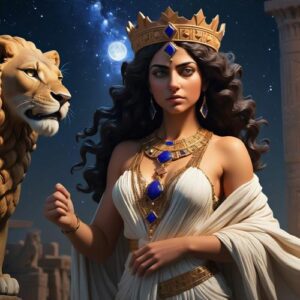


Gods of Love in Ancient Civilizations and Sacred Traditions
Love has inspired poetry, wars, kingdoms, and revolutions. Across civilizations, the Gods of Love were never simple symbols of romance. They represented attraction, fertility, beauty, devotion, longing, and even obsession. In many traditions, love was considered a divine force powerful enough to shape destiny itself.
In Greek tradition, Aphrodite embodies beauty, sensuality, and irresistible charm. Her influence extended beyond romance into political alliances and legendary conflicts. Alongside her stands Eros, a force of desire whose arrows could ignite uncontrollable passion in gods and mortals alike. Love, in the Greek world, was both enchanting and dangerous.
Roman culture revered Venus, who symbolized not only passion but also fertility and prosperity. Venus became a mother figure to the Roman people, linking love to legacy and national identity. In the Indian tradition, Kamadeva wields a sugarcane bow and flower-tipped arrows, representing desire as a subtle yet transformative energy capable of awakening both romance and spiritual longing.
Norse mythology presents a more layered vision through Freyja, who governs love, beauty, fertility, and even aspects of battle. Her presence reflects how passion and power often intertwine. In Egyptian belief, Hathor represents love expressed through music, celebration, and maternal warmth, connecting affection with joy and cosmic harmony.
Beyond romance, many Gods of Love also presided over fertility and creation. In Aztec tradition, Xochiquetzal embodies youthful beauty and artistic inspiration. Love here becomes life-giving, creative, and sacred.
Across cultures, Gods of Love reveal that affection is never merely emotional. It is elemental. It binds families, unites kingdoms, and shapes spiritual journeys. Some love deities inspire harmony and devotion. Others stir jealousy, obsession, and transformation. Together, they show that love is one of the most powerful forces in mythology.
To explore the Gods of Love is to understand how ancient civilizations viewed attraction not as weakness, but as divine influence. Love was creation, desire, fertility, beauty, and destiny woven together — a sacred power that moved both heaven and earth.