

Eir : The Norse Goddess of Healing and Mercy
Listen
At a glance
| Description | |
|---|---|
| Origin | Norse Mythology |
| Classification | Gods |
| Family Members | N/A |
| Region | Norway, Sweden, Denmark |
| Associated With | Healing, Mercy, Protection, Medicine |
The Mythlok Perspective
Eir represents the quiet counterbalance to the violence of Norse cosmology. In a culture remembered for warriors and thunder gods, she embodies preservation rather than destruction. Her presence suggests that survival itself was sacred. Comparable to the Greek Hygieia and the Egyptian goddess Sekhmet in her healing aspect, Eir reflects a universal archetype: the divine healer who sustains life amid chaos. Across cultures, the power to mend has always stood beside the power to conquer.
Eir
Introduction
Eir is one of the most intriguing yet understated figures in Norse tradition. Her name, derived from Old Norse, translates to “help,” “mercy,” or “protection,” immediately placing her within the sacred domain of healing. Eir appears in both the Poetic Edda and the Prose Edda, two of the primary sources for Norse lore. Though references to her are brief, they consistently associate Eir with medicine and compassionate intervention.
In the poem Fjölsvinnsmál, Eir is named among the maidens who sit on Lyfjaberg, the “Hill of Healing,” attending the mysterious figure Menglöð. Those who climb the hill and offer sacrifices are promised relief from illness and suffering. In the Prose Edda, written by Snorri Sturluson in the 13th century, Eir is listed among the ásynjur, the goddesses of the Aesir, and is described as an exceptionally skilled physician.
Scholars continue to debate whether Eir was originally a goddess of healing or a Valkyrie with restorative powers. Some skaldic lists identify her as a Valkyrie, linking her to the battlefield and the fate of warriors. However, across traditions, her defining trait remains consistent: Eir embodies mercy in a world defined by conflict.
Physical Traits
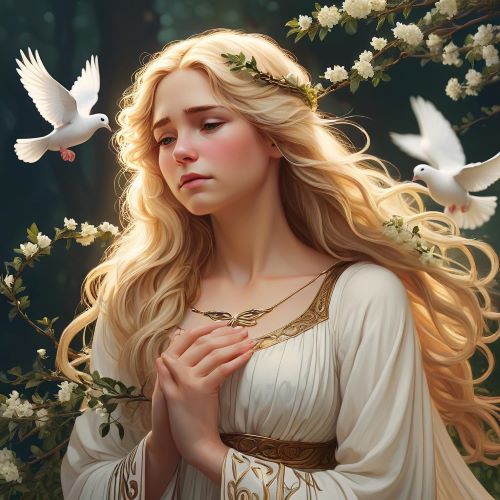
Unlike more vividly described Norse figures such as Thor or Freyja, Eir is not given a detailed physical description in surviving texts. The Eddas focus on her role rather than her appearance. There are no references to her clothing, weapons, or distinctive features. This absence suggests that her identity was defined more by her function than by imagery.
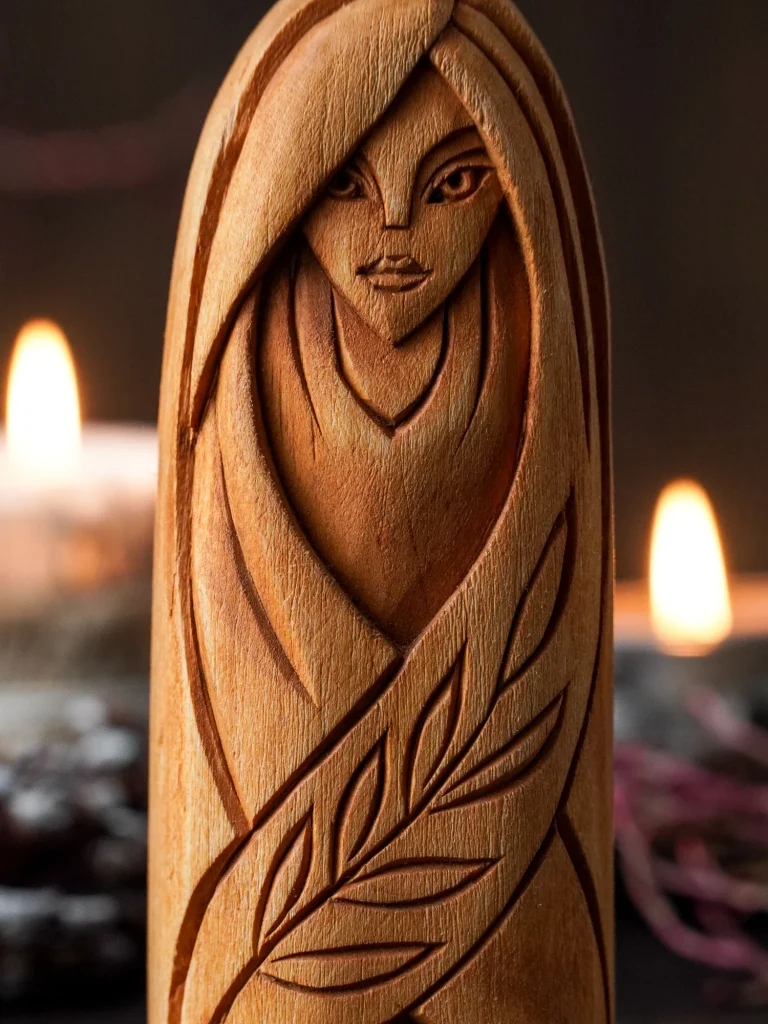
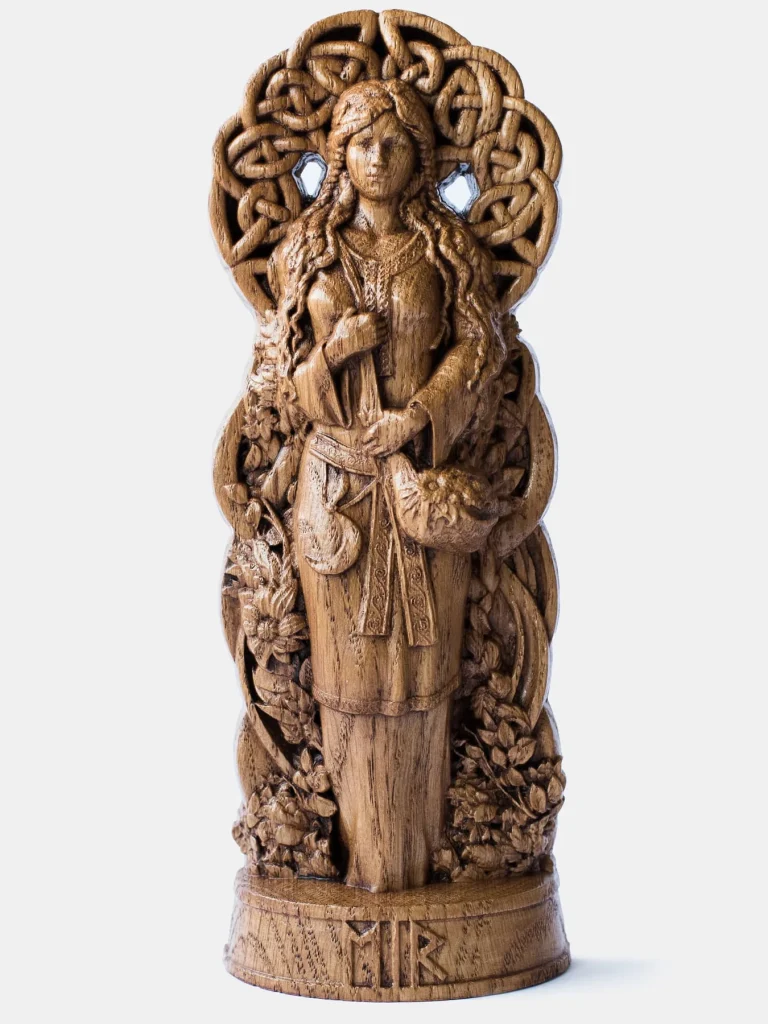
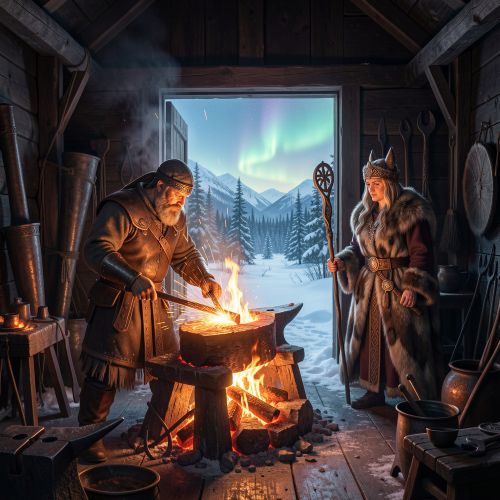
Later artistic depictions, particularly from the 19th century Romantic revival of Norse themes, portray Eir as a serene Valkyrie clad in armor or flowing robes, often holding herbs or tending to wounded warriors. These portrayals, while visually compelling, are modern interpretations rather than direct reflections of medieval sources.
The lack of a fixed physical image may reflect the broader cultural perception of healers in early Scandinavian societies. Healing was often associated with women who possessed knowledge of herbs, incantations, and practical medical skill. Eir’s representation as a divine healer likely mirrors these respected roles rather than emphasizing martial grandeur.
Family
The genealogy of Eir remains uncertain. The Prose Edda lists her among the ásynjur, indicating that she belongs to the Aesir, the principal divine family of Norse cosmology. However, no parents, siblings, or offspring are explicitly named in the primary sources.
In Fjölsvinnsmál, Eir appears as one of nine maidens serving Menglöð on Lyfjaberg. Menglöð herself is a somewhat enigmatic figure, sometimes interpreted as a giantess or a healing goddess. Eir’s connection to her does not imply blood relation but suggests a shared healing function within a sacred space.
Some traditions and later interpretations speculate that Eir may have served Odin if she was indeed a Valkyrie, as Valkyries traditionally operate under his command. Yet this connection remains indirect. Unlike other Norse deities whose lineages are clearly mapped, Eir stands apart, defined by service and skill rather than familial ties.
Other names
The name Eir carries powerful symbolic meaning. In Old Norse, it conveys assistance and mercy, aligning perfectly with her healing role. In skaldic poetry, “Eir” also appears as a poetic synonym for “woman,” which suggests that her name had become emblematic of feminine grace and protection.
Variant spellings such as Eira or Eyra appear in later Scandinavian naming traditions, but these are linguistic evolutions rather than distinct mythological figures. Unlike many Norse deities who possess multiple epithets or alternate identities, Eir remains singular in designation. Her simplicity strengthens her thematic clarity.
Comparative mythologists often draw parallels between Eir and figures such as Hygieia from Greek tradition, due to their shared association with health. However, Eir’s presence in a warrior culture gives her a unique dimension: she represents healing not in peaceful temples but in a world shaped by battle and fate.
Powers and Abilities
Eir’s primary power is mastery of healing. In the Prose Edda, she is described as the best physician among the gods. This brief but definitive statement establishes her as the foremost authority on medical knowledge within the divine realm.
In Fjölsvinnsmál, Eir’s role among the maidens of Lyfjaberg reinforces her protective aspect. Those who honor the maidens receive relief from sickness and sorrow. The hill itself symbolizes sanctuary, suggesting that Eir’s healing extends beyond the battlefield into everyday human vulnerability.
If identified as a Valkyrie, Eir may have possessed the ability not only to choose the slain but also to preserve life. Some scholars suggest that her presence among Valkyrie lists reflects a more nuanced role in battle, where healing and death exist side by side. While other Valkyries guide fallen warriors to Valhalla, Eir’s domain may have included those who survive.
Her abilities likely encompassed knowledge of herbs and remedies, as healing in Norse society combined practical medicine with ritual and spiritual elements. Though the Eddas do not specify particular plants associated with her, later folklore traditions link divine healers to herbal wisdom. Eir’s power, therefore, can be understood as both physical and spiritual restoration.
Modern Day Influence
Eir continues to resonate in contemporary culture. In modern interpretations of Norse lore, including video games such as God of War, Eir appears as a Valkyrie figure. These adaptations expand upon limited source material, blending creative imagination with mythic fragments.
Within modern Heathen and Asatru communities, Eir is honored as a patron of health and well-being. Rituals dedicated to her often focus on protection, recovery, and compassionate service. Her name is also used in Scandinavia as a given name, preserving its association with mercy and assistance.
Academic scholarship continues to explore whether Eir represents a fusion of healing goddess and Valkyrie traditions. Regardless of classification, her enduring appeal lies in the universality of her domain. In a mythology famous for thunder gods, tricksters, and apocalyptic battles, Eir stands as a reminder that survival requires care as much as courage.
Related Images




Source
Bellows, H. A. (1923). The Poetic Edda: Translated from the Icelandic with an introduction and notes. The American-Scandinavian Foundation.
Davidson, H. R. E. (1998). Roles of the Northern Goddess. Routledge.
Faulkes, A. (Trans.). (1995). Snorri Sturluson: Edda. Everyman.
Lindow, J. (2001). Norse Mythology: A Guide to the Gods, Heroes, Rituals, and Beliefs. Oxford University Press.
Orchard, A. (1997). Dictionary of Norse Myth and Legend. Cassell.
Simek, R. (2007). Dictionary of Northern Mythology (A. Hall, Trans.). D.S. Brewer.
The Viking Herald. (2025, September 22). Eir, goddess of healing, and her influence in Norse mythology.
https://thevikingherald.com/article/eir-goddess-of-healing-and-her-influence-in-norse-mythology/835
Wikipedia contributors. (2026). Eir. Wikipedia. https://en.wikipedia.org/wiki/Eir
Frequently Asked Questions
Who is Eir in Norse tradition?
Eir is a Norse goddess or Valkyrie associated with healing, mercy, and medical skill, mentioned in the Poetic Edda and Prose Edda.
Was Eir a goddess or a Valkyrie?
Sources describe Eir both as an ásynja among the Aesir and as a Valkyrie. Scholars debate whether these references describe one figure or overlapping traditions.
What does the name Eir mean?
The name Eir comes from Old Norse and means help, mercy, or protection.
Where does Eir appear in Norse texts?
Eir appears in Fjölsvinnsmál within the Poetic Edda and is listed among the goddesses in Snorri Sturluson’s Prose Edda.
Is Eir worshipped today?
Some modern Heathen and Asatru practitioners honor Eir in rituals focused on healing and protection.