


Chikasa : The Legendary Founder of the Chickasaw People
Listen
At a glance
| Description | |
|---|---|
| Origin | Chickasaw Mythology |
| Classification | Mortals |
| Family Members | Chahta (Brother) |
| Region | United States of America |
| Associated With | Founding Nations |
The Mythlok Perspective
In Mythlok’s Perspective, Chikasa represents a recurring archetype found in many cultural origin stories: the mortal founder guided by divine signs. His story reflects how communities explain their beginnings through migration and leadership narratives. Similar figures appear elsewhere in world traditions, such as Romulus in Roman origin stories or Moses guiding the Israelites in Biblical tradition. Like these figures, Chikasa stands at the intersection of memory, identity, and cultural storytelling rather than supernatural mythology.
Chikasa
Introduction
Chikasa is an important ancestral figure in the oral traditions of the Chickasaw people of North America. In Chickasaw migration stories, Chikasa appears as a respected leader who helped guide his people during a long journey in search of their destined homeland. Alongside his brother Chahta, he led a large group of people who would eventually become two separate nations: the Chickasaw and the Choctaw. The story is not simply about travel. It explains the origins, identity, and cultural memory of these Southeastern Native American peoples.
According to Chickasaw oral tradition, the ancestors of the Chickasaw and Choctaw once lived together as a single community. During a period of hardship and uncertainty, spiritual leaders received guidance from the Creator, Abaꞌ Bínniꞌliꞌ. The people were instructed to travel eastward while carrying a sacred pole called Kohta Falaya. Each night the pole was planted in the ground, and its position the following morning determined the direction of their next movement. The pole’s leaning was interpreted as divine guidance.
Chikasa and Chahta shared leadership during this journey. Eventually, the sacred pole stood upright, which was interpreted as a sign that the people had reached the place chosen by the Creator. At this point, a disagreement emerged between the two brothers. Chahta believed the journey had ended and chose to settle there, becoming the ancestor of the Choctaw people. Chikasa, however, believed the sign indicated something different and continued the migration with his followers. Those who followed him became the Chickasaw Nation. Through this story, Chikasa becomes more than a historical leader. He represents determination, independence, and the founding identity of the Chickasaw people.
Physical Traits
In Chickasaw mythology and oral history, Chikasa is not described through detailed physical characteristics. Unlike supernatural beings in many mythologies, he is remembered as a human leader rather than a divine or mystical figure. Because of this, traditional narratives focus on his actions, decisions, and leadership qualities instead of appearance.
The stories portray him as a young and capable chief who possessed the endurance needed for long journeys. The migration described in Chickasaw tradition involved traveling across rivers, forests, and unfamiliar territories, which implies that Chikasa was physically strong and resilient. However, these qualities are implied through the narrative rather than described directly.
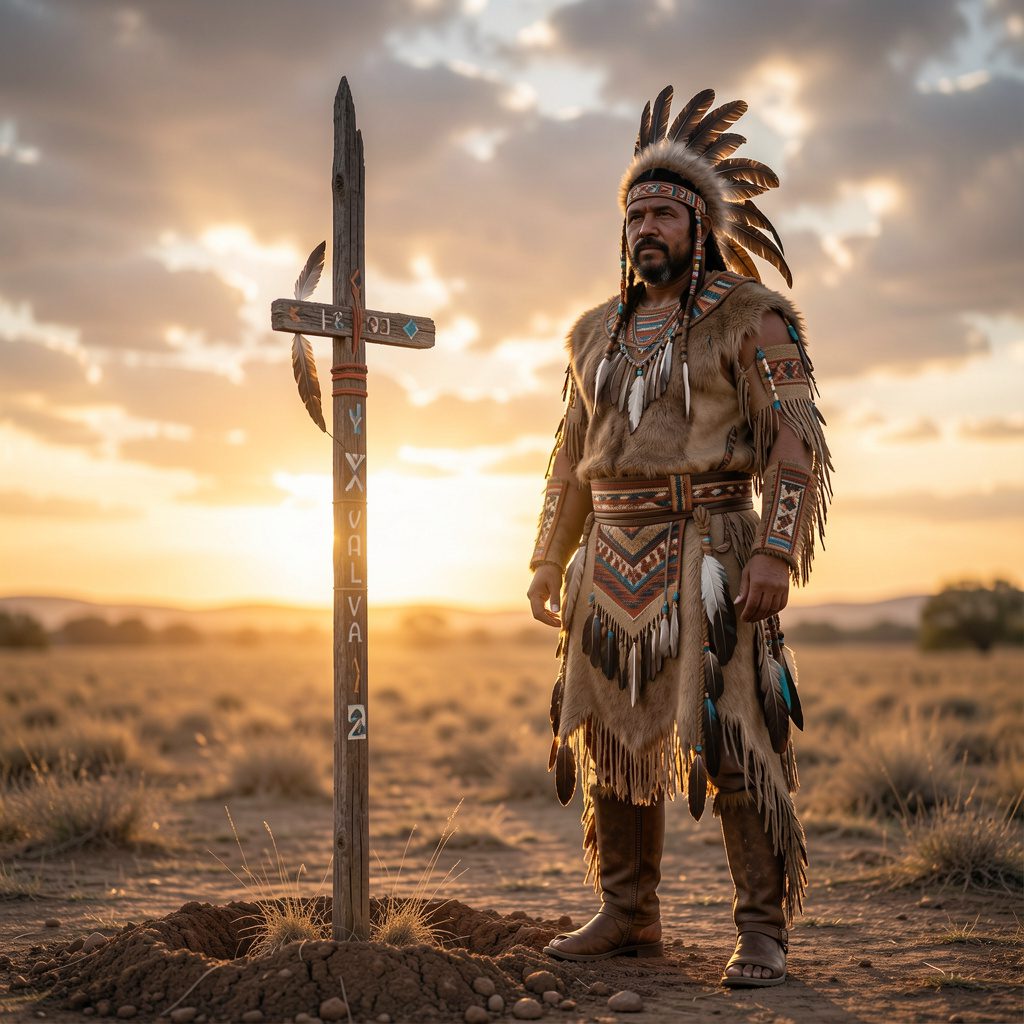
Chikasa is often remembered symbolically as a figure representing courage and leadership. In many artistic depictions created by modern Chickasaw artists, he is shown wearing traditional Southeastern Native American clothing and carrying the bearing of a chief. These depictions are interpretations rather than descriptions preserved in ancient oral accounts. The emphasis in traditional storytelling remains on character rather than physical form.
Family
The most significant relationship in Chikasa’s story is his bond with his brother Chahta. The two leaders are central figures in the migration legend of the Chickasaw and Choctaw peoples. Together they guided their people through difficult conditions while relying on spiritual guidance from the Creator.
In the narrative, the brothers are portrayed as cooperative leaders during the early stages of the migration. They consulted prophets and spiritual advisors who interpreted the meaning of signs from Abaꞌ Bínniꞌliꞌ. Their leadership reflects the collective decision-making traditions of many Southeastern Native American cultures.
The story reaches its defining moment when the sacred pole stops leaning and stands upright. Chahta interprets this as a sign that the people should settle in the area, while Chikasa believes the journey should continue. Their disagreement leads to the division of their followers into two groups. Chahta’s people remain and become the Choctaw Nation, while Chikasa continues onward with those who choose to follow him.
No detailed records within the migration legend describe additional family members such as parents, spouses, or children. The narrative is focused primarily on the symbolic relationship between the two brothers and the way their decisions shaped the formation of two distinct nations.
Other names
Chikasa’s name appears in several forms depending on language translation and spelling conventions. In Chickasaw language traditions, the name is often written as Chiksa’ or Chiksa. These variations reflect the challenges of transliterating Indigenous languages into English spelling systems.
In some historical records and retellings, he may also be referred to as Minko’ Chiksa’. The term “minko’” means chief or leader in the Chickasaw language. When used with his name, it emphasizes his role as a respected leader of his people. The name itself is closely tied to the ethnonym of the Chickasaw people, who call themselves Chikashsha. Because of this linguistic connection, Chikasa is often regarded as the ancestral figure whose leadership helped establish the identity of the Chickasaw Nation.
Powers and Abilities
Chikasa is not portrayed as a supernatural being with magical powers. Instead, his abilities are expressed through leadership, endurance, and spiritual awareness. In Chickasaw tradition, these qualities are valued as essential characteristics of a successful chief.
One of the most important elements associated with Chikasa’s leadership is the sacred pole known as Kohta Falaya. This pole was believed to have been given by the Creator Abaꞌ Bínniꞌliꞌ as a guide for the migrating people. Each evening the pole was planted in the ground, and the direction it leaned the next morning determined where the group would travel next.
Although the pole itself carried spiritual significance, Chikasa’s role was to interpret its meaning and guide the people accordingly. This required wisdom, patience, and trust in divine guidance. The legend highlights his determination when he chooses to continue traveling even after the pole stands upright.
His abilities therefore reflect human leadership rather than supernatural power. The story portrays him as a decisive figure who trusted his interpretation of divine signs and led his people toward the lands that would later become associated with the Chickasaw Nation.
Modern Day Influence
The story of Chikasa continues to hold cultural significance for the Chickasaw people today. Migration legends remain an important part of tribal identity and are taught through educational programs, storytelling traditions, and cultural institutions maintained by the Chickasaw Nation.
Modern Chickasaw historians and cultural educators frequently reference Chikasa in discussions about tribal origins and identity. The narrative helps explain the historical relationship between the Chickasaw and Choctaw peoples and highlights the values of resilience and independence that remain central to Chickasaw culture.
The story also appears in modern artistic interpretations. Paintings, museum exhibits, and cultural media created by Chickasaw artists often depict the moment when the brothers decide to separate. These visual interpretations help bring the ancient narrative to life for contemporary audiences.
Today, the legacy of Chikasa survives not as a mythological hero with supernatural powers, but as a foundational ancestor remembered through storytelling and cultural preservation. His journey represents the enduring connection between the Chickasaw people, their history, and the lands that shaped their identity.
Related Images



Source
Chickasaw Nation. (n.d.). Migration story. https://www.chickasaw.net/Our-Nation/History/Migration-Story.aspx
Chickasaw TV. (n.d.). Chiksa’ and Chahta profile. https://www.chickasaw.tv/profiles/chikashsha-and-chata-profile
Swanton, J. R. (2001). Source material for the social and ceremonial life of the Choctaw Indians (Reprint ed.). University of Alabama Press.
Chickasaw Nation. (n.d.). Religion. https://chickasaw.net/Our-Nation/Culture/Religion.aspx
Wikipedia contributors. (2026). Chickasaw. Wikipedia. https://en.wikipedia.org/wiki/Chickasaw
University of Tennessee at Martin. (n.d.). The Chickasaw people. https://www.utm.edu/academics/library/special-collections/wc_hist/chksaw.php
Wright, J. L. (2020). The Chickasaws. Chickasaw Press.
Frequently Asked Questions
Who was Chikasa in Chickasaw tradition?
Chikasa is remembered as a legendary leader who guided his people during a sacred migration and eventually became the ancestral founder of the Chickasaw Nation.
What is the story of Chikasa and Chahta?
Chikasa and his brother Chahta led a group of people following a sacred pole believed to guide them to their homeland. When the pole stood upright, Chahta stayed and founded the Choctaw people while Chikasa continued onward, forming the Chickasaw Nation.
Was Chikasa a god or supernatural figure?
No. Chikasa is portrayed as a human leader rather than a deity or spirit. His importance comes from his role in guiding his people and interpreting divine signs.
What was the sacred pole in the migration legend?
The sacred pole, known as Kohta Falaya, was believed to have been given by the Creator Abaꞌ Bínniꞌliꞌ. Its direction each morning determined where the migrating people should travel.
Why is Chikasa important to Chickasaw culture?
Chikasa represents the ancestral origins of the Chickasaw Nation and symbolizes leadership, resilience, and the historical journey of the Chickasaw people.
