Mukanda and the Sacred Male Initiation Ritual of Central Africa
Mukanda is a traditional male initiation system practiced by several Central African communities, especially in regions of present-day Angola, Zambia, and the Democratic Republic of Congo. More than a single ceremony, Mukanda is a structured rite of passage that transforms boys into socially recognised men. It blends ritual discipline, spiritual symbolism, physical endurance, and moral education into a single cultural framework. Within Mythlok’s lens, Mukanda stands as a living example of how myth, body, and community intersect to shape identity.
At its core, Mukanda marks the transition from childhood dependency to adult responsibility. Boys are removed from their everyday environment and taken into a secluded initiation camp, often deep in forested areas. This separation is deliberate. In mythic thinking, the forest represents the unknown, the liminal space between what one was and what one is becoming. By stepping away from the village, initiates symbolically die to their former identity, preparing for rebirth into adulthood.
Mukanda is commonly associated with circumcision, but reducing the practice to that single act misses its deeper cultural meaning. Circumcision is only one moment in a much longer process that can last weeks or even months. The real focus of Mukanda lies in endurance, obedience, secrecy, and the internalisation of communal values. Pain and hardship are not inflicted for cruelty but are seen as necessary tools for forging emotional control and inner strength.
Ritual Structure and Symbolic World of Mukanda
The Mukanda process unfolds in carefully defined stages, each layered with symbolism. After separation from the village, the boys enter a period of instruction overseen by elders and ritual specialists. These mentors are not simply teachers but guardians of ancestral knowledge. Through songs, proverbs, and ritual tasks, initiates learn about sexuality, social conduct, respect for elders, and their future roles as husbands, fathers, and protectors of the community.
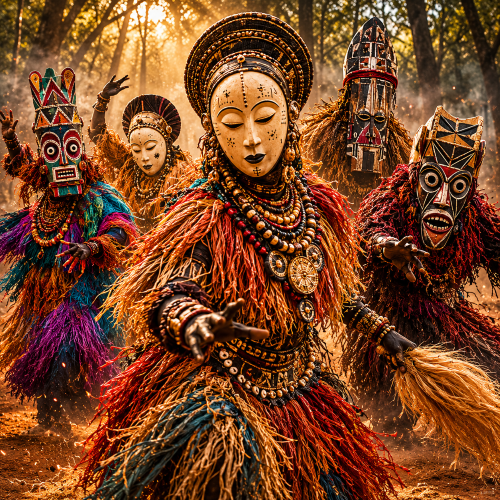
One of the most striking elements of Mukanda is the presence of masked figures often referred to as Makishi. These masked dancers represent ancestral spirits and mythic beings who oversee the initiation process. Their appearances are intentionally frightening and theatrical. In mythic terms, they act as embodiments of the unseen world, reminding initiates that adulthood comes with spiritual accountability, not just social privilege. The masks erase personal identity, reinforcing the idea that tradition is larger than any individual.
Silence and secrecy play a crucial role. Initiates are discouraged from expressing pain or fear openly, training them in emotional restraint. This controlled silence mirrors a broader mythic idea found across cultures: true power is quiet, internal, and disciplined. By the time the initiates are ready to return to the village, they have not only endured physical trials but have also learned how to govern themselves within a moral framework shaped by generations.
The final reintegration ceremony is celebratory and dramatic. The initiates emerge transformed, often adorned with symbolic markings or new clothing. The community welcomes them with dances, feasts, and public acknowledgment of their new status. This return marks the mythic rebirth phase, where the initiate re-enters society carrying new responsibilities and expectations.
Mukanda as Living Myth and Modern Cultural Legacy
Mukanda is not a relic frozen in the past. Even today, it continues to evolve in response to modern realities such as urbanisation, education systems, and changing health standards. In some communities, the duration of initiation has shortened, and medical oversight has been introduced, yet the symbolic framework remains intact. This adaptability highlights Mukanda’s strength as a living mythic system rather than a rigid ritual.
From a mythological perspective, Mukanda aligns closely with the universal initiation archetype. Across cultures, initiation myths follow a similar pattern: separation, ordeal, transformation, and return. What makes Mukanda distinctive is how vividly these stages are embodied through masks, performance, and communal participation. Myth here is not told as a story alone but enacted through the body and landscape.
In contemporary cultural discourse, Mukanda is also being re-examined as a source of identity and continuity. Artists, scholars, and cultural historians increasingly view it as an intangible heritage practice that encodes ethical values, ecological awareness, and social cohesion. The forest setting, for instance, reinforces respect for natural spaces as sacred zones of transformation rather than resources to be exploited.
Mukanda represents a powerful reminder that mythology is not confined to ancient texts or distant eras. It lives in rituals, scars, dances, and shared silence. Mukanda shows how myth operates as a social technology, shaping character, transmitting wisdom, and anchoring individuals within a cosmic and communal order. In a world increasingly detached from rites of passage, Mukanda challenges modern societies to reconsider how adulthood, responsibility, and belonging are defined.


No posts were found.